Discover the 8 types of work styles, from deep work to collaborative. Learn the pros & cons of each and find the best fit for your productivity and team.
April 19, 2026 (6mo ago)
8 Key Types of Work Styles for 2026
Discover the 8 types of work styles, from deep work to collaborative. Learn the pros & cons of each and find the best fit for your productivity and team.
← Back to blog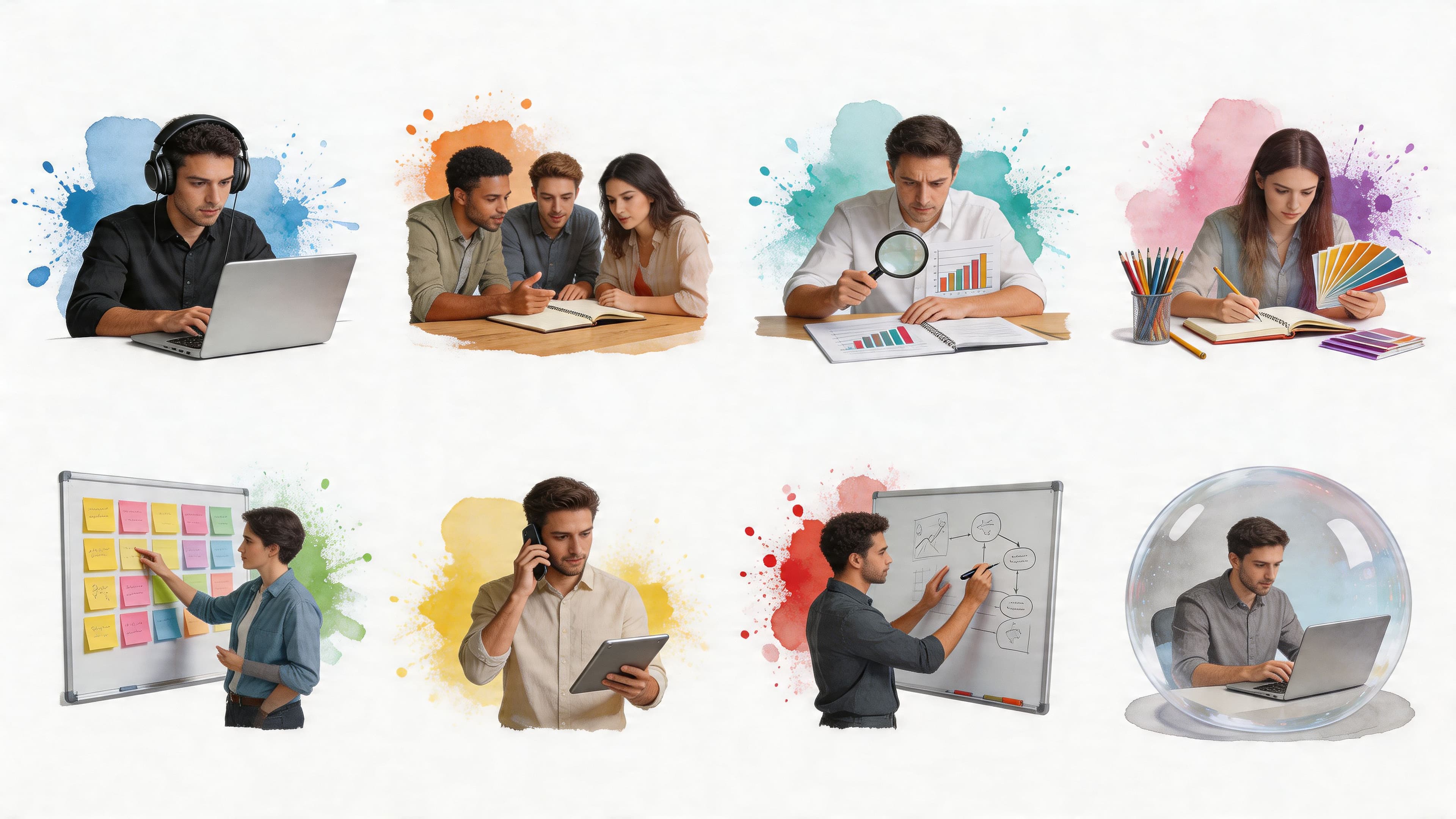
At 10:00 a.m., one teammate is finally ready to concentrate on a pricing model. Another is waiting on a quick reply in chat so a client draft can move. By noon, both feel blocked, and both think the other person is working the wrong way.
That tension shows up in healthy teams too. Work style is not a soft label or a manager-only framework. It shapes how people plan, communicate, recover energy, and finish meaningful work without creating avoidable friction for everyone else.
Assessment tools have tried to categorize these patterns for years. The useful takeaway is simpler than any framework. People bring different operating preferences to the same job, and those preferences matter most when the pressure goes up.
I’ve seen teams lose weeks trying to standardize every task into one workflow. It usually creates new problems. A system that helps in practice gives focused people protected time, gives collaborative people clear ways to engage, and gives everyone enough visibility to coordinate without constant interruption.
That is where this article takes a more practical angle. Instead of stopping at definitions, it maps each work style to specific operating rules, common failure points, and concrete ways to use Fluidwave to reduce drag in day-to-day execution. It also calls out adjustments that often help neurodivergent professionals, especially in areas like context switching, communication load, and task visibility.
One example: if your work style breaks down under inbox noise, start by tightening message triage and organize your email effectively. If attention control is the bigger issue, a practical guide to how to focus at work will do more for your output than another color-coded personality label.
Use the eight styles below as patterns, not boxes. Many professionals are hybrids, and the same person may switch styles by role, task, or season of work. The goal is not to find a perfect label. The goal is to build a system that fits how you produce good work.
1. Deep Work / Focus-Intensive Style
Some people produce their best work when they can disappear for a while.
This style fits developers, analysts, researchers, writers, and anyone whose output gets worse when Slack pings every six minutes. They don’t need silence because they dislike people. They need it because complex work usually breaks under interruption.
KI’s workplace research identifies focus as one of the core work styles organizations need to support, and Microsoft’s hybrid work research found that 58 percent of employees cited focused work as the main reason for their workspace preference. That tracks with what many teams already feel day to day. People often don’t need more meetings. They need longer stretches without them.
What works for this style
Deep workers do well when the task list is filtered hard. They need to know which tasks deserve concentration and which ones are admin, coordination, or routine follow-up.
Fluidwave fits this style best when you use its distraction-light interface as a temporary working environment rather than just a storage place for tasks. Pair that with scheduled blocks on your calendar and a visible status rule so teammates know when you’re reachable. If focus is a weak point for you, this guide on how to focus at work is a useful companion.
A practical setup looks like this:
- Protect one real block: Reserve a chunk of time for cognitively heavy tasks, not fragmented half-hours.
- Separate deep from shallow: Put scheduling, inbox cleanup, approvals, and routine follow-ups into a later batch.
- Pre-define the finish line: “Work on report” is vague. “Draft sections one and two” is usable.
Practical rule: If a task requires original thinking, don’t leave it buried in the same queue as calendar edits and status checks.
What doesn’t work
Open-ended availability doesn’t work. Neither does pretending you can “multitask” through problem-solving. Most people can’t. They just context-switch and call it productivity.
It also helps to reduce email drag before a focus block starts. If your inbox is the thing that keeps pulling you sideways, it’s worth learning how to organize your email effectively so low-value messages stop stealing your best hours.
For neurodivergent professionals, especially those with ADHD, this style can be powerful and tricky at the same time. Hyperfocus can create excellent output, but starting the task is often the primary barrier. External structure, clear next actions, and a visual task view usually help more than sheer willpower.
2. Collaborative / Team-Oriented Style
Some work gets better in the room, even if the room is virtual.
Collaborative workers think by talking, testing ideas aloud, and building momentum with other people. They’re common in product, design, client service, operations, and startup environments where speed depends on shared context more than solo craftsmanship.

The upside is obvious. Decisions can move faster when everyone sees the same board, the same blockers, and the same handoffs. The downside is just as real. Teams that default to constant collaboration often mistake activity for progress.
How collaborative workers stay effective
This style works when collaboration is intentional, not ambient. The best collaborative teams don’t talk all day. They talk at the right moments.
Fluidwave helps here because shared task views make progress visible without requiring another check-in. A Kanban board is useful when work moves through stages. A shared list works better when the team needs a straightforward action queue. If your team is trying to tighten the basics, this article on team collaboration covers the fundamentals well.
Use a few rules:
- Collaborate around decisions: Brainstorm together, assign clearly, then let people execute.
- Keep one shared source of truth: Don’t split action items across chat, email, and three docs.
- Make ownership visible: Every task should have one owner, even if several people contribute.
Collaboration helps when people need alignment. It hurts when people use it to avoid individual responsibility.
Common failure modes
The big one is meeting sprawl. Another is over-reliance on synchronous communication. Team-oriented workers can accidentally create bottlenecks by expecting instant feedback from everyone else.
This style also benefits from protected solo windows. The strongest collaborators usually have some independent work habits too. They gather energy from the team, then step away long enough to turn discussion into output.
For neurodivergent professionals, collaborative setups can be energizing or draining depending on sensory load and meeting quality. Shared boards, written notes, and explicit next steps usually make collaboration far easier than fast verbal discussion alone.
3. Asynchronous / Flexible Time-Zone Style
A product lead signs off at 6 p.m. in London. A contractor in São Paulo picks up the task while that lead is asleep. An engineer in Singapore reviews it the next morning. That workflow only works when the work can move forward without live clarification.
Asynchronous work suits distributed teams, freelance networks, global companies, and anyone who does better work outside a fixed office clock. The core skill is not delayed communication. It is making progress possible without another meeting, another ping, or another round of “quick question” messages.
The trade-off is real. Async work gives people more control over focus, schedule, and environment. It also punishes vague thinking fast. If the task owner cannot explain the goal, constraints, and deadline clearly, the delay shows up later as rework.
What strong async work looks like
Strong async systems reduce dependency on timing. The handoff carries enough context that the next person can act, decide, or review without waiting for someone to come online.
Fluidwave supports this style well because the task can hold the actual working brief. Scope, deadline, dependencies, notes, and expected output stay attached to the work instead of getting buried across chat and email. If part of your async problem is poor handoff quality, this guide on how to delegate work clearly across a team is useful because delegation and async execution break for the same reason: incomplete instructions.
A clean async task usually includes:
- A defined outcome: What needs to be delivered, approved, or decided.
- Operating context: Why the task matters, what constraints apply, and what already changed.
- Timing rules: When feedback is expected, what can wait, and what counts as urgent.
- Proof of done: A file, decision, comment, or status change that confirms the work is complete.
One detail matters more than people expect. Write down the decision standard. If someone knows whether to optimize for speed, accuracy, cost, or client experience, they make better choices without asking for permission.
Where async breaks down
Async fails in predictable ways. Priorities sit in someone’s head. Decisions stay trapped in chat. Managers say response time does not matter, then reward the person who replies first. Teams call that flexibility, but the operating system is still built around constant availability.
I see another failure mode often. People document the task but skip the reason. Then the assignee completes exactly what was written, while missing the actual business need. A single sentence of context prevents a surprising amount of wasted work.
This style often works well for neurodivergent professionals who need more control over sensory input, pace, or recovery time between interactions. Written expectations, visible deadlines, and fewer forced live responses can reduce strain. The downside is that unclear priorities feel even heavier when no one is available for immediate clarification. In practice, the best setup is explicit structure with flexible timing.
If you want async to work this week, start small. Pick one recurring handoff. Put the outcome, context, deadline, and review standard in one place. Then watch how many follow-up messages disappear.
4. Delegation-Focused / Leveraged Style
Delegation is a work style, not just a management skill.
Some professionals naturally look at a task and ask one question first. Am I the right person to do this? That mindset is common in founders, executives, operators, agency owners, and experienced freelancers who know their output improves when they stay close to high-value work and hand off the rest.
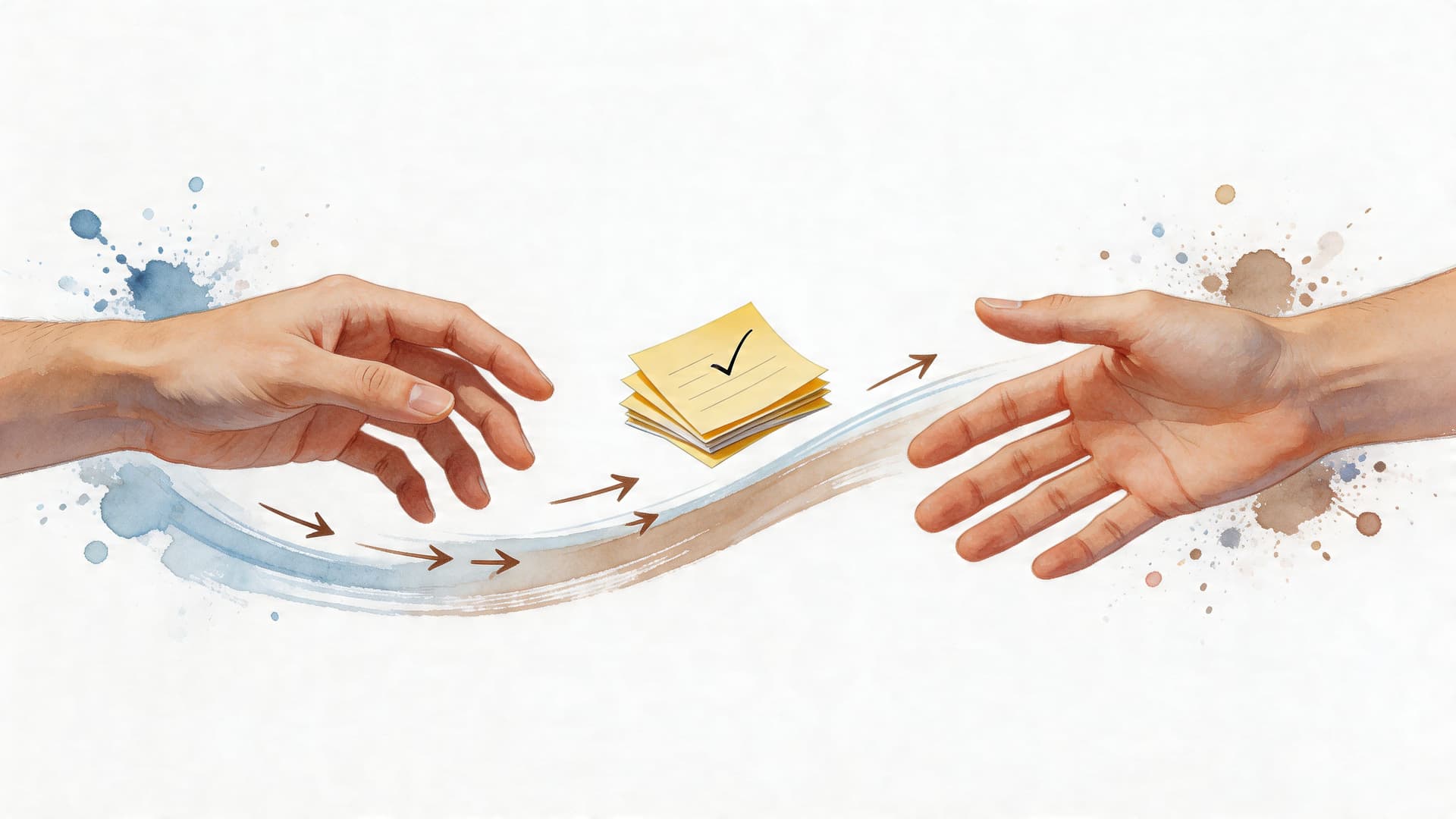
Delegation-focused people often get dismissed as “not hands-on enough.” Sometimes that criticism is fair. But in many cases, they’re just clear about strategic task assignment. If the founder is formatting slides, booking travel, or rewriting notes from a meeting, the company is usually paying the wrong person to do the wrong task.
How to delegate without creating chaos
Delegation only works when the handoff is precise. Vague assignments create rework, not benefit.
Fluidwave is built for this style because delegation is part of the operating model. You can define the task, set a budget and timeline, and assign work through the platform rather than managing the whole exchange in scattered messages. If you want the mechanics, this guide on how to delegate is the right place to start.
Use this sequence:
- Start with repeatable tasks: Inbox cleanup, research summaries, formatting, scheduling, data entry, first-pass outreach.
- Define success upfront: Explain what “done” means before the work starts.
- Keep a delegation log: Notice which tasks you hand off repeatedly. That reveals your most impactful opportunities.
One useful refresher on the mindset behind this is below.
What usually goes wrong
People fail at delegation in two opposite ways. They either hand off too little and stay buried in low-value work, or they hand off too much too fast and create confusion.
The fix is to start smaller than you think. Delegate one well-bounded task. Review the result. Improve the instruction. Then expand.
For detail-oriented professionals, delegation can feel uncomfortable because quality matters. For ADHD professionals, it can be a major relief because low-focus tasks are often the ones that clog the system. In both cases, the key skill is designing the handoff clearly enough that someone else can succeed.
5. Structured / Process-Driven Style
Some people work best when the process is visible, stable, and repeatable.
This is the home territory of operations leads, project managers, coordinators, quality teams, compliance functions, and anyone responsible for making sure work happens the same way each time it needs to happen. They usually don’t resist creativity. They resist unnecessary chaos.
Indeed’s overview of working styles describes the four-category model of logical, detail-oriented, idea-oriented, and supportive styles, and notes that detail-oriented workers excel in precision-heavy roles such as accounting, quality assurance, and editing (Indeed on working styles). You can feel that preference clearly in structured workers. They want definitions, stages, checklists, and handoff rules because precision reduces avoidable mistakes.
What makes this style strong
Process-driven workers are often the people who keep a team from reinventing the wheel every week. They document standard operating procedures, turn repeated work into templates, and catch the places where good intentions usually break.
Fluidwave works well for this style when you use different views for different layers of process. Table view is useful for tracking fields and checkpoints. Kanban works for stage-based movement. Calendar adds timing. The point isn’t to use every view at once. It’s to match the view to the process.
A solid setup includes:
- Templates for recurring work: Launches, approvals, reporting cycles, hiring steps.
- Checklists linked to tasks: So quality control doesn’t rely on memory.
- Recurrence for predictable work: If it happens every week or month, automate the reminder.
Operational note: A process should reduce decision fatigue. If it creates more questions than it answers, it isn’t ready yet.
The trade-offs
This style can become rigid. Process-minded people sometimes overbuild systems for simple work, or they keep polishing workflows after the team really just needs to move.
Still, for many neurodivergent professionals, structure is protective. Clear stages, visible priorities, and repeatable routines lower cognitive load. That’s especially useful when executive function is inconsistent. A process can act like external memory when internal memory is already overloaded.
6. Entrepreneurial / Adaptive Style
This style moves fast, tolerates ambiguity, and changes direction without needing emotional recovery time.
Founders, startup operators, business development leads, and generalist managers often work this way. They’re comfortable making decisions with incomplete information, testing a rough version, and adjusting as the market responds.
Monday.com’s analysis describes six AI-augmented work styles for 2026, including Adaptive and Visionary, and emphasizes that cross-functional teams often contain several work styles at once, which makes low-friction style switching important in shared tools (Monday.com on working styles). That’s a useful lens for entrepreneurial workers because they rarely stay in one mode all day. They brainstorm, review numbers, assign work, change priorities, and jump into execution.
What helps adaptive workers stay useful
Adaptive workers need enough structure to capture movement without slowing it down. Too much process kills momentum. Too little process means the same ideas get restarted every week.
Fluidwave’s multi-view approach helps here. Cards and Kanban are useful when priorities shift quickly. A backlog can hold ideas that aren’t ready. Calendar view can force reality onto plans that would otherwise stay conceptual.
These habits keep the style productive:
- Run short cycles: Work in tight bursts with a visible outcome.
- Keep experiments bounded: Define what you’re testing before you test it.
- Record lessons immediately: Fast-moving teams forget why they changed course.
What this style gets wrong
Adaptive workers often underestimate operational drag. They can spin up new projects faster than the team can absorb them. They also tend to overvalue novelty and undervalue maintenance.
That’s why pairing this style with a structured operator or a detail-oriented reviewer is so effective. One pushes motion. The other protects follow-through.
For ADHD professionals, this style can feel natural because novelty creates energy. The challenge is that novelty can also scatter attention. A system that captures ideas fast, then narrows them into one active lane, usually works better than trying to suppress the instinct to explore.
7. Relationship-Centered / Network Style
A client call ends. Ten minutes later, another message comes in asking for an intro, a status update, or a quick opinion before someone else moves. For relationship-centered workers, that stream of contact is often the job.
This style shows up in sales, consulting, partnerships, recruiting, community, customer success, and leadership roles where trust affects speed and outcomes. People with this style usually notice social cues early, maintain warm ties over time, and remember the context behind a conversation. They often spot risk before it appears in a dashboard because they hear hesitation, confusion, or frustration first.
As noted earlier, common work-style frameworks describe this pattern as relational, supportive, or people-centered. The label matters less than the operating reality. Progress comes from trust, timing, and consistent follow-through.
How this style becomes a real asset
Teams sometimes undervalue relationship work because it does not always produce a visible artifact by the end of the day. That is a costly mistake. Strong relationships reduce friction, speed up decisions, improve retention, and create opportunities that never appear in a standard task queue.
The trade-off is that relationship work becomes vague unless you systematize it. Fluidwave helps by turning conversations into trackable commitments. Use recurring tasks for check-ins, create a dedicated view for accounts or partners that need attention, and log post-meeting actions while the context is still fresh. If the promise matters, it needs a date, an owner, and a next step.
A few habits make this style much stronger:
- Batch outreach into focused blocks: Group calls, follow-ups, and introductions so your day is not fragmented by constant context switching.
- Record next actions during or right after the conversation: Memory is unreliable once the day fills up.
- Rank relationships by strategic value: Give more attention to the people, clients, and partners tied to active goals.
Good relationship work is structured generosity. It is not random friendliness.
Where this style breaks down
The main risk is reactivity. A relationship-centered worker can spend the entire week maintaining responsiveness while personal priorities stall. Overcommitment is common too, especially for people who read tension quickly and want to keep trust high.
The fix is simple, but it takes discipline. Every verbal yes needs a visible follow-up. Every open loop needs a review point. Without that structure, strong people skills turn into stress and dropped commitments.
This style also needs recovery boundaries. Networking-heavy work can drain autistic professionals, people with ADHD, and anyone who masks heavily in social settings. In practice, I usually recommend shorter meeting blocks, written prep before high-stakes conversations, and buffer time after relationally intense work. That setup preserves the strength of the style without treating constant availability as the standard.
8. Results-Only / Outcome-Focused Style
This style cares less about how the work looks in progress and more about whether the result lands.
Outcome-focused workers tend to value autonomy, clear targets, and minimal interference. They’re common in sales, consulting, freelance work, leadership roles, and remote teams where hours are less important than delivery. They don’t want process theater. They want a finish line.
This style can work well across several of the established types of work styles. Logical workers often like measurable outcomes. Idea-oriented workers like freedom in approach. Detail-oriented workers may resist vague goals but perform well when the deliverable is explicit. The common thread is clarity.
How to run this style well
Outcome-focused work only functions when the result is defined tightly enough that everyone knows what success looks like. “Improve onboarding” is not enough. “Draft the onboarding sequence, finalize the checklist, and hand off the implementation brief” is.
Fluidwave supports this approach when you organize work around deliverables instead of activity. Use tasks to specify the output, add milestones, and monitor what has been completed rather than who looked busy.
What tends to help:
- Write deliverables, not just actions: Name the thing that must exist at the end.
- Use milestones for long work: Break big outcomes into reviewable pieces.
- Give autonomy after alignment: Agree on the result first, then step back.
Where this style can fail
Results-only teams sometimes ignore healthy process until something breaks. They may also undervalue the work that doesn’t show up neatly as a deliverable, such as documentation, mentoring, or relationship maintenance.
The better version of this style keeps the focus on outcomes without pretending process never matters. Process matters when it protects quality, coordination, or legal and operational standards. It just shouldn’t become a substitute for actual results.
For neurodivergent professionals, outcome-focused work can be freeing because it allows customization of method. It can also be difficult if the expected result is clear but the path to get there isn’t. In that case, pairing an outcome target with a few visible checkpoints works better than total open-ended freedom.
Comparison of 8 Work Styles
A style is only useful if it helps you choose the right operating system for the work. The table below compares the eight styles by setup effort, resource demands, likely payoff, and where each one works best.
Use it as a selection tool, not a personality quiz.
| Style | Implementation Complexity 🔄 | Resource Requirements ⚡ | Expected Outcomes 📊 | Ideal Use Cases 💡 | Key Advantages ⭐ |
|---|---|---|---|---|---|
| Deep Work / Focus-Intensive Style | Moderate. Requires calendar protection, boundary setting, and consistent focus habits | Low to Moderate. Quiet space, focus tools, blocked time | Higher-quality thinking, stronger creative output, better progress on hard problems | Developers, writers, analysts, researchers | Produces original work, improves concentration, reduces context switching |
| Collaborative / Team-Oriented Style | Moderate. Depends on facilitation, meeting discipline, and clear team norms | High. Shared time, collaboration tools, visible project spaces | Better idea development, stronger alignment, faster decisions on interdependent work | Creative teams, product squads, cross-functional initiatives | Brings in multiple perspectives, improves coordination, builds shared ownership |
| Asynchronous / Flexible Time-Zone Style | Moderate to High. Requires strong documentation and response expectations | Low to Moderate. Async tools, written updates, clear workflows | More schedule flexibility, fewer unnecessary meetings, better coverage across time zones | Distributed teams, remote-first companies, freelance networks | Supports autonomy, fits global teams, gives people more control over when they work best |
| Delegation-Focused / Leveraged Style | Moderate. Needs clear briefs, trust, review points, and handoff routines | Moderate to High. Budget, onboarding time, tracking systems | More time for strategic work, higher output capacity when delegated well | Founders, executives, agency leads, freelancers with repeatable tasks | Increases output per hour, expands team capability, reduces owner bottlenecks |
| Structured / Process-Driven Style | High upfront, lower once established. Requires SOPs, templates, and defined stages | Moderate. Documentation time, process tools, training | More consistency, steadier throughput, fewer preventable errors | Operations, customer support, compliance-heavy work, recurring service delivery | Reduces decision fatigue, improves reliability, makes training easier |
| Entrepreneurial / Adaptive Style | Low to Moderate. Light structure, frequent reprioritization, fast feedback loops | Variable. Depends on testing speed, tools, and staffing | Faster iteration, quicker learning, more room for experimentation | Startups, early product teams, campaign testing, new ventures | Supports quick course correction, helps teams act on new information, speeds up learning |
| Relationship-Centered / Network Style | Moderate. Requires steady outreach, follow-up systems, and reputation management | Moderate. Time, CRM tools, events, relationship-building effort | More referrals, stronger partnerships, better access to opportunities over time | Sales, consulting, partnerships, business development | Builds trust-based pipelines, strengthens reputation, creates long-term opportunity flow |
| Results-Only / Outcome-Focused Style | High. Requires sharp goal definition, metrics, and clear ownership | Moderate. Measurement tools, autonomy support, visible targets | Stronger accountability, more autonomy, clearer performance expectations. Can create pressure if goals are poorly scoped | Sales, remote roles, project-based teams, deliverable-driven work | Keeps attention on outcomes, reduces unnecessary oversight, gives skilled people room to execute |
The trade-offs matter as much as the advantages. Deep work can isolate people from decisions they should hear early. Collaborative systems improve alignment but often consume prime working hours. Delegation creates capacity, but only after someone invests real time in training, quality control, and clearer instructions than they may be used to writing.
This is also where tools start to matter in a practical way. Fluidwave is useful when teams need to support different styles without forcing one default workflow on everyone. A deep worker can protect focus blocks and track solo milestones. A collaborative team can work from shared boards and visible status updates. An async group can rely on documented tasks, comments, and handoffs instead of meetings.
Neurodivergent professionals often benefit from that flexibility. Structured workers may need predictable task stages and lower ambiguity. Adaptive workers may need room to reorder tasks without losing visibility. Outcome-focused workers may do best with clear targets plus intermediate checkpoints, especially when the path is not obvious.
In practice, the strongest teams rarely use one style in pure form. They combine them on purpose. A product team might use deep work for design and coding, collaboration for planning, async updates across time zones, and structured process for release management. That mix usually performs better than forcing every task through the same system.
From Style to System: Making Your Work Style Work for You
Individuals don’t need a new personality. They need a better setup.
That’s the practical value in understanding the types of work styles. Once you know how you naturally approach work, you can stop forcing yourself into systems that look good on paper but keep failing in real life. A deep worker needs protected concentration. A collaborative worker needs visible shared progress. A structured worker needs repeatable stages. An adaptive worker needs room to reorganize without losing the thread.
The mistake I see most often is choosing a system based on image instead of fit. Someone hears that high performers wake up early, time-block every hour, or run everything from a Kanban board, then assumes that method should work for them too. Sometimes it does. Often it doesn’t. A method isn’t good because it’s popular. It’s good because it matches the demands of the work and the person doing it.
That matters even more on mixed teams. One person may need long solo blocks while another needs frequent alignment. One person wants a checklist before starting. Another wants a rough direction and space to improvise. If you manage everyone with the same cadence, one group feels smothered and another feels abandoned.
The useful question is simple. What kind of friction keeps showing up for you?
If your days disappear into messages and meetings, you may need a focus-first system. If your projects stall because no one owns the next step, you may need a more structured or results-based approach. If your ideas are strong but follow-through is weak, process or delegation may be the missing layer. If you constantly feel busy but not effective, your current workflow may be mismatched to your actual work style.
For neurodivergent professionals, this shift is often even more important. Standard productivity advice can be too generic to help. The better move is to build external supports that match how your brain already works. That might mean visual task tracking, shorter work cycles, clear deadlines, fewer hidden steps, or stronger delegation for tasks that create friction. The point isn’t to copy someone else’s routine. It’s to reduce unnecessary resistance.
A good system usually has four parts:
- A clear way to capture work: So nothing important lives only in memory.
- A clear way to prioritize: So urgency doesn’t crowd out importance every day.
- A clear way to switch modes: Focus when you need depth, collaboration when you need alignment.
- A clear way to hand work off: So everything doesn’t depend on you personally.
That’s where a flexible tool can help. Fluidwave is one option because it supports multiple views such as table, list, calendar, Kanban, and cards, which makes it easier to fit the system to the worker instead of forcing one rigid approach. If your style changes by task, that flexibility matters. It lets you stay structured where you need structure and lighter where you need speed.
The true win isn’t labeling yourself. It’s designing a week that works with your tendencies instead of against them. If you want one simple next step, map your current tasks into categories: focus work, collaborative work, routine work, and delegated work. Then compare that map to how your calendar looks. The gap between those two usually explains why productivity feels harder than it should.
If consistency is your bigger issue, it can also help to revisit the basics of how to stay consistent with goals and achieve success. Work style awareness gives you the pattern. Consistency turns that pattern into results.
If you want a task system that can support different work styles without forcing everything into one view, take a look at Fluidwave. You can organize tasks across table, list, calendar, Kanban, and card views, use automation to prioritize work, and delegate tasks when your workload needs support instead of more effort.
Focus on What Matters.
Experience lightning-fast task management with AI-powered workflows. Our automation helps busy professionals save 4+ hours weekly.