Create a powerful stakeholder engagement plan with our step-by-step guide. Learn to identify, map, and communicate with stakeholders to ensure project success.
July 14, 2026 (3mo ago)
Your Stakeholder Engagement Plan: A Practical Guide for 2026
Create a powerful stakeholder engagement plan with our step-by-step guide. Learn to identify, map, and communicate with stakeholders to ensure project success.
← Back to blog
A lot of teams are in the same spot right now. The work itself is moving. Tasks are assigned. Deadlines are in the calendar. Then progress slows for reasons nobody put in the project plan. Legal has concerns nobody surfaced early. A department head starts pushing back in steering meetings. End users stay quiet until rollout, then reject the thing you built for them.
That's usually not a planning failure in the narrow sense. It's a stakeholder failure.
A good stakeholder engagement plan fixes a problem that ordinary task lists can't touch. It gives you a working view of who can block, shape, speed up, or strengthen the project, and what each of those people needs from you at the right time. In fast-moving teams, especially agile ones, that plan can't be a static document built once and forgotten. It has to move with the project.
Why Your Project Needs More Than a To-Do List
Most project plans are heavy on activity and light on human reality. They tell you when the prototype ships, when testing starts, and when finance needs the revised forecast. They rarely tell you how to handle the operations lead who feels bypassed, the sponsor who wants weekly reassurance, or the customer support manager who will inherit the mess if rollout goes badly.
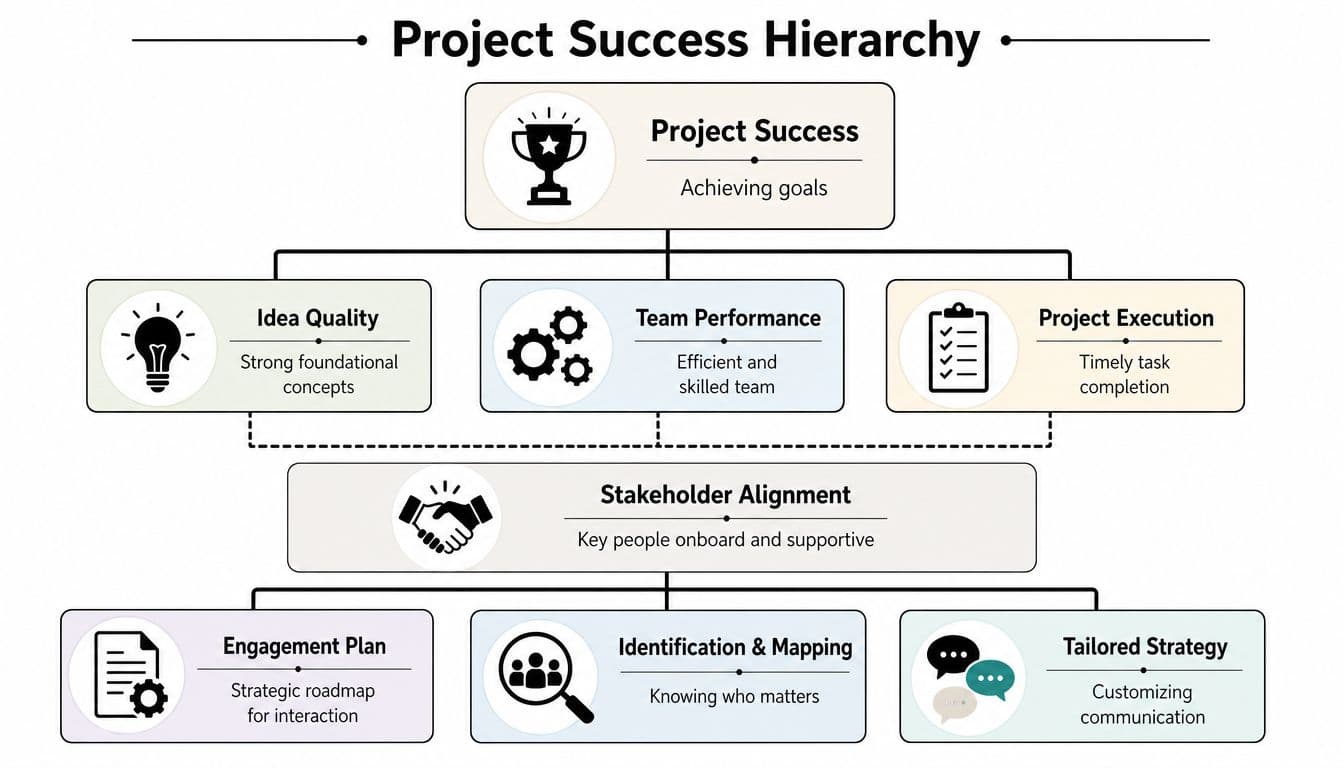
The significance of that gap is often underestimated. The Project Management Institute formalized the Stakeholder Engagement Plan as a core project document, and projects with active stakeholder engagement saw a 40% higher success rate. The same PMI-backed reporting found that 72% of highly performing organizations had formalized engagement plans, versus 35% of low-performing ones (PMI stakeholder engagement data summarized here).
What a to-do list misses
A to-do list tracks deliverables. A stakeholder engagement plan tracks relationships, influence, expectations, and decision timing.
Those are not soft concerns. They determine whether people approve budgets quickly, show up to reviews prepared, flag risks early, and defend the project when pressure rises. A weak plan leaves all of that to improvisation, and improvisation usually shows up as late escalation.
Here's what I see go wrong most often:
- Wrong people consulted too late. Teams ask for input after the decision is already emotionally locked.
- Too much generic communication. Everyone gets the same update, even though their concerns are completely different.
- No ownership for stakeholder work. Somebody assumes the sponsor will handle resistance. The sponsor assumes the project manager will.
- No mechanism for change. A stakeholder shifts from supportive to skeptical, but the plan never catches up.
Practical rule: If someone has the power to delay your project, reshape its scope, or undermine adoption, that person belongs in your plan long before they show up as a problem.
What a useful plan actually does
A useful stakeholder engagement plan is not a compliance artifact. It's a decision tool.
It answers a few blunt questions. Who matters most right now. What do they care about. What outcome do you need from them. How often should you engage them. Who owns that contact. What signal tells you the relationship is improving or deteriorating.
When teams work this way, scope discussions get clearer. Approval cycles tighten. Resistance becomes visible before it hardens. You stop treating stakeholder management as “communication” and start treating it as part of delivery.
Finding Your People by Identifying and Mapping Stakeholders
It's easy to name the obvious stakeholders in a minute. Sponsor. Project team. Leadership. Customer. That's not enough.
The people who shape project outcomes are often one layer out from the obvious list. Compliance reviewers. The team that has to support the product after launch. Contractors who depend on clear handoffs. Internal gatekeepers who don't own the project but can stall it. Sometimes the most important stakeholder is the quiet manager who controls access to operational data or frontline staff.
Start with a wider sweep than feels necessary
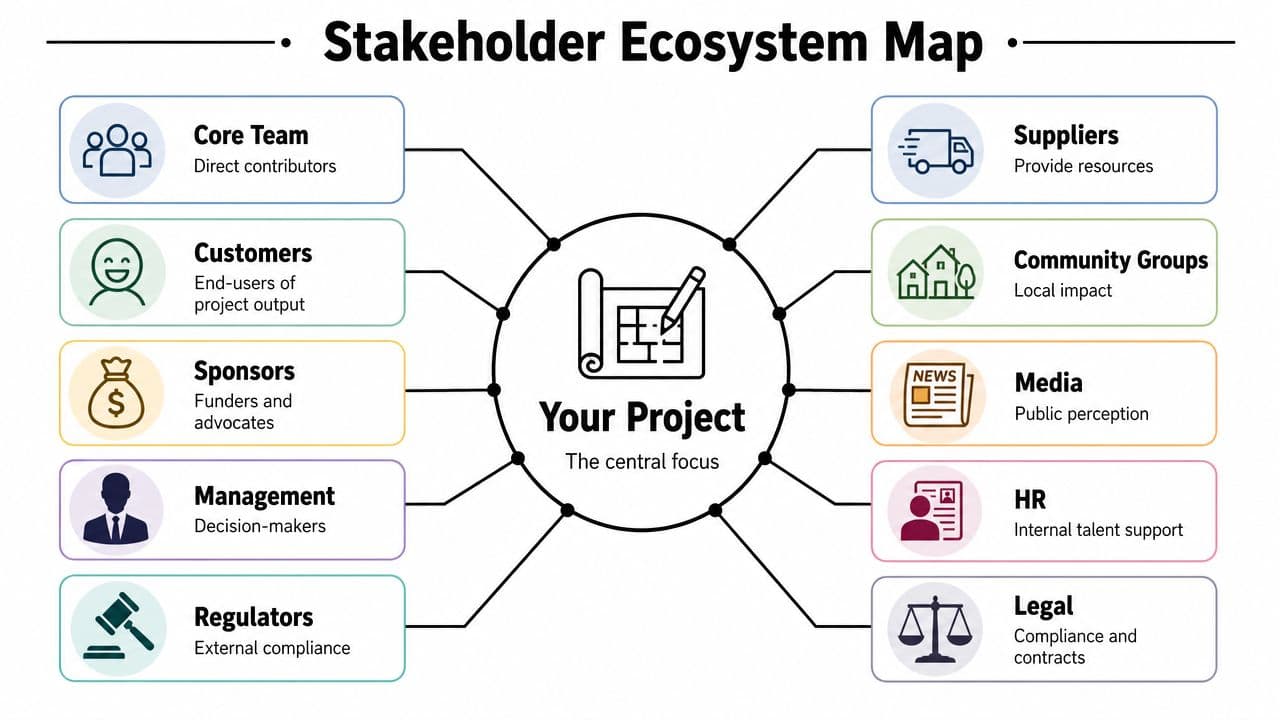
I usually begin with one question: Who can affect this project, and who will feel the effect of this project?
That produces a better list than “who's on the org chart.” Use a working session and force the team to think across categories:
- Decision-makers. Sponsors, budget owners, functional heads, steering committee members.
- Delivery actors. Project team, engineering, design, operations, vendors, implementation partners.
- Impact groups. End users, support teams, sales, customer success, field staff, contractors.
- Control points. Legal, security, compliance, procurement, HR, regulators.
- Peripheral but influential voices. Community groups, partner organizations, internal critics, executive assistants who manage access and agenda flow.
Don't clean the list too early. Over-inclusion is easier to fix than discovering a missing stakeholder in week ten.
A strong stakeholder engagement plan also needs a matrix sorted by influence and interest, with each stakeholder placed on that grid to determine priority, channel, frequency, and a measurable engagement goal such as approval, support, or feedback (guidance on the influence-interest matrix).
Plot people on the influence-interest grid
Once the list is broad enough, the matrix turns noise into priorities. Use a simple two-axis grid:
| Influence | Interest | Typical handling |
|---|---|---|
| High | High | Manage closely |
| High | Low | Keep satisfied |
| Low | High | Keep informed |
| Low | Low | Monitor lightly |
That sounds basic. The value comes from forcing real judgment.
A CFO may have high influence and low day-to-day interest until budget drift appears. A support lead may have lower formal influence but very high interest because the team will absorb fallout after launch. A regulator may have intermittent interest but very high influence at specific checkpoints. The map should reflect project reality, not titles.
Here's a simple template to start with.
| Stakeholder Name | Role | Influence (Low/High) | Interest (Low/High) | Engagement Goal |
|---|---|---|---|---|
| Executive Sponsor | Funding and escalation support | High | High | Maintain active backing |
| Head of Operations | Process owner | High | High | Gain approval for rollout approach |
| Legal Counsel | Contract and compliance review | High | Low | Prevent late-stage objections |
| Customer Support Lead | Post-launch support | Low | High | Gather implementation feedback |
Use the grid to make choices, not decorate a slide
The matrix only helps if it changes your behavior.
For high-influence, high-interest stakeholders, schedule direct conversations. Don't rely on broad status emails. These people need context, trade-offs, and a chance to shape key decisions early.
For high-influence, low-interest stakeholders, protect their attention. Give concise updates tied to risk, budget, and decisions needed. Too much noise can create irritation where there was none.
For low-influence, high-interest stakeholders, make input easy. These groups often provide the most practical warning signs. If you ignore them, the project can look healthy in steering meetings while implementation breaks down unseen.
For low-influence, low-interest stakeholders, monitor but don't over-engineer. They still belong in the register. They just don't need constant active management.
A communication framework helps turn the matrix into working routines. If you need a companion structure for message cadence and channels, this project communications plan template is a useful next document to pair with the stakeholder map.
A quick walkthrough can help if your team hasn't built one of these before.
The point of mapping isn't to label people. It's to decide where your time creates the most movement.
From Mapping to Action with a Tailored Engagement Strategy
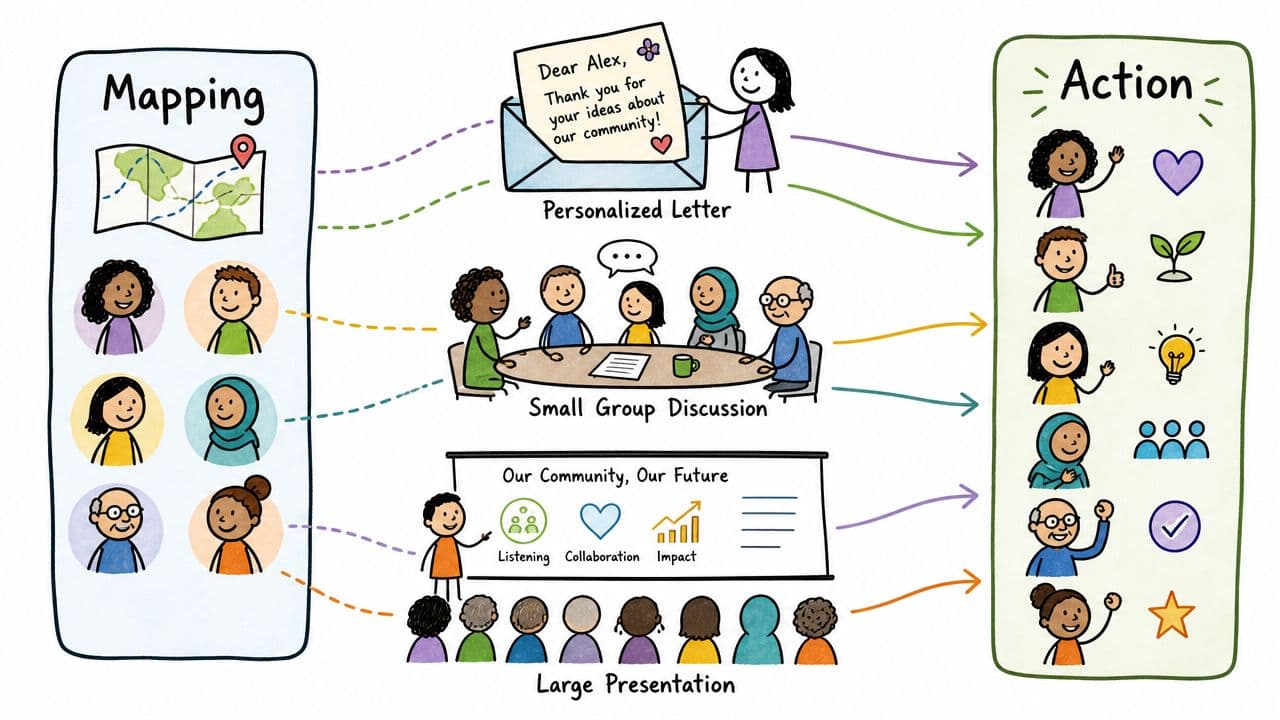
Once the map is done, the critical work starts. It is at this point that many teams collapse back into generic updates, because customization takes thought and discipline. But one-size-fits-all communication is one of the fastest ways to lose credibility.
Organizations that excel at stakeholder plans are 40% more likely to deliver projects on time and within budget, and 83% of successful projects recognize that different stakeholders have unique interests and communication preferences (stakeholder customization findings). That lines up with what happens in practice. People engage when the message speaks to their concerns, not yours.
Match the tactic to the quadrant
The influence-interest grid should drive engagement style.
Manage closely
These stakeholders need direct access, not polished summaries. Think sponsor, business owner, department head, or client lead. Use live briefings, short decision memos, and focused working sessions.
What works:
- Decision framing. Present options, risks, and recommendation.
- Predictable cadence. Weekly or milestone-based touchpoints.
- Early escalation. Raise concerns before they become political.
What doesn't:
- Long decks with no clear ask.
- Surprise issues in formal meetings.
- Hiding disagreement until the deadline is near.
Keep satisfied
These stakeholders don't want constant detail. They want confidence that the project is under control and won't create downstream trouble for them.
Useful methods include concise email updates, short steering notes, and pre-read summaries before approval points. Lead with business impact, not team activity.
Keep informed
This group often includes end users, support teams, or internal partners who care a lot but don't hold final authority. They can become advocates or critics depending on how you treat them.
Use demos, walkthroughs, office hours, FAQs, asynchronous updates, and feedback forms. Keep the language practical. Skip jargon and strategy theater.
Monitor lightly
Don't ignore them. Just don't spend prime stakeholder time where the return is low. Monthly updates or milestone notices are usually enough unless their position changes.
Tailor channel, frequency, and tone
The same update can fail for three different reasons. Wrong channel. Wrong timing. Wrong tone.
A skeptical operations leader usually responds better to a working session than a celebratory launch message. An enthusiastic early adopter might love a pilot invite and a Slack channel. Legal may prefer a clearly bounded review packet. Neurodivergent team members or less-vocal stakeholders may contribute more thoughtfully in asynchronous formats than in crowded meetings.
That's one reason broad inclusion language isn't enough on its own. Accessibility and participation style matter. If your project struggles with buy-in at the goal-setting level, this piece on addressing OKR failure points is worth reading because it shows how misaligned expectations and weak involvement create execution problems later.
Field note: If a stakeholder keeps “not engaging,” first question the format. Silence often means the channel is wrong, the ask is vague, or the person doesn't feel safe challenging the room.
Set an engagement goal for each person
Every important stakeholder should have one clear outcome attached to them. Not a vague relationship objective. A concrete result.
Examples:
- Approval of budget revision
- Willingness to pilot the new process
- Public support in steering review
- Fast turnaround on compliance questions
- Honest feedback from frontline users
This changes how conversations are designed. If you need approval, ask for approval. If you need surfaced risk, create a format where criticism is welcome. If you need advocacy, give the stakeholder enough context to defend the project credibly.
Making It Happen with Clear Roles and Timelines
A stakeholder engagement plan deteriorates when ownership is fuzzy. Everyone agrees stakeholder management matters, but nobody knows who is supposed to brief the sponsor, collect user feedback, chase legal review, or follow up after a difficult steering meeting.
Execution needs named owners, deadlines, and visible follow-through.
Assign work the same way you assign deliverables
Treat stakeholder tasks as real project tasks. Put them in the schedule. Give them owners. Attach due dates and expected outcomes.
A simple responsibility matrix works well here. You don't need to make it academic. You need to stop confusion.
For example:
- The project manager owns the weekly sponsor update.
- The product lead runs the monthly user demo.
- The operations manager gathers frontline process concerns.
- The executive sponsor handles peer-level escalation with resistant department heads.
If you don't define this, engagement becomes an orphaned responsibility. That usually means only the loudest stakeholder gets attention.
A practical RACI setup helps keep this straight. If your team needs a starting point, this RACI matrix template is a solid reference for assigning who is responsible, accountable, consulted, and informed.
Put engagement milestones into the project timeline
At this point, good strategy becomes operational.
Don't keep stakeholder activity in a separate document no one opens after kickoff. Build it into the actual project flow:
- Pre-decision briefings before scope approval
- User input sessions before design freeze
- Legal review before vendor commitment
- Operations sign-off before rollout
- Sponsor alignment before steering committee milestones
A plan gets stronger when these moments are sequenced, not improvised. The handoff matters too. If one team is collecting stakeholder signals and another is making decisions, you need a routine for feeding that insight into the work.
Use lightweight structure, not bureaucracy
Some teams overcorrect and create a giant stakeholder administration machine. That's not better. You want just enough structure to make the work visible and repeatable.
A simple operating rhythm usually works:
- Review the stakeholder list in the weekly project meeting.
- Note changes in sentiment, influence, or risk.
- Confirm upcoming engagement actions and owners.
- Log decisions, objections, and follow-up.
Teams using platforms like monday.com often build this into a shared workflow with reminders and ownership fields. If you're formalizing that process at scale, Wisely's monday.com services offer a useful example of how organizations operationalize recurring coordination work.
One hard lesson: a stakeholder task without an owner is the same as a stakeholder risk with no mitigation plan.
Make room for judgment
Not every stakeholder issue belongs in a template. Some need discretion.
A sponsor may need a private heads-up before a contentious meeting. A hesitant leader may need one candid conversation, not six automated check-ins. A burned-out team may need shorter updates and clearer asks. Good project managers know when to follow the grid and when to read the room.
That's why the best stakeholder engagement plans are structured but not rigid. They tell the team who matters, what needs to happen, and when. They still leave room for human judgment.
Measuring What Matters and Adapting on the Fly
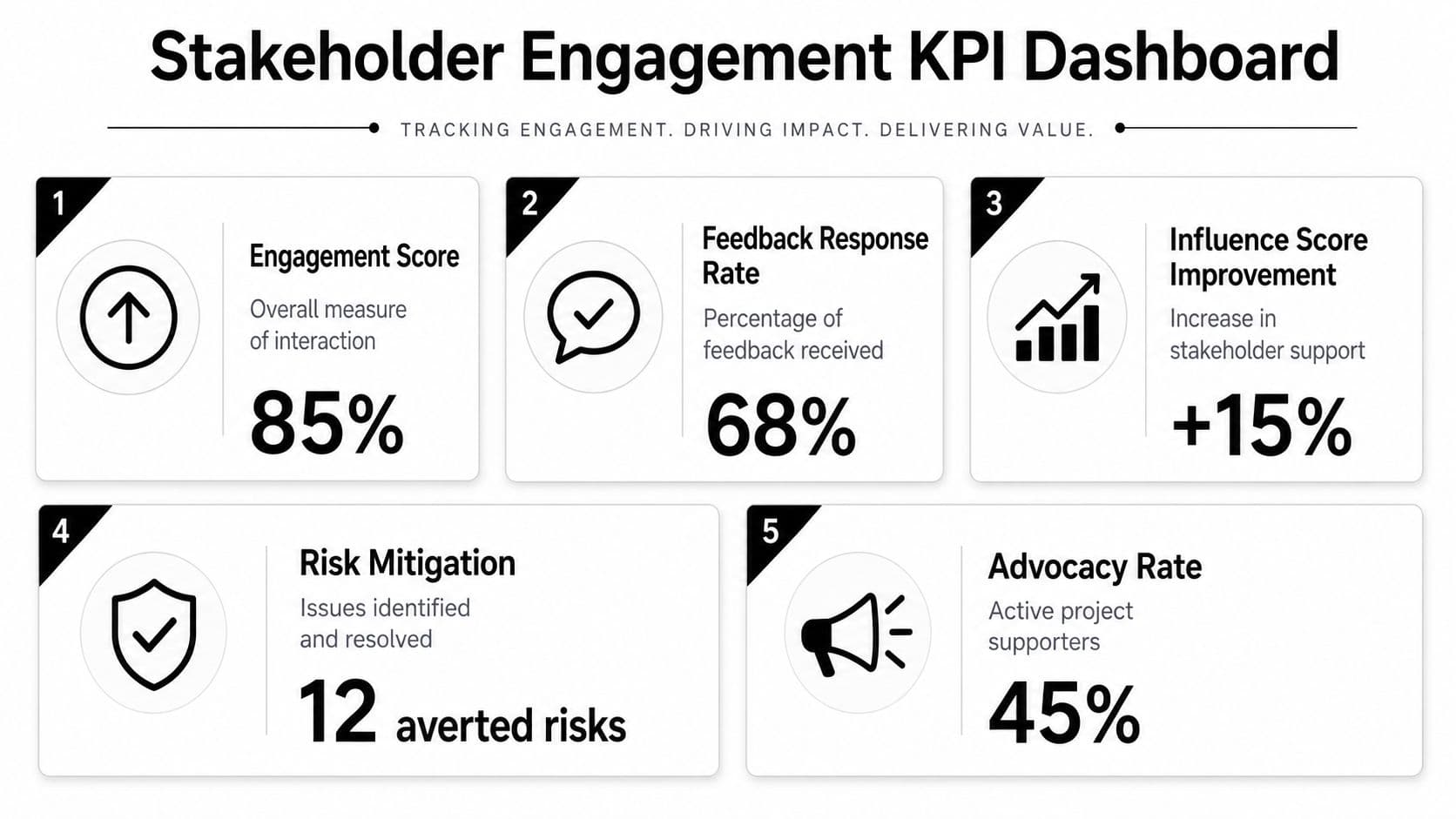
A stakeholder engagement plan earns its keep when you can tell whether it's working. Not whether updates were sent. Whether resistance is dropping, approvals are moving, and useful input is getting adopted.
Projects with defined engagement timelines and responsibility matrices achieve a 52% reduction in delays caused by stakeholder resistance, and structured engagement plans can increase adoption of stakeholder recommendations from 18% to 43% (engagement effectiveness data).
Track signals that change decisions
The wrong metrics create false comfort. Counting meetings or email sends tells you almost nothing.
Track indicators like these instead:
- Approval speed. Are key decisions clearing faster or getting stuck longer?
- Resistance patterns. Which stakeholder groups are raising objections repeatedly, and at what stage?
- Feedback quality. Are you getting actionable input or polite silence?
- Recommendation adoption. Which stakeholder suggestions are changing project decisions?
- Escalation frequency. Are issues surfacing early, or only when they're already blocking work?
If you want a broader framework for operational KPIs, this guide to project tracking metrics is a practical companion.
Review the map like conditions have changed
Because they probably have.
A stakeholder who was neutral last month may now be under pressure from leadership. A quiet user group may become vocal after seeing a prototype. A low-interest executive may suddenly care once budget, risk, or public visibility shifts. Agile environments expose this constantly.
One of the biggest gaps in textbook guidance is that teams build a stakeholder register once and stop revisiting it, even though influence and sentiment move during the life of the work. In real projects, those shifts are normal.
A useful review cadence asks:
- Who gained influence since the last review?
- Who lost interest or stopped responding?
- Who became a risk?
- Who became an advocate?
- Which communication methods are producing actual response?
Good stakeholder management isn't about having the best kickoff workshop. It's about noticing when the map is no longer true.
Close the loop on feedback
Stakeholders disengage when they feel consulted but not heard. If you ask for input, show what changed, what didn't, and why.
That's also where ROI thinking becomes helpful. Community and support models often do a better job than project teams at tying participation to outcomes. This piece on understanding community ROI is useful because it focuses on measuring value from engagement instead of just activity.
A living stakeholder engagement plan keeps this cycle going. Listen. Assess. adjust. Re-engage. That's what separates a project that survives friction from one that keeps stepping into preventable resistance.
Conclusion Your Blueprint for Project Success
The strongest projects don't win because the Gantt chart was beautiful. They win because the people with influence, insight, and legitimate concerns were brought in at the right moments, in the right way, for the right reasons.
That's why a stakeholder engagement plan should be treated as a living operating document, not a kickoff attachment. A rigorous approach follows a dynamic three-step method: continuously maintain the stakeholder map, frequently reprioritize key stakeholders, and actively develop their commitment. That iterative model is central to adapting when influence or support shifts during the project (PMI guidance on dynamic stakeholder engagement).
If you remember one thing, make it this: stakeholder management is not extra admin layered on top of project delivery. It is project delivery. The work moves faster when the right people are aligned, and it gets painful when they aren't.
Build the plan early. Update it often. Use it to make better calls when the project changes, because it will.
If you want a simpler way to keep stakeholder follow-ups, approvals, and communication tasks from slipping, Fluidwave can help you turn that work into visible, assigned action. It's especially useful when your project has lots of moving parts and the human side of delivery needs the same discipline as the task list.
Focus on What Matters.
Experience lightning-fast task management with AI-powered workflows. Our automation helps busy professionals save 4+ hours weekly.