Discover how project management software for solopreneurs can simplify tasks, streamline client work, and reclaim your time.
February 15, 2026 (8mo ago)
Discover project management software for solopreneurs: Boost Focus & Efficiency
Discover how project management software for solopreneurs can simplify tasks, streamline client work, and reclaim your time.
← Back to blog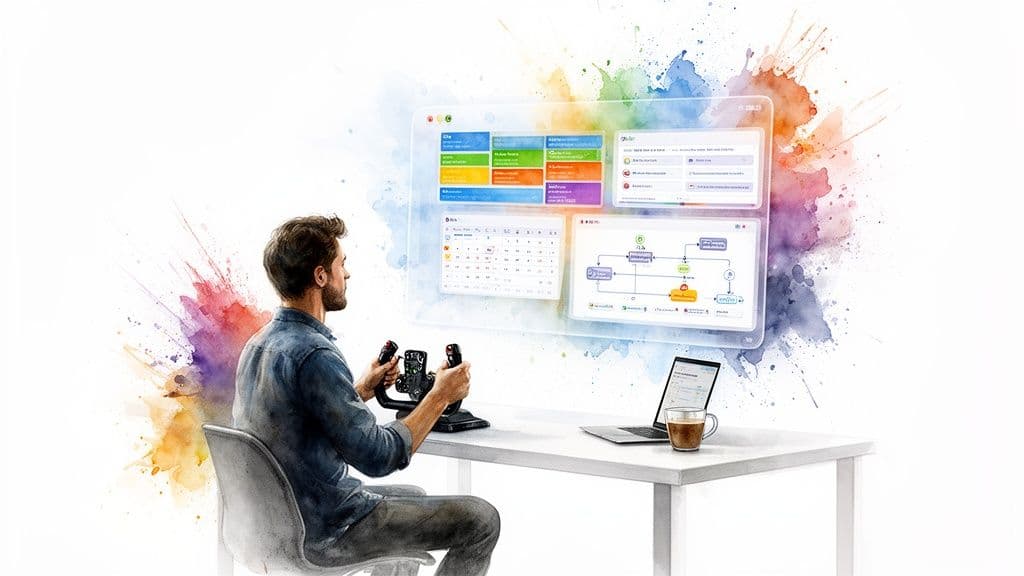
Solopreneur PM: Boost Focus & Efficiency
As a solopreneur, you wear many hats. A robust project management tool becomes your central command center, turning scattered notes into a cohesive, scalable system that saves time and keeps clients happy.
Why Your To-Do List Is Holding You Back
When you're a one‑person show, you're not just the CEO; you’re the marketer, the accountant, and the person actually doing the work. In the beginning, a few sticky notes or a basic task app might seem to do the trick. But as your client list grows and projects become more complex, that simple system starts to crack.
Think of it like being a solo pilot. At first, you can get by with a compass and a clear view of the horizon. But as you start flying longer routes through unpredictable weather, you need a full dashboard with advanced navigation, not just a simple needle pointing north. Relying on scattered notes and a jumble of apps is like flying blind in a storm—it’s a recipe for missed deadlines, unhappy clients, and serious burnout.

From Simple Lists to a Strategic System
For any serious solopreneur, real project management software isn't a luxury; it's a necessity. It’s about creating a single source of truth for your entire operation so nothing ever falls through the cracks. It's the critical difference between constantly putting out fires and proactively managing your workflow. If you want to get a better handle on structuring your tasks, these to-do list examples are a great starting point.
This kind of software becomes a strategic partner. It’s built to handle the complexity that even a one-person business generates, helping you see a project through from the initial client email to the final invoice without losing your mind. The goal is to build a system that supports your growth, not one you constantly have to fight. For those ready to level up, understanding the benefits of a more dynamic approach is key. You can learn more about how Kanban vs To-Do Lists can seriously upgrade your productivity.
The Real Cost of Disorganization
Sticking with a makeshift system has real costs. When your tasks are scattered across notebooks, buried in email threads, and spread across various apps, you waste valuable time and mental energy just figuring out what to do next. That mental clutter leads to decision fatigue and makes it impossible to get a clear, high-level view of your business's health.
A proper project management tool isn't an expense; it's an investment in your sanity and scalability. It gives you the structure to go from an overworked freelancer to a business owner who is in control.
Ultimately, this software gives you the framework you need to succeed for the long haul. It helps you:
- Centralize Communication: Keep all client notes, files, and feedback neatly organized in one spot.
- Automate Tedious Work: Set up recurring tasks, reminders, and workflows to free up your brainpower.
- Gain Financial Clarity: Easily track billable hours and see which projects are actually profitable.
By adopting a robust system, you’re not just getting organized. You’re building a resilient foundation that lets you scale your business efficiently and, most importantly, reclaim your time.
Key Software Features Every Solopreneur Needs
Picking the right project management software is like outfitting a one-person workshop. You don’t need a massive industrial press; you need a versatile, reliable multi-tool that does exactly what you need, without the clutter. It’s about finding the core features that solve the real-world problems of a solo business, not getting sidetracked by enterprise-level gadgets you’ll never touch.
This isn't just about making better to-do lists. It's about building a central command center that’s wired to work the way your brain works.

Intuitive Task Management with Multiple Views
Your brain doesn’t operate in spreadsheets, so your project tool shouldn't either. The best platforms let you look at your work from different angles, allowing you to switch views based on what you need to focus on at any given moment. This is a game-changer for staying clear-headed and moving forward.
The ability to see the same tasks through different lenses—a timeline, a board, or a simple list—is what turns a static to-do list into a dynamic project dashboard. It adapts to you, not the other way around.
This adaptability is especially critical for solopreneurs who are constantly shifting gears. You might be juggling a long-term client retainer, a short-burst marketing project, and your own business admin all at once. The right software brings it all together in one place without feeling overwhelming.
Effortless Time Tracking and Invoicing
As a solopreneur, your time is your inventory. If you're not tracking it accurately, you're pretty much giving it away for free. Manually logging hours in a clunky spreadsheet is a recipe for lost billable time and underpriced projects. A built-in time tracker is non-negotiable.
Look for a tool where you can start a timer right from the task you're working on. This creates a rock-solid, accurate log of every minute you spend. When it’s time to get paid, the software should instantly pull all that tracked time into a professional invoice. This feature alone can save you hours of admin agony every single month.
The payoff goes way beyond just billing correctly:
- Profitability Analysis: You can finally see which clients or project types are your real money-makers, helping you price future work with confidence.
- Scope Creep Prevention: When a client asks for "just one more little thing," a detailed time log gives you the data to politely and professionally push back or add it to the bill.
- Improved Estimations: With a backlog of real data, your quotes and proposals become incredibly accurate, which builds major trust with clients.
Automation and Smart Integrations
The real magic of modern project management tools is their ability to automate the monotonous, low-impact tasks that suck up your day. Think of it as your own personal robot assistant, quietly handling the busywork in the background.
For example, you can set up simple rules that:
- Generate recurring tasks for things like sending monthly reports or posting on social media.
- Shoot off automatic reminders to clients about an upcoming invoice due date.
- Move a task to your 'Done' column the moment you attach the final deliverable.
Beyond the tool itself, integrations are what tie your entire business together. Your project hub should talk to your other essential apps—like your email, calendar, and accounting software. This creates a single, smooth workflow where information moves automatically, killing off manual data entry and cutting down on mistakes.
This push for efficiency is why the project management software market is projected to hit an incredible USD 9.1 billion by 2030, with small businesses and solopreneurs leading the way. As more of us ditch outdated methods for smarter systems, the right tool becomes less of a luxury and more of a necessity. You can find more insights on this market growth at ERP Today 1.
A Smart Solopreneur's Guide to Delegation
Scaling your business doesn’t have to mean hiring a full-time employee. For most solopreneurs, the mere thought of payroll, benefits, and the legal red tape of hiring is enough to cause a headache. Yet, you'll eventually hit a wall where you simply can't do it all yourself.
This is where smart delegation comes in, and your project management software is the key to getting it right. It’s not about finding a co-pilot; it’s about strategically handing off specific flight duties so you can keep your hands on the yoke. Think of your software as the central hub for working with virtual assistants (VAs), freelancers, or specialized contractors.
Turning Your Software into a Command Center
The biggest roadblock to delegation isn't finding someone to help—it’s making sure they do the work correctly without you having to look over their shoulder every five minutes. A good project management software for solopreneurs is built to solve exactly this problem by giving you the structure to hand off tasks clearly and confidently.
With the right setup, you can stay in complete control while strategically buying back your time. The whole process feels less like you're giving up control and more like you're extending your capabilities in a smart, managed way.
You can dive deeper into bringing on this kind of help by reading our guide on how to use a virtual assistant to grow your business.
A few key features make this possible:
- Clear Task Assignments: Assign tasks directly to a contractor’s profile, so there’s never any confusion about who owns what.
- Firm Deadlines: Attach a due date to every task you delegate. It automatically shows up on their calendar and sends reminders, so you don't have to.
- Secure File Sharing: Drop all the necessary documents, briefs, or brand assets right inside the task itself. Everything stays in one neat place.
- Permission Levels: Grant contractors access only to the projects or tasks they need to see, keeping the rest of your business information private and secure.
A Modern Approach to Getting Help
This kind of system turns delegation from a scary, permanent commitment into a flexible, powerful tool for growth. It's no longer an all-or-nothing decision to hire someone. Instead, it becomes a fluid strategy where you bring in expert help exactly when and where you need it.
Delegation through project management software is like having a specialist on call. You don't keep a full-time surgeon on staff, but you can bring one in for a specific procedure and trust them to work their magic within a controlled environment.
This model is where modern platforms really shine. Some tools, like Fluidwave, build this idea right into their workflow. They don't just give you the tools to manage a VA you found on your own; they can connect you to a network of vetted professionals.
Imagine you need someone to do market research for a new service or to schedule your next month of social media posts. You can create the task on your project board, define the scope and budget, and then delegate it to a skilled assistant on a pay-per-task basis. You only pay for the work that gets done, which completely removes the overhead and risk of a long-term contract.
This approach flips the old way of delegating on its head. It makes getting help accessible, affordable, and incredibly efficient, letting you scale your output without scaling your payroll.
Choosing a Plan That Scales with Your Business
When you're shopping for project management software, it's tempting to let the price tag make the final call. But as a solopreneur, grabbing the cheapest option is rarely the best long-term play. Think of it like buying your first real car; you're not just looking at the sticker price. You're thinking about gas mileage, maintenance costs, and whether it can handle the big road trips you're planning for the future.
You need a tool that grows with you, not one that puts the brakes on the moment you start picking up speed.
Looking Beyond the Initial Price Tag
Pricing models for these tools can be a real headache. You’ve got your freemium plans, per-user subscriptions, and a dozen other variations. The trick is to dig a little deeper and ask the right questions before you lock yourself into a contract.
Before you commit, here's what you should be asking:
- Is the free plan actually useful? A good "free forever" plan should give you the core tools to manage your current workload without making you feel like you're constantly hitting a paywall.
- What happens when my business doubles? That cheap introductory plan can get expensive fast. You might find that essential features like automation or key integrations are locked behind a pricey upgrade you'll desperately need down the line.
- Am I paying for seats I don't need? So many PM tools are built for teams, and their pricing reflects that. You end up paying for empty seats, which is a total waste for a one-person operation.
Thinking this way is absolutely critical. After all, independent contractors are a huge reason the project management software market is booming, with projections showing it will hit USD 23.09 billion by 2031. Solopreneurs are finally ditching clunky spreadsheets for smarter tools that let them automate work and scale effectively. You can read more on these project management market trends to see just how much solopreneurs are shaping the industry 2.
A Financially Sound Path to Growth
This is where you can find a real edge. Instead of getting shoehorned into a plan built for a 20-person team, look for project management software for solopreneurs that offers a more sensible model. A rigid monthly subscription that hits your bank account whether you’re swamped or slow just doesn’t make sense.
A pricing model built for solopreneurs shouldn't be a hurdle to your growth. It should be a launchpad, giving you access to premium tools without the enterprise-level financial commitment.
This is exactly the problem platforms like Fluidwave were built to solve. The "free forever" plan is genuinely powerful—it's designed to be the complete command center for your solo business. Then, when you're ready to bring on some help, the model adapts. You can delegate work to vetted assistants and pay per task, only spending money on work that actually gets done.
It's truly the best of both worlds. You get a robust, free tool to run your business day-to-day, plus a scalable, affordable way to get help when you need it. It’s a smart financial path that lets you invest in growth on your own terms, without getting trapped in expensive subscriptions built for a completely different kind of business.
How to Set Up Your System for Maximum Productivity
Picking the right project management tool is a great first step, but the software is only as good as the system you build around it. This is where the real work—and the real payoff—begins. A powerful tool without a thoughtful setup is like a high-performance engine sitting on the garage floor. It has all the potential in the world, but it isn’t going anywhere.
The trick is to configure your system to do the heavy lifting for you, wiping out repetitive thinking and manual chores. Your goal is to turn it into a true partner in productivity, built on repeatable processes you can fire up with a single click.
Build Your Foundational Templates
Templates are the not-so-secret weapon of every highly efficient solopreneur I know. Instead of reinventing the wheel for every new client or project, you create a master blueprint of all the necessary tasks. Then, you just duplicate and customize it as needed. This simple habit doesn't just save an incredible amount of time; it also makes sure you never miss a critical step.
Start by mapping out your most common workflows. If you're a marketing consultant, a go-to template might be "New Client Onboarding."
- Task 1: Send Welcome Packet & Contract
- Task 2: Schedule Kick-off Call
- Task 3: Request Access to Analytics & Social Accounts
- Task 4: Create Shared Client Folder in Google Drive
For a content creator, a "New Blog Post" template could cover everything from brainstorming and outlining to drafting, editing, and scheduling the social media promotion. This kind of structured approach builds consistency and a sense of professionalism into every corner of your business.
Unleash the Power of Automation
This is where your project management software really starts to work for you. By integrating practices like business process automation, you can set up simple "if-this-then-that" rules to handle tasks that you'd otherwise have to manage manually.
For example, you could create a rule that automatically moves a task from the "In Progress" column to "Ready for Invoice" the moment you mark it complete. Or maybe you set up an automation that assigns a follow-up task to yourself two weeks after a project ends, reminding you to ask for a testimonial. These small automations add up, saving you precious mental energy and preventing things from slipping through the cracks.
The growth in this space is telling. The project management software market, which was valued at USD 9.81 billion in 2026, is projected to skyrocket to USD 39.16 billion by 2035. That surge is largely driven by solopreneurs and small teams who need smarter tools with AI and automation to stay competitive.
Use AI to Overcome Decision Fatigue
One of the biggest energy vampires for any solopreneur is decision fatigue—that mental fog that rolls in after making countless small choices all day. Modern platforms like Fluidwave are designed to fight this with AI-driven features that help you focus on what actually matters.
Instead of staring at a massive to-do list and wondering where to even begin, an AI-powered system can auto-prioritize your day based on deadlines, task dependencies, and overall project importance. It’s intelligent guidance that cuts through the noise, letting you dive right into your most impactful work. To get a deeper look at building these kinds of workflows, check out our guide on creating personal productivity systems that actually stick.
This diagram shows how a solopreneur's software needs naturally evolve as their business grows.

The journey almost always starts with a solid free foundation, moves into a growth phase, and eventually leads to smart delegation—all supported by the central system you build from day one.
Frequently Asked Questions
When you're running the whole show yourself, diving into project management software can feel like just one more thing on your plate. Let's clear up some of the most common questions solopreneurs have when they’re looking for a tool to be their command center.
Is Project Management Software Overkill for One Person?
I get this question a lot. It's easy to think these tools are just for big teams managing massive, complex projects. But the truth is, a solopreneur is a one‑person team. You’re the marketer, the accountant, the project lead, and the customer service rep all rolled into one. That makes having a central system even more critical, not less.
Think of it less as managing a team and more as managing your work, your time, and your focus. The right project management software for solopreneurs doesn't add complexity; it cuts through the mental fog that comes from tracking everything in your head, in a dozen emails, and on a pile of sticky notes.
Can't I Just Use a Free Tool Like Trello or Asana?
Of course! Starting with a free tool is one of the smartest things you can do. Platforms like Trello or the free version of Asana are excellent for getting a handle on basic task and project tracking. They let you get a feel for what works for you without spending a dime.
The key is to keep an eye on their limitations as your business grows. Many free plans put a ceiling on features that end up saving you the most time, like advanced automation, built-in time tracking, or crucial integrations. A great strategy is to find a platform with a free plan that's powerful enough for you today, but that also has a clear, affordable upgrade path for when you land more clients.
How Much Should I Expect to Pay?
The price can be all over the map, but you'll see a few common pricing models. Many of the big names use a per-user, per-month subscription, which can sting when you’re the only user. Some of these plans run $10-$25 per user/month, but they often come with minimum seat requirements, effectively doubling the price for a solo operator.
Look for pricing that actually makes sense for a one-person business. A solid "free forever" plan is a great start, as is a model where you only pay for specific features—like delegation—when you actually use them.
This kind of approach lets you scale your capabilities without getting locked into a fixed monthly bill, giving you more flexibility as your business ebbs and flows.
What Is the Single Most Important Feature?
If I had to boil it down to one thing, it would be automation. As a solopreneur, your time isn’t just money—it's everything. Automation is the closest you’ll get to cloning yourself.
When you can set up simple rules—like automatically moving a task from "Done" to an "Invoice" list, or having recurring monthly reports generate themselves—you're freeing yourself from mind-numbing admin work. That's what gives you more time to spend on the high‑value activities that actually grow your business. Your software stops being a passive to-do list and becomes an active assistant.
Ready to stop juggling and start organizing? Fluidwave gives you a powerful, AI‑driven command center for free, with the flexibility to delegate tasks when you need to scale. Take control of your workflow and reclaim your focus today.
Get Started with Fluidwave for Free
Q&A
Q: Can project management software help a solo business run more smoothly?
A: Absolutely. A central system reduces scatter, automates repetitive work, and gives you visibility into your projects and finances.
Q: Should I start with a free plan?
A: Yes. A free plan allows you to test core features and ensure it fits your workflow before upgrading.
Q: How can I ensure my PM setup scales with growth?
A: Look for automation, time tracking, delegation capabilities, and pricing that scales with usage rather than forcing you into a larger team plan.
1.
Footnote 1: ERP Today, "Project management software market to reach USD 9.1B by 2030" ERP Today.
2.
Footnote 2: Mordor Intelligence, "Project Management Software Market Size & Trends" Mordor Intelligence.
3.
Footnote 3: Grand View Research, "Project Management Software Market Size, Share & Trends Analysis" Grand View Research.
Focus on What Matters.
Experience lightning-fast task management with AI-powered workflows. Our automation helps busy professionals save 4+ hours weekly.