Discover practical Pareto Principle examples in business, productivity, and tech. Learn to apply the 80/20 rule for massive results with actionable steps.
April 25, 2026 (5mo ago)
10 Pareto Principle Examples for 2026
Discover practical Pareto Principle examples in business, productivity, and tech. Learn to apply the 80/20 rule for massive results with actionable steps.
← Back to blog
Stop wasting effort on work that barely moves anything. The uncomfortable part is that this pattern isn’t just motivational advice. It shows up in economics, quality management, software, marketing, and publishing. Italian economist Vilfredo Pareto first observed in the 1890s that 80% of Italy’s land was owned by 20% of the population, a pattern later developed into the broader Pareto Principle and expanded by Joseph Juran into the idea of the “vital few” and the “useful many” or “trivial many” in this overview of Pareto’s original observation and later development.
That’s why the 80/20 rule keeps surviving trend cycles. It describes how value, risk, revenue, defects, and attention often concentrate. In practice, the principle shows up in places that matter to operators: a minority of customers often drives most revenue, a minority of bugs causes most failures, and a minority of posts drives most engagement. If you’re managing a team, a pipeline, or your own workload, that concentration is your advantage.
Many interpret the principle incorrectly, using it as an excuse to ignore detail. That’s not how this works. Instead, the effective approach is to identify the few actions that create outsized results, protect time for them, and systematize the rest. If you want to scale that approach, tools matter. A platform like Fluidwave can help you spot the high-impact work, route lower-value tasks for delegation, and keep your attention on the work that compounds. The same logic also applies to content systems, especially if you're building automated content creation workflows and need to separate vanity activity from real output.
1. 80/20 Rule in Task Management and Prioritization
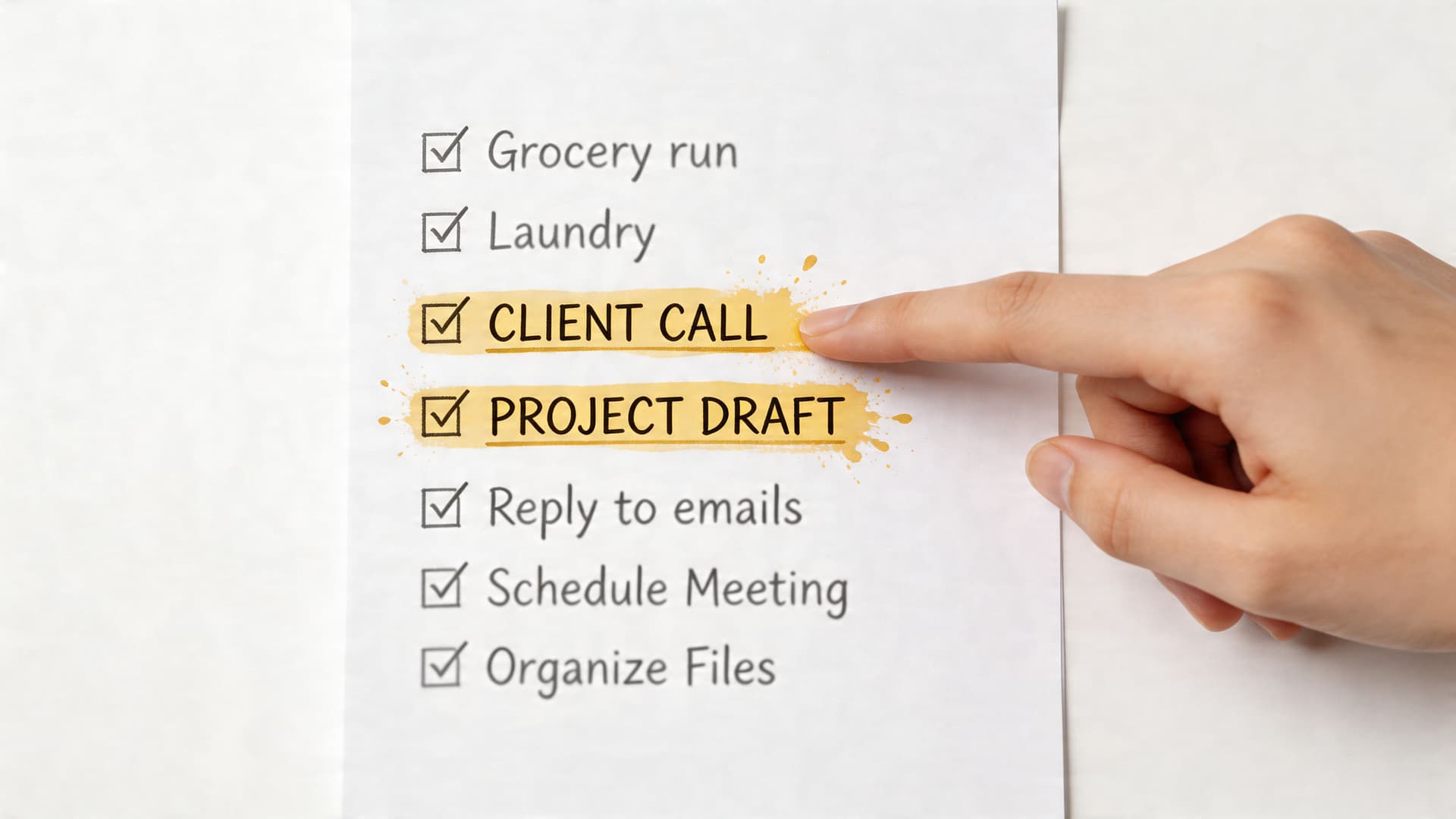
Most task lists are flat. Your business is not.
A founder might have fifty open tasks, but only a handful affect revenue, delivery, or decision speed. A project manager sees the same thing from another angle. A few unresolved dependencies or risks create most of the delay, while dozens of smaller tasks create noise and the illusion of progress.
What works in the real world
In task management, pareto principle examples are usually simple. Sales teams get more from the clients already showing buying intent. Operators get more from fixing the recurring blocker than clearing ten minor admin tasks. Marketers get more from the channel that already converts than from spreading effort evenly across every platform.
Fluidwave is useful here because it gives you more than one way to see work. In table view, score tasks by impact, urgency, and owner. In list view, keep the top group visible. If you want a practical framework, this guide on how to prioritize tasks effectively fits the 80/20 mindset well.
How to implement it in Fluidwave
- Tag the vital few: Mark tasks tied to revenue, deadlines, customer delivery, or strategic decisions.
- Delegate the useful many: Send repeatable admin, follow-up, formatting, and coordination work to assistants instead of letting it crowd your day.
- Review weekly: Re-rank the list. Yesterday’s priority often becomes today’s maintenance.
Practical rule: If a task doesn’t change an outcome, shorten it, batch it, automate it, or delegate it.
What doesn’t work is treating every overdue item as equally important. That’s how people stay busy and still miss the work that mattered.
2. Customer Concentration in B2B and B2C Businesses
A small slice of customers usually decides whether the quarter feels strong or weak.
That pattern shows up often enough that it changes how serious operators build service models. Harvard Business Review has written about the uneven profitability of customers and why companies need to understand which relationships create value, not just volume in its analysis of customer profitability. For a SaaS company, agency, retailer, or consultancy, this is one of the pareto principle examples that affects staffing, support design, retention work, and margin protection.

What smart operators do differently
They tier accounts on purpose.
High-value customers get named ownership, shorter response targets, and tighter follow-up around onboarding, renewals, and risk signals. Lower-value customers still get reliable service, but through standard workflows, self-serve resources, and delegated support. That trade-off keeps quality high where churn or expansion matters most, without letting service costs swell across the whole book of business.
I have seen teams miss this by treating every account like a top account. The result is predictable. Strategic customers wait in the same queue as low-margin accounts, account managers spend time on scheduling and recap work, and leadership assumes service is strong because everyone is busy.
Fluidwave helps turn the 80/20 idea into an operating system instead of a slide-deck insight. Create one workspace for priority accounts and another for general customer operations. Use Kanban stages for onboarding, renewal, open risk, expansion, and closed-loop follow-up. Add custom fields for account tier, contract value, renewal date, health status, and next decision-maker touchpoint so the team can sort work by business impact, not by whoever sent the latest message.
A practical setup looks like this:
- Separate priority accounts from the main queue: Give top-tier customers their own workflow with tighter SLAs and clear ownership.
- Trigger alerts around revenue risk: Flag overdue replies, slipping renewals, unresolved issues, or stalled onboarding for higher-value accounts first.
- Delegate repetitive account work: Hand off meeting recaps, document collection, scheduling, CRM updates, and prep tasks so account leads stay focused on retention and expansion.
- Review concentration monthly: Check whether the same accounts drive revenue, support load, and profit, then adjust coverage before small problems turn into churn.
What works is matching service intensity to customer value and customer risk. What fails is over-serving low-impact accounts while the customers funding growth get slower answers and less senior attention.
3. 80/20 Rule in Code Quality and Bug Fixes
Software teams learn this lesson fast. Not all bugs deserve equal urgency.
One of the clearest pareto principle examples comes from Microsoft. In an internal analysis, engineers found that 80% of errors and crashes in Windows and Office were caused by just 20% of the total bug pool, leading the team to focus code reviews and fixes on that critical slice as described in this write-up of the Microsoft example.

The trade-off most teams avoid
Teams often spread attention across cosmetic bugs, backlog cleanup, and edge-case defects because it feels thorough. Users don’t experience software that way. They feel the crashes, sync failures, broken handoffs, and unstable core flows.
If checkout fails, login loops, or task delegation breaks, that bug belongs near the top. A typo in settings does not.
How to use Fluidwave for bug triage
Use tags that separate bugs by user impact, recurrence, and affected workflow. Then schedule focused debugging blocks in calendar view rather than letting bug work leak into every sprint meeting. Junior team members or assistants can collect repro steps, duplicate issue reports, and prepare bug summaries before senior engineers step in.
Fix the failures users hit every day before you polish the defects they might never see.
What works is clustering issues by consequence. What doesn’t work is prioritizing by who complained loudest in Slack.
4. Marketing Channel and Campaign ROI Optimization
More channels rarely mean more growth. In practice, a small set of campaigns usually carries the revenue load, while the rest consume budget, reporting time, and creative attention.
Start with the media before the process:
What channel discipline looks like
A B2B team might see paid search and founder-led LinkedIn generate sales conversations, while display and broad social campaigns produce dashboard activity with no serious pipeline. An ecommerce brand may find that email and branded search keep driving repeat purchases, while constant experimentation on new platforms creates work without enough margin to justify it.
Good marketing teams accept that trade-off. They stop rewarding channel count and start rewarding contribution.
That is why strong pareto principle examples in marketing often look ordinary from the outside. The team commits to fewer channels, sharper creative, faster iteration, and cleaner measurement. If organic visibility is part of that mix, this breakdown of enterprise search strategy comparing AEO, SEO, and GEO helps clarify where search effort belongs.
Fluidwave becomes useful once channel focus turns into an operating system instead of a monthly opinion. Set up one project per channel. Add custom fields for campaign goal, spend range, owner, asset status, and outcome. Then review performance on a fixed cadence so proven channels keep their production slots and weak channels get reduced, paused, or handed off for lighter maintenance.
I have seen teams improve results just by removing hidden channel sprawl. They were not short on ideas. They were short on follow-through.
A practical setup looks like this:
- Assign one owner per channel: Accountability gets sharper when one person tracks output, cost, and result quality.
- Use calendar view for repeatable winners: Schedule production where consistency drives returns, especially for email, search content, and retargeting.
- Delegate low-judgment work: Uploads, QA, asset resizing, report prep, and UTM checks can be handed off without risking strategy.
- Review contribution, not just activity: Clicks and impressions matter less than qualified pipeline, repeat orders, or assisted conversions.
- Protect strategy time: Save your best thinking blocks for analysis and decision-making, then use a structure like this deep work scheduling approach for focused execution to keep optimization work from getting buried under campaign admin.
What fails is keeping weak channels alive because nobody wants to cut an old experiment. Strong teams prune early, document what they learned, and move resources to the channels that keep proving they deserve more.
5. Time Management and Deep Work Focus
Your best hours are not average hours.
People often talk about time as if every hour has the same value. In practice, a few blocks of concentrated work create most of the meaningful output. Writers know which sessions produce clean pages. Developers know when they can solve architecture problems without interruption. Executives know that some meetings create decisions, while others preserve motion.

Protect the hours that produce
People sabotage themselves. They do so by identifying their strongest work window, then fill it with inbox maintenance, approvals, and low-stakes calls.
A better approach is to reserve that block for hard thinking and hard production. Fluidwave fits well because the interface is built around task clarity and reduced friction. Pair that with scheduled focus blocks and a clear handoff process for interruptions. If you want a stronger operating model for this, the deep work summary on the Fluidwave blog gives a practical starting point.
A simple 80/20 time setup
- Schedule difficult work first: Put writing, planning, coding, or analysis into your highest-energy block.
- Move interruptions elsewhere: Delegate scheduling, routine replies, and document prep.
- Track patterns: Review which blocks produced finished work, not just occupied time.
Most people don't need more time. They need fewer low-value claims on their best attention.
What doesn’t work is trying to “squeeze in” important work after the day has already been fragmented.
6. Project Risk Management and Issue Resolution
Projects rarely fail from every risk at once. A small cluster usually does the damage.
In manufacturing, General Motors used Pareto analysis to identify that 20% of its factories produced 80% of total vehicles, which made it easier to target resources where output and operational advantage were concentrated in this GM example focused on Pareto-based optimization. The same logic applies to project risk. A minority of dependencies, suppliers, approvals, or scope decisions usually drives most delivery pain.
Where project managers go wrong
They build giant risk registers and then treat every line item as if it deserves the same attention. That creates administrative comfort, not control.
A more useful approach is to rank risks by consequence. If one external dependency can stall launch, legal review, or product readiness, that item belongs in active management. Minor uncertainties can sit in a monitored lane until their impact changes.
Fluidwave works well here because a risk register can live as an active workflow instead of a dead spreadsheet. Use tags for impact, owner, and trigger condition. Put high-risk items into Kanban with visible mitigation stages. Schedule weekly review points and assign assistants to collect updates from stakeholders before the meeting.
If your team needs a stronger process around escalation and contingency planning, this article on risk mitigation planning is worth reviewing.
What works is active surveillance on the few risks that can derail the whole project. What doesn’t work is drowning the team in equal-opportunity risk theater.
7. Employee Productivity and Performance Variance
Managers get into trouble when they pretend contribution is evenly distributed.
Some people reliably move work forward. They unblock others, write the hard proposal, close the messy issue, or clean up the process everyone avoids. Others are steady but limited to narrower execution. Both groups matter. The mistake is acting as if they should receive identical work design, coaching, and influence.
Use variance without creating resentment
The goal isn’t to worship top performers or ignore everyone else. The goal is to understand where the greatest impact lies, then build systems that raise the whole team.
In Fluidwave, track completion quality, cycle time, and ownership patterns at the task level. You’ll start to see who consistently handles ambiguous work well, who needs clearer scoping, and who could grow fast with better delegation. This guide on how to measure employee productivity is a practical reference if you want a cleaner measurement model.
A few ways to apply this without turning it into politics:
- Give high-impact people high-impact work: Protect them from routine churn.
- Pair emerging talent with strong operators: Use mentorship tasks around real work, not abstract training.
- Delegate stretch assignments intentionally: Growth often appears when ownership becomes visible.
What doesn’t work is loading your strongest people with every emergency until they become your bottleneck.
8. Content Strategy and Audience Engagement
A small slice of your content usually drives a disproportionate share of attention. Good content teams treat that as an operating rule, not a pleasant surprise.
On social platforms, a handful of posts often account for most meaningful engagement. The practical takeaway is simple. Stop judging content by volume alone. Study the posts that get comments, saves, shares, replies, and downstream clicks, then build your next cycle around the patterns that worked.
How to turn engagement into a repeatable process
High-performing teams do more than celebrate a winner. They examine why it worked. Topic matters, but so do format, hook, audience segment, timing, and the point of view behind the piece. In practice, I usually find that one of those variables does most of the work, and teams waste time when they try to replicate all of them at once.
Fluidwave gives content teams a practical way to run that analysis without turning it into a spreadsheet project. Tag each asset by theme, format, audience, funnel stage, and distribution channel. Use Kanban to move work through draft, review, edit, publish, repurpose, and distribution. Then assign the support work, research, transcript cleanup, clipping, image sourcing, scheduling, to assistants or junior contributors so the strategist stays focused on concept, positioning, and voice.
The best post is not a trophy. It is production guidance.
A workable implementation plan looks like this:
- Review the top performers monthly: Rank content by meaningful engagement, not vanity metrics alone.
- Identify the repeatable pattern: Separate topic from hook, format, timing, and audience so you know what to test next.
- Repurpose with intent: Turn one strong webinar clip into short video, a text post, an email angle, and a sales enablement asset.
- Kill low-yield formats faster: If a channel keeps consuming effort without producing engagement or pipeline value, reduce it.
- Track outcomes after publication: Measure comments, saves, click-throughs, and assisted conversions so you know which engagement matters.
What fails is publishing every format at the same frequency because the calendar says your team should be everywhere. Strong content strategy is selective. The 80/20 move is to find the few themes and formats that consistently earn attention, then use Fluidwave to systemize production around them.
9. Technical Debt and System Performance Optimization
Technical debt becomes expensive when teams spread fixes too broadly.
The better move is to hunt concentration. Slow systems usually have a few ugly roots: one overloaded query pattern, one brittle integration, one legacy module with too many side effects, one architectural shortcut nobody wanted to revisit. Teams know this intuitively, but they often avoid it because the root fix is politically harder than shipping small visible improvements.
Where to focus first
Start where users feel the pain and where engineers repeatedly spend cleanup time. Those areas are usually the intersection of business value and maintenance drag.
In Fluidwave, create a technical debt backlog with fields for user impact, recurrence, effort, and system dependency. Use Kanban for sequencing refactors and audits. Calendar view helps when you need protected maintenance windows that won’t get swallowed by feature work.
- Log recurring pain, not isolated frustration: Repeated incidents reveal concentration.
- Prioritize core flows: Authentication, billing, task sync, reporting, and integrations usually deserve earlier attention than edge features.
- Delegate routine monitoring: Let assistants or junior ops staff gather logs, summarize incidents, and prep maintenance checklists.
What doesn’t work is calling everything debt. If every issue is critical, nothing gets the sustained attention required to improve the system.
10. Expense Management and Cost Reduction
Cost reduction goes sideways when leaders cut broad categories before they understand concentration.
Some vendors, tools, subscriptions, and operating habits barely matter. Others carry a disproportionate share of spend, complexity, or renewal risk, making the Pareto mindset more useful than blanket austerity. You don’t need to squeeze everything. You need to inspect the few categories that shape the budget.
Better cost control without blunt-force cuts
Start with categories that combine high spend and low clarity. Cloud services, contractor stacks, software renewals, and fragmented vendor relationships usually deserve a closer look. Then separate spend that creates significant advantage from spend that survives by inertia.
Fluidwave can support this with expense review workflows. Create tasks by category or vendor, add custom fields for owner and renewal timing, and schedule quarterly review cycles. Delegated support can handle invoice collection, contract summaries, and first-pass variance checks before finance or leadership steps in.
A simple operating pattern works well here:
- Review major vendors first: Big contracts usually hide the best renegotiation opportunities.
- Attach ownership to each cost: Unowned spend tends to persist.
- Turn reviews into recurring tasks: Cost discipline fades when it depends on memory.
What doesn’t work is cutting small visible expenses while ignoring the few large commitments that shape the whole budget.
Pareto Principle, 10 Examples Compared
| Example | 🔄 Implementation Complexity | ⚡ Resource Requirements & Speed | 📊 Expected Outcomes (Impact) | ⭐ Key Advantages (Quality) | 💡 Ideal Use Cases / Quick Tip |
|---|---|---|---|---|---|
| 80/20 Rule in Task Management and Prioritization | Low–Medium: needs initial task-impact analysis | Low: time + lightweight tooling or Fluidwave automation | Higher productivity and clearer priorities | Focuses effort on high‑impact tasks, reduces busy work | Tag high‑impact tasks, use auto‑prioritization and delegate the rest |
| Customer Concentration in B2B and B2C Businesses | Medium–High: requires customer segmentation & analytics | Medium: CRM data, analytics tools, account management effort | Concentrated revenue growth and improved retention | Directs premium support to top clients, increases margins | Create dedicated spaces for top accounts and automate alerts |
| 80/20 Rule in Code Quality and Bug Fixes | High: needs technical diagnosis and code analysis | High: developers, QA tools, triage processes | Faster stability gains and fewer recurring crashes | Focuses fixes where most bugs originate, improves UX | Implement bug triage, schedule focused debugging sprints |
| Marketing Channel and Campaign ROI Optimization | Medium: needs tracking setup and attribution analysis | Medium: analytics, ad spend reallocation, content ops | Higher marketing ROI and reduced wasted spend | Data‑driven budget allocation, accelerates growth | Separate channel projects, track performance and review monthly |
| Time Management and Deep Work Focus | Low–Medium: process and habit changes required | Low: calendar blocking, discipline, distraction‑free tools | Large gains in output quality and creative work | Enables flow states, reduces context switching and burnout | Block peak hours, use focus mode and delegate interruptions |
| Project Risk Management and Issue Resolution | Medium–High: needs historical data and risk expertise | Medium: risk register, monitoring, stakeholder coordination | Fewer delays, higher on‑time delivery rates | Proactive mitigation of critical risks, better allocation | Maintain a risk register, set automated alerts and weekly reviews |
| Employee Productivity and Performance Variance | Medium: requires nuanced measurement and HR input | Medium: performance metrics, manager time, analytics | Targeted development, improved team performance | Identifies top performers and retention risks | Track task quality, create mentoring tasks and development streams |
| Content Strategy and Audience Engagement | Medium: analytics + content operations important | Medium: analytics tools, creators, editorial calendar | Higher engagement and reduced production waste | Concentrates effort on high‑impact content, improves ROI | Use content calendars, tag top content and delegate routine posting |
| Technical Debt and System Performance Optimization | High: deep technical analysis and refactoring effort | High: engineers, monitoring/logging, possible refactors | Major performance and reliability improvements | Targets bottlenecks that yield disproportional gains | Create technical debt backlog, prioritize by user impact and metrics |
| Expense Management and Cost Reduction | Medium: requires detailed expense tracking & categorization | Medium: finance tools, reporting, vendor negotiation time | Significant cost savings and improved margins | Identifies few drivers of most spend, enables strategic cuts | Track expenses by category, run quarterly cost reviews and alerts |
From Insight to Impact Your 80/20 Action Plan
The Pareto Principle is useful because it forces an uncomfortable question. What if most of your effort isn’t just low return, but actively distracting you from the few things that matter most?
That’s why the best pareto principle examples aren’t academic. They change behavior. In business, a minority of customers often deserves a different service model. In software, a small set of defects usually deserves the first engineering response. In marketing, a handful of channels or content patterns often merits the planning calendar, the budget, and the best creative attention.
The hard part isn’t understanding the rule. The hard part is accepting the trade-off. Once you identify your vital few, you have to stop pretending everything else deserves equal urgency. That means saying no more often. It means standardizing lower-value work instead of polishing it. It means giving your best hours, best people, and best systems to the work with the highest consequence.
A practical way to start is to choose one domain only. Don’t audit your whole company this week. Pick your task list, your customer base, your marketing channels, your bug backlog, or your operating expenses. Then rank items by contribution to the outcome that matters. Revenue. delivery speed. customer friction. margin. completed strategic work. The exact metric matters less than choosing one and sticking to it long enough to see the pattern.
Once the pattern is visible, build operating rules around it:
- Protect the top group: Give those items faster response, clearer ownership, and calendar space.
- Systematize the middle: Standard workflows keep useful work moving without consuming leadership attention.
- Delegate the bottom layer: Necessary but low-impact work should not sit in your prime working hours.
Fluidwave functions as more than a task app. It can function as the execution layer for Pareto analysis. Use it to centralize tasks, tag high-impact work, sort by importance, and hand off the lower-value but necessary tasks to assistants on a pay-per-task basis. That’s often a missing piece. Teams identify the vital few, then get dragged back into the trivial many because they never redesign the workflow.
Start small, but be strict. Run one 80/20 review this week. Protect the top slice. Delegate the rest where appropriate. Measure what changes. Once you’ve done that in one area, the pattern becomes hard to ignore everywhere else.
If you want a practical way to apply the 80/20 rule instead of just admiring it, try Fluidwave. It gives you a clean place to organize tasks, spot high-impact work across list, table, calendar, and Kanban views, and delegate lower-priority execution to human assistants without adding another bloated system to your stack.
Focus on What Matters.
Experience lightning-fast task management with AI-powered workflows. Our automation helps busy professionals save 4+ hours weekly.