Find 8 developmental goals for work examples with SMART templates and action steps. Boost your career with goals for leadership, delegation, and more.
June 28, 2026 (3mo ago)
8 Developmental Goals for Work Examples (2026)
Find 8 developmental goals for work examples with SMART templates and action steps. Boost your career with goals for leadership, delegation, and more.
← Back to blog
Feeling stuck in a cycle of setting professional goals that sound good in January and disappear by February? That pattern usually starts with goals that are too vague, too broad, or too detached from your actual workday. “Improve leadership” looks fine on a review form, but it doesn't tell you what to do on Tuesday at 10 AM when your inbox is full and three people need decisions.
Better goals change behavior in the flow of work. They help you protect focus, communicate more clearly, automate repetitive tasks, and build skills you can use this quarter. That's why the best developmental goals for work examples aren't abstract. They're tied to visible habits, concrete outputs, and tools that reduce friction instead of adding more admin.
SMART goals are 42% more likely to be achieved than vague goals, according to Qooper's career development goals guide. That tracks with what managers see every day. Specific goals get discussed, tracked, and adjusted. Fuzzy goals get forgotten.
If you need a broader starting point, Intonetic's career goals is a useful companion read. But if you want practical examples you can adapt to modern work, including delegation, automation, and AI-supported workflows with Fluidwave, start here.
1. Master Strategic Task Prioritization and Time Blocking
The issue isn't typically a lack of motivation. Instead, it's a sequencing problem. They start the day reacting to whoever pings first, then wonder why their most important work keeps sliding into next week.
A stronger development target is simple: get better at deciding what deserves your best hours, then defend those hours. That could mean a marketing executive blocking 9 to 11 each morning for campaign planning, a founder organizing quarterly priorities into weekly sprints in a Kanban board, or a project manager reviewing a table view every morning before assigning anything new.
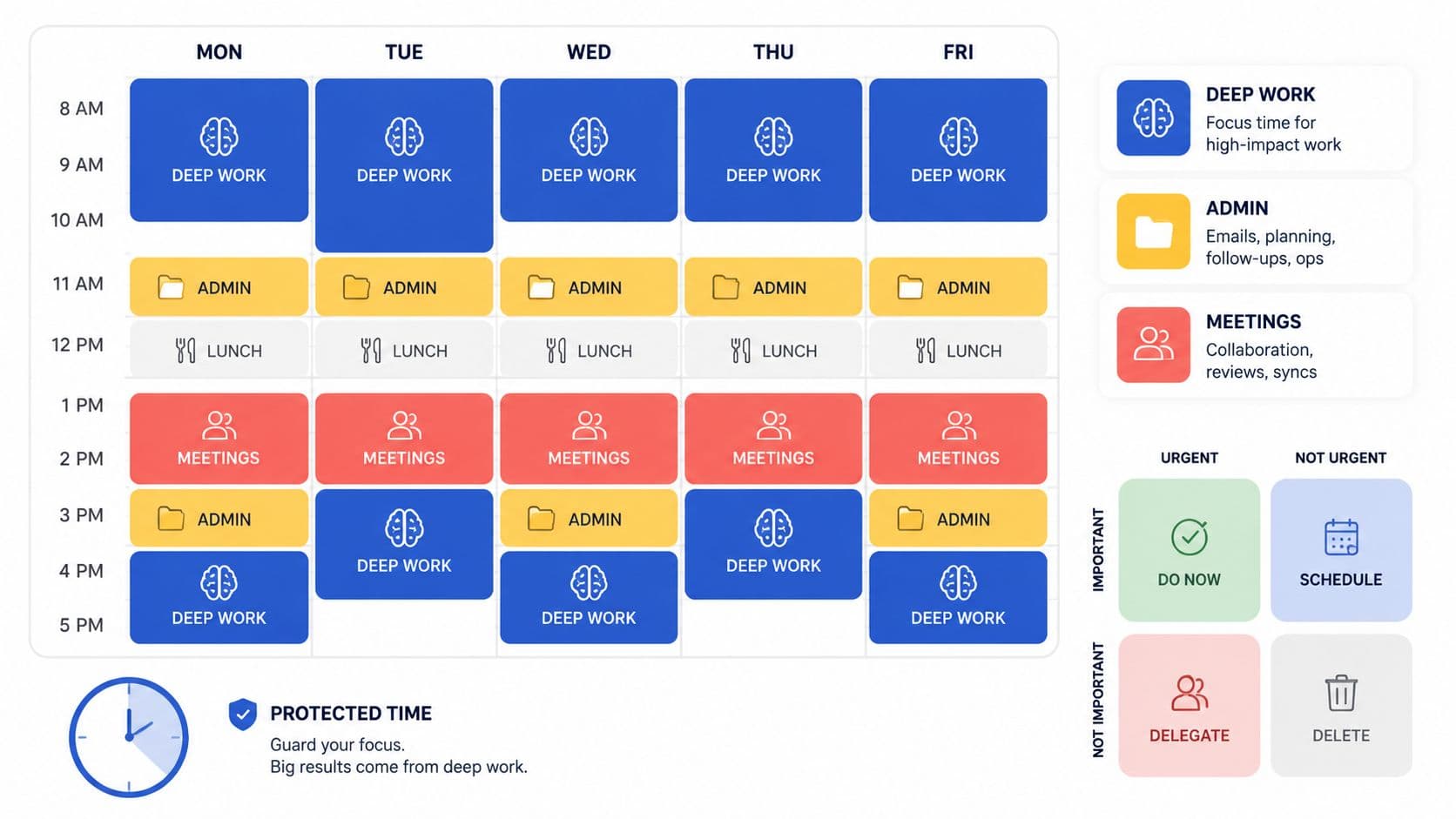
Fluidwave helps because it doesn't force you into one view of work. You can use calendar view to protect focus blocks, Kanban to see flow, and table view when you need a cleaner operational picture. If you want a practical framework, their guide on prioritizing tasks at work is a solid place to tighten your system.
What works in practice
The best version of this goal starts with only a few priorities. Effective development plans should focus on just 2 to 3 key areas rather than trying to fix everything at once, as noted in Paycor's professional development guidance. In real life, that means you don't chase inbox zero, strategic thinking, executive presence, course completion, and team coaching all at once.
Use your top 3 high-value activities for the week as your anchor. Build your schedule around those first. Then let lower-value work fill the remaining space, not the other way around.
Practical rule: If a task can move without real consequence, it shouldn't take your prime focus hours.
A good example goal would be: block daily deep work for strategy, client analysis, or writing, then review blocked time at the end of each week and adjust based on what got interrupted. If you're using Fluidwave, let auto-prioritization surface time-sensitive work so you don't waste mental energy scanning everything manually.
The trade-off is real. Better prioritization often means telling people “not now” more often. That can feel uncomfortable at first, especially for people who equate responsiveness with value. But once your work becomes more senior, your value comes less from reacting fast and more from choosing well.
2. Develop Effective Delegation and Task Communication Skills
A lot of professionals say they need to delegate more. What they usually need is to communicate better. Bad delegation creates rework, frustration, and the false belief that “it's faster if I just do it myself.”
Good delegation starts with scope. An entrepreneur assigning market research through Fluidwave needs to define the audience, what counts as a credible input, what format the findings should come back in, and when to escalate uncertainty. An executive handing off email triage needs clear categorization rules. A freelancer delegating recurring admin work needs templates and checklists so different assistants can produce consistent results.
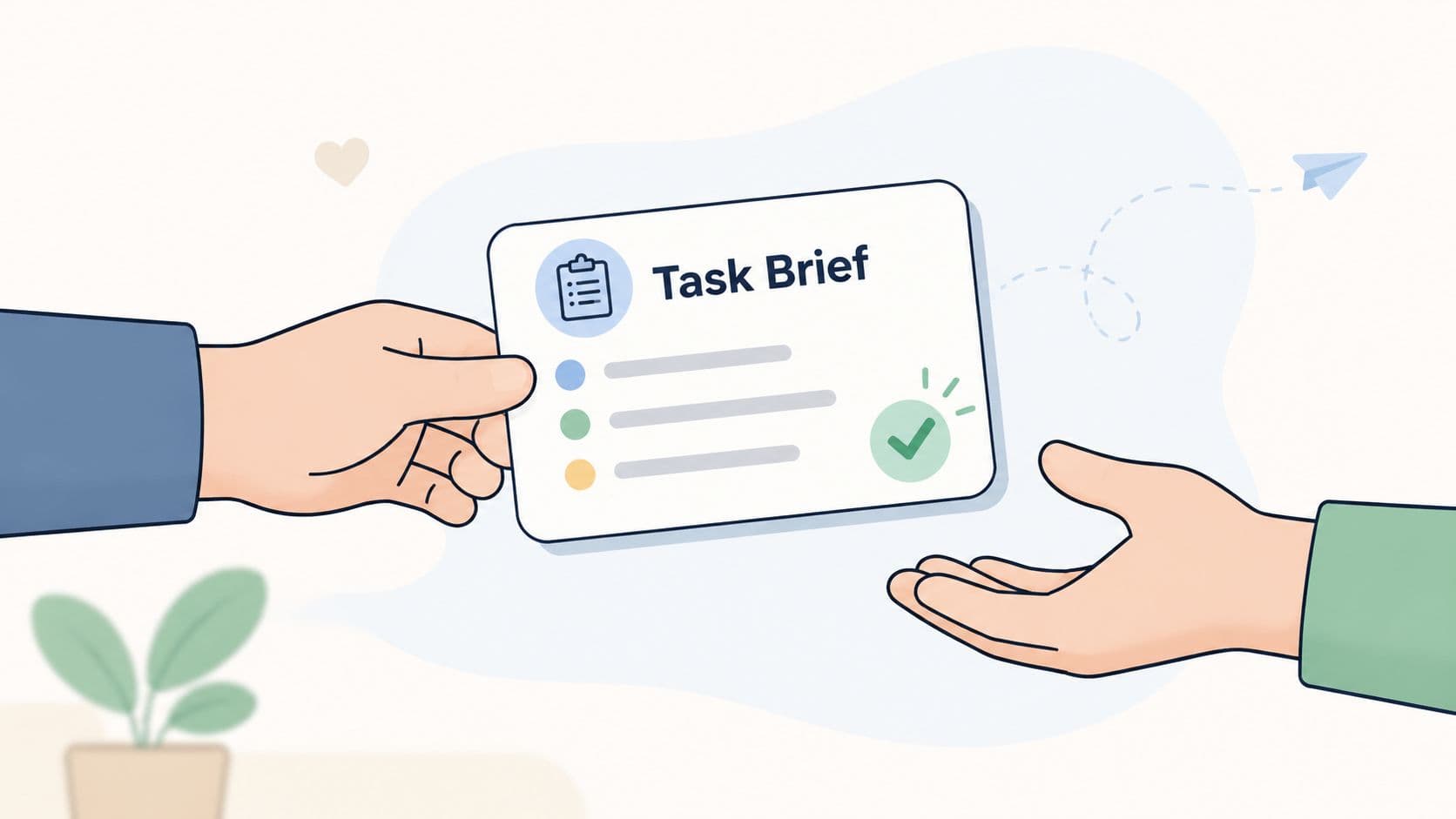
Fluidwave is useful here because it supports task descriptions, budgets, timelines, and progress tracking in one place. If delegation is a growth area for you, their walkthrough on how to delegate lines up well with how experienced managers structure handoffs.
The mistake people repeat
They assign tasks at the level of action, not at the level of judgment. “Research competitors” sounds clear until the other person has to decide which competitors count, what to compare, and how deep to go.
Write task briefs as if the person has never worked with you before. Include context, examples, constraints, and decision rules. That one habit saves more time than most follow-up meetings.
- Define success clearly: Say what a finished task looks like.
- Add useful context: Explain why the task matters so the assistant can make better calls.
- Build checkpoints: Review midway on ambiguous work instead of waiting for final delivery.
- Template recurring work: Repeated tasks shouldn't require fresh explanation every time.
Clear delegation isn't dumping work. It's transferring ownership without transferring confusion.
One of the better developmental goals for work examples in this category is: improve delegated task briefs by documenting success criteria, examples, and review points for every recurring handoff. That goal sharpens leadership, communication, and operational thinking at the same time.
3. Build Advanced Workflow Automation and Process Optimization
If you keep repeating a task exactly the same way, you're not being thorough. You're probably leaving a process design problem untouched.
A useful development goal here is to identify routine decisions and handoffs that don't need your attention anymore. Knowledge workers increasingly use AI tools in daily work, but most development plans still center on manual effort instead of automation and AI delegation. That gap matters because automation changes what high performance looks like, especially for busy operators and managers.
Start by mapping one routine process you touch every week. Intake, approval, task assignment, onboarding follow-up, content requests, expense routing. Don't automate the whole department in one shot. Fix one repeatable flow well.
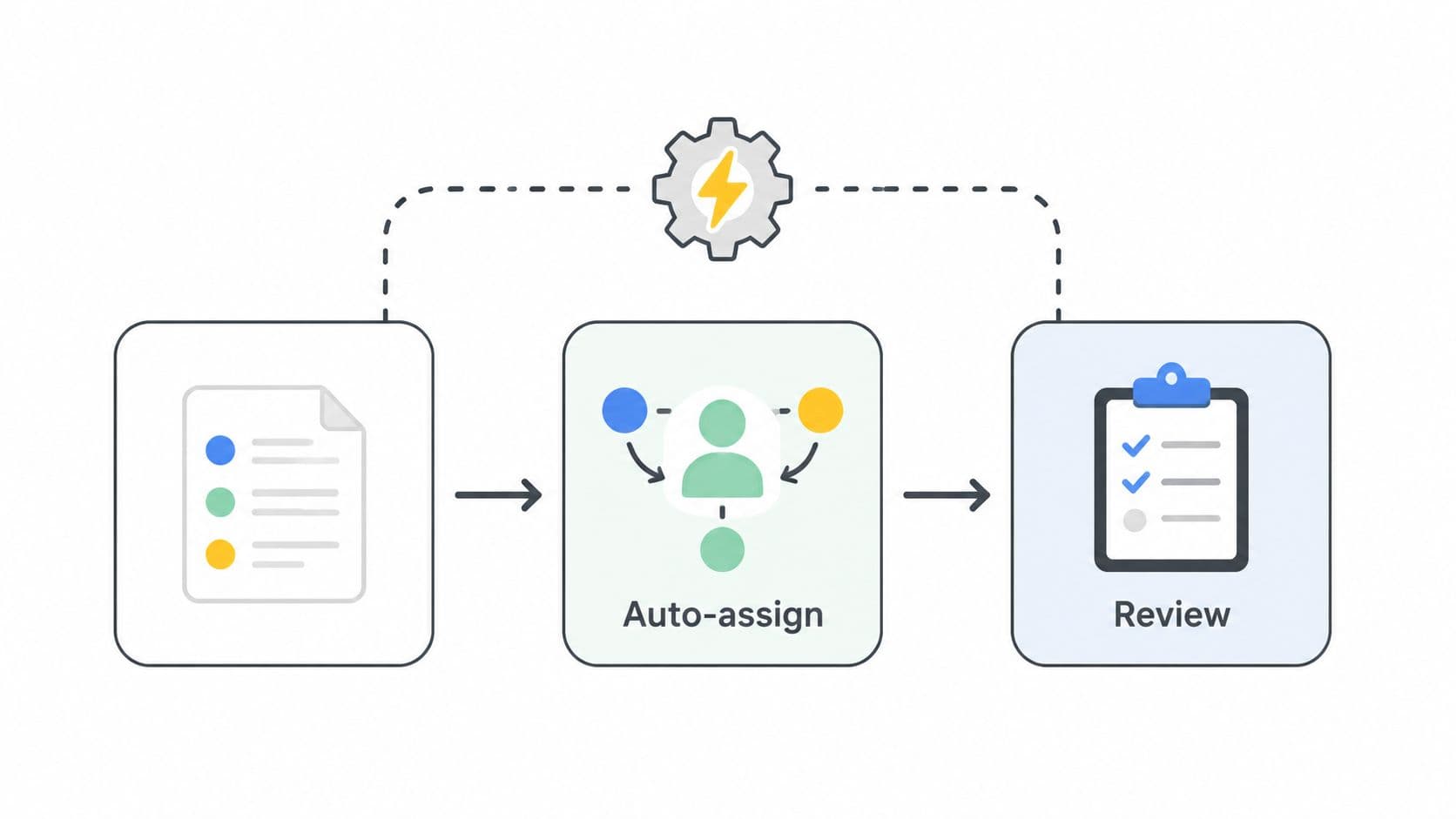
Fluidwave fits this kind of goal because it combines automated workflows with human delegation. That mix matters. Some work should be routed automatically. Some work still needs a person with judgment. Their guide on how to automate workflows is worth reviewing if your current system still depends on someone manually forwarding requests all day.
Build the process before you optimize it
A team lead might set up incoming requests so they're auto-prioritized and routed based on urgency and type. A founder might create a lightweight onboarding flow where setup steps trigger in sequence instead of living in someone's memory. A manager might use multiple views for different stakeholders, with leadership looking at milestones while the team works in a more detailed board.
That's where this goal becomes career-relevant. Process optimization teaches you to think beyond your own to-do list.
Watch for this: If you can't explain the rule behind an automation in one or two sentences, the process probably isn't ready yet.
Review the workflow monthly. Not because optimization has to be complicated, but because work changes. The rule that made sense last quarter may create bottlenecks now.
A simple video can help if you're designing your first system:
The trade-off is that automation forces clarity. That's good for the business, but uncomfortable for people who've been relying on improvisation. Still, if you want a modern development goal that compounds over time, this is one of the strongest options.
4. Enhance Emotional Intelligence and Collaborative Leadership
Technical competence gets you trusted for the work. Emotional intelligence gets you trusted with people.
This matters more in hybrid and distributed teams, where small communication mismatches become bigger faster. A manager who notices that one teammate prefers written directions while another needs a short live discussion will delegate more effectively than the manager who uses the same style for everyone. A founder who recognizes stress rising before a deadline can redistribute work early instead of waiting for burnout symptoms to surface.

Standard goal advice often ignores neurodivergent workers. That's a mistake. The verified data notes that 15 to 20% of workers are neurodivergent, yet only 3% of professional development resources address neuro-specific strategies. In practice, that means rigid goal structures can fail people who work best with visual boards, lower cognitive load, flexible pacing, or micro-steps supported by AI.
Leadership gets better when it gets more specific
If you want this goal to be useful, don't write “improve EQ.” Write something observable. Ask teammates and assistants how they prefer to receive work. Notice what happens to your tone under stress. Reflect weekly on what drained your energy and what helped you stay steady.
A manager could build a habit of adding human context to delegated tasks in Fluidwave, such as whether something is urgent, flexible, or exploratory. A team lead might start recognizing strong assistant work consistently instead of only pointing out mistakes. A founder might proactively shift lower-value work off a stretched team during a high-pressure period.
- Ask about preferences: Some people want detail upfront. Others want a quick summary and room to ask questions.
- Match the medium to the message: Written task instructions often reduce confusion on repeatable work.
- Leave room for different working styles: Strong teams don't all operate identically.
- Lead with curiosity: Misunderstandings usually reveal assumptions before they reveal bad intent.
The trade-off is speed versus understanding. Leaders under pressure often default to blunt efficiency. Sometimes that's necessary. But if it becomes your standard mode, collaboration quality drops and trust erodes.
5. Develop Strategic Thinking and Business Acumen
Plenty of capable people stay stuck because they only see the task in front of them, not the business behind it. Strategic thinking changes that. It helps you connect your daily choices to company direction, customer needs, team capacity, and longer-term risk.
This goal looks different by role. A project manager might review company objectives each month and align team priorities accordingly. A virtual assistant can become far more valuable by understanding the client's business model and spotting inefficiencies before being asked. A founder can use analytics and reporting inside Fluidwave to focus discussion on the few signals that matter.
Stop treating strategy like an executive-only job
You don't need a big title to think strategically. You need the habit of asking better questions. What is the company trying to achieve right now? Which work supports that directly? Which recurring tasks exist mostly because nobody has redesigned the process?
Historically, employee development moved from informal mentoring into a more structured and measurable practice, with the SMART framework becoming a key part of that shift and with later examples including goals like reducing onboarding time by 25% in a year or increasing internal promotions by 15%, according to Moodle's overview of employee development goals. The point isn't the format alone. It's alignment. Development goals became more useful when they tied individual growth to business outcomes.
The fastest way to look more strategic is to stop reporting activity and start explaining impact.
A practical version of this goal could be: schedule monthly strategic thinking time, read industry coverage that affects your role, and tie at least one workstream each month to a business objective you can explain clearly. If you use Fluidwave, protect that thinking time in the calendar and make sure the tasks you delegate don't crowd it out.
What doesn't work is pretending strategy means broad visionary talk. Strong strategic thinkers usually sound more grounded than dramatic. They understand trade-offs, constraints, and timing.
6. Master Technical Skills and Digital Literacy
At this point, digital literacy isn't optional unless your role somehow exists outside modern work. Most jobs now involve platforms, dashboards, integrations, AI features, or data workflows that shape how the work gets done.
That doesn't mean you need to become a technical specialist. It means you should be competent enough to use the tools around you well. In Fluidwave, that might mean learning when Kanban is better than calendar view, how reporting can expose stalled work, or how integrations reduce duplicate effort across your stack.
Learn tools by use case, not by feature tour
Generic software training usually fails because it teaches menus instead of problems. A freelancer learns faster by connecting Fluidwave with time tracking and accounting workflows than by memorizing every possible setting. A team manager gets more value from mastering reporting and visibility features than from clicking through options they'll never use.
One practical habit works well here: dedicate a short block each week to one feature you haven't fully used yet, then apply it immediately to a live workflow. Keep it role-specific. If you're managing deliverables, explore dashboards. If you coordinate others, get good at templates, recurring tasks, and task views.
- Use a sandbox first: Test new setups on low-risk work before rolling them into critical operations.
- Document what helps: Keep a short record of which features save time or reduce confusion.
- Learn from real users: Communities and peer examples often reveal better workflows than official feature lists.
- Ignore novelty for novelty's sake: A feature isn't valuable just because it exists.
This category is one of the better developmental goals for work examples because progress is easy to see. Either your workflow gets clearer and faster, or it doesn't. The trap is overlearning. Some people spend too much time exploring tools and not enough time applying them to real work.
7. Cultivate Resilience and Adaptive Problem-Solving
Every professional eventually runs into the same test. Plans change, resources disappear, timelines compress, or someone important drops the ball. Resilience is what determines whether you freeze, flail, or adapt.
A compressed launch timeline is a good example. The weak response is panic and overwork. The stronger response is to re-sort the work quickly, drop or delegate the non-essential pieces, and help the team focus on what still matters. Fluidwave is useful in these moments because delegation and visibility are already built into the workflow. You don't have to invent a system during the crisis.
Resilience is not silent suffering
Too many people define resilience as taking on more pain without complaint. That's not professional maturity. It's often poor workload design.
A stronger developmental goal is to improve how you respond under pressure. A project manager can practice rapidly re-scoping work. A freelancer can build the habit of reallocating capacity after a client cancellation instead of spiraling. A team under resource pressure can use better delegation to preserve output without burning out the most responsible person.
A case study from a Fortune 500 HR department found that replacing vague annual goals with quarterly SMART milestones reduced onboarding time by 25% in 12 months and increased internal promotion rates by 15%, with a structured mentorship program that included six shadowing sessions and documented outcomes. The same case showed a shift from an average 8-week onboarding cycle with 40% of new hires missing proficiency targets to a 6-week cycle with 95% meeting proficiency, as described in Learnit's professional development goals examples. One reason the program worked was simple: people could see progress, adjust expectations, and respond before problems hardened.
Resilient people don't avoid stress. They shorten the time between disruption and a workable response.
What helps most is reflection after the fact. Identify one lesson from each setback and store it somewhere visible. That keeps hard weeks from turning into wasted weeks.
8. Advance Communication Skills and Executive Presence
As careers progress, communication becomes a key asset. The person who can explain a messy issue clearly, ask sharp questions, and delegate without creating confusion usually gets trusted faster than the person with slightly stronger technical skills but weaker presence.
Executive presence isn't about sounding important. It's about helping other people understand you quickly and take your judgment seriously. A technical expert who can explain complexity to non-technical stakeholders becomes more promotable. A founder who can communicate vision cleanly becomes easier to back. A manager who writes clear task instructions in Fluidwave reduces friction for everyone around them.
Presence comes from clarity, not performance
If you want to improve here, start with one channel. Maybe it's speaking in meetings. Maybe it's concise written updates. Maybe it's the quality of your delegated task descriptions. Don't try to “be more executive” in the abstract.
To prevent overestimating progress, establish baseline measurements before you begin, such as an assessment of your current communication quality or direct stakeholder feedback that you can compare against later, as explained in SkillPannel's article on development goals examples. Without a baseline, people often claim improvement they can't verify.
A strong example goal could be to improve stakeholder updates by making them shorter, clearer, and more decision-oriented, then compare later feedback against your starting point. Another could be to practice active listening by reflecting back what you heard before responding in meetings. If your work depends on delegation, use every Fluidwave task as a writing exercise. Clear task descriptions build clearer thinking.
- Record yourself occasionally: You'll hear filler, vagueness, and rambling faster than anyone can explain it to you.
- Ask for specific feedback: “Was that clear?” is weak. “What part was confusing?” is useful.
- Present one idea at a time: Simplicity reads as confidence.
- Listen longer than feels natural: Better questions improve your presence more than polished monologues do.
8-Point Developmental Work Goals Comparison
| Development Goal | 🔄 Implementation Complexity | ⚡ Resource Requirements | 📊 Expected Outcomes | ⭐ Key Advantages | 💡 Quick Tip |
|---|---|---|---|---|---|
| Master Strategic Task Prioritization and Time Blocking | Medium, initial setup and habit formation | Low–Medium, calendar/time + Fluidwave views | Protected deep-focus blocks; higher completion rates; less burnout | Increases output quality; reduces decision fatigue | Start with your top 3 weekly priorities and use auto-prioritization |
| Develop Effective Delegation and Task Communication Skills | Low–Medium, requires clear templates and briefs | Medium, time to document processes and onboard assistants | More capacity; fewer workflow bottlenecks; faster task turnaround | Multiplies individual capacity; builds trust and consistency | Write briefs as if to a newcomer and use templates for recurring tasks |
| Build Advanced Workflow Automation and Process Optimization | High, needs mapping, rules design, testing | Medium–High, technical skills, integrations, monitoring | Significant time savings; fewer human errors; scalable processes | Eliminates repetitive work; creates consistent outcomes | Automate incrementally; document logic and review rules monthly |
| Enhance Emotional Intelligence and Collaborative Leadership | Medium, ongoing self-reflection and practice | Low, time for reflection, feedback and relationship building | Stronger team relationships; reduced conflict; better retention | Improves influence and psychological safety | Reflect weekly on energy patterns and ask about communication preferences |
| Develop Strategic Thinking and Business Acumen | High, continuous learning and cross-functional engagement | Medium, time for research, meetings, and metric tracking | Better alignment with company goals; proactive decision-making | Increases credibility and career mobility | Block monthly strategic thinking time and tie tasks to key metrics |
| Master Technical Skills and Digital Literacy | Medium, continuous upskilling and experimentation | Medium, tutorials, practice time, community resources | Faster tool adoption; improved workflows and reporting | Competitive advantage; higher tool ROI | Dedicate 30 minutes weekly to learn one new feature and test it safely |
| Cultivate Resilience and Adaptive Problem-Solving | Medium, behavioral change and recovery practices | Low–Medium, support networks, stress-management routines | Better performance under change; faster recovery from setbacks | Reliable in crises; fosters creative solutions under constraints | Reframe setbacks as learning and delegate during high-stress periods |
| Advance Communication Skills and Executive Presence | Medium–High, deliberate practice and feedback cycles | Medium, coaching, rehearsal time, feedback from peers | Clearer influence; fewer misunderstandings; stronger leadership presence | Dramatically increases influence and collaboration quality | Record practice, solicit specific feedback, and present one key idea per interaction |
From Goals to Reality Your Action Plan
Setting goals is the easy part. Daily practice is the part that changes careers.
If you've read this far, resist the urge to turn all eight ideas into a giant self-improvement project. That's how good intentions become clutter. Pick one area that would make your current workday noticeably better. Not your imaginary future role. Your actual week.
Then tighten it. Effective development plans usually work best when they focus on only a few priorities, not every weakness at once. If your biggest issue is reactive work, choose prioritization. If you're overloaded, choose delegation. If repetitive work keeps eating your week, choose automation. If your technical skill is fine but people still misunderstand you, choose communication.
The next step should be embarrassingly concrete. Put one action in your task manager today. Block deep work tomorrow morning. Create a delegation template for recurring admin tasks. Audit one repeatable process for automation. Ask two teammates how they prefer to receive work. Schedule monthly strategy time. Choose one Fluidwave feature to learn this week. Write down your baseline before trying to improve anything.
The importance of that last point is frequently underestimated. You can't truly evaluate progress without a known starting point. That's true whether you're trying to communicate more clearly, delegate better, or build stronger leadership habits. A loose feeling that you're “probably better now” isn't enough.
I'd also push most professionals to make one of their goals more modern than the usual list of trainings and courses. Development today isn't just about adding skills by hand. It's also about removing low-value effort through better systems, automation, and strategic delegation. That's where a platform like Fluidwave becomes useful. It gives you a place to organize work, auto-prioritize what matters, and hand off the noise so your attention goes to growth instead of constant cleanup.
If you want more structure around consistency, track progress with Habit Huddle for a practical look at staying on course after the initial motivation fades.
Your future self won't care how ambitious your goals sounded in a review. That version of you will care whether you built better habits, made smarter decisions, and protected time for the work that moved your career forward.
Fluidwave is a strong fit if you want your development goals to survive contact with real work. You can organize tasks across calendar, Kanban, table, list, and card views, auto-prioritize what needs attention, and delegate lower-value work to human assistants on a pay-per-task basis without adding more overhead. If you're ready to turn developmental goals for work examples into an actual operating system, explore Fluidwave.
Focus on What Matters.
Experience lightning-fast task management with AI-powered workflows. Our automation helps busy professionals save 4+ hours weekly.