Struggling with CDT to EDT conversion? Learn the simple one-hour rule, see examples, and get tips for scheduling meetings across time zones without confusion.
June 10, 2026 (4mo ago)
CDT to EDT Conversion the Simple Rule and How to Use It
Struggling with CDT to EDT conversion? Learn the simple one-hour rule, see examples, and get tips for scheduling meetings across time zones without confusion.
← Back to blog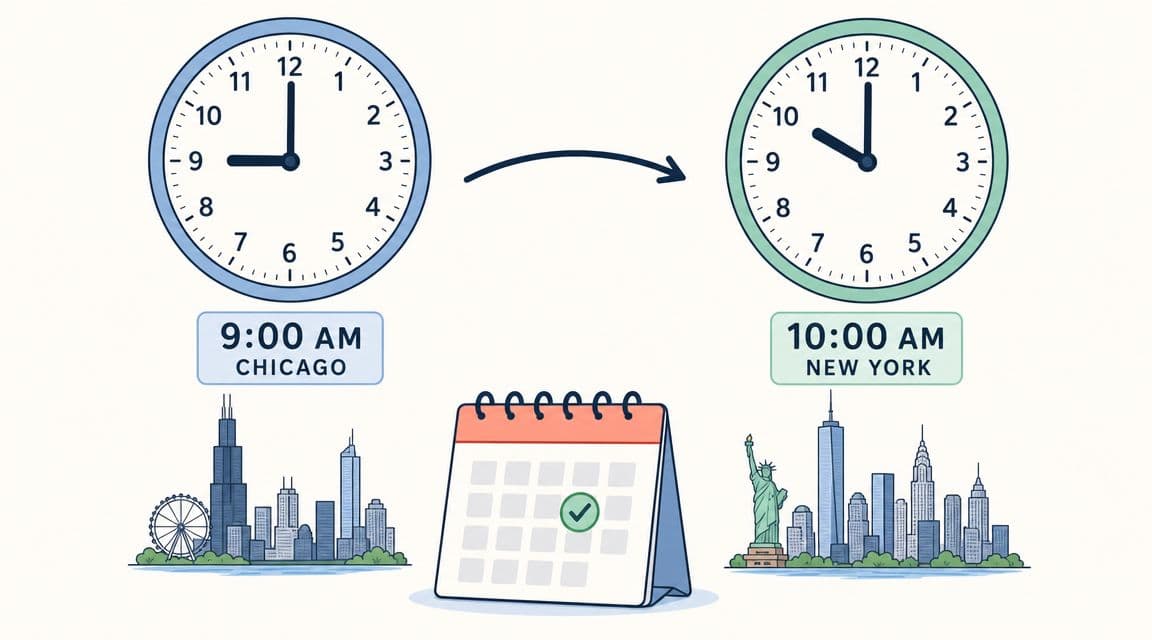
EDT is one hour ahead of CDT. If it's 9:00 a.m. CDT, it's 10:00 a.m. EDT.
If you're staring at a meeting invite and wondering whether the New York team will join an hour early or an hour late, you're in good company. This is one of those tiny details that can throw off a project kickoff, a client call, or a deadline handoff if nobody slows down long enough to check the conversion.
The good news is that CDT to EDT is usually simple. The tricky part isn't the math. It's the workflow around the math: naming the time zone clearly, handling calendar tools correctly, and staying alert around the seasonal clock changes that catch busy people off guard.
That Meeting Request CDT or EDT
A familiar scenario: someone in Chicago sends “Project kickoff at 9 a.m.” Someone in New York reads it fast, drops it into their day, and assumes it means 9 a.m. local time. Then one side joins the call while the other is still clearing email.
That's why time zone mistakes feel so annoying. The conversion itself is easy. The underlying issue is that teams often move fast, skim invites, and rely on context that isn't always there.
A common workday example
Say your operations lead is in Chicago and your client success manager is in New York. The kickoff has to happen in the morning, before everyone gets buried in Slack, email, and status updates. If the invite says 9:00 a.m. CDT, the New York team needs to read that as 10:00 a.m. EDT. One hour. That's it.
Still, people get tripped up because the labels look similar, and calendar views don't always show what each attendee is seeing. If your team is juggling overlapping calendars, a process like merging Google Calendars for better visibility can cut down on the back-and-forth before a meeting ever gets booked.
The time zone label matters almost as much as the meeting time itself.
What professionals usually mix up
Most confusion falls into a few buckets:
- Acronym blur: CDT and EDT look close enough that people skim past them.
- Local-time assumptions: A reader sees “10 a.m.” and assumes it's their own time.
- Calendar overconfidence: Someone trusts the app without checking how the event was entered.
- Deadline drift: A same-day handoff slips by an hour because one team worked from CDT and the other worked from EDT.
For a bi-coastal project, that hour can affect who speaks to the client, when a draft gets reviewed, and whether a deliverable lands on time. So it's worth making this one conversion automatic in your head.
Decoding Central and Eastern Daylight Time
The terms sound technical, but they're manageable once you break them apart.
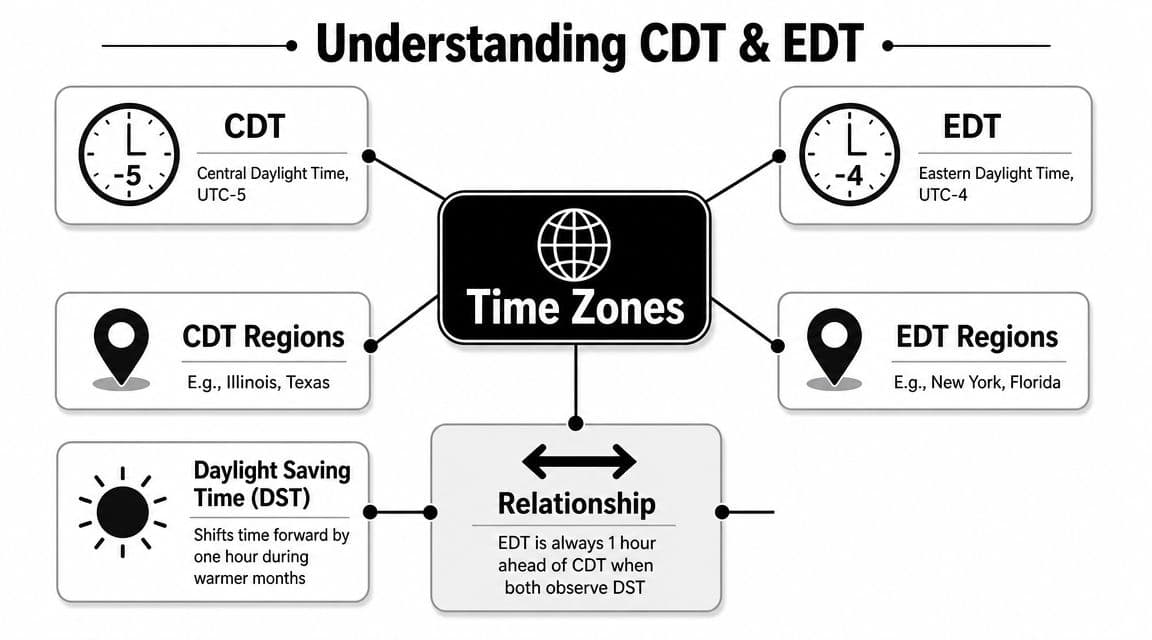
CDT means Central Daylight Time. EDT means Eastern Daylight Time. The key word in both is Daylight. That tells you these are the daylight-saving versions of the Central and Eastern time zones, not the standard-time versions used outside that seasonal period.
Why the difference exists
A useful way to understand the relationship is through UTC, or Coordinated Universal Time. You don't need to use UTC every day, but it explains why the shift between these two zones stays consistent during daylight-saving season.
UTC reference: CDT is UTC-5 and EDT is UTC-4, so EDT stays one hour ahead during the daylight-saving period, which makes conversion a simple +1 hour shift according to Time Now's CDT to EDT converter explanation.
That's the reason the conversion feels so clean. You aren't memorizing a random rule. You're applying a system. One zone sits one hour ahead of the other.
What Daylight Time means in practice
For working professionals, “daylight time” mostly matters because it tells you the label is seasonal. During that part of the year, teams across the central and eastern U.S. can usually convert quickly without recalculating every meeting from scratch.
You'll also see this in daily business patterns. A team in Illinois might start their day in CDT. A counterpart in New York starts in EDT. They're often active at roughly the same points in their local day, but the clock reading is offset.
A simple mental model helps:
- Central Daylight Time: think Chicago, one step earlier on the clock
- Eastern Daylight Time: think New York, one step later on the clock
- Relationship: same workday rhythm, different displayed hour
If you keep that picture in mind, the acronyms stop feeling abstract. They become part of how you plan handoffs, reviews, and response times.
The Simple Rule for CDT to EDT Conversion
Use one rule and you'll handle most scheduling situations correctly:
Practical rule: To convert CDT to EDT, add one hour.
That's the whole move. If something is scheduled in CDT, the Eastern version is one hour later on the clock.
Everyday examples
This comes up constantly in work:
- A webinar set for 9:00 a.m. CDT happens at 10:00 a.m. EDT, as shown in the CDT and EDT time difference reference from 24TimeZones.
- A deadline at 5:00 p.m. CDT lands at 6:00 p.m. EDT in the same reference.
- A meeting block that runs from 9:00 a.m. to 5:00 p.m. CDT maps to 10:00 a.m. to 6:00 p.m. EDT, which is a practical shared work window for cross-zone scheduling in that same source.
If you need to go the other direction, reverse the move. From EDT back to CDT, subtract one hour.
CDT to EDT quick conversion
| If it's this time in CDT... | ...It's this time in EDT |
|---|---|
| 9:00 a.m. | 10:00 a.m. |
| 5:00 p.m. | 6:00 p.m. |
A faster way to think during a busy day
Don't do fresh math every time. Use shortcuts:
- Read the label first. If the invite says CDT, your brain should immediately think “Eastern is later.”
- Add one hour once. Don't keep rechecking unless the date is near a seasonal time change.
- Translate deadlines, not just meetings. Time zone errors happen with approvals, publishing times, and client follow-ups too.
This matters most when work crosses functions. Marketing may schedule a launch in one zone. Sales may present it in another. Support may staff coverage based on a third person's understanding of the time. If the original label is sloppy, the confusion spreads.
That's why professionals who do this well don't just know the rule. They write times clearly enough that nobody else has to guess.
How Daylight Saving Time Affects Conversions
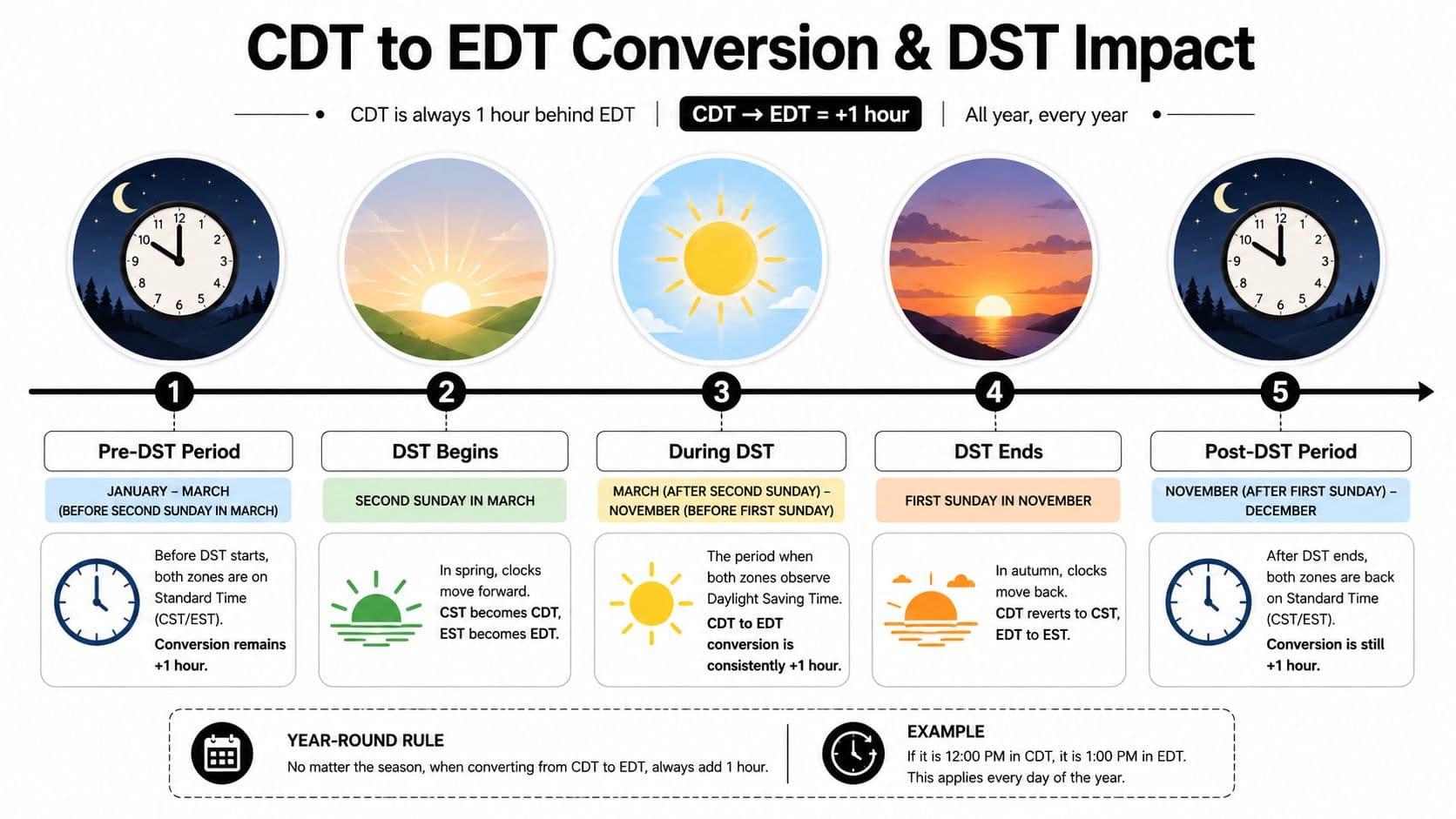
The conversion rule is simple, but one assumption causes trouble: people treat it like a year-round label issue instead of a seasonal one.
CDT and EDT are daylight-saving time zones. Those labels apply when both regions are on daylight time. In 2026, CDT begins on Sunday, March 8 at 2:00 a.m. local time, when clocks move forward to 3:00 a.m., according to Savvy Time's CDT to EDT converter details. The same source notes that daylight saving starts on the second Sunday of March and ends on the first Sunday of November.
Where people slip up
The biggest mistakes happen near the switch dates. Someone copies a recurring invite from an older meeting, keeps the same wording, and forgets that the seasonal label may no longer match the calendar date.
A clean operational habit helps. Keep a record of recurring meetings, review them around the spring and fall transitions, and export them if you need to audit a larger schedule. If you manage a lot of recurring events, this guide on exporting Google Calendar to Excel can make that review easier.
Around March and November, don't trust old invite text. Check the event date and the actual time zone setting.
Later in the year, standard-time labels come back into play. You don't need to memorize every edge case to stay safe. You just need to recognize that “CDT” and “EDT” are not permanent labels.
A quick visual can help if you're explaining this to a team:
Smart Scheduling Tips for Busy Professionals
Knowing the conversion is useful. Building a reliable scheduling habit is better.
Write invites so nobody has to interpret them
A strong meeting invite removes ambiguity before it starts.
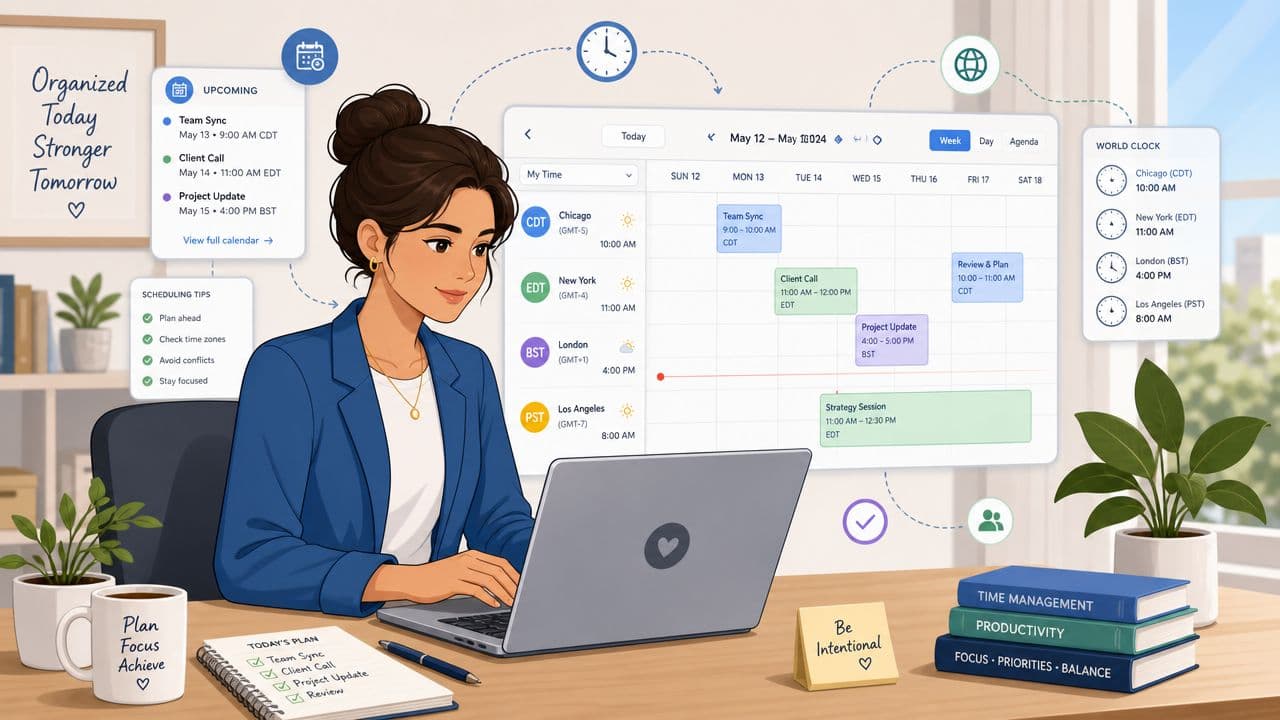
- Name the time zone in the title or description. Write “Client kickoff, 10:00 a.m. EDT” instead of just “Client kickoff, 10:00.”
- Add one local equivalent when needed. If half the team works in Central and half in Eastern, include both in the body.
- State the date with the time. This matters most for recurring meetings around seasonal time changes.
That last point sounds obvious, but rushed teams often leave dates and acronyms implied. That's where mistakes come from.
Build a repeatable workflow
If you schedule often, don't rely on memory alone. Use tools and habits that make the conversion visible.
Some professionals keep a second calendar time zone on screen. Others maintain recurring templates for common meetings. If your schedule already lives inside Google Calendar, syncing your workflow with Google Calendar can help keep tasks and appointments aligned in one place instead of scattered across separate tools.
For client-facing teams, appointment operations matter too. If calls are booked by phone, web form, and follow-up outreach, time zone clarity needs to show up in every step. A practical read on optimizing appointments with an answering service is useful if you want to tighten how booking details get captured before they hit the calendar.
A short checklist before you send
Use this when accuracy is essential:
- Check the acronym: Is it CDT, EDT, or a standard-time label instead?
- Check the calendar date: Is the meeting near a spring or fall clock change?
- Check attendee locations: Are you sending to Chicago, New York, or a broader mix?
- Check recurring events: Old templates are where hidden errors tend to sit.
A lot of time zone stress disappears once your team treats meeting setup like part of project management, not an afterthought.
Stop Guessing and Start Scheduling with Confidence
The core idea is simple: EDT is one hour ahead of CDT. Once that rule is automatic, most day-to-day scheduling gets easier.
The professional edge comes from what you do around that rule. You write the time zone explicitly. You double-check recurring invites around the spring and fall clock changes. You make sure deadlines, handoffs, and client calls use the same reference point.
What confidence looks like in practice
A confident scheduler doesn't send “Let's meet at 9.” They send the exact meeting time, the time zone, and enough context that nobody has to decode it. That small habit makes you easier to work with.
Clear time-zone communication is a professionalism signal. It tells people you think ahead and protect other people's time.
If you manage distributed work, this isn't a minor admin task. It shapes whether meetings start smoothly, whether approvals arrive when expected, and whether a launch day feels coordinated or chaotic.
Keep the rule simple. Respect the calendar edge cases. Be explicit in every invite. That's usually enough to turn CDT to EDT from a recurring annoyance into one less thing your team has to think about.
If you want fewer moving parts in your day, Fluidwave gives you a cleaner way to manage tasks, deadlines, and team coordination alongside your calendar workflow. It's built for busy professionals who want to spend less time tracking details and more time getting the actual work done.
Focus on What Matters.
Experience lightning-fast task management with AI-powered workflows. Our automation helps busy professionals save 4+ hours weekly.