Maximize your 10 minute break with these 10 genius ideas. Boost productivity, relax, or learn something new in just 10 minutes!
July 18, 2026 (2mo ago)
Make Your 10 Minute Break Count: 10 Genius Ideas
Maximize your 10 minute break with these 10 genius ideas. Boost productivity, relax, or learn something new in just 10 minutes!
← Back to blog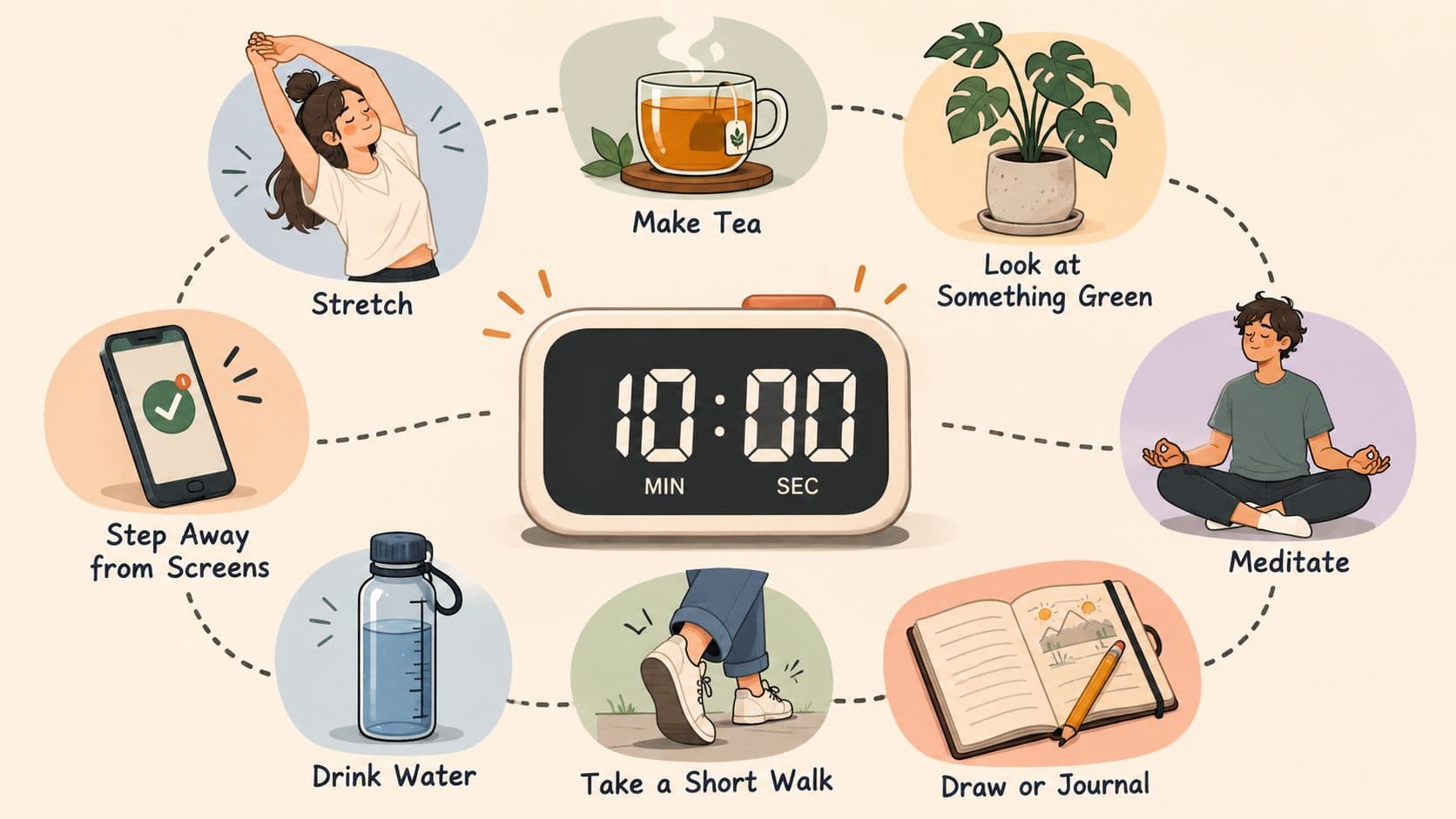
It's 2:30 PM. You've hit a wall. The cursor blinks on a half-finished task, Slack keeps lighting up, and your brain feels both busy and useless at the same time. Many find themselves reaching for another coffee, scrolling their phone, or pretending to work until the fog lifts.
A better move is a deliberate 10 minute break.
Not a random pause. Not a guilt-soaked break you spend half-working through. A specific reset that matches the kind of fatigue you're dealing with. That's the difference between coming back sharper and coming back just as scattered. Short breaks can help, but the details matter. A 2022 meta-analysis of 22 studies involving 2,335 participants found that micro-breaks of 10 minutes or less improved vigor and reduced fatigue, even though immediate task performance gains across all tasks weren't statistically significant. That's useful because it sets the right expectation. A 10 minute break is often best for restoring energy, not magically fixing every hard problem.
That's also why better workplaces treat breaks as part of the system, not a perk. Even basic refreshment access can support better pause habits, as Vendmoore Enterprises smart vending points out in its take on workplace break design.
Here are ten 10-minute resets worth using when your day starts slipping.
1. Mindful Breathing and Box Breathing
When your head is noisy, don't start with motivation. Start with your nervous system.
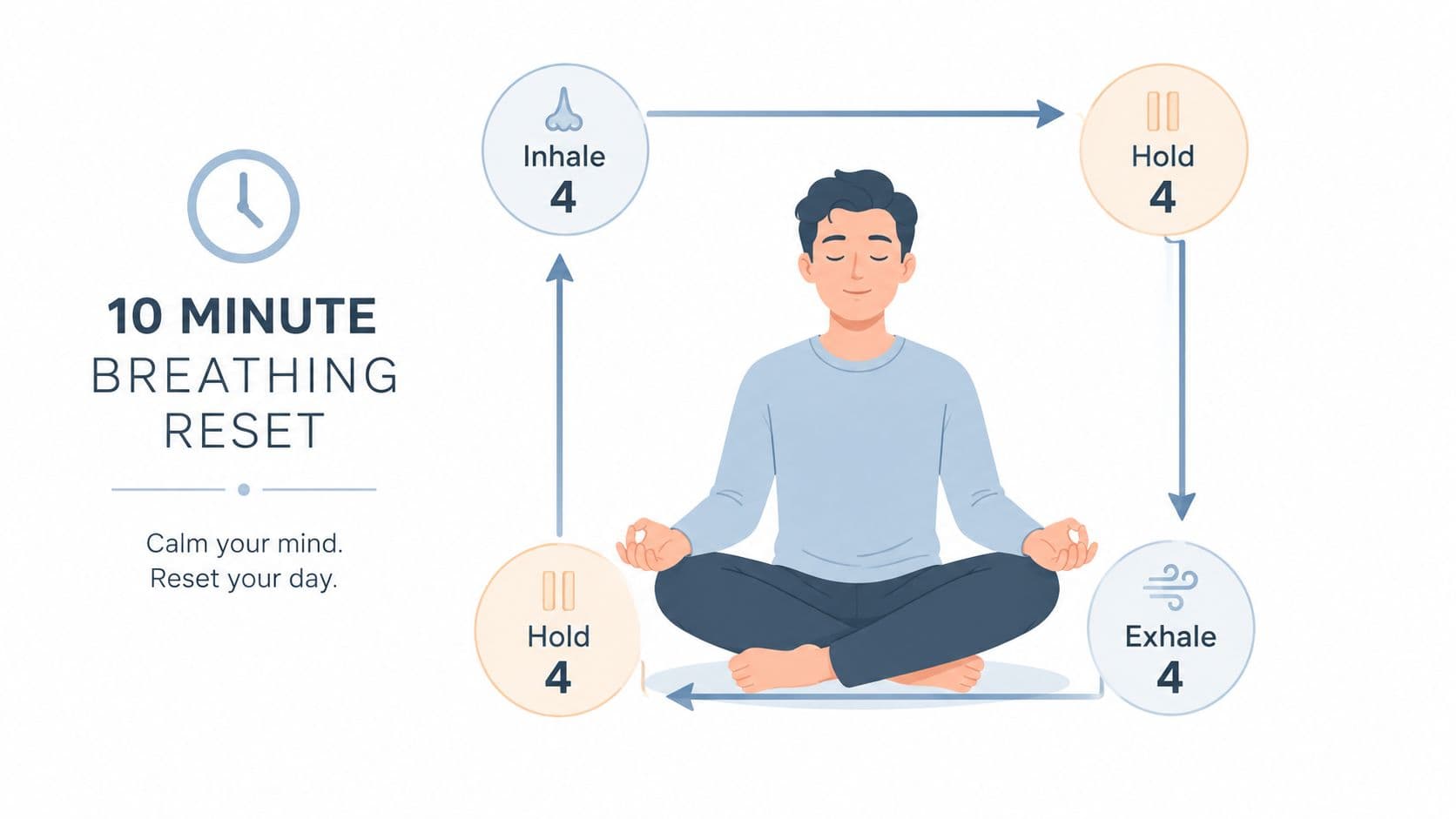
Box breathing is simple. Inhale for 4, hold for 4, exhale for 4, hold for 4, and repeat. It works well after a tense meeting, before a presentation, or in that awkward gap where you need to stop thinking about one task before starting the next.
Use it at task boundaries
This is one of the cleanest 10 minute break options for knowledge workers because it doesn't require privacy, gear, or a perfect mood. I've seen it work best when people tie it to transitions. After a client call. Before a writing sprint. Right after a burst of inbox triage.
If you already use timed work intervals, pair breathing with that structure. A short breathing reset fits naturally into a Pomodoro-style work rhythm, especially when you need to downshift before deep work.
- For ADHD brains: Use a visual breathing app or animated shape so you're not counting in your head.
- For office settings: Stand up while you do it. That helps break the “still staring at the desk” feeling.
- For high-stress roles: Keep one saved 10-minute guided breathing session on your phone so you don't waste time choosing.
Practical rule: If you're emotionally activated, don't force productivity first. Regulate first, then decide what to do next.
Real-world example. A founder finishing one investor call and moving into team planning usually carries stress from one room into the next, even on Zoom. Ten minutes of box breathing creates a cleaner handoff than powering through.
2. Quick Mobility and Stretching Routine
Mental fatigue often starts as physical friction. Tight hips, locked shoulders, a neck that feels like concrete. You can't think cleanly when your body has been parked in one position for hours.
A good 10 minute break here isn't a workout. It's maintenance. Neck rolls, shoulder circles, thoracic twists, hip openers, standing hamstring stretches, and a few calf raises are enough to reset desk posture without making you sweaty or disheveled.
Keep the sequence boring on purpose
The best mobility routine is one you don't have to invent every day. Use the same short sequence until it becomes automatic. Executives and remote workers both benefit from this because it's discreet and doesn't require changing clothes or leaving the building.
A short guided routine helps you hit all the common trouble spots. This one works well as a plug-and-play option:
Try this timing:
- Minute 1 to 2: Neck, jaw, and shoulder release
- Minute 3 to 5: Chest opening and upper back rotation
- Minute 6 to 8: Hips, hamstrings, and lower back
- Minute 9 to 10: Walk the room and reset posture before sitting again
For neurodivergent professionals, mobility breaks can work better than passive rest because the body gets a clear state change. If sitting still makes you more restless, movement is usually the smarter choice.
A common mistake is doing this only after pain shows up. Use it before long review sessions, spreadsheet work, or back-to-back meetings.
3. Guided Meditation and Body Scan
If breathing feels too bare-bones, use a body scan instead. It gives your mind something concrete to do. You move attention from head to toe, noticing tension without trying to fix every sensation.
That structure matters for people who hate vague advice like “just be present.” A guided session from Headspace, Calm, or Insight Timer can carry the load when your brain is too busy to self-direct.
Make it concrete, not mystical
A 10 minute break with meditation works best when you strip out the performance around it. You don't need a cushion, a silent room, or a personality transplant. Sit in a chair, put your feet down, and follow the audio.
For professionals who make decisions all day, body scans are useful because they create a small gap between stimulus and reaction. That can stop the chain of snap replies, rushed approvals, and emotionally sloppy decisions that pile up late in the day.
Some people need calm. Others need distance from their own momentum. Meditation is better at the second one.
A practical setup:
- Start with body scan sessions: They're easier than open-ended meditation.
- Use headphones if possible: Fewer interruptions, less self-consciousness.
- Save one favorite session: Don't scroll an app library every time.
- For ADHD users: Start shorter if needed, then build toward a full 10 minute break.
Real-world example. A project manager heading into a conflict-heavy afternoon can use a guided body scan between meetings and come back less reactive. That doesn't solve the politics. It does improve the quality of the next conversation.
4. Walking and Outdoor Exposure
If your thinking feels sticky, walk.
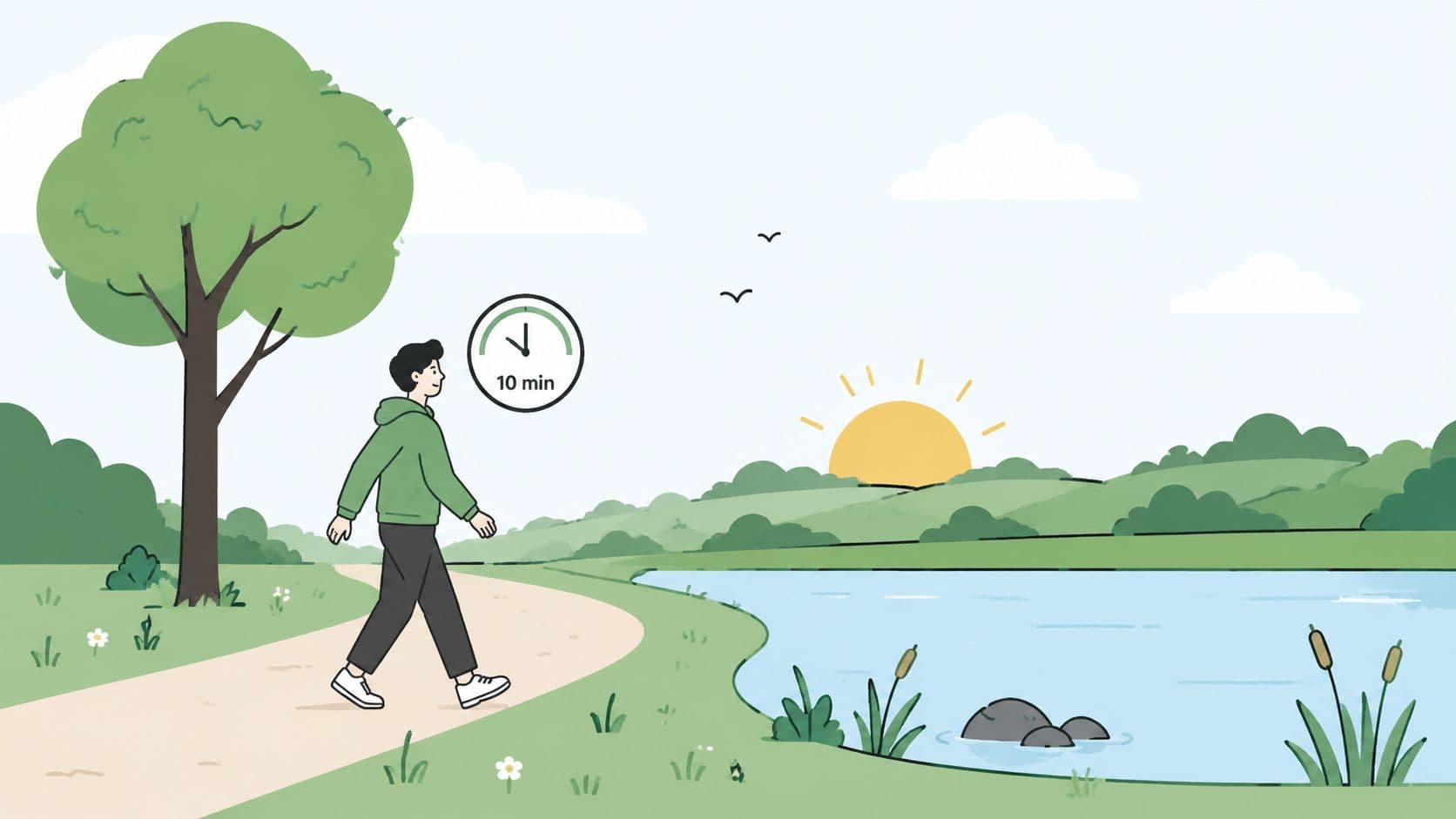
Not because walking is trendy. Because it changes your input fast. Light, air, movement, and distance from the screen can shift your mental state in a way that sitting at your desk never will. This is one of the strongest all-purpose 10 minute break options when you're mentally saturated but not physically exhausted.
Choose the right walking style
Don't turn every walk into efficiency theater. If the break is for recovery, leave the podcast off sometimes. Let your eyes move farther than your monitor and your thoughts loosen a little.
Research summarized by the IOGP fatigue guidance on breaks notes that brief, structured physical activity breaks lasting exactly ten minutes had an acute positive influence on cognitive function in healthcare workers. That supports a simple practical takeaway. Active breaks can sharpen attention, especially when your work has been repetitive or mentally draining.
For implementation:
- Go outside if you can: Natural light and a visible horizon help more than another hallway lap.
- Keep the pace moderate: Fast enough to wake up, slow enough to avoid turning it into exercise.
- Use voice notes sparingly: Good for capturing one idea, bad if it turns the whole break back into work.
- For autistic or ADHD professionals: A familiar route reduces transition friction and decision load.
A good use case is after an hour of document review, dashboard analysis, or writing edits. You're not trying to “optimize cardio.” You're resetting attention.
5. Micro-Workouts and Desk Exercises
Sometimes you don't need calm. You need activation.
A micro-workout is the right 10 minute break when you feel dull, heavy, or almost sleepy. Think squats, incline push-ups against a desk, marching in place, jumping jacks if you have privacy, wall sits, planks, or stair intervals. No equipment. No perfect plan. Just enough intensity to wake your system up.
Don't use this before delicate cognitive work
Trade-offs matter. A burst of movement can raise energy, but it isn't ideal right before work that needs fine concentration and patience. Save it for after a completed task block, before admin work, or when you need to shake off a slump.
There's also a useful nuance from the research. The same IOGP review notes that industrial workers who took 10-minute breaks every hour showed higher productivity and lower fatigue than those taking longer 15-minute breaks every 90 minutes, but another study in the same review found that 10-minute breaks every 50 minutes during prolonged intense mental office work could hurt cognitive efficiency. The lesson isn't “breaks are bad.” It's that active short breaks help most when the work and timing fit.
If screens are part of the problem, pair movement with environmental relief. This guide on how to optimise screen settings for comfort is a useful companion because body fatigue and screen fatigue often travel together.
- Best for: Mid-afternoon sluggishness, post-lunch drift, long sedentary stretches
- Not best for: Right before analytical writing, coding, or complex decision-making
- ADHD tip: Use a fixed 3-exercise circuit so you don't stall out choosing moves
This break works well for founders, operators, and remote workers who can close the door and reset fast.
6. Journaling and Reflection Writing
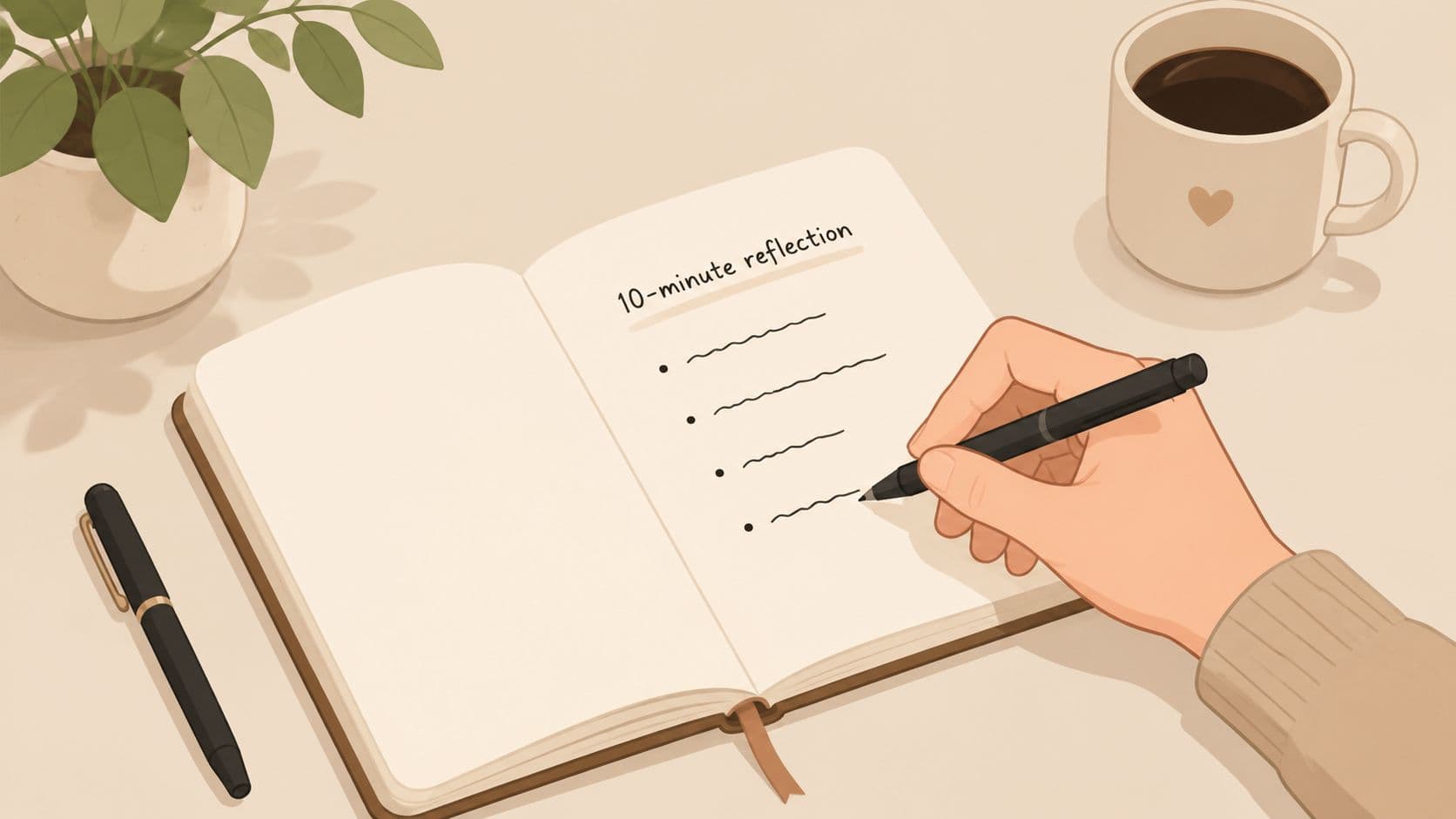
If your brain keeps looping the same thoughts, write them down. Don't organize them first. Don't try to make them elegant. Just get them out of your head.
Journaling is one of the most underrated 10 minute break tools for professionals because it can double as recovery and decision support. You stop carrying every open loop mentally, which frees attention for the next block of work.
Use prompts when your mind is jammed
Blank pages can backfire when you're already overloaded. Prompts help. Three of my favorites are simple and practical:
- What am I avoiding: Good when procrastination is really uncertainty.
- What matters today: Good when everything feels urgent.
- What would make the next hour easier: Good for reducing friction instead of chasing motivation.
This kind of writing works especially well after meetings that leave residue. Maybe you're irritated, unclear, or carrying too many action items. A short reflection turns scattered impressions into visible next steps.
Write the sentence you've been refusing to admit. That's usually where the useful break starts.
For neurodivergent users, externalizing thoughts can reduce the mental overhead of holding competing priorities in working memory. If you use a visual task system, this pairs naturally with moving those notes into actual tasks after the break.
7. Hydration and Nutrition Breaks
A lot of “productivity problems” are just neglected basics.
If you've been running on caffeine, forgotten lunch, and whatever snack was closest, a 10 minute break for hydration and food can do more than another app, playlist, or tab management trick. The key is intentionality. This is not desk grazing while answering email.
Treat it like a reset, not a side quest
The best version is simple. Get up, drink water, eat something steadying, and step away from the screen while you do it. Nuts, yogurt, fruit, cheese, or a real small meal all beat sugary convenience food that buys you a short lift and a harder crash later.
The broader research on micro-breaks also supports this general approach to recovery. A review covered in ScienceDaily reported that participants who took micro-breaks of 10 minutes or less had approximately 60% better odds of feeling energetic compared with those who didn't take breaks. That doesn't mean any snack automatically fixes focus. It does mean a proper pause can restore some usable energy.
If you struggle to remember this at all, put it in your schedule. A time-blocked system works better than hoping hunger cues arrive before your judgment gets sloppy. A time blocking schedule that works becomes useful, especially for people who hyperfocus past meals.
- Keep backup snacks visible: Friction kills good habits.
- Avoid eating over your keyboard: Your brain doesn't register it as a break.
- For ADHD professionals: Pair hydration with another recurring cue, like the end of a meeting block.
Real-world example. A consultant finishing two client calls in a row often mistakes depletion for lack of discipline. Water and a real snack fix that faster than forcing another hour of strained concentration.
8. Creative Breaks and Skill Practice
When your day has been pure analysis, a different kind of thinking can feel restorative. That's where creative breaks help. Sketching, doodling, playing a few chords on a guitar, handwriting ideas, or doing a quick language lesson can give your main work circuits a rest without making you feel idle.
This is a strong 10 minute break for people who hate “doing nothing” but still need recovery.
Pick something unlike your main work
The rule is contrast. If your job is words, use images or sound. If your job is decision-heavy, do something playful and low stakes. If your work is highly social, choose a solo creative task.
Good examples include Duolingo for a short language drill, a tiny sketchbook kept at your desk, a keyboard in the next room, or a notes app where you write one paragraph of fiction. The point isn't mastery. It's a clean cognitive lane change.
For neurodivergent professionals, novelty can restore attention faster than passive rest. Just be careful with activities that are too sticky. A break should reset you, not become the new rabbit hole.
A founder who spends all morning in financial models may get more from ten minutes of sketching product ideas than from sitting still trying to “relax.” Different input often creates better output later.
9. Social Connection and Micro-Conversations
Some fatigue is cognitive. Some is social deprivation.
If you work remotely, lead a team, freelance alone, or spend most of the day in transactional conversations, a genuine 10 minute break with another person can restore more than silence can. Not a status check. Not “quickly while we're here” work talk. An actual human conversation.
Keep it light and real
Ask a colleague how their week is going. Call a friend. Drop into a team chat and talk about something other than deadlines. Small social moments can interrupt the tunnel vision that builds up during solo work.
This one is especially useful for remote teams because isolation often looks like low motivation from the outside. In practice, the person may just need reconnection. Managers miss that all the time.
- Use a recurring cue: After lunch or after a long solo block works well.
- Avoid turning it into problem-solving: Keep the boundary clear.
- For distributed teams: Video helps when people feel disconnected, but audio-only can be easier for overstimulated brains.
- For autistic professionals: Structured, predictable check-ins can feel better than spontaneous drop-ins.
A quick example. A designer working alone all morning may come back more grounded after a short non-work conversation with a trusted teammate than after scrolling alone in silence.
10. Gratitude Practice and Positive Reflection
Gratitude gets oversold in annoying ways, so let's keep it useful. This isn't pretending everything's fine. It's deliberately noticing what's working so your attention isn't consumed by friction alone.
That makes it a solid 10 minute break when you're spiraling, catastrophizing, or ending the day with a distorted sense that nothing moved forward.
Specific beats vague
Write down three things that helped today. Make them concrete. A colleague gave useful feedback. A hard email got sent. A client was more flexible than expected. Specificity matters because your brain trusts evidence more than generic positivity.
There's also an important trade-off to remember in break planning overall. A 2022 review discussed by Waterloo Engineering Wellness noted that recovery from low cognitive-demand tasks can be achieved with micro-breaks of exactly 10 minutes or less, while higher cognitive-demand tasks may require longer recovery. That's a helpful reality check. Gratitude is great for emotional reset. It won't replace deeper recovery when your brain is cooked from complex work.
If burnout is creeping in, this kind of reflection works best inside a broader support system. These burnout prevention strategies are a useful next step when a quick reset no longer feels sufficient.
Notice one thing that went right, one person who helped, and one thing you handled better than last week.
For leaders, this practice also improves how you close the day. You stop ending every evening with a mental list of unfinished problems and start seeing progress more accurately.
10-Minute Break Techniques Comparison
| Practice | Implementation Complexity 🔄 | Resource & Setup ⚡ | Expected Outcomes ⭐📊 | Key Advantages ⭐ | Ideal Use Cases | Quick Tips 💡 |
|---|---|---|---|---|---|---|
| Mindful Breathing and Box Breathing | Low, learn and repeat 4-4-4-4 pattern | None, can be done anywhere; timer/app optional | Rapid cortisol reduction and clearer focus; measurable within minutes (⭐⭐⭐⭐ 📊) | Fast parasympathetic activation; smooth task transitions | Between meetings, pre-deep work, acute stress | Use a timer or guided app; visual guides for ADHD |
| Quick Mobility and Stretching Routine | Low–Moderate, simple sequences, form awareness advised | Minimal space; no equipment | Increased circulation, reduced stiffness and posture relief (⭐⭐⭐ 📊) | Counters sedentary strain; prevents compounding physical fatigue | After prolonged sitting, between task blocks | Follow a 10-min video; combine with standing desk |
| Guided Meditation and Body Scan | Moderate, needs quiet and practice to deepen | Guided audio/apps recommended | Improved emotional regulation and sustained attention (⭐⭐⭐⭐ 📊) | Deep mindfulness; reduces reactivity and rumination | Morning routine, pre-decision making, high-stress periods | Start with body scans; use consistent time/place |
| Walking and Outdoor Exposure | Low, simple but weather/area dependent | Low, outdoor access preferred; indoor option possible | Boosts creativity, mood, and circadian regulation (⭐⭐⭐⭐ 📊) | Combines light, movement, and biophilia for cognitive refresh | Creative blocks, idea generation, need for perspective | Walk near greenery; use conversational pace; take calls if useful |
| Micro-Workouts and Desk Exercises | Moderate, higher intensity; requires baseline fitness | Minimal equipment; private space recommended | Immediate endorphin/dopamine surge and alertness; cardio benefit (⭐⭐⭐⭐ 📊) | Efficient fitness + cognitive boost; combats decision fatigue | Short windows when leaving desk is impractical; energy slumps | Choose bodyweight moves; prioritize form in private space |
| Journaling and Reflection Writing | Low, requires discipline and prompts | Pen/paper or digital doc | Clarifies priorities, reduces rumination, creates record (⭐⭐⭐ 📊) | Externalizes thoughts; improves planning and pattern recognition | Morning intention-setting, end-of-day review, task triage | Use prompts; avoid editing; review weekly for patterns |
| Hydration and Nutrition Breaks | Low–Moderate, planning for snacks/water | Requires prepared snacks/water station | Restores cognitive function; prevents energy crashes (⭐⭐⭐ 📊) | High cognitive ROI for minimal effort; reduces eye strain when stepping away | Mid-afternoon slumps, long meetings, pre-decision periods | Prep protein/fat snacks; set hydration reminders; avoid sugary foods |
| Creative Breaks and Skill Practice | Low–Moderate, depends on activity chosen | Variable, doodle to instrument or apps | Enhances problem-solving and novelty-driven rest (⭐⭐⭐ 📊) | Activates different neural networks; reduces burnout | When stuck on problems or seeking fresh perspective | Keep materials accessible; set a strict 10-min timer |
| Social Connection and Micro-Conversations | Low, requires partner/time and willingness | None, in-person or remote; scheduling may be needed | Improves mood, trust, and collaboration (⭐⭐⭐ 📊) | Builds psychological safety and team cohesion | Remote teams, morale boosts, relationship maintenance | Schedule intentional social breaks; keep conversations light |
| Gratitude Practice and Positive Reflection | Low, simple ritual or journal entry | Minimal, journal or mental practice | Increases resilience and positive affect (⭐⭐⭐ 📊) | Counters negativity bias; improves motivation and perspective | Pre-work reset, team rituals, post setback recovery | Be specific in entries; combine with journaling and balance with problem-solving |
Integrate Your Breaks, Master Your Day
Knowing which break fits your situation is only half the job. The harder part is using it before you're fully fried. Most professionals don't fail because they hate breaks. They fail because they leave breaks up to mood, memory, and whatever chaos the day allows.
That's why I push systems over good intentions. Put your 10 minute break choices where your work already lives. If you know walking helps after heavy meetings, schedule it. If breathing helps before deep work, automate it. If journaling clears decision fatigue, make it a recurring reset before your afternoon priority block.
This matters even more once you understand the trade-offs. Research summarized in the PubMed record for the 2022 micro-break review highlights a nuance many people miss. Micro-breaks improve vigor and reduce fatigue, but they don't automatically produce statistically significant gains in overall job performance across cognitively demanding roles. That's why a 10 minute break should be treated as a strategic tool, not a magic productivity button. Sometimes it's exactly what you need. Sometimes you need a longer pause, fewer interruptions, or a totally different kind of recovery.
For teams and executives, in these scenarios break design becomes operational. A finance lead might use breathing before forecast reviews. A founder might use a walk after investor calls. A developer might avoid frequent interruptions during deep coding and instead take a longer reset after finishing a mentally dense block. A neurodivergent professional might build recurring movement breaks because passive rest doesn't regulate attention well enough. Same length. Different purpose.
A platform like Fluidwave makes this easier because it turns intentions into visible workflow. You can create recurring tasks such as “10-min walk after morning sync,” “hydration break before admin block,” or “body scan after lunch.” That removes a surprising amount of decision fatigue. You don't have to negotiate with yourself every day. The prompt is already there, in the same system as your real work.
That principle applies beyond work too. Habit-building gets easier when repetition is built into the environment, whether you're scheduling recovery blocks or following a structured routine like how to practice Irish daily.
Breaks aren't the opposite of productivity. Used well, they're part of how productive people stay usable through the full day.
If your workdays are packed, don't rely on memory to protect your focus. Use Fluidwave to schedule recurring 10 minute break rituals, automate reminders before deep work, and keep recovery habits inside the same system that manages your tasks. It's a practical way to reduce decision fatigue, protect your energy, and make better breaks happen.
Focus on What Matters.
Experience lightning-fast task management with AI-powered workflows. Our automation helps busy professionals save 4+ hours weekly.