Is a reusable N95 mask safe? This guide explains cleaning, reuse limits, and how to choose the right one. Get the facts on NIOSH standards and proper care.
July 15, 2026 (5d ago)
Reusable N95 Mask: A Complete 2026 Safety Guide
Is a reusable N95 mask safe? This guide explains cleaning, reuse limits, and how to choose the right one. Get the facts on NIOSH standards and proper care.
← Back to blog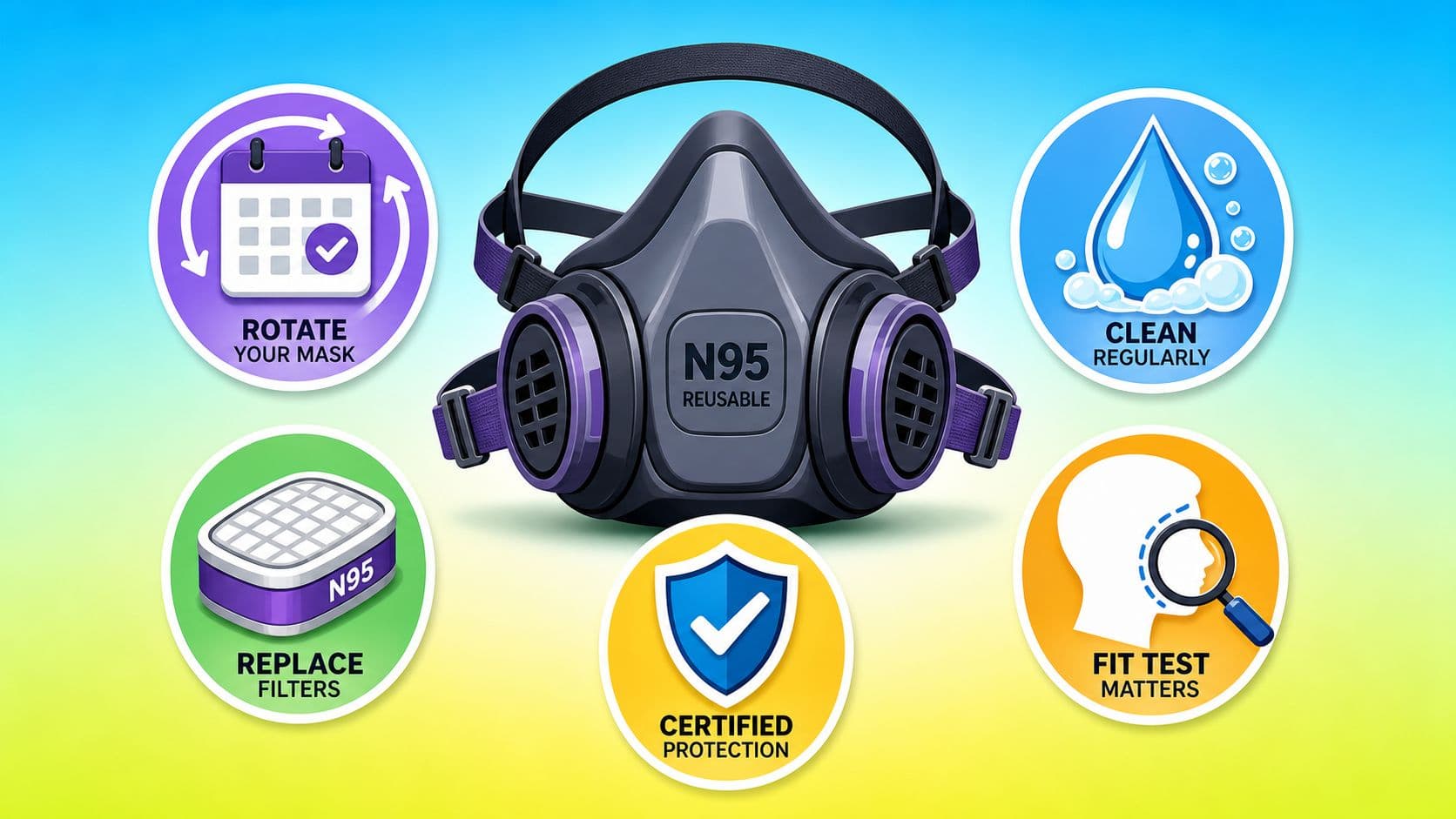
You may have an unopened box of N95s in a closet, or one leftover mask in a laptop bag from the pandemic years. A lot of people pull one out, look at the straps, and ask the same question: can this still be used, and if so, is it a reusable N95 mask now?
That question sounds simple, but it hides two very different situations. One is the careful, limited reuse of a disposable N95. The other is a true reusable respirator built for repeated wear and maintenance. Mixing those up is where people get into trouble.
For a busy professional, the practical issue isn't theory. It's whether the mask on your desk will still seal, still filter, and still make sense for how you live. Maybe you need something for flights, public transit, wildfire smoke, a home project, or occasional crowded indoor events. The right answer depends less on the label and more on the type of respirator, its condition, and whether you can still get a real seal on your face.
Your Guide to the Reusable N95 Mask
The phrase reusable N95 mask gets used loosely online, and that creates most of the confusion. Someone might mean, "Can I wear this disposable N95 again tomorrow?" Another person might mean, "Should I buy a respirator that's designed to be cleaned and reused for months?" Those are not the same decision.
A common scenario looks like this. You find an old N95 in a drawer. It still looks clean. The nose clip seems fine. The straps haven't snapped. That can tempt you to treat it like any other face covering. But an N95 isn't just fabric. Its protection depends on both filtration and fit, and both can degrade with use, storage, and handling.
If you're comparing shapes and trying to sort out what tends to fit different face types, a practical starting point is this N95 duckbill mask guide. Shape matters more than many buyers expect, especially if you've worn "good" masks that never sealed well on your face.
A mask can look intact and still fail in the way that matters most. Around the seal.
The useful way to think about this topic is simple:
- Disposable N95 reused carefully: A crisis-era compromise with limits.
- Elastomeric respirator with replaceable filters: A real reusable system.
- Counterfeit or poor-fit mask: Not worth trying to salvage.
Most guides stop at cleaning tips. That misses the bigger issue. For non-healthcare users, the fundamental questions are whether the mask is authentic, whether the seal still holds, and whether buying a purpose-built reusable respirator would be safer and simpler than trying to extend the life of a disposable one.
The Two Types of Reusable N95 Masks Explained
Calling both options "reusable" is like using the same word for refilling a disposable water bottle and carrying a stainless steel bottle meant for years of use. You can reuse the first one for a while. The second one was built for it.
Extended use of disposable N95s
A standard disposable N95 is still a disposable respirator, even if you wear it more than once. NIOSH and manufacturers mark standard disposable models as NR, meaning Not Reusable, and they're intended for single-shift use rather than washing or routine disinfection. That matters because the filter media depends on an electrostatic layer, and common cleaning methods can damage it.
During the COVID-19 emergency, agencies allowed limited reuse because supply constraints were severe. That was a contingency practice, not a redesign of the product. In practical terms, it meant one person could sometimes don the same mask again under controlled conditions, with close attention to damage, soil, moisture, and fit.
This is why "I reused it and it looked fine" isn't enough. Disposable N95s often fail gradually. The straps relax. The nose clip stops holding shape. The seal becomes less reliable before the mask necessarily looks worn out.
True reusable respirators
A true reusable N95-grade respirator is an elastomeric system. It uses a durable facepiece and replaceable filters. According to an ACS Nano overview, true reusable N95-grade protection requires an elastomeric facepiece with replaceable filters, unlike disposable units which are not designed for disinfection. The 95% rating only applies when the mask achieves a complete facial seal, making the rigid facepiece and adjustable harness of an elastomeric system critical for reliable reuse (ACS Nano).
That design difference changes almost everything. The facepiece is built to hold shape. The harness is adjustable. The filter is replaceable. Cleaning is part of normal ownership instead of an improvised workaround.
If you're seeing general face-covering products marketed as reusable, it helps to separate them from respirators. For example, EcoQuest Purifiers' face masks sit in a different category from a NIOSH-style respirator. That's not a knock on them. It's just a reminder that "reusable face mask" and "reusable N95-grade respirator" are not interchangeable terms.
Disposable N95 vs. True Reusable (Elastomeric) Respirator
| Feature | Disposable N95 (Extended Use) | True Reusable (Elastomeric) Respirator |
|---|---|---|
| Core design | Disposable filtering facepiece | Durable facepiece with replaceable filters |
| Intended use | Single-use, sometimes limited reuse in constrained situations | Repeated use with maintenance |
| Cleaning approach | Washing and routine disinfection are not the normal use case | Facepiece cleaning is part of normal ownership |
| Fit stability | More likely to degrade as straps and nose clip wear | More stable when properly adjusted |
| Maintenance | Inspect, rotate, discard when compromised | Clean facepiece, replace filters as needed |
| Waste profile | Higher ongoing waste | Lower waste from the facepiece itself |
| Best for | Occasional use, travel backup, short-term needs | Repeated protection needs, regular exposure, long-term use |
Practical rule: If the whole mask gets thrown away when performance drops, it isn't truly reusable. If the facepiece stays and the filters are the consumable part, you're in reusable respirator territory.
What works better for most people
For occasional exposure, a well-fitting disposable N95 can still be the simplest choice. It's light, portable, and familiar.
For repeated use over time, the elastomeric option is usually the cleaner decision. You stop trying to stretch a disposable product past its comfort zone and start using equipment that was built for repeated wear, inspection, and upkeep.
Decoding Safety and Certification Marks
A respirator only helps if it's real and if it can seal. Counterfeits fail on both counts.
When I check an N95 first, I don't start with packaging claims. I start with physical cues that affect whether the mask can do the job on a face in motion.
What to look for first
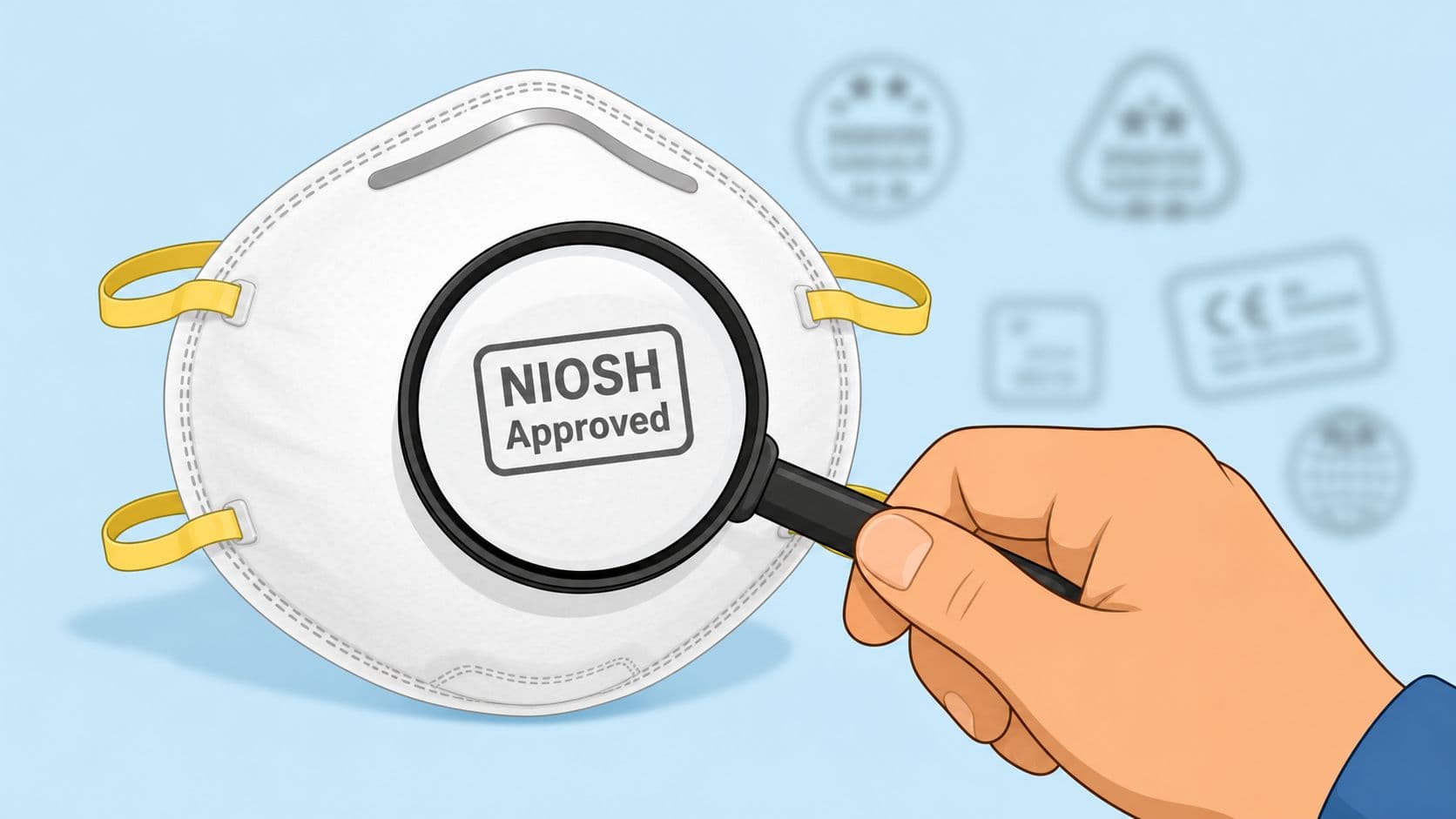
The most useful quick screen is strap design. Valid NIOSH-approved N95 respirators must have two headband straps and do not use ear loops. The presence of ear loops is a primary indicator of a counterfeit or non-approved mask that cannot reliably achieve the tight facial seal required for 95% filtration efficiency (CDC NIOSH counterfeit respirator guidance).
That point gets missed because ear loops are convenient. Convenience isn't the issue. Seal is.
Use this short checklist when you're deciding whether a mask is worth trusting:
- Two headbands: One high, one low. That's the standard design pattern to hold a seal.
- No ear loops: Especially not plain ear loops with no fastening system.
- Clear approval markings: The respirator itself should identify what it is, not just the outer box.
- No fashion-first add-ons: Decorative features can be a sign that protection wasn't the primary design target.
Why ear loops are a serious red flag
Ear loops often can't pull the mask evenly enough to maintain the face seal an N95 depends on. That's the practical reason this design cue matters.
If you're comparing mask categories for workplace or facility use, some broader procurement and sanitation discussions touch related issues around form factor and handling. One example is this piece on hygiene best practices for facilities, which is useful as context when teams are sorting through ear-loop masks versus tighter-sealing options.
If the mask can't stay snug along the cheeks and under the chin, the filtration spec on the material doesn't rescue it.
Certification should connect to function
People sometimes get hung up on labels and miss the mechanical reality. The seal matters because the 95% performance rating applies to the respirator when it's worn correctly and sealed, not when it's hanging loosely on the face.
So the smart buying order is this: verify it's a legitimate respirator design, confirm it uses headbands instead of ear loops, then check whether that model shape fits your face.
Safe Cleaning and Reuse Protocols
The safest protocol depends entirely on which mask you have. A disposable N95 and an elastomeric respirator should not be maintained the same way.
For reusing disposable N95s
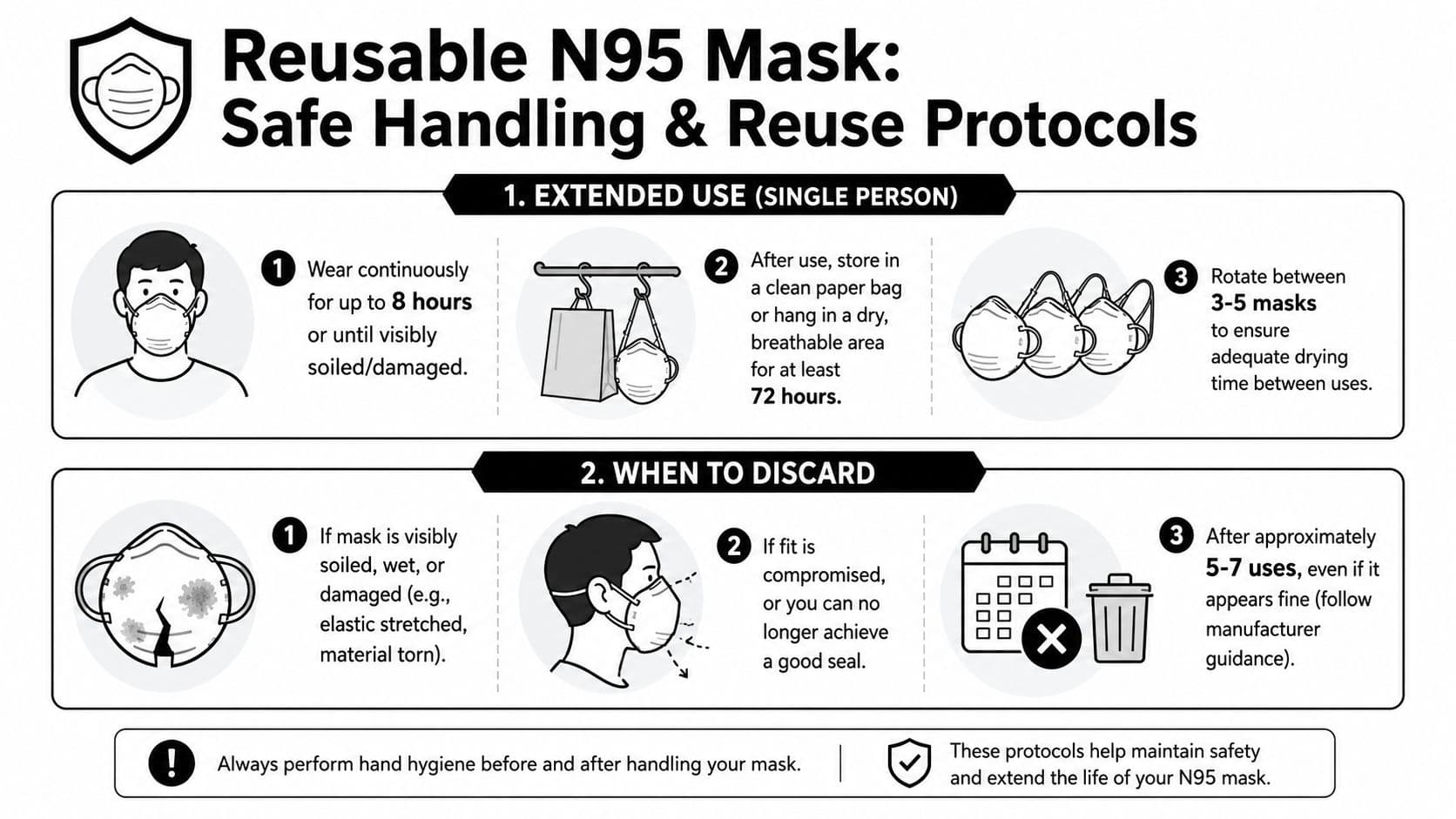
The least risky way to extend a disposable N95 is rotation, not aggressive cleaning. MedlinePlus summarizes research showing that rotating 3–4 masks and storing them at room temperature of 21–23°C allows SARS-CoV-2 to die off within 3 days, while retaining 92.4% to 98.5% filtering efficiency (MedlinePlus Magazine).
That approach works because you're reducing repeated handling and avoiding the filter damage caused by liquid cleaning.
Use a simple system:
- Assign one mask per day. Number them if needed.
- Store each used mask in a dry, breathable setup. A paper bag works better than sealed plastic.
- Let it rest before rewearing. Rotation only works if you give masks enough downtime.
- Inspect before every use. Look at the straps, nose clip, and mask shape.
- Discard at the first sign of fit failure. If it won't seal, it's done.
The hard cap matters too. According to CDC conservation guidance, a single disposable N95 should be limited to no more than five total uses (five donnings) by the same person (CDC NIOSH conserving N95s). In practice, many masks become unreliable before that outer limit because the fit degrades first.
What not to do with a disposable N95
Two cleaning mistakes show up again and again because they feel intuitive. Both can ruin performance.
- Don't wash with soap and water. That can reduce filtering efficiency to 54% (Wikipedia overview of N95 respirators).
- Don't use alcohol sprays or wipes on the filter media. Alcohol treatment can drop efficiency to 67% on disposable N95s in the same overview.
- Don't assume heat is harmless just because the mask looks unchanged. Some methods may preserve filtration better than others, but fit and seal can still become the weak point.
- Don't reuse a wet or visibly dirty mask. Moisture, makeup, dust, and deformation all count against it.
If you're documenting this for staff or household routines, it helps to turn the process into a written checklist rather than relying on memory. A simple SOP workflow format like this guide on how to create standard operating procedures works well for mask rotation, storage, and discard rules.
Treat disposable N95 reuse as a controlled exception, not a casual habit.
For true reusable elastomeric respirators
Elastomeric respirators follow a different logic. The facepiece is reusable, so cleaning it is expected. The filters are the consumable component, and replacement timing depends on the manufacturer and the environment you're using it in.
The practical routine is straightforward:
- Clean the facepiece according to the manufacturer instructions. That's normal maintenance for this category.
- Keep the sealing surfaces clean. Dirt or skin oils where the mask meets the face can interfere with fit.
- Inspect valves, harnesses, and attachment points. Reusability only helps if the hardware stays sound.
- Replace filters when the manufacturer says to, or when breathing resistance or contamination makes replacement necessary.
This is the big trade-off. Elastomeric models ask more of you operationally. You need to clean them, store them properly, and stay on top of filter replacement. In return, you get a more durable platform for repeated use.
How to Perform a Proper Fit Test at Home
A perfect filter doesn't help much if air leaks around the edges. That's why fit checking has to become routine, especially if you're trying to get more than one wear out of a mask.
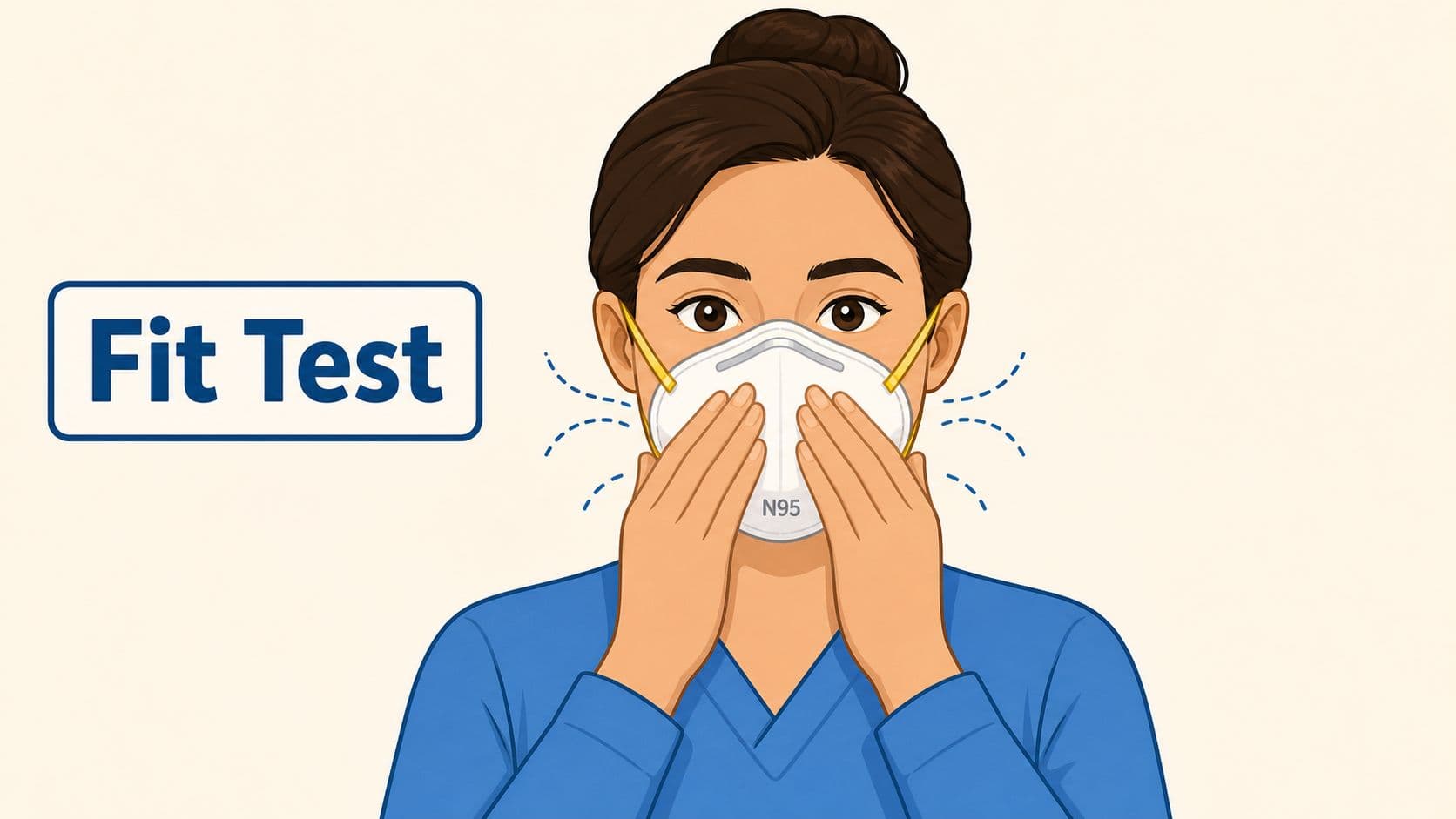
OSHA's Respiratory Protection Standard requires users to perform a seal check each time they put on a tight-fitting respirator, using positive and negative pressure checks to confirm there's no air leakage between the mask and the face (Stericycle summary of OSHA requirements).
Start with the basics
Before the seal check, make sure the mask is sitting where it should:
- Top strap high on the head: Not down on the neck.
- Bottom strap below the ears: This stabilizes the lower edge.
- Nose clip molded firmly: Press it to your nose shape with both hands.
- Mask fully under the chin: Gaps at the chin are common and easy to miss.
If you're setting this up as a repeatable household or workplace habit, a short reusable checklist helps people do it consistently. This format for creating a checklist is a good model for turning fit checks into a routine instead of an afterthought.
The negative pressure check
This is the easier one for many people to feel.
Cover the respirator surface as best the model allows, then inhale gently. You want the mask to pull slightly inward toward your face. That inward pull tells you air isn't rushing in from the edges.
If you feel air entering near the nose, cheeks, or chin, adjust the mask and try again. Reposition the straps before you blame the mask model itself.
The positive pressure check
Now exhale gently.
You're checking for escaping air around the perimeter. If air shoots upward toward your eyes, the nose area isn't sealed well enough. If you feel leakage at the cheeks or chin, reset the mask and tighten or reposition as needed.
Small leaks count. You don't need a dramatic failure to lose protection.
A good seal check should feel boring. No obvious leaks, no fluttering around the edges, no air blowing into your eyes.
A visual demo can help if you've never done this before:
Signs the mask has aged out
At-home judgment is paramount. A mask may need to be discarded even if the filter media looks clean.
Watch for these clues:
- Straps that feel loose: If tension is fading, seal reliability drops with it.
- A nose clip that won't hold shape: Repeated bending can weaken it.
- Edges that no longer sit flat: Warping changes how the mask contacts your face.
- Repeated adjustment during wear: If you keep chasing the fit, the fit is already failing.
For most non-healthcare users, this user seal check is the practical bridge between product claims and real protection. It takes less than a minute, and it catches the failures that a quick mirror check won't.
Choosing the Right Reusable N95 Mask For You
You need respiratory protection for a recurring task, but the right choice depends on what “reusable” means in your situation. For some people, it means limited repeat use of a disposable N95 before fit or condition drops off. For others, it means buying an elastomeric respirator that was built to be cleaned, maintained, and used again.
That distinction matters more than branding.
If your exposure is occasional, a disposable N95 is often the practical option. It travels well, draws less attention in public, and works well for flights, short smoke events, or as a backup in a work bag. The trade-off is lifespan. Disposable N95s are not designed for routine cleaning, and repeated wear gradually weakens the parts that matter most, especially the straps and nose area.
When a disposable N95 makes sense
Choose a disposable N95 if your use is intermittent and you want the simplest setup.
Pros
- Light and easy to carry
- Lower profile for public settings
- Good choice for short, infrequent exposures when fit remains reliable
Cons
- Limited reuse window
- Not designed for washing or disinfection
- Performance depends heavily on continued fit, which can decline before the mask looks worn out
If you expect to wear a respirator often, an elastomeric model usually gives you more control. The facepiece is built for repeated cleaning. The filters are replaceable. The strap system is generally more stable over time. You do give up some convenience. Elastomerics are bulkier, more visible, and require a maintenance routine that many casual users will not keep up with.
When an elastomeric respirator is the better call
Choose an elastomeric respirator if respiratory protection is part of your regular routine, not an occasional precaution.
Pros
- Designed for true reuse
- Durable facepiece and head harness
- Replaceable filters and a clear maintenance cycle
Cons
- Bulkier to store and carry
- More noticeable in shared or public spaces
- Requires cleaning, inspection, and timely filter replacement
The simplest way to choose is to match the respirator to the pattern of use.
- Occasional flights or crowded transit: A disposable N95 is usually easier to pack, wear, and replace.
- Wildfire smoke that lasts for days or weeks: Disposable N95s can still work, but frequent use starts to favor an elastomeric respirator.
- Home renovation, sanding, or workshop dust: Elastomeric respirators are often the better long-term tool because repeat use is expected.
- Emergency backup in a bag or car: Disposable N95s are usually more practical.
One more filter for the decision is tolerance for upkeep. Some people will reliably clean a facepiece, store it properly, and track filter changes. Others want a mask they can inspect quickly and replace without much thought. Be honest about that. The best respirator on paper is not the best one for you if you will avoid using it because it feels like another piece of equipment to manage.
If you are choosing for a household, team, or project, build a short comparison sheet with criteria such as use frequency, storage, maintenance burden, communication needs, and replacement cost. A simple framework like this guide on how to make a decision template can make the trade-offs easier to see.
The practical bottom line is straightforward. If you want something you can accurately call reusable, buy a true reusable respirator. If you plan to reuse a disposable N95, treat that as limited extended use, not as a washable long-term solution.
Focus on What Matters.
Experience lightning-fast task management with AI-powered workflows. Our automation helps busy professionals save 4+ hours weekly.