When you run a small team, project management shouldn’t be heavy documentation and rigid frameworks. Use lightweight, practical methods that bring speed, clarity, and clear ownership.
December 15, 2025 (8mo ago) — last updated March 22, 2026 (5mo ago)
Lean Project Management for Small Teams
Lean project management strategies, simple templates, and workflows to help small teams prioritize, collaborate, and deliver results faster.
← Back to blog
Lean Project Management for Small Teams
Summary
Lean project management strategies, templates, and workflows to help small teams prioritize, collaborate, and deliver results faster.
Introduction
When you run a small team, project management shouldn’t be heavy documentation and rigid frameworks. Use lightweight, practical methods that bring speed, clarity, and clear ownership. This guide shows how to build a simple Mission Control that fits your team, not the other way around.
Why Traditional Project Management Crushes Small Teams
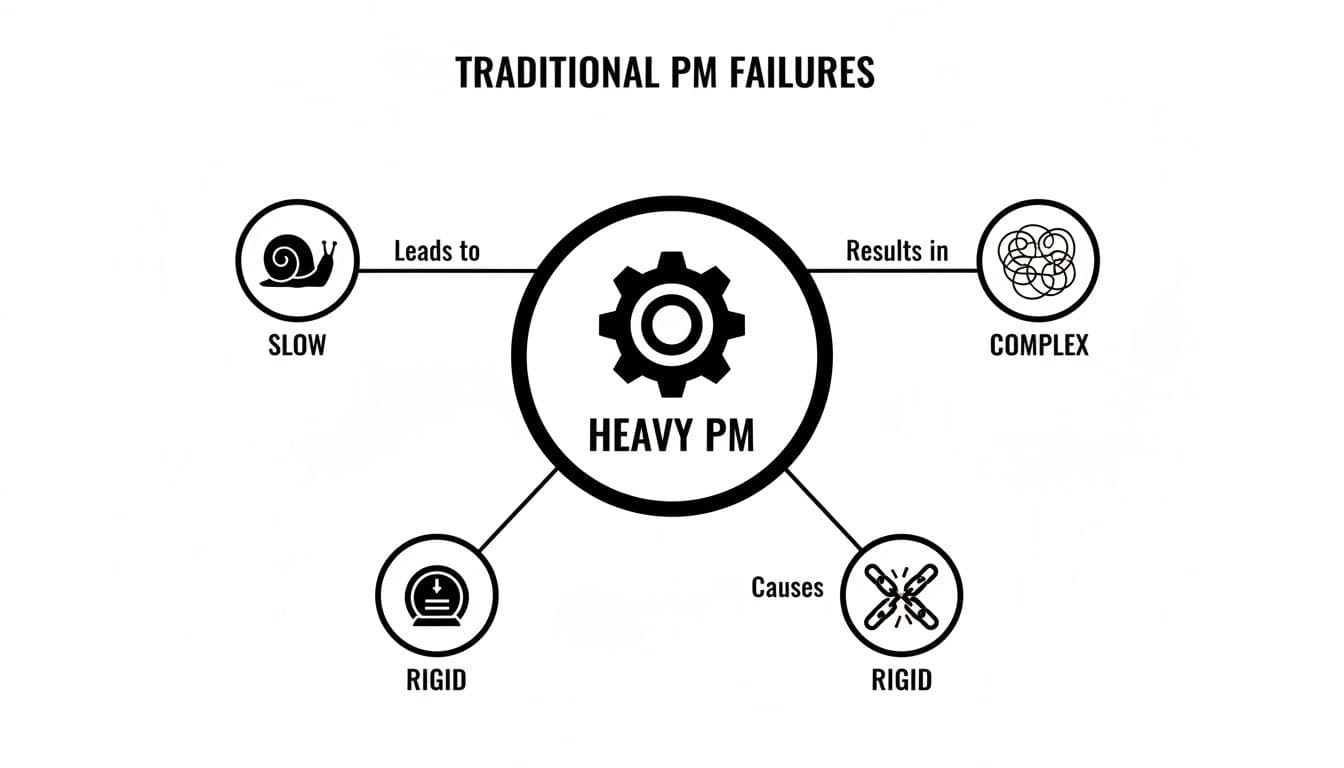
Have you ever tried to use a sledgehammer to hang a small picture frame? That’s what it feels like when a nimble team is forced into a top-heavy project management system. Those approaches were built for large organizations with layers of approvals and they create friction for teams that need to move fast.
Instead of helping you move quicker, they bog you down with endless Gantt charts, complex resource spreadsheets, and waterfall workflows where one small delay can derail the whole project. The result is wasted time, lower morale, and less creativity.
The Friction of Big-Business Bureaucracy
Small teams thrive on direct communication and rapid decisions. Drop in a system designed for a 500-person department and a five-minute decision can turn into a formal change request with multiple approvals. Creativity and quick problem-solving get buried under process, and people spend more time managing the system than doing work that matters.
“For small teams, lightweight project management isn’t a compromise, it’s a strategic necessity that unlocks rapid progress and ownership.”
Before we move on, here are the core challenges that come from overly complex systems:
| Challenge Area | Impact on Small Teams |
|---|---|
| Excessive Documentation | Drains time and energy from creative and productive work. |
| Rigid Hierarchies | Slows decision-making and reduces autonomy. |
| Complex Workflows | Creates unnecessary bottlenecks and reduces flexibility. |
| High Administrative Overhead | Shifts focus from doing the work to managing the system. |
| Poor Communication Flow | Important information gets lost in formal, bureaucratic channels. |
Misaligned Tools and Mindsets
Most project teams are small, with many teams made up of ten or fewer members1. Yet many organizations still rely on spreadsheets and email instead of adopting the right tools for small teams. Adopting structured, right-sized practices can meaningfully improve project outcomes and reduce avoidable delays2.
Ultimately, your system should amplify your team’s strengths, not treat them like a tiny cog in a giant machine. By recognizing common pain points, you can start building a framework centered on clarity, speed, and ownership.
Building Your Lightweight Project Management Framework
Creating a lightweight framework isn’t about buying clunky software or memorizing jargon. It’s about agreeing on a few clear rules everyone can follow. Think of it as creating a Mission Control: one central, easy-to-understand place where everyone sees what’s important, tracks status, and knows who owns each task.
The Three Pillars of a Lightweight Framework
Nail these three and you’ll solve most project headaches without bogging people down:
-
Clear Roles and Ownership: Every task needs one clear owner. It isn’t about blame, it’s about responsibility and preventing work from falling through the cracks.
-
A Simple Task Workflow: Use a dead-simple visual process like To Do → Doing → Done so status is obvious at a glance.
-
A Consistent Communication Rhythm: Pick predictable check-ins—10-minute stand-ups or a weekly planning meeting—to reduce interrupt-driven work.
Putting Your Framework into Action
Keep it simple. A Kanban board is a perfect way to visualize the workflow with minimal overhead. A basic board needs three columns:
- To Do: Backlog of tasks waiting to be tackled.
- In Progress: What the team is actively working on now.
- Done: Completed tasks that show visible momentum.
See our guide to a Kanban board for project management to get started. Lightweight systems let small teams manage multiple concurrent projects without drowning in process—many teams find these systems drive far better outcomes than rigid waterfall approaches3.
“A lightweight framework isn’t about having fewer rules, it’s about having the right rules. The goal is a system so simple and intuitive it becomes an invisible engine for progress.”
Tools like Fluidwave let you spin up a Kanban board in minutes, assign owners, and keep project conversations attached to the work. If you want to strengthen your practical knowledge, foundational PMP principles are a helpful reference for planning and governance4.
By focusing on clear roles, simple workflows, and consistent communication, you create a system that amplifies your team’s speed and collaborative energy.
Mastering Prioritization When Everything Is Urgent
On a small team, the line between “important” and “on fire” gets blurry. When everyone wears multiple hats, every new request can feel urgent. That constant urgency leads to burnout and scattered results.
The solution isn’t working harder, it’s getting smarter. Use a shared system to decide what truly matters now. With a system, priorities become calm, objective conversations rather than shouted opinions.
Choosing Your Prioritization Framework
Keep it simple. Two reliable methods for small teams are the Eisenhower Matrix and the MoSCoW method.
The Eisenhower Matrix separates tasks by urgency and importance so you focus on what matters rather than what screams the loudest.
The MoSCoW method groups work into:
- Must-Have: Non-negotiables for the release or sprint.
- Should-Have: Important but not critical for the initial launch.
- Could-Have: Nice-to-have items if time allows.
- Won’t-Have (This Time): Explicitly out of scope to prevent creep.
These shared categories give everyone a common language for prioritization and reduce the need for constant, context-free status checks.
Applying Prioritization in Your Daily Workflow
Use these frameworks during your stand-ups or weekly planning to turn abstract goals into ordered tasks. When team members understand why something is top priority, they can make smarter on-the-spot decisions without waiting for approvals. For practical techniques, see our guide to task prioritization techniques.
Mastering prioritization moves your team from reactive firefighting to proactive, intentional work—an essential shift for sustained performance.
Using Simple Templates to Drive Consistency
Consistency beats complexity. Minimalist templates are like recipes: they give predictable, repeatable outcomes without killing creativity. Small teams do best when they reuse a few powerful templates rather than inventing new documents every project.
The project management software market is growing rapidly, reflecting demand for tools that balance structure and speed5.
Core Templates for Small Team Success
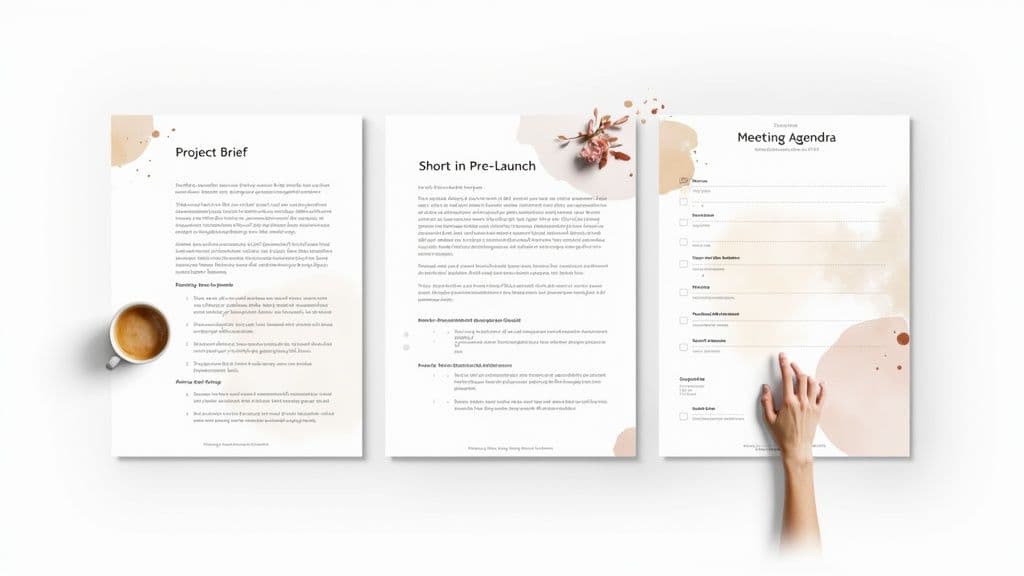
Three templates cover most needs:
| Template | Core Purpose | Must-Have Elements |
|---|---|---|
| One-Page Project Brief | Align the team on mission and goals before work begins. | The “Why,” key objectives, target audience, success metrics, and major milestones. |
| Pre-Launch Checklist | Catch critical oversights before launch. | Technical checks, content proofreading, stakeholder approvals, communications plan. |
| Focused Meeting Agenda | Make meetings productive and decision-focused. | One clear meeting goal, timed discussion points, and required attendees. |
These templates aren’t bureaucracy, they’re shortcuts that save time. Pin them to the top of your project board in Fluidwave so they’re living assets, not buried files.
For timeline planning, an Excel project planner template can help map responsibilities and deadlines.https://whatpulse.pro/blog/2025-10-03-template-project-planner-excel
From Static Files to Living Assets
Treat templates as living documents inside your workspace. Pin the one-page brief, keep the pre-launch checklist attached to release tasks, and use agenda templates to keep meetings tight. This makes consistency the path of least resistance and keeps project management light and useful.
Making Your Workflow Work for Everyone
Small teams are often a mix of locations, personalities, and work styles. Your system should make work flow smoothly whether someone is remote, hybrid, or in the office. It should also support neurodivergent team members by adding clarity and predictability.
Thriving in a Remote or Hybrid World
Two practices are essential for distributed teams: asynchronous communication and a single source of truth.
Asynchronous work lets people contribute on their own schedule and respects different time zones. In practice, that means:
- Writing detailed tasks with goals, talking points, audience, and links.
- Recording quick Loom-style walkthroughs instead of long meetings.
- Keeping project conversations on task cards, not scattered across Slack and email.
A single source of truth—your pinned brief and task board—keeps everyone aligned and reduces unnecessary check-ins. Project performance can be strong across setups, and small teams with the right habits can succeed from anywhere1.
Designing for Neurodiversity and Inclusion
Small adjustments make a big difference. Support neurodivergent team members by:
- Offering information in multiple formats: written brief, short video, and simple diagrams.
- Using clear, direct language: explicitly state what “done” looks like with acceptance criteria.
- Making progress visual: Kanban boards give tangible satisfaction and clarity.
When you design for inclusion, you make work clearer and less stressful for everyone, boosting performance across the team.
Managing a Project from Start to Finish
Here’s a practical example: a four-person marketing team has one month to launch a new social campaign. They use Fluidwave to apply the principles above and keep things simple and visible.

Step 1: Draft a Clear Project Brief
The team lead creates a one-page brief answering the essentials:
- The “Why”: Increase webinar sign-ups by 20%.
- Audience: B2B tech professionals.
- Key message: Our feature saves teams over four hours a week.
- Success metric: 200 webinar registrations from the campaign.
- Deadline: Launch in four weeks.
They pin this brief to the top of the project board in Fluidwave so it’s always visible.
Step 2: Build a Simple Task Board
Their Kanban board has four columns:
- Backlog: Brain dump of initial ideas and raw tasks.
- To Do (This Week): Weekly priorities pulled from the backlog.
- In Progress: What each person is actively working on now.
- Done: Completed tasks that show momentum.
Every task card has a clear owner and acceptance criteria, so there’s no confusion about responsibilities.
Step 3: Prioritize and Track Progress
In Monday’s check-in the team uses MoSCoW to prioritize the week’s tasks. Must-Haves are scheduled first; Could-Haves are parked for later. The board makes bottlenecks obvious—if a task sits in In Progress too long, the team lead knows who to check in with.
This simple visual system replaces endless “What’s the status?” messages with one single source of truth everyone can see.
Got Questions? We’ve Got Answers.
What’s the Best Project Management Method for a Small Team?
There’s no single best method. Many small teams find success with agile-inspired approaches like Kanban for continuous flow work and Scrum for time-boxed sprints. Pick one, try it for a few weeks, and adapt it to your team’s needs.
How Do We Handle Scope Creep Without a Formal Process?
Use a crystal-clear project brief as your reference point. When new requests appear, ask: “Does this directly help our main goal?” If not, park it in an ideas backlog and revisit later. This keeps focus without stifling new ideas.
Are Soft Skills Really That Important for a Project Manager?
Yes. On a small team, soft skills—communication, empathy, leadership—often matter more than technical expertise. Strong leadership reduces budget losses and scope creep and keeps teams productive and motivated4.
Quick Q&A
Q: How do I start with lightweight project management?
A: Begin with a one-page brief, a three-column Kanban, and a weekly check-in. Keep ownership clear and prioritize with a simple method like MoSCoW.
Q: What if my team resists change?
A: Start small. Pilot the approach on one project, show visible wins, and incorporate feedback. Make the new process easier than the old one.
Q: How do I measure success for small-team projects?
A: Use a few clear metrics tied to your brief—conversion goals, delivery dates met, and task cycle time—and review them in your weekly sync.
1.
ProofHub, “Project Management Statistics: Key Trends & Data,” https://www.proofhub.com/articles/project-management-statistics.
2.
Project Management Institute, “Pulse of the Profession,” https://www.pmi.org/learning/library/pulse-of-the-profession-2021-12369.
3.
Standish Group, CHAOS Report, https://www.standishgroup.com/sample_research_files/CHAOSReport2015-FINAL.pdf.
4.
Project Management Institute, “Pulse of the Profession: Leadership & Communication Impact,” https://www.pmi.org.
5.
Grand View Research, “Project Management Software Market Size, Share & Trends Analysis Report,” https://www.grandviewresearch.com/industry-analysis/project-management-software-market.
Focus on What Matters.
Experience lightning-fast task management with AI-powered workflows. Our automation helps busy professionals save 4+ hours weekly.