Tired of chaos? Master planning and organizing with our guide. Learn actionable methods to manage tasks, boost productivity, and finally gain control.
January 1, 2026 (9mo ago)
A Modern Guide to Planning and Organizing Your Life
Tired of chaos? Master planning and organizing with our guide. Learn actionable methods to manage tasks, boost productivity, and finally gain control.
← Back to blog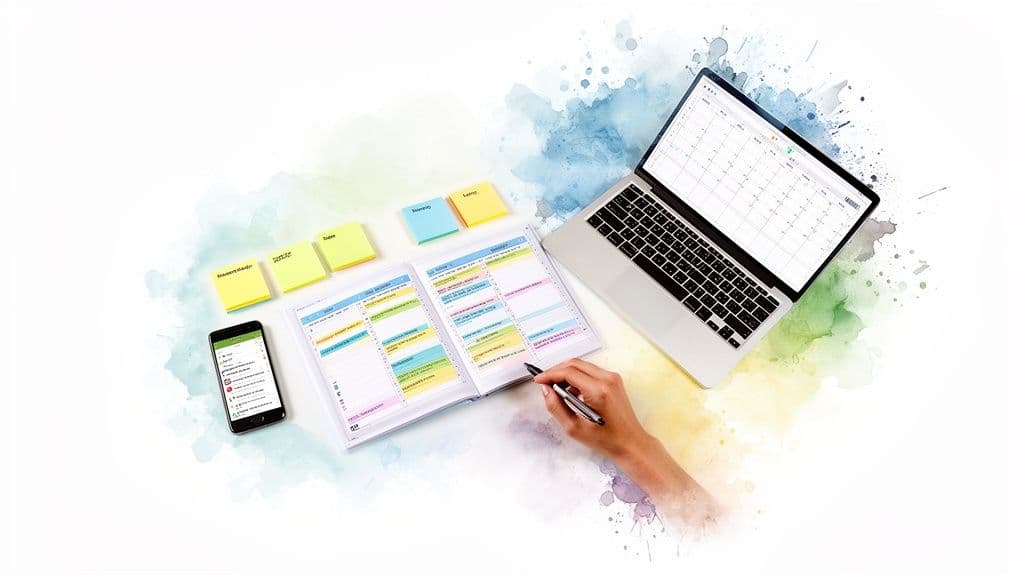
A Modern Guide to Planning and Organizing Your Life
Summary: Tired of chaos? Master planning and organizing with clear capture, prioritization, and automation strategies to manage tasks, boost productivity, and regain control.
Introduction
Tired of chaos? This guide shows practical ways to capture ideas, prioritize what matters, and build a planning system that actually works. You’ll learn simple habits, useful views for different workflows, and how to use automation and delegation to reclaim time and focus.
Effective planning and organizing isn’t just about making lists. It’s about turning goals into concrete, doable steps and arranging those steps so you reach the finish line. A reliable system moves you from constantly reacting to shaping your future.
Why Traditional Planning Methods No Longer Work

The classic to‑do list often becomes an endless scroll of tasks with no context or priority, and that breeds overwhelm. In our hyper‑connected world, static analog tools can’t keep up. When your system is a mess of sticky notes, app reminders, and a bursting inbox, your brain does the work of memory instead of focusing on the task at hand.
The Hidden Cost of Chaos
Disorganization increases cognitive load, making it hard to filter noise, decide what’s important, and keep momentum. Every minute spent hunting for a note is a minute taken from meaningful work, and over time that adds up to missed deadlines, burnout, and a constant feeling of falling behind.
“Stop seeing planning as a chore. See it as the blueprint for your own success and peace of mind.”
This need for better systems is driving rapid growth in task and project management tools, as many organizations invest to reduce friction and improve execution1.
The Cost of Chaos vs The Return on Structure
| Challenge of Disorganization | Impact | Benefit of Structured Planning | Outcome |
|---|---|---|---|
| Mental Overload | Constantly trying to remember tasks, feeling overwhelmed and stressed. | Clear Mind | Ideas and tasks are captured in a trusted system, freeing mental space. |
| Missed Deadlines | Important work slips through the cracks due to lack of visibility. | Reliable Execution | Prioritized tasks with clear deadlines ensure nothing is forgotten. |
| Reactive Fire‑Fighting | Always responding to the most urgent but not most important issue. | Proactive Strategy | You work on what truly matters, aligned with long‑term goals. |
| Wasted Time | Searching for information and constant context switching. | Increased Efficiency | Everything has a place, allowing you to focus. |
| Stalled Progress | Projects stall without a clear path forward. | Consistent Momentum | Break big goals into small steps to drive steady progress. |
Investing a little time in structure removes hidden costs and delivers outsized returns.
Moving Beyond the Basic To‑Do List
Simple lists are static and can’t show how tasks relate or change. The better solution is a dynamic framework you can trust—one place that captures everything and gives clarity from every angle. If you want to compare digital tools versus older methods, check this head‑to‑head on wall calendars and modern apps.
The goal is a system that captures reliably, helps you focus, and gives a clear path forward every day.
How to Capture Every Idea and Task
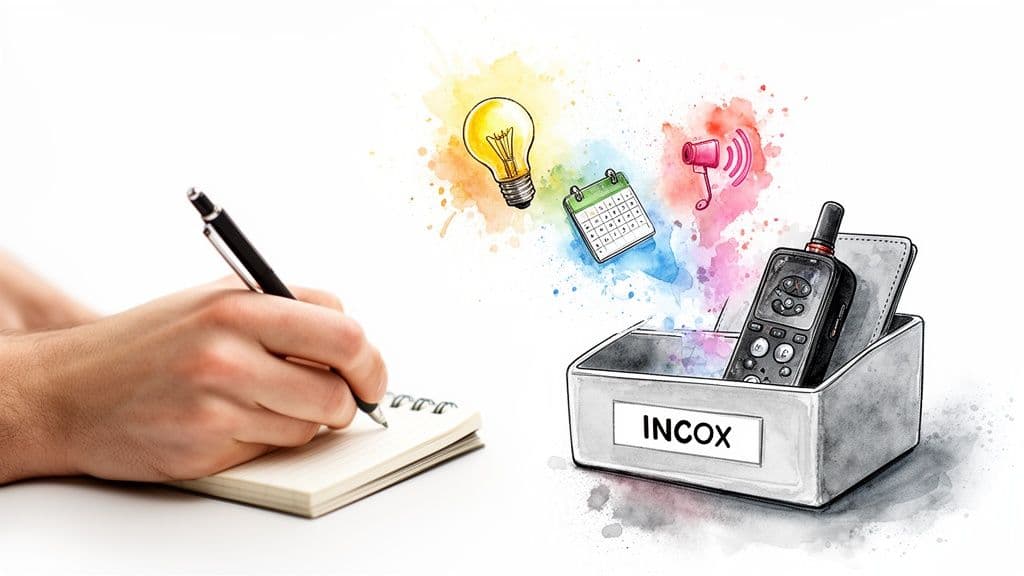
Step one is simple: get everything out of your head. Your brain is for ideas, not storage. A complete “brain dump” creates an inventory of commitments, ideas, and to‑dos so nothing is leaking attention.
Capture methods that stick:
- The Digital Inbox: One app or a dedicated “Inbox” project where every new thought goes first.
- Voice Memos: Record ideas while walking or driving and process them later.
- A Simple Notebook: Jot tasks quickly without getting lost in phone notifications.
This external inbox is a cornerstone of many productivity systems. For a deeper look at processing captured items, see our guide on the Getting Things Done methodology.
The real relief comes when you trust that everything is captured, letting your mind focus on the present work rather than juggling what’s next.
Turning Vague Goals into Actionable Steps
Big items like “Launch new marketing campaign” are projects, not tasks. Break them into the next physical actions you can complete:
- Draft the initial campaign brief.
- Research keywords for the target audience.
- Design mockups for the ad creative.
- Write three versions of ad copy.
- Schedule a review meeting with the team.
Each step is a clear, doable action. Practicing this habit reduces anxiety and makes progress inevitable. For note‑taking tactics that support this work, see our guide on how to take better meeting notes.
Choosing the Right Prioritization Framework
Once your tasks are captured, decide what actually matters. Stop guessing and use a framework to make deliberate choices about where to invest your time.
The task management software market is growing fast as teams look to solve these exact problems, with rising valuations and adoption across industries2.
The Eisenhower Matrix: Urgent vs. Important
Ask two questions: Is it urgent? Is it important? Sort tasks into four buckets:
- Urgent & Important (Do now)
- Not Urgent & Important (Schedule)
- Urgent & Not Important (Delegate)
- Not Urgent & Not Important (Delete)
This helps you protect time for the “Not Urgent & Important” work that drives long‑term progress.
The Impact vs Effort Matrix for Quick Wins
Plot tasks by potential impact and required effort. When you need momentum, choose high impact, low effort items first. Explore more task prioritization techniques to refine your approach.
The specific framework matters less than the discipline of making consistent, informed choices about your time.
Organizing Your Tasks for Total Clarity
A prioritized list is a start, but you also need views that match the work you do. Different perspectives reveal different context, just like maps for different trips.
Using multiple views helps you spot bottlenecks and plan more effectively. This is a major reason modern task tools are growing in popularity, with market size rising steadily in recent years3.
Matching the View to Your Workflow
Choose the view based on the work:
| View Type | Best For | Example Use Case | Key Benefit |
|---|---|---|---|
| List View | Simple, linear tasks and daily planning. | Morning brain dump or a grocery list. | Fast capture and clarity. |
| Kanban View | Work that moves through stages. | Content pipeline or development sprints. | Visual progress and bottleneck spotting. |
| Calendar View | Date or time‑based work. | Editorial calendar or client appointments. | Time context and sequencing. |
Use the right lens, and you stop just listing tasks and start understanding them.

Scaling Your System with Automation and Delegation
A great system is a machine that produces results, often without your constant input. Once you capture and prioritize reliably, the next step is to automate or delegate repetitive, low‑value work so you can focus on high‑impact activities.
What to Automate or Delegate
Look for repeating, predictable tasks and work outside your strengths. Common candidates:
- Recurring administrative chores like weekly reports.
- High‑volume, low‑strategy tasks such as data entry.
- Tasks outside your zone of genius like advanced bookkeeping or specialized design.
If you find yourself repeating the same manual process daily, automate it or hand it off.
How to Delegate Without Headaches
Be explicit about outcomes. Don’t say “Find some sales leads.” Say, “Please find 20 UK marketing agencies (10–50 employees), include company name, website, and Head of Growth contact info in the shared spreadsheet by Friday at 5 PM.” Clear, measurable requests save hours of back‑and‑forth.
Putting Simple Automations to Work
You don’t need to code. Most tools offer trigger‑based rules. Simple automations to try:
- Auto‑assign recurring tasks like the weekly analytics report.
- Send deadline reminders 24 hours before a task is due.
- Move tasks between columns when status changes and notify the next owner.
For step‑by‑step automation ideas, see our guide on how to automate tasks.
Troubleshooting and Making the System Stick
Building a system is one thing, making it stick is another. Below are common sticking points and practical fixes.
“How Do I Stick With This When I Get Busy?”
Start tiny. Pick one habit, like a 10‑minute morning brain dump for two weeks. Consistency beats perfection. A system you use 80% of the time is far better than a perfect system you abandon.
“What’s the Best Way to Handle Urgent, Unplanned Tasks?”
Plan for interruptions. Block a 60‑minute “Reactive Work” window each afternoon. When something urgent arises, decide: is it a true fire, can it wait until the reactive block, or should it be scheduled later? This buffer prevents interruptions from derailing deep work.
“How Often Should I Review My Goals and Priorities?”
Use a three‑tier cadence:
- Daily huddle (5–10 minutes): Orient to your top three priorities.
- Weekly lookback (30–60 minutes): Review wins, gaps, and the week ahead.
- Quarterly strategy session (1–2 hours): Ensure your projects still align with big goals.
This layered approach connects daily tasks to long‑term direction.
Ready to stop managing tasks and start building a system that works? Combine smart task management with on‑demand support to free your time. Create your free account at Fluidwave.
Frequently Asked Questions
Q: What’s the first step to get organized?
A: Do a complete brain dump into a single, trusted inbox. Capture everything without organizing it yet, then process items into concrete actions.
Q: Which prioritization method should I start with?
A: The Eisenhower Matrix is a great starting point to separate urgent from important work. Use an Impact vs Effort matrix when choosing quick wins.
Q: How do I make a system sustainable?
A: Build small habits, automate repetitive work, delegate clearly, and use a regular review cadence (daily, weekly, quarterly) to keep priorities aligned.
1.
Task management software market forecast and industry trends: https://www.thebusinessresearchcompany.com/report/task-management-software-global-market-report
2.
Market valuation and short‑term projections for task management tools: https://www.thebusinessresearchcompany.com/report/task-management-software-global-market-report
3.
Historical growth and projections for task management software: https://www.fortunebusinessinsights.com/task-management-software-market-102249
Focus on What Matters.
Experience lightning-fast task management with AI-powered workflows. Our automation helps busy professionals save 4+ hours weekly.