Learn delegation in management to empower your team, prevent burnout, and drive productivity. A practical guide with proven strategies for effective leadership.
March 14, 2026 (6mo ago)
Mastering Delegation in Management for Modern Leaders
Learn delegation in management to empower your team, prevent burnout, and drive productivity. A practical guide with proven strategies for effective leadership.
← Back to blog
Delegation is one of the most misunderstood—and underutilized—tools in a manager's arsenal. It's not about just handing off tasks. Think of a great chef: they aren't frantically cooking every dish themselves. Instead, they're orchestrating the entire kitchen, empowering their team to create a flawless dining experience. That's the real essence of delegation—shifting your focus from doing to directing so you can build a more capable and resilient team.
What Is Effective Delegation In Management

At its heart, delegation in management means entrusting both responsibility and authority for a specific task to someone on your team. But effective delegation is much more than that. It's a deliberate strategy for growth, not just a handy way to get rid of work you don't want to do.
It’s a transfer of ownership, not just a task. To do it right, you need to communicate clearly, trust your people, and be willing to let go of a little control. When you nail this, you stop being a bottleneck and start being an enabler of your team's success.
The Critical Difference Between Delegation And Dumping
A lot of managers fall into a common trap: they think they’re delegating when they're actually just "dumping" tasks. The difference is night and day, and it's something your team feels right away. Task dumping is simply dropping work on someone's plate without context, resources, or real authority. It just breeds resentment.
True delegation is an act of empowerment. It communicates trust and a belief in your team's abilities, fostering a culture of ownership and growth. Dumping tasks, on the other hand, signals a lack of respect for an employee's time and skills.
For example, dumping sounds like this: "I need this report done by Friday." It’s a command, not a collaboration.
Effective delegation sounds more like this: "I'd like you to own the quarterly sales report from now on. You'll have the authority to gather data from the team, and your analysis will be critical in shaping our strategy for next quarter. Let's sync up on the key metrics you'll need to get started." This approach connects the work to a larger purpose and is a cornerstone of the delegative leadership style.
To help clarify this distinction, here’s a breakdown of how these two approaches differ in practice.
Delegation vs. Task Dumping
| Characteristic | Effective Delegation | Task Dumping |
|---|---|---|
| Objective | Develops skills and empowers the employee | Gets a task off the manager's plate |
| Context | Clear purpose and context are provided | Little to no context or rationale is given |
| Authority | The employee is given the necessary authority | No real authority is transferred |
| Support | Resources and support are made available | The employee is left to figure it out alone |
| Outcome | Builds trust, ownership, and morale | Creates confusion, resentment, and poor quality |
Seeing the two side-by-side makes it clear: one is a strategic investment in your people, while the other is a short-sighted transaction that can damage team morale.
Why Delegation Is No Longer Optional For Leaders
In today's workplace, delegation has become the single most important strategy for preventing leadership burnout. Research from DDI's Global Leadership Forecast shows that 71% of leaders report significantly higher stress levels, with nearly one in six experiencing full-blown burnout. That's a staggering number.
Leaders who master delegation directly combat this by reclaiming their time and empowering their teams. This move counters the overwhelming feeling of being buried under endless decisions and back-to-back meetings.
Ultimately, effective delegation is a pillar of strong leadership and a key part of great performance management best practices. By building this foundation, you can start rethinking your workload, fostering genuine trust, and strategically scaling your impact as a leader.
Why Leaders Fail to Delegate Effectively
We all know we should delegate. It’s Management 101, a core tenet of effective leadership. So why do so many smart, capable leaders stumble when it comes to actually handing work off? The truth is, the biggest roadblocks usually aren't on your calendar; they're in your head.
Deep-seated habits and psychological tripwires can turn even the best-intentioned leaders into organizational bottlenecks. And the cost is staggering. The pressure is so intense that 40% of managers are now considering quitting due to overload. It's a clear signal that failing to delegate has become a critical business risk.
A recent State of Delegation 2026 report found that even when leaders do delegate, they often hang onto the mental load, which just slows everything down. To break this cycle, we first have to get honest about the fears that are really holding us back.
The Fear Of Losing Control
For many managers, the idea of handing over a task feels like letting go of the wheel. There's a nagging worry that if they aren't personally involved, things will inevitably go wrong—deadlines will be missed, quality will suffer, and chaos will ensue. This belief often comes from a good place: a deep sense of responsibility.
But this fear creates a vicious cycle. When you refuse to let go, your team never gets the opportunity to build competence or earn your trust. They become dependent on you for every minor decision, which only reinforces your original belief that you have to be in control. You end up stuck in the weeds, and your team’s potential remains untapped.
The Perfectionism Trap
Running parallel to the fear of control is the siren song of perfectionism. It’s the voice in your head that says, "If you want something done right, you have to do it yourself." This is especially common among leaders who got to where they are by having incredibly high standards.
This perfectionism leads leaders to micromanage, rework completed tasks, or simply refuse to delegate in the first place. It sends a demoralizing message to the team: "Your best work is not good enough."
While the intention might be to maintain quality, the impact is destructive. It absolutely crushes morale and tells your team not to bother taking initiative. Why would they, if they expect you to just redo their work anyway? You're left with a disengaged team and a fast track to your own burnout.
The "It's Faster If I Do It Myself" Myth
When you're up against a tight deadline, it’s incredibly tempting to just do a task yourself. The thought of taking the time to explain it, answer questions, and review the work feels like a luxury you can't afford. In that moment, doing it yourself absolutely feels faster.
But this is a classic short-term shortcut with disastrous long-term consequences.
- You never get that time back. The next time that task comes up, and the time after that, it’s still on your plate.
- Your team's skills stagnate. You're not investing in their growth, which means they can't take on bigger challenges down the road.
- You become the single point of failure. What happens when you're sick or on vacation? The work grinds to a halt because no one else knows how to do it.
Think of it as an investment, not a cost. Spending 30 minutes training someone today can save you hours every single week for years. By clinging to the "it's faster" myth, you’re not just holding yourself back; you're robbing your team and your entire organization of the chance to scale and build resilience.
The Framework for Successful Delegation
Getting over the common fears that hold managers back takes more than just good intentions. You need a solid, repeatable process. After all, great delegation isn't just about randomly handing off tasks you don't want to do. It’s a deliberate skill, one built on a framework that creates clarity, empowers your people, and gets you the results you need.
Think of it like building an archway. You can't just toss a bunch of stones in a pile and expect them to hold. You need key pieces, each one fitting perfectly to support the others, to build something that lasts. The same principle applies to delegation.
Before we get into the "how," let's look at the "why." Here’s a breakdown of the mental roadblocks that often trip managers up—the very things a good framework is designed to dismantle.
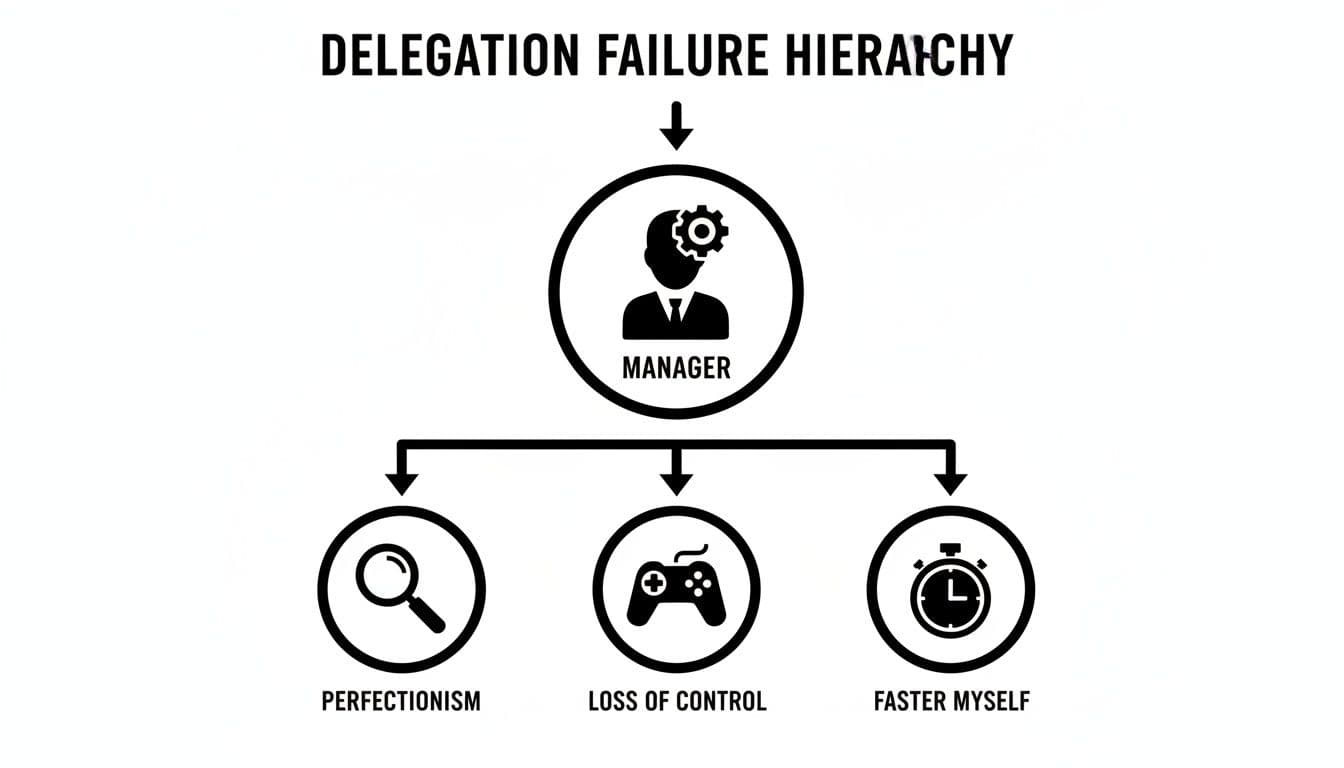
This pyramid gets straight to the point. At the bottom, you have those gut-level fears: perfectionism, loss of control, and the classic "it's faster if I just do it myself" trap. A structured approach helps you push past these instincts.
Define Crystal-Clear Outcomes
If there’s one thing that will sink a delegated task, it’s ambiguity. A fuzzy request like, "Can you work on our social media?" is practically guaranteed to fail. What does "work on" even mean? This forces your team member to guess, and that guesswork almost always leads to mismatched expectations and frustration for everyone.
You have to define exactly what a successful outcome looks like. Let's turn that vague request into something tangible.
- Vague: "Improve our social media."
- Clear: "Increase Instagram engagement by 15% this quarter. To do this, I need you to post three times per week and respond to all comments within 24 hours."
See the difference? Now your team member has a clear target. They know precisely what "done" looks like and can focus their energy on hitting that specific goal.
Grant True Authority
Handing over a task without the authority to actually execute it is incredibly demoralizing. It's like telling someone to drive a car but keeping the keys in your pocket. If you’ve asked someone to run a project, they need the power to make key decisions, access resources, and work with others without having to come to you for permission at every turn.
When you delegate responsibility, you must also delegate the authority that goes with it. This is a non-negotiable part of building trust and fostering real ownership.
This doesn't mean you disappear. It just means you set clear boundaries from the start. For example, you might say, "You have the authority to approve any project expenses up to $500 without checking with me first." That empowers them to move forward while ensuring you’re still in the loop on bigger decisions.
Provide All Necessary Resources
A task without the right resources is just an empty wish. Before you assign anything, pause and think through what that person will need to actually succeed. This is about more than just money.
Ask yourself:
- Tools and Tech: Do they have access to the right software, accounts, or equipment?
- Information: Do they have all the background docs, data, or contact lists they'll need?
- Time: Is the deadline you have in mind actually realistic with their current workload?
- Support: Who can they turn to for help or specific expertise if they get stuck?
Setting someone up with the right resources shows you're invested in their success, not just trying to clear your own to-do list. If you're looking to refine your approach, articles like Three Ways To Make Delegating Easier offer some great, practical tips.
Establish Accountability And Communication
Let's be clear: accountability isn't about pointing fingers when things go wrong. It's about creating a shared understanding of who owns what and how progress will be tracked. You need to agree on how and when you’ll check in. This isn’t micromanaging—it's just responsible leadership.
A simple check-in cadence might look like this:
- A quick kickoff meeting to make sure you’re both on the same page.
- Weekly 15-minute syncs to touch base on progress and clear any roadblocks.
- A final review session to go over the results and talk about what was learned.
This structure creates a predictable rhythm for communication. It gives your employee a safe and consistent way to ask for help, and it gives you visibility without you having to constantly look over their shoulder. When you put these principles into practice, delegation stops being a source of anxiety and becomes one of your most powerful tools for building a more capable and motivated team.
Your Step-by-Step Guide to Delegating Any Task

Knowing the theory behind delegation in management is one thing; putting it into practice is another game entirely. The real difference between managers who thrive and those who just get by is having a reliable, repeatable process for handing off work. This guide breaks that process down into five clear, actionable steps.
Think of this as your playbook. You wouldn't send a team onto the field without a clear plan, and you shouldn't delegate important work by just winging it. A structured approach is your best guarantee for a successful outcome.
Step 1: Identify the Right Tasks to Delegate
First things first: you can't just offload the tasks you hate doing. Smart delegation starts with a strategic look at your own workload to find opportunities that will free you up and help someone on your team grow.
A simple way to begin is by mapping out your typical week. What are the things you do over and over? Which tasks require skills that others on your team either have or could build with a little guidance? Those urgent but low-impact items are often the perfect place to start.
Here are some of the best candidates for delegation:
- Routine and Repetitive Work: Think data entry, pulling standard reports, or coordinating schedules. These tasks are necessary but eat up time you could be using for strategic work.
- Tasks for Skill Development: Do you have a project that could be a fantastic learning opportunity for a junior team member? Delegating this kind of work is a direct investment in your team's long-term strength.
- Time-Consuming but Low-Risk Activities: Things like conducting initial research, gathering information from various departments, or creating the first draft of a document are ideal for handing off.
It's just as important to know what not to delegate. Core leadership responsibilities like performance reviews, high-level strategic planning, or handling sensitive team conflicts should always stay on your plate. These require your specific authority and insight.
Step 2: Choose the Right Person for the Job
Once you've pinpointed what to delegate, the next question is who. This is about more than just finding the person who isn't busy. It’s about thoughtfully matching the task to the right individual's skills, professional interests, and current bandwidth.
When the task is a good fit for the person, everybody wins. Giving a complex data analysis project to a natural-born creative might just cause headaches for everyone. On the flip side, asking a highly analytical person to lead a wide-open brainstorming session could leave them feeling completely out of their element.
As you decide, weigh these factors carefully:
- Skills and Competence: Does this person already have the skills to get the job done right? If not, do they have the potential to learn quickly with some support?
- Interests and Goals: Does this task align with their career ambitions? People produce much higher-quality work when they are genuinely interested in the task at hand.
- Current Workload: Be honest—is their plate already overflowing? Piling more work onto your best people is the fastest way to burn them out.
Getting this match right is a cornerstone of great delegation in management. You get a high-quality result, and your team member gets a meaningful chance to develop.
Step 3: Communicate the Task with Total Clarity
This is the step where I’ve seen delegation fall apart more times than I can count. A rushed, half-explained task is a setup for failure. To give your team member a real shot at success, you need to provide a briefing so clear that it leaves zero room for guessing.
Your mission is to transfer the vision of "done" from your head to theirs. This isn't just about the "what"—it's about the "why."
A solid delegation briefing must cover these five points:
- The Desired Outcome: Be incredibly specific about what a finished, successful task looks like.
- The "Why": Explain how this one task connects to the larger project or company goals.
- Deadlines: Set a firm, realistic due date.
- Authority Level: Let them know which decisions they can make on their own.
- Resources Available: Tell them what tools, budget, or people are available to help.
For more complex or ongoing projects, working with a skilled assistant can be a total game-changer. If you want to learn more about that, check out our guide on how to use a virtual assistant.
Step 4: Monitor Progress Without Micromanaging
Once you hand off the task, the temptation to constantly check in can be overwhelming. But hovering is counterproductive—it kills trust and makes the person feel like you don't believe in them. The art is in finding that perfect balance between staying in the loop and giving them the space to own their work.
The best way to do this is to agree on a check-in schedule right from the start. This gives you a structured way to get updates and offer help without breathing down their neck.
For example, you might set up:
- A quick 15-minute sync at the beginning or end of the week.
- A shared project board where they can post updates.
- A clear open-door policy, so they feel comfortable coming to you if they hit a wall.
This approach gives you the visibility you need while giving them the autonomy they crave. It proves you trust them, which is a powerful motivator.
Step 5: Provide Constructive Feedback and Review
The final, crucial piece of the puzzle is the debrief. When the task is complete, taking the time to review the work and provide feedback is what closes the loop. This step is what solidifies the learning, boosts confidence, and makes the next act of delegation even smoother.
Talk about both the final result and the process they used. Celebrate what they did well, and don't be shy about giving public credit where it's due. If the outcome missed the mark, treat it as a coaching moment. Instead of pointing fingers, ask open-ended questions like, "What was the biggest hurdle you ran into?" or "If you were to do this again, what would you do differently?"
This turns every delegated task into a valuable growth opportunity for your team.
Common Delegation Mistakes and How to Avoid Them
Even with the best intentions, delegation can go wrong. It’s a skill, and like any other, it takes practice. The real trick is spotting the common pitfalls before they turn into major problems that damage trust or derail a project.
Think of these mistakes as tripwires. By knowing where they are, you can step over them. This builds resilience into your leadership style, turning potential failures into powerful coaching moments that make your whole team stronger.
Mistake 1: Delegating the Work but Not the Authority
This is one of the most frustrating things a manager can do. You assign a task but hold all the decision-making power hostage. You've asked someone to run with a project, but they have to come to you for permission on every little thing, from sending a key email to ordering basic supplies.
This doesn't just create a bottleneck; it ties your employee's hands. It sends a clear message: "I'm giving you this work, but I don't actually trust you to handle it."
The fix: When you delegate, be explicit about the authority that comes with the task. Try saying something like, “You have the green light to make any decisions needed to complete this, as long as you stay within our budget. If anything comes up that might push us over budget or shift the deadline, let's talk first.”
Mistake 2: Micromanaging the "How" Instead of the "What"
This is the classic trap for perfectionists. You delegate a task, then you can't help but hover, dictating every single step of how the work gets done. You’re not just focused on the finish line; you’re trying to control the entire race.
Micromanaging absolutely crushes creativity and autonomy. It trains your team to stop thinking for themselves and just wait for your next instruction. Over time, you'll find you have a team that’s afraid to take initiative, which is the exact opposite of what you want.
The fix: Focus on the outcome, not the process. Once you’ve clearly defined the goal and made sure they have what they need, step back. Give them the space to find their own path. Your job shifts from director to supporter.
Mistake 3: Taking Back Tasks at the First Sign of Trouble
Your team member hits a small roadblock, and your gut reaction is to swoop in and "save the day" by taking the task back. It might feel efficient in the moment, but this habit is incredibly damaging in the long run. It tells your employee you have no faith in their ability to handle a challenge.
Every time you reclaim work, you rob your team of a chance to learn. They never get to build the problem-solving muscles or the resilience they need to navigate difficulties on their own.
The goal of delegation isn't just to get a task done; it's to build capability. A mistake isn't a failure—it's a training opportunity in disguise.
Mistake 4: Giving Unclear Instructions or Vague Expectations
Handing off a task with fuzzy instructions is like sending someone on a trip without a map or a destination. A request like, "Can you look into our marketing?" is almost guaranteed to end in frustration for everyone. Your employee is left guessing what you really want, and the result will almost certainly miss the mark.
The fallout from this is huge. It wastes time, kills morale, and can even hurt retention. Companies that are great at delegation see a 23% increase in employee retention. Yet a DDI assessment found that only 19% of managers are considered strong delegators. In the U.S., where workplace engagement hovers around a dismal 31%, this leadership gap costs businesses billions. You can see more on how leaders become great delegators in this report from Gallup.
The fix: Invest the time upfront to be crystal clear. Use a framework like SMART goals (Specific, Measurable, Achievable, Relevant, Time-bound) to define the task. For anything complex, put the key points in writing and hold a quick kickoff meeting to make sure you're both on the same page from the start.
Scaling Your Impact With Technology-Powered Delegation
Even when you've mastered the art of delegation in management, you eventually hit a ceiling. There’s a natural limit to how much you can manually track, follow up on, and manage. The administrative overhead starts to creep back in, and soon you're spending more time managing the work than doing the high-impact thinking you delegated tasks to create time for in the first place.
This is the point where you need to lean on technology. Modern delegation platforms aren't just fancy to-do lists; they're built to act as an extension of your own management capabilities. They handle the repetitive, administrative side of delegation, freeing you up to focus on strategy, mentoring, and the work only a leader can do.
Moving From Manual Delegation To Automated Workflows
Think about what manual delegation actually looks like. You identify a task, find the right person, walk them through it, and then it’s on you to remember to check in. Every single one of those steps pulls on your time and mental energy. It’s a process that simply doesn’t scale with a growing team or an increasing workload.
The right tool shifts that entire process from a clunky, manual effort into a smooth, automated workflow. Instead of drowning in a sea of emails, spreadsheets, and calendar pings, you can orchestrate everything from one place.
The true value of technology here isn’t just about clawing back a few hours. It’s about reducing cognitive load. When you can trust a system to handle the follow-ups and tracking, you can assign work and truly let go, confident that nothing will slip through the cracks.
How AI-Driven Platforms Supercharge Delegation
The best tools are now taking this a step further with AI, making the entire process smarter and more intuitive. These platforms act like a digital chief of staff, helping you make better, faster decisions that used to require a lot of manual thought and analysis.
An AI-powered system gives you a real edge by:
- Spotting Delegable Tasks: The platform can analyze your workload to flag repetitive or time-consuming tasks that are perfect candidates for you to hand off.
- Matching Tasks to Talent: Based on team members' known skills, current workload, and past performance, AI can suggest who is best suited for a specific task. This removes the guesswork.
- Automating Follow-Ups: The system can send automated nudges and reminders based on deadlines, ensuring projects stay on track without you having to constantly ask, "What's the status on this?"
- Giving You Real-Time Visibility: A central dashboard gives you a bird's-eye view of everything. You know who’s working on what and where every task stands, all at a glance.
This isn’t about replacing your leadership; it’s about reinforcing it. Technology takes care of the logistics so you can pour your energy into coaching, setting a clear vision, and steering the team. If you're looking to make this leap, it’s worth learning more about what to look for in delegation software. It’s how you turn delegation from a management art into a scalable system that helps you and your team accomplish far more.
Frequently Asked Questions About Delegation
Even the most seasoned managers have questions when they start delegating with more intention. It's one thing to understand the theory, but it’s another to put it into practice with your team. Let's tackle a few of the most common hurdles you might face.
What Kinds Of Tasks Are Best To Delegate First?
When you're building your delegation muscle, start with the low-hanging fruit. I always recommend looking for tasks that are structured, repeatable, and low-risk. Good examples include pulling a weekly report, organizing team meeting agendas, or gathering initial background research for an upcoming project.
These aren't busywork. They are self-contained tasks with clear finish lines, making them the perfect training ground for your team members. Handing these off gives you immediate time back for high-impact work, and it gives your employee a manageable win. It's how you build confidence and trust on both sides before moving on to bigger, more complex responsibilities.
How Do I Delegate To Someone Who Is Already Busy?
This question comes up all the time, and it's a critical one. You never want to burn out your best people. The trick is to shift your mindset from adding work to shaping their workload for growth.
Start with an honest conversation about their current capacity. If their plate is overflowing, the answer isn't to just pile on more. It's to partner with them to reprioritize. You might even need to help them delegate one of their current tasks to someone else. When you introduce the new responsibility, frame it as a direct investment in their career. You could say, "I know you're at capacity, but I see this project as a key step for you to build client management skills. Let's look at your current list and see what we can move to make space for it."
This isn't about piling on more work. It's about thoughtfully curating a workload that fuels both team productivity and individual career development. When you approach it this way, you show you're invested in their growth, not just their output.
What If A Delegated Task Is Not Completed To My Standards?
Sooner or later, it will happen. Your first instinct might be to grab the reins and fix it yourself, but that's a trap. Taking work back silently erodes trust and robs your team member of a crucial learning opportunity. Instead, you have to treat it as a coaching moment.
Schedule a quick one-on-one to review the work together. The goal isn't to point out what's wrong, but to understand what went sideways. Ask curious, open-ended questions about their process. You might discover your instructions weren't as clear as you thought, or they were missing a critical piece of context.
Use the gap between their result and your expectation as a chance to clarify, coach, and reset for next time. This turns a misstep into a powerful lesson and makes your entire delegation in management process more resilient.
Ready to stop being a bottleneck and start scaling your impact? Fluidwave combines intelligent task management with a network of skilled virtual assistants, allowing you to delegate work seamlessly. Reclaim your time and focus on what matters most by visiting https://fluidwave.com.
Focus on What Matters.
Experience lightning-fast task management with AI-powered workflows. Our automation helps busy professionals save 4+ hours weekly.