Discover how the delegative leadership style fuels autonomy and innovation by empowering skilled teams to decide and act.
March 7, 2026 (6mo ago) — last updated March 14, 2026 (6mo ago)
Delegative Leadership Style: How It Empowers Modern Teams
Discover how the delegative leadership style fuels autonomy and innovation by empowering skilled teams to decide and act.
← Back to blog
The delegative leadership style is really all about trusting your team. A lot. Think of it like being a film director. You're not going to hover over an Oscar-winning cinematographer and tell them how to frame a shot, or coach a seasoned actor on delivering every single line. You hire talented people, give them the script and your vision, and then you trust them to work their magic.
That, in a nutshell, is delegative leadership.
What Is the Delegative Leadership Style?
This isn't about being hands-off or just letting things slide—that's a common misunderstanding. Real delegative leadership is a deliberate choice. It's about handing over true ownership of projects to your most capable people to encourage independence, creative problem-solving, and a real sense of accountability.
As a leader, you pull yourself out of the weeds of daily tasks so you can focus on the big-picture stuff. Your role shifts, but you're still very much in charge of the overall environment. That means you’re responsible for:
- Setting a super clear vision and defining what a successful outcome actually looks like.
- Making sure the team has all the resources, tools, and info they need to get the job done.
- Being available as a guide and a problem-solver, ready to clear any roadblocks that pop up.
It's kind of like building a high-performance engine. You design the system, give it the fuel it needs, and then trust the skilled mechanics (your team) to make it run at its best. This whole approach is built on three core pillars.
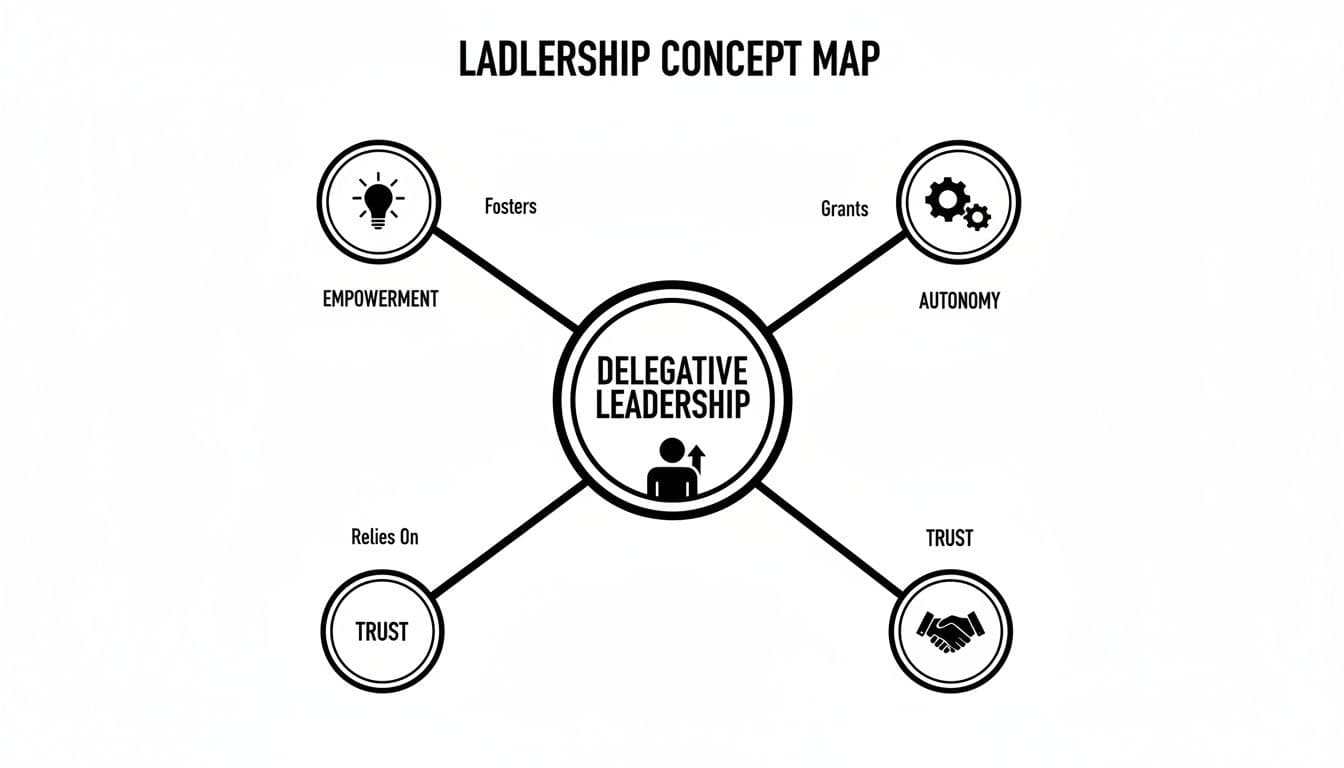
As you can see, this style is a powerful mix of empowerment, autonomy, and trust. When a leader gets these three things right, the results can be pretty amazing. It’s a framework that helps build a self-sustaining, high-achieving team.
The Power of Trust and Autonomy
When you give people real autonomy while still providing the high-level guidance they need, their motivation just soars. The data backs this up. One study found that 74% of employees are way more likely to stick around long-term when they see their manager as an effective delegator. You can read more about this in the Zenger Folkman research on delegative leadership.
The real art of delegative leadership isn't just letting go; it's knowing what to let go of, who to give it to, and how to support them from a distance. It’s an active, trust-building process.
This style is especially useful in fast-moving industries where specialized knowledge is everything. Think of a team of software engineers. They can build and innovate much faster when they aren't stuck waiting for a manager's approval on every little piece of code. The leader’s job becomes less about micromanaging and more about being a mentor and strategic guide, making sure the team's brilliant work lines up with the company's bigger goals.
The Core Traits of an Effective Delegative Leader
It’s easy to think that delegative leadership just means being hands-off. Honestly, nothing could be further from the truth. A good delegative style isn’t built on being absent—it’s built on a specific, active set of trust-building behaviors. Just stepping back without laying the right groundwork is a recipe for chaos. The best delegative leaders are architects of autonomy, carefully building an environment where their teams can really shine.
These leaders are good at spotting talent. They have a sharp eye for recognizing the unique strengths, skills, and even the untapped potential in each person on their team. This lets them match the right person to the right challenge, which is a huge part of getting great results and helping people grow.

This is what separates intentional delegation from just dumping work on someone. It’s about empowering them with a task that not only gets the job done but also helps them sharpen their own skills.
An Architect of Trust and Clarity
At the end of the day, the entire delegative approach runs on trust. A leader using this style has to have a ton of confidence in their team's abilities and judgment. This faith is contagious; it empowers employees to take real ownership. A recent survey from the Niagara Institute backs this up, showing that 80.7% of leaders build this trust by delegating confidently, with very few worrying about whether the task will get done afterward.
But trust alone isn't enough. It has to be paired with great communication. A great delegative leader is a master at setting crystal-clear goals and defining what success looks like from the get-go. They are responsible for the what and the why, but they leave the how completely up to their team.
A great delegative leader provides the destination and the map but trusts the team to drive the car and choose the best route. They are available for roadside assistance, not to take over the wheel.
Finding this balance takes a high degree of emotional intelligence. These leaders can get a feel for their team's readiness and confidence, giving support when it's needed and stepping back when it's not. They stay focused on the big picture, steering the ship with a strategic vision rather than getting tangled up in managing every little wave.
The Key Characteristics of a Delegative Leader
To really make this leadership style work, you need to cultivate a few key traits. Think of them as the pillars that hold up an entire ecosystem of empowerment and high performance.
- Strategic Mindset: They keep a 30,000-foot view, focusing on the big goals instead of getting lost in the day-to-day details. This lets them guide the team without ever having to micromanage.
- High Emotional Intelligence (EQ): They have a good sense of the team's morale, motivation, and capacity. This intuition helps them know when to offer support and when to give people space, preventing burnout and keeping everyone engaged.
- Exceptional Communication: This is probably the most critical skill of all. They have to articulate goals, expectations, and deadlines with total clarity, making sure everyone is on the same page. If you're looking to build this muscle, our guide on how to improve team communication is a great place to start.
When to Use This Style for Maximum Impact

The delegative leadership style is a bit like knowing when to let a great chef cook. You don't stand over their shoulder telling them how much salt to add. You trust their expertise. Knowing when to apply this hands-off approach is what separates a good leader from a great one.
This style really shines when you're leading a team of experienced, self-starting pros. Think of a senior engineering squad, a seasoned creative team, or a lab full of research scientists. These people are masters of their craft and do their best work when they have the freedom to solve problems their own way.
In these environments, jumping in with too much direction can feel like micromanagement. It can actually squash the creativity and problem-solving skills you hired them for in the first place. By handing over the reins, you show trust and empower them to deliver incredible results.
Ideal Scenarios for Delegative Leadership
Certain projects and team dynamics are practically made for this leadership style. It all comes down to matching the level of autonomy you give with your team's proven skills and the task at hand. The goal is to create a system where trust becomes the fuel for high performance.
You'll find this approach works wonders when:
- The Team Is Highly Skilled: Your people are genuine experts who have a history of delivering quality work without needing someone to check in all the time.
- Motivation Is Intrinsic: The team is driven by a real passion for their work and the desire to grow, not just by the next paycheck or deadline.
- Innovation Is the Goal: The project calls for out-of-the-box thinking and exploring new territories where a top-down order would just get in the way.
- Team Members Crave Autonomy: Your people have made it clear, either through words or actions, that they thrive when they have ownership over their work.
A delegative leader's most important job is to clear the path so experts can excel. Your role shifts from director to facilitator—providing high-level goals and then trusting the team to handle the details.
But let’s be clear: delegative leadership isn't a magic bullet. Using it in the wrong situation can be counterproductive, and in some cases, a total disaster. For instance, during a crisis that demands immediate, unified action, a more top-down, autocratic style is what you need to get everyone moving in the same direction—fast.
It’s also the wrong tool for managing junior employees or new hires. These team members need clear guidance, direct supervision, and consistent feedback to build their confidence and skills. Just throwing them in the deep end with total freedom is a recipe for anxiety and failure. If your team doesn't have the right expertise or a strong sense of accountability, you need to be more hands-on.
The Benefits and Challenges of Delegating Power
Handing over the reins with a delegative leadership style can feel a bit like letting go of the steering wheel on a moving car. It’s nerve-wracking at first, but where you end up—with a more creative, innovative, and empowered team—is well worth the initial jitters. When you give your team the room to explore solutions on their own, you’ll be amazed at the imaginative work they come up with.
More than anything, this autonomy sends a powerful message: I trust you. That respect for their expertise is a huge motivator, directly boosting job satisfaction and giving them a real sense of ownership over their work. In the long run, that’s what keeps your best people from looking for a new job.
Unlocking Creativity and Growth
The link between delegation and happy, productive employees is impossible to ignore. A study of 312 professionals found that trust-based delegation was responsible for a whopping 39% of the variation in how well employees thrived at work. You can explore the full findings and see how delegation boosts employee well-being on Indeed.com.
But this isn't just about feeling good. It's about getting better. When people are trusted to tackle challenges, they quickly develop new skills and gain confidence in their own judgment. They become more competent, more independent, and ultimately, more valuable to the whole organization.
Navigating the Potential Pitfalls
Of course, it’s not all smooth sailing. The same freedom that sparks brilliant ideas can quickly spiral into chaos if you aren't careful. Delegating isn't a set it and forget it strategy; it comes with real risks you need to be ready for.
Watch out for these common stumbling blocks:
- A Lack of Clarity: Autonomy without clear direction is just confusion. If your team doesn't know what done looks like or what the main goals are, they're set up to fail.
- Misjudging Skills: Sometimes a leader can be a little too optimistic, handing off a task to someone who isn't quite ready for it. This can lead to missed deadlines, sloppy work, and a demoralized team member who feels completely overwhelmed.
- Becoming Disconnected: Stepping back is part of the job, but stepping away entirely is dangerous. If you lose touch with the day-to-day realities your team is facing, you won't be able to spot problems before they get out of hand or offer the right kind of support.
A critical risk of the delegative leadership style is a potential drop in productivity, especially if the team isn't ready for full autonomy. This makes it essential to track progress without micromanaging.
If the team struggles to coordinate or just doesn't have the experience to manage their own workflow, you might see a temporary dip in output. That’s why you need a system to monitor progress without breathing down their necks. It's all about finding that tricky balance between freedom and oversight. Check out our guide on how to measure employee productivity for practical tips on doing this effectively.
How to Implement Delegative Leadership Step by Step
Switching to a delegative leadership style doesn’t happen overnight. It’s a deliberate move away from directing every play to empowering your team to win the game on their own. Think of it less like flipping a switch and more like becoming a director instead of the lead actor—your job is to guide a talented cast, not perform every role yourself.
So, where do you start? It all begins with an honest look at your team. You can’t hand off responsibility effectively without knowing who you’re handing it to. Take stock of each person's skills, their professional experience, and what really motivates them. Who’s the seasoned expert ready for a high-stakes project? Who’s the rising star who could build confidence with a smaller, well-defined win? This first assessment is your foundation.
With a clear picture of your team's strengths, you're ready to start defining the work.
Define Goals and Provide Resources
Nothing kills autonomy faster than ambiguity. To make delegation work, you have to be crystal clear about the what and the why, while leaving the how up to your team. Set concrete, measurable goals, establish firm deadlines, and paint a vivid picture of what success looks like.
Just as important is making sure they have everything they need to succeed. This means giving them:
- Information: Full access to relevant data, project history, and any context they need to make smart decisions.
- Tools: The right software, equipment, or platforms to do the job without friction.
- Authority: The power to make key decisions on the task without running to you for approval at every turn.
For a founder, this might look like entrusting major strategic responsibilities to an outside expert. For example, many founders get to a point where they realize the value of hiring a fractional CFO for startups, a prime example of delegating both a critical function and the authority that comes with it.
Establish Check-ins and Foster a Learning Culture
Delegating doesn't mean disappearing. The next step is to find a good rhythm for check-ins that provides support without feeling like micromanagement. These conversations should be about progress and roadblocks, not policing every move. Your go-to question should be, What do you need from me to keep moving forward? not Show me exactly what you did today.
A successful delegative leader manages the environment, not the people. Your role is to remove obstacles and offer guidance, creating a clear path for your team to do their best work.
This is where a good project management tool becomes your best friend. A simple Kanban board, for instance, gives everyone a transparent, at-a-glance view of progress.
This kind of visual system lets you see where every task stands in the workflow without constantly bugging your team for status updates.
Lastly, and maybe most importantly, you have to create a culture where mistakes are seen as lessons, not failures. If your team is afraid of getting things wrong, they’ll never take the kinds of risks that lead to innovation. When a delegated task hits a snag, the conversation should be about what happened, why it happened, and what everyone can learn from it. This psychological safety is the glue that holds the entire approach together.
For a deeper dive into these techniques, check out our complete guide.
Common Questions About Delegative Leadership

As you start thinking about a more hands-off approach, it's totally normal for questions to pop up. The delegative leadership style is built on a foundation of trust and empowerment, but putting it into practice isn't always as simple as it sounds. Let's walk through some of the most common sticking points to help you lead with more confidence.
Is Delegative Leadership Just a Fancy Term for Laissez-Faire?
That's a common mix-up, but there’s a huge difference between the two. While both involve giving a team a lot of freedom, their underlying intentions couldn't be more different. Laissez-faire leadership often comes from a place of neglect or indifference—a leader who is pretty much entirely absent.
Delegative leadership, on the other hand, is a very intentional strategy. A delegative leader is deeply involved at the beginning, setting clear goals and making sure the team has everything it needs. They're also there at the end, staying fully accountable for the outcome. Think of it as trust with a safety net; they are available for guidance, whereas a laissez-faire leader has often checked out completely.
How Can I Delegate When My Team Has Mixed Skill Levels?
This is where great leaders really shine. Effective delegation isn't about giving everyone the same amount of freedom. You wouldn’t give a brand-new driver the keys to a race car. The trick is to practice what I call calibrated delegation.
You just match the level of autonomy to each person's experience and readiness.
- For Senior Members: Give them the keys. Trust them with complex, high-stakes projects where their expertise can truly make a difference.
- For Junior Members: Start with smaller, well-defined tasks that have clear boundaries. This is how you build their confidence and skills in a controlled, supportive way.
This method lets you grow every single person on your team while still embracing the core ideas of delegative leadership.
What's the Best Way to Monitor Progress Without Micromanaging?
The secret here is to shift your focus from activities to outcomes. Your job isn't to watch over everyone's shoulder; it's to make sure the project is moving toward its goal. Instead of asking the what are you working on right now? try a more supportive approach: Are there any roadblocks I can help you clear?
The goal of a check-in is to offer support, not to conduct surveillance. A shared project management platform is perfect for this, as it offers real-time visibility into progress without disrupting your team's workflow.
Set up a predictable rhythm for check-ins, like a brief weekly review. This gives the team a dedicated time to report on milestones and flag any issues, creating a sense of structure that still respects their autonomy.
How Does This Style Benefit Neurodivergent Professionals?
For many neurodivergent professionals, especially those with ADHD, a delegative environment can feel like a breath of fresh air. The autonomy it offers lets them tap into their natural strengths—like bursts of creativity and intense hyperfocus—to solve problems in a way that works for their unique cognitive wiring.
This freedom gets them out from under the rigid, one-size-fits-all processes that can often feel stifling. When a delegative leader trusts them with the what (the outcome) instead of dictating the how (the process), it empowers them to structure their own work. By delegating away the administrative or less engaging tasks, they can save their valuable executive function for the complex, high-impact work where they truly shine.
Ready to master the art of delegation and reclaim your focus? Fluidwave combines AI-powered task management with a network of skilled virtual assistants. Delegate tasks seamlessly, track progress transparently, and pay only for completed work—no subscriptions required. Stop juggling and start leading.
Get started with Fluidwave for free today.
Focus on What Matters.
Experience lightning-fast task management with AI-powered workflows. Our automation helps busy professionals save 4+ hours weekly.