Ready to break the habit for good? Learn a proven, step-by-step system to identify triggers, build new routines, and prevent relapse.
April 26, 2026 (5mo ago)
Break the Habit: Proven Steps for Lasting Change
Ready to break the habit for good? Learn a proven, step-by-step system to identify triggers, build new routines, and prevent relapse.
← Back to blog
You open your laptop to do one important task. Ten minutes later, you’re in your inbox again. Then Slack. Then a quick scan of headlines. Then back to the inbox because it feels productive, even when it isn’t.
That’s how most bad habits work for professionals. They don’t look dramatic. They look reasonable, useful, even responsible. But they steal attention from the work that matters.
When people say they want to break the habit, they usually mean they want to stop doing one frustrating thing. In practice, they’re dealing with a whole pattern: a trigger, a default response, and a tiny reward that keeps pulling them back. The fix usually isn’t more pressure on yourself. It’s better design.
Why Most Attempts to Break a Habit Fail
Most habit change advice collapses because it treats the problem like a character flaw. You checked email too often, so you must need more discipline. You procrastinated on a hard project, so you must need more motivation. That framing is wrong often enough to do real damage.
Busy professionals usually aren’t failing because they don’t care. They’re failing because the old behavior is easier, faster, and more available than the new one. If your phone is within reach, your inbox is always open, and your day is fragmented into tiny interruptions, the habit is already built into the environment.
Willpower is a weak tool for a design problem
A habit sticks when the path into it is frictionless. That’s why smart, capable people keep repeating patterns they hate. They rely on resolve at the exact moment their brain is looking for relief, novelty, or certainty.
That’s also why the language around habit change can be misleading. People talk about “breaking” a habit as if they’re going to overpower it in one decisive moment. Real change is less cinematic. It’s structural.
Linkin Park’s “Breaking the Habit” is a useful metaphor here because the song itself had unusual staying power. Its live legacy includes 426 plays by the band and 705 total performances by 38 artists as of late 2024, and its single release reached number one on Billboard’s Modern Rock Tracks and Mainstream Rock Tracks charts in a historic run from Meteora according to setlist.fm song stats. Lasting impact rarely comes from one burst of energy. It comes from repetition supported by a system.
Practical rule: If a habit keeps winning, assume the system is helping it.
What usually doesn’t work
The professionals I’ve coached tend to try the same losing moves first:
- They make the goal too vague. “Be more focused” won’t hold up at 3:15 p.m. when a hard task starts to feel uncomfortable.
- They remove the bad habit without replacing its function. If email checking gives reassurance, you need another way to create reassurance.
- They depend on memory. That’s especially unreliable when stress is high or attention is already split.
- They aim for a personality transplant. They don’t need that. They need a repeatable operating method.
For habits that spill into personal life, the same pattern shows up outside work. A self-protective reflex can sabotage communication, follow-through, or trust. If that’s relevant for you, this guide to ending relationship sabotage is a useful companion because it frames recurring behavior as something you can understand and interrupt, not just feel ashamed of.
Consistency comes after clarity
If you’ve been telling yourself “I know what to do, I just don’t do it,” stop there. That sentence usually hides a design gap. You may know the desired outcome, but not the exact trigger, replacement action, or support structure required to make it happen under real conditions.
If you want a grounded way to think about follow-through, read this piece on how to stay consistent. The core idea is simple. Consistency is rarely a motivation problem by itself. It’s usually the result of what your environment, schedule, and tools make easy.
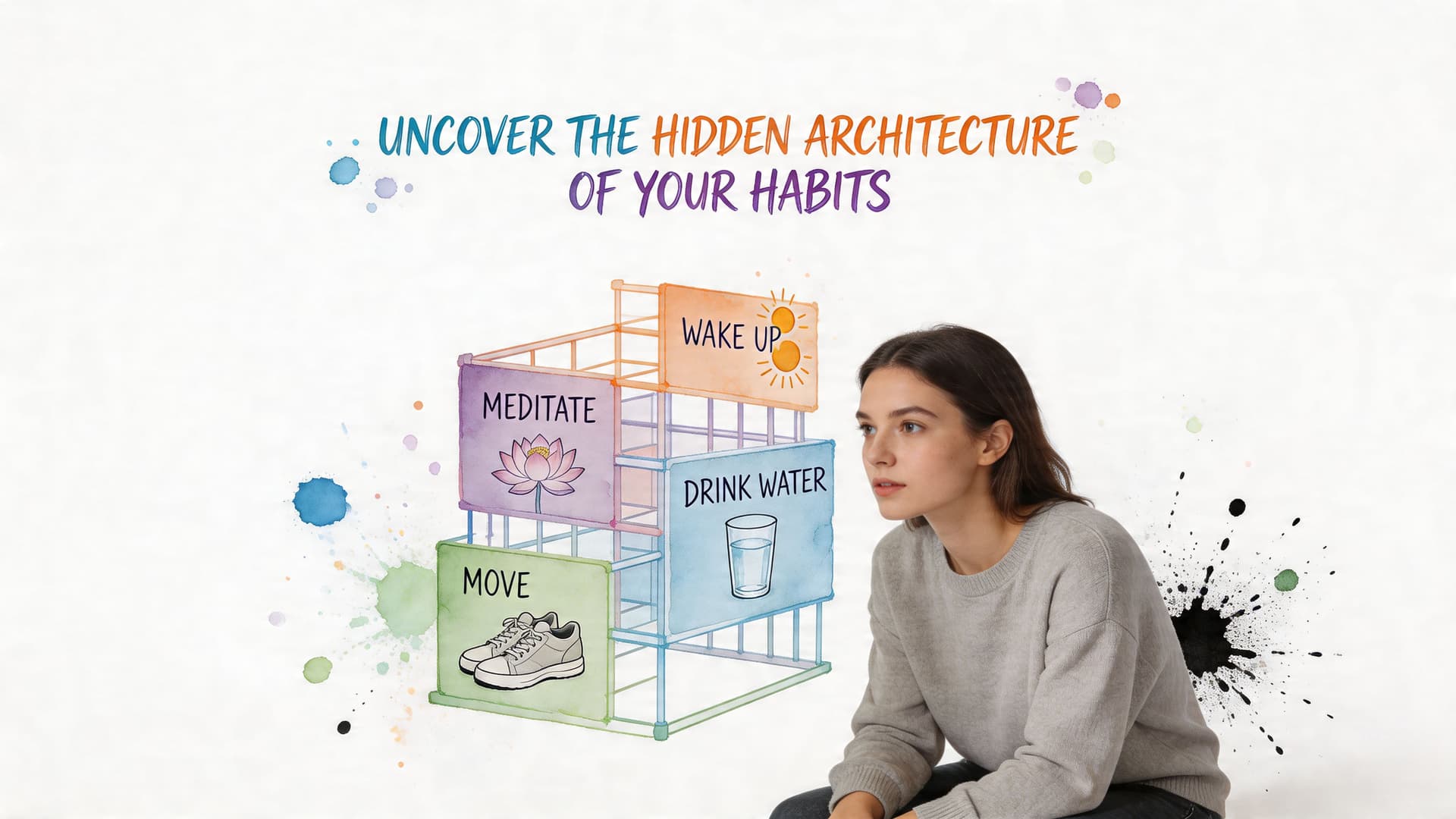
Uncover the Hidden Architecture of Your Habits
Before you try to change a habit, study it. Not in a philosophical way. In a plain, forensic way.
Most unhelpful habits run on some version of the cue, routine, reward loop. Something happens. You respond. Your brain gets a small payoff. The payoff might be relief, stimulation, certainty, avoidance, or the feeling of progress without the risk of real work.
That’s why “I do it when I’m bored” usually isn’t enough. Boredom is too broad. You need the exact setup.
What to capture for one week
Run a simple log for seven days. Don’t try to improve the habit yet. Just catch it.
Use a table in your notes app, spreadsheet, or task manager. Each time the habit appears, capture:
| What to log | Example |
|---|---|
| Time | 10:40 a.m. |
| Location | Desk, conference room, couch |
| Triggering event | Finished a meeting, got stuck on a paragraph, received a notification |
| Emotion or state | Restless, overwhelmed, uncertain, tired |
| Action | Checked inbox, opened social media, wandered into admin work |
| Reward | Felt caught up, got a quick hit of novelty, avoided friction |
Patterns emerge fast when the entries are specific. People often discover that the habit doesn’t start with “bad discipline.” It starts right after a context shift, a difficult decision, or a drop in mental energy.
Go narrower than your first explanation
A few examples:
- Compulsive email checking may be a response to uncertainty. You don’t want email. You want reassurance that nothing is on fire.
- Scrolling may be a transition ritual. You don’t want content. You want a low-friction buffer between demanding tasks.
- Procrastination may be task confusion. You don’t want avoidance. You want a clearer first step.
This distinction matters because you can’t replace a habit well if you misread what it’s doing for you.
Don’t log the habit as a moral failure. Log it as data from a system under load.
Why external tracking matters more for ADHD
This step is even more important if you’re neurodivergent, because internal monitoring is often the exact point where habit advice falls apart. A verified summary tied to a 2023 Journal of Attention Disorders finding states that 78% of adults with ADHD struggle with traditional habit-change methods due to challenges with impulse control and working memory, which is why external support matters so much according to this ADHD habit-change discussion.
If you have ADHD, the problem often isn’t awareness in hindsight. It’s recall in the moment. You may understand your pattern perfectly at night and still miss it the next morning when the trigger shows up live.
A practical self-audit that actually gets used
Keep the system light enough that you’ll use it.
Try this format:
- Create one capture point. One note, one table, one recurring reminder.
- Log in under a minute. If the process is annoying, you’ll stop doing it.
- Review at the same time each day. End of workday works well because the day’s context is still fresh.
A short daily review can look like this:
- Most common trigger today was task-switching after meetings.
- Most common reward was relief from ambiguity.
- Most expensive version of the habit was opening inbox instead of starting the proposal draft.
- Best interruption point was the ten seconds after the meeting ended.
That last line is gold. It tells you where to intervene.
What professionals often miss
People try to break the habit at the action stage. By then, they’re already in it. The effective point is usually earlier.
If the pattern starts after meetings, the intervention belongs after meetings. If the pattern starts when a task feels undefined, the intervention belongs in task setup. If the pattern starts when energy dips, the intervention belongs in your calendar and environment, not your self-talk.
Once you can name the architecture, you stop saying “Why do I keep doing this?” and start asking a better question: “What setup keeps producing this response?”
Engineer a System to Replace Your Old Routines
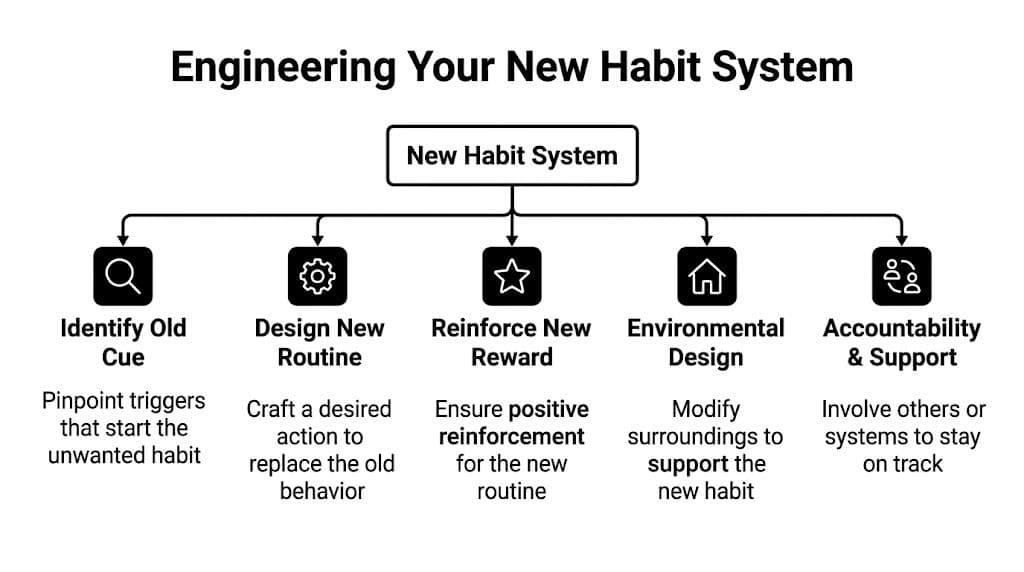
A bad habit doesn’t leave an empty space when you remove it. Something fills that gap immediately. If you don’t choose the replacement, your brain will.
That’s why the strongest habit changes don’t focus on stopping. They focus on substitution, friction, and environment. You aren’t trying to become a different person overnight. You’re building a setup where the old routine is harder to access and the new routine is the easiest available move.
Pick a replacement that matches the real reward
Many people get stuck. They pick a replacement that sounds virtuous but doesn’t solve the original need.
Use this comparison:
| Old habit | Actual reward | Better replacement |
|---|---|---|
| Rechecking email | Reassurance | Review top priorities and identify what actually needs a response |
| Scrolling after hard work | Mental decompression | Take a short walk, stretch, or do a brief reset ritual |
| Avoiding a complex task | Relief from ambiguity | Write the next visible action only |
| Doing low-value admin work | Sense of progress | Finish one defined subtask that moves the core project |
The replacement has to be realistic under pressure. If the old habit takes two seconds and the new one takes fifteen minutes, the old one wins.
Add friction to the old path
People underestimate how practical this is. You don’t need a dramatic digital detox. You need enough resistance to interrupt autopilot.
Try a few of these:
- Move the trigger out of reach. Log out of the most distracting account on your phone.
- Change the default screen. Open your computer to the project dashboard, not your inbox.
- Hide the easy escape hatches. Remove browser bookmarks that lead straight into distraction loops.
- Delay access. Put the distracting app in a folder, or require one extra step before opening it.
Those changes look small. They matter because habits often survive on instant availability.
Remove friction from the new path
This part deserves just as much attention.
Don’t tell yourself to “work on the report.” Make the replacement routine impossible to misunderstand. The cleaner the first move, the easier it is to start.
For example:
- Open the report.
- Find the last edited section.
- Write three bullet points only.
- Stop and reassess.
That sequence works better than “make progress on strategy doc” because it lowers activation energy.
The first step should feel almost too small to matter. That’s often a sign it’s correctly sized.
Build around micro-steps, not heroic effort
When a habit is tangled with overwhelm, the solution is usually decomposition. Break the replacement routine into parts that your brain can complete without negotiation.
A practical setup for “I avoid client follow-up” might look like this:
- Step one is opening the client list.
- Step two is selecting one name.
- Step three is drafting two sentences.
- Step four is sending or scheduling.
This matters even more for professionals juggling multiple roles, because complexity often masquerades as resistance. The task isn’t emotionally impossible. It’s structurally muddy.
A related productivity principle appears in this article on personal productivity systems. Strong systems reduce the number of decisions required at the moment of action. That’s what makes them durable.
Solve habit clusters, not isolated behaviors
A lot of bad habits travel in packs. Procrastination often comes with inbox checking, tab switching, low-value planning, and unnecessary research. If you only target one behavior, the others can keep the loop alive.
That’s why it helps to think in clusters:
| Cluster | What it looks like | What to change |
|---|---|---|
| Avoidance cluster | Email, Slack, tidying files, “quick checks” | Define one primary task and one recovery action |
| Overwhelm cluster | Freezing, list-making, reshuffling priorities | Reduce the task to one visible action |
| Stimulation cluster | Scrolling, hopping tabs, checking messages | Use a short reset routine that gives movement or novelty |
| Control cluster | Re-reading, over-editing, excessive planning | Ship a draft, then review on a timer |
This approach has practical payoff. Verified data states that recent 2025 to 2026 studies show tangled habit clusters like procrastination cause over four hours of weekly productivity loss for startup founders, and that platforms enabling pay-per-task delegation can save an average of 4.2 hours per week through automation and human support, as summarized in this discussion of tangled habits and delegation. The useful lesson isn’t the platform itself. It’s that reducing friction at the cluster level beats fighting each symptom one by one.
What works better than “trying harder”
A replacement system is usually strong enough when it includes these five pieces:
- A known cue you can identify quickly.
- A replacement action that satisfies the same need.
- A smaller first step than your brain wants to negotiate over.
- Environmental edits that make the old route less convenient.
- A recovery move for the days when you catch yourself late.
What doesn’t work is keeping everything the same and hoping your behavior changes inside the same conditions. That’s not habit change. That’s self-criticism with a calendar reminder attached.
Build Your Habit Flywheel with Automation and Tracking
A new habit becomes reliable when it stops depending on memory and mood. You need feedback. You need a visible record. And you need some parts of the process to happen automatically so your brain isn’t re-deciding the same thing every day.
That’s where tracking becomes useful, not as guilt management, but as operational support.
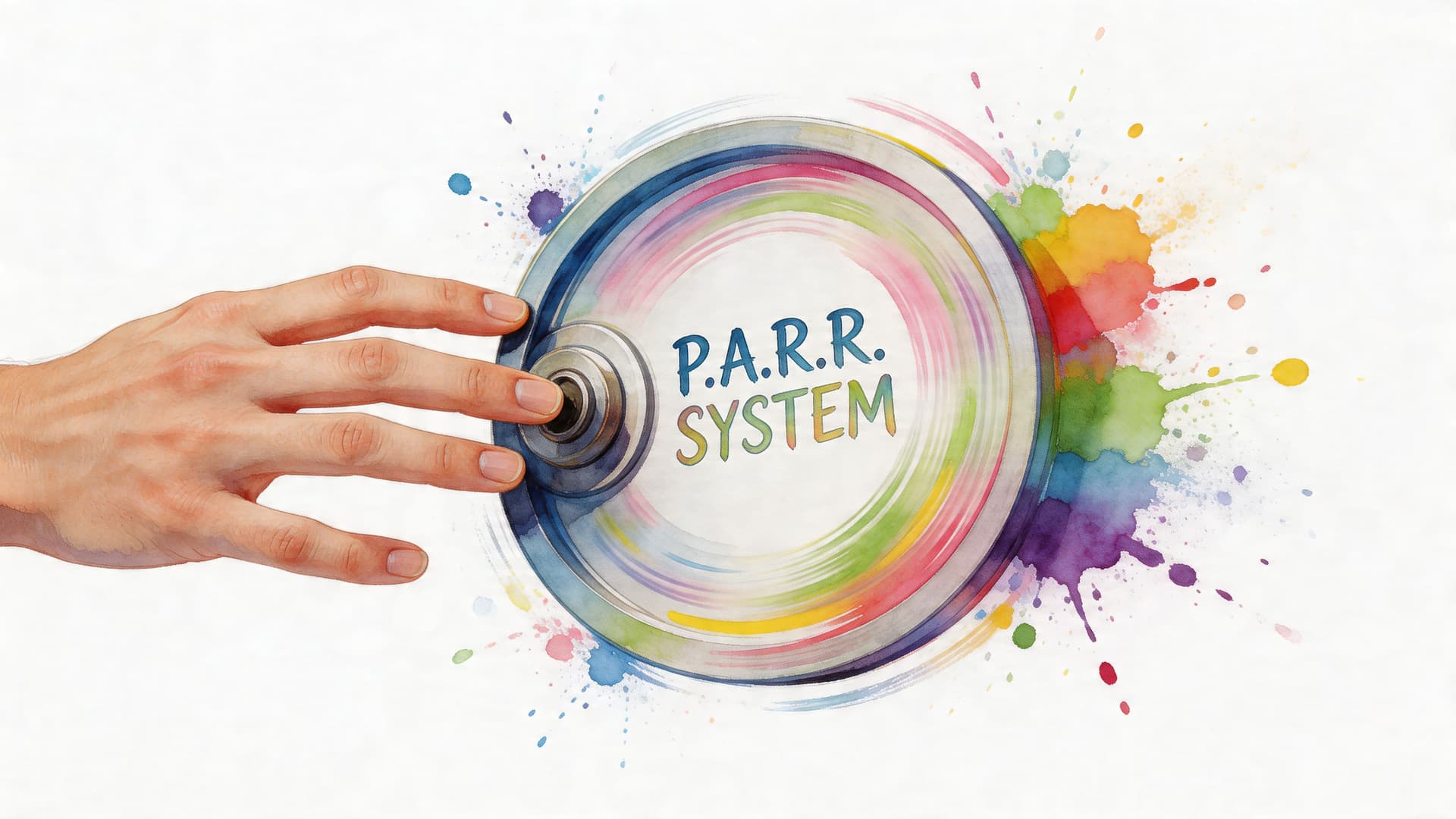
Use P.A.R.R. instead of vague reflection
The P.A.R.R. methodology stands for Plan, Act, Record, Reassess. It works because it treats habit change like an experiment instead of a self-esteem referendum.
Verified data tied to The Habit Factor’s P.A.R.R. explanation notes that consistent tracking boosts awareness and success rates, and that some research indicates an average of 66 days for a new habit to become automatic. That doesn’t mean you wait around for automaticity. It means you give yourself a structure sturdy enough to carry you through the variable middle.
Here’s how to use it in a work context:
Plan
Write one testable behavior, not an aspiration.
Good: “After each meeting, I will spend two minutes identifying the next concrete task before opening email.”
Weak: “I will be more proactive.”
Act
Perform the action exactly as defined. Keep it small enough that you can repeat it on imperfect days.
Record
Use binary tracking. Done or not done. Don’t write essays unless you need to diagnose a miss.
Reassess
Review your log on a schedule. Look for patterns, not excuses.
A sample weekly review:
- What triggered the old habit most often
- Which replacement worked fastest
- What time of day I was least reliable
- What part of the routine needs simplification
Coach’s note: Tracking is not there to prove whether you’re disciplined. It’s there to show you what your system does under real conditions.
Keep the score visible and simple
Many professionals abandon tracking because they overbuild it. They make categories, tags, colors, notes, streak systems, and then stop using the whole thing.
Use a lean version:
| Day | Replacement habit completed | Old habit interrupted early | Notes |
|---|---|---|---|
| Monday | 1 | 0 | Lost focus after meeting |
| Tuesday | 1 | 1 | Better after task was clarified |
| Wednesday | 0 | 0 | Energy drop late afternoon |
That’s enough to produce insight.
If you like a separate visual template for personal routines, this SleepHabits habit tracking resource is a decent example of what useful tracking looks like when it stays simple and repeatable.
Automation is what turns intention into follow-through
A habit flywheel builds when one action naturally triggers the next one. You finish the focus block, then take a short break. You complete the task setup, then begin the first subtask. You end a meeting, then review the next action before any inbox drift starts.
That kind of sequencing reduces decision fatigue because the next move is already prepared.
If you want examples of how these sequences can be designed in modern tools, this guide on how to automate workflows shows the broader principle well. The value of automation isn’t convenience alone. It protects your attention at the exact points where habits usually break.
A short walkthrough can help make that concrete:
- Choose one recurring trigger. Example: the end of a client meeting.
- Attach one replacement action. Write the next concrete deliverable.
- Attach one support action. Schedule a short work block for that deliverable.
- Attach one reward or closure action. Mark it complete and take a brief reset.
That’s a flywheel. It creates momentum because the process carries itself forward.
Here’s a useful visual primer on habit systems and behavior loops:
Delegation is a habit tool, not just a productivity tool
This is the part many high performers resist. They see delegation as optional, expensive, or relevant only to large teams. But for habit change, delegation can remove the exact section of a task that repeatedly triggers avoidance.
If you always stall when a task becomes tedious, ambiguous, or admin-heavy, the issue may not be motivation. The issue may be that your habit loop starts at the point where the task stops rewarding your attention.
Examples:
- You avoid publishing because formatting and upload steps drain you.
- You delay outreach because list-building feels annoying.
- You dodge project follow-up because coordinating details is cognitively sticky.
In those cases, strategic delegation changes the habit loop itself. It removes the section that keeps reactivating procrastination.
That’s also why automation and delegation work so well together. One reduces repeated decisions. The other reduces repeated drag.
Prepare for Setbacks and Solidify Your Gains
You will slip. That doesn’t mean the system failed. It means you’ve found the point where the old pathway still has an advantage.
The worst response to a setback is moralizing it. “I knew I’d do this.” “I’m back to square one.” “I can never stick with anything.” None of that helps. A setback is a diagnostic event.
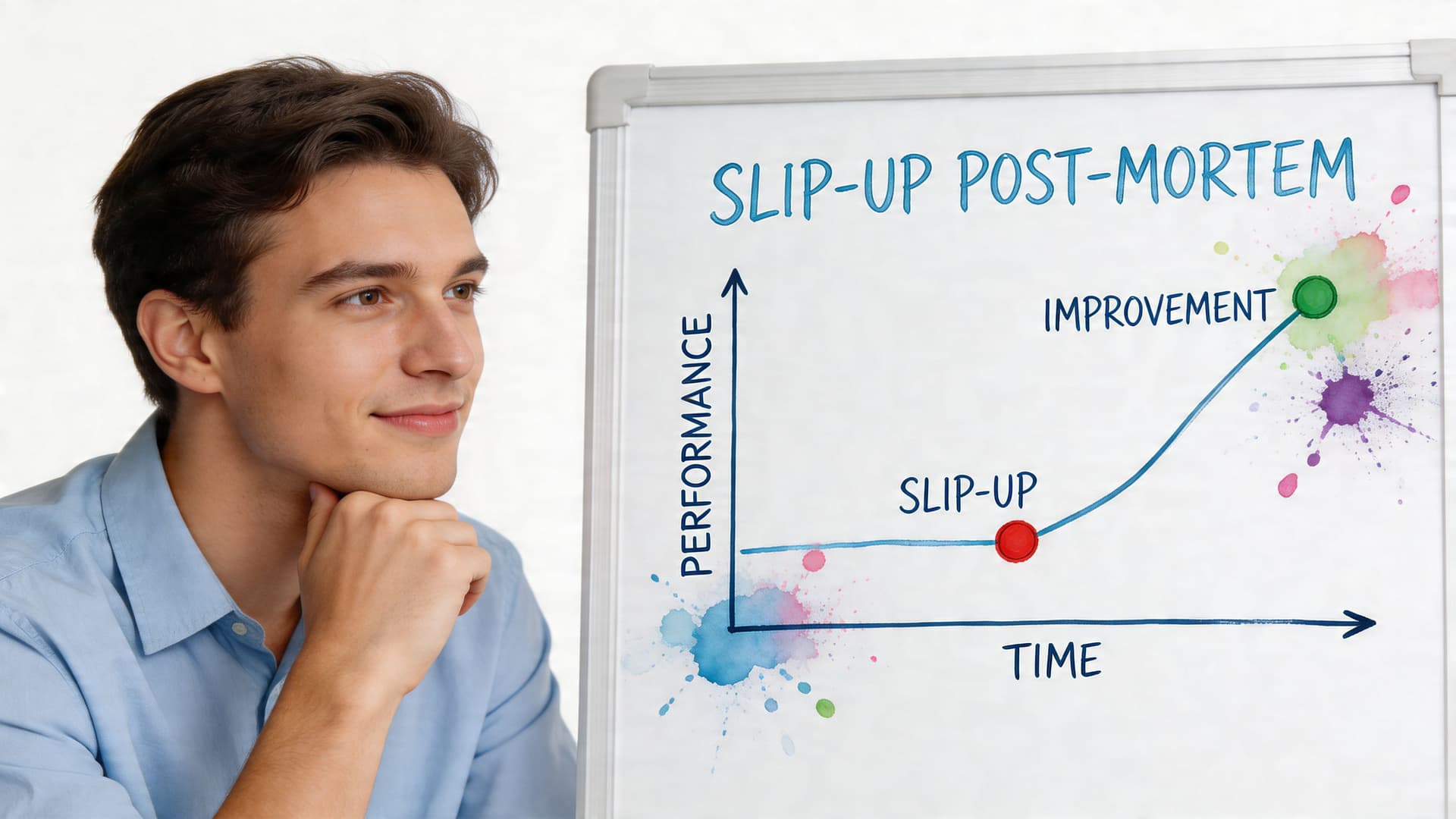
Run a post-mortem within 24 hours
Use a short review template. Keep it factual.
- What was the trigger
- What was I feeling or trying to avoid
- What did I do instead of the replacement
- Where did the system fail
- What single adjustment would make the better action easier next time
That last question matters most. Don’t ask, “How do I become stronger?” Ask, “What design change would help at this exact failure point?”
A few examples:
| Slip-up | Likely weak point | Better adjustment |
|---|---|---|
| Checked inbox after every meeting | No transition ritual | Add a standard two-minute shutdown and next-step review |
| Scrolled at night instead of planning tomorrow | Decision fatigue | Pre-write tomorrow’s first task before ending the workday |
| Avoided a proposal for three days | Task too large | Reduce it to outline, then first section only |
A relapse is not a verdict. It’s evidence.
Use if-then plans for the moments that keep defeating you
Verified data from Huberman Lab’s habit protocol states that if-then plans can increase habit-breaking success by 2 to 3 times, and that decision fatigue can reduce willpower by 30 to 50% by the end of the day. That’s why broad intentions like “I’ll try to focus more this afternoon” often collapse. Afternoon you is operating with less margin.
Use prewritten responses instead:
- If I finish a meeting and feel the urge to check email, then I will write the next task first.
- If I open a social app during work hours, then I will close it and stand up for one minute.
- If I feel overwhelmed by a project, then I will write one ugly first draft paragraph.
These work because they remove negotiation. The response is chosen in advance.
Use blocks when one habit is stable enough
If you’re trying to change several behaviors, don’t throw them all into one giant reset. A structured cycle is better.
Huberman Lab’s protocol uses alternating blocks for building and testing habits. The practical lesson is this: install a small set of behaviors, then stop adding new ones long enough to see what remains when novelty fades.
That matters because many professionals mistake enthusiasm for durability. The first week feels clean and decisive. The third week tells the truth.
A useful pattern is:
- Pick one work habit and one recovery habit.
- Keep both stable for a set block.
- Review what still happens without much internal debate.
- Drop what was unrealistic.
- Tighten the cues around what survived.
Protect the habit with environmental controls
When the new routine is still fragile, your environment has to do more of the work.
Good controls include:
- Visual simplicity so the next task is obvious.
- Limited notifications during concentrated work.
- Defined start rituals that reduce transition friction.
- Shared expectations if the habit depends on coworkers not interrupting constantly.
For ADHD in particular, routine support has to be concrete. General advice like “be more consistent” doesn’t survive contact with a crowded day. If that’s your context, this article on routines for ADHD challenges is worth reading because it focuses on practical routine support rather than abstract discipline.
Teams have habits too
Individuals aren’t the only ones who need to break the habit. Teams develop automatic patterns just as quickly.
Common team habits include:
- defaulting to meetings instead of decisions
- interrupting focused work with constant chat pings
- reopening the same unresolved issues
- treating urgency as a status symbol
These patterns persist for the same reasons personal habits do. They’re easy, familiar, and socially reinforced. The fix is also similar. Define the trigger, create a replacement behavior, and make the better path easier to follow.
A team that wants fewer interruption loops might agree on a short written update before any meeting is scheduled. A team that overuses chat might define blocks for asynchronous responses. Social accountability works well here because habits become visible once the group names them.
Your First Step Towards Intentional Action
If you want to break the habit, stop framing the job as a fight against yourself. That mindset keeps people stuck because it makes every miss feel personal and every good day feel fragile.
The stronger approach is calmer. Study the pattern. Identify the cue. Replace the routine. Reduce friction. Track what happens. Adjust the system when it fails. Repeat until the better behavior becomes the default.
That’s what lasts.
You don’t need a dramatic reset this week. You need one small intervention that’s clear enough to survive a normal day. Pick the habit that wastes the most attention right now. Not the one that sounds deepest or most ambitious. The one that keeps derailing today’s work.
Write down three things:
- the trigger
- the old action
- the new, smaller replacement
Then put that replacement where you can see it before the old habit starts. If the pattern is email checking, your replacement might be “write the next task before opening inbox.” If the pattern is procrastination, it might be “draft the first three bullet points only.”
Small, specific, repeatable actions beat dramatic promises every time.
If you want a tool that supports this kind of system design with task organization, automation, and flexible delegation, take a look at Fluidwave. Start with one recurring task tied to one trigger. Keep it simple enough to repeat. That first setup is often the moment a vague intention turns into real behavior change.
Focus on What Matters.
Experience lightning-fast task management with AI-powered workflows. Our automation helps busy professionals save 4+ hours weekly.