For individuals with ADHD, standard organization advice often falls flat. ADHD affects working memory, attention regulation, and task initiation, making many conventional systems feel restrictive rather than helpful1. This guide offers seven neuroscience-informed, practical techniques you can implement immediately to reduce clutter, improve focus, and make task management sustainable.
August 9, 2025 (1y ago) — last updated April 11, 2026 (6mo ago)
2025 ADHD 정리법 7가지 — 실전 전략
ADHD 특성에 맞춘 7가지 검증된 정리 전략으로 작업 관리, 집중력, 잡동사니 감소를 즉시 개선하세요.
← Back to blog
2025년 ADHD 정리 팁 7가지: 검증된 전략
Summary: 강력한 ADHD 정리 팁으로 삶을 간소화하세요. 작업 관리, 잡동사니 감소, 집중력 향상을 위한 실용적 7가지 전략을 소개합니다.
Introduction
For individuals with ADHD, standard organization advice often falls flat. ADHD affects working memory, attention regulation, and task initiation, making many conventional systems feel restrictive rather than helpful1. The goal isn’t to force conformity but to find strategies that work with your cognitive wiring. This guide offers seven neuroscience-informed, practical techniques you can implement immediately to reduce clutter, improve focus, and make task management sustainable.
1. The One-Minute Rule
The One-Minute Rule is simple: if a task takes less than one minute, do it now. It’s powerful for ADHD because it prevents small items from snowballing into overwhelming clutter and reduces the mental load of tracking tiny tasks5.

Acting on micro-tasks creates momentum and frees cognitive capacity for more complex work.
How to implement
- Physical: File documents immediately, hang coats, put dishes in the dishwasher.
- Digital: Reply to quick emails, archive or delete spam at once.
- Tasks: Send quick confirmation messages or add items to lists immediately.
Strategic tip
Use the One-Minute Rule during transitions (between meetings, when you arrive at your desk, or before leaving). A sticky note on your monitor reading “Does this take < 1 minute?” can help make the response automatic.
2. Color-Coded Organization Systems
Color-coding turns categories into instant visual cues, reducing reliance on working memory. For many with ADHD, visual systems speed retrieval and lower the friction of staying organized.

How to implement
- Documents: Use colored folders or tabs (e.g., red = urgent, blue = health).
- Calendar: Assign colors by event type (work, personal, appointments).
- Home: Colored bins/hangers for easy sorting.
Strategic tip
Start with 3–4 core colors (Work, Home, Health, Finances). Post a visible legend and apply the colors consistently across digital and physical systems.
3. External Brain Systems (Digital and Physical)
An external brain stores information and tasks outside your head, reducing working memory demands. This concept underlies systems like Getting Things Done and Building a Second Brain and is essential for sustained organization2.
How to implement
- Digital: Choose one trusted app (Notion, Obsidian, or a dedicated task manager) and capture everything there. Use voice memos for fleeting ideas.
- Physical: Create a command center with a whiteboard, family calendar, and trays for mail.
- Workspace: Use clear zones for different task types and keep capture tools accessible.
Strategic tip
Schedule a weekly review to process captured items. Start by committing to one capture tool for a week; build the habit before adding complexity.
4. Body Doubling and Accountability Partners
Body doubling means working alongside another person to improve focus. The mere presence of someone else—virtually or in person—can reduce task paralysis and increase motivation4.
How to implement
- Virtual: Use Focusmate or set a Zoom co-working session. Structure sessions with timers.
- In person: Work with a friend in a library or café.
- Household: Ask a roommate or family member to be nearby while you tackle chores.
Strategic tip
Use body doubling for tasks you habitually avoid. Agree on interaction level beforehand (silent, minimal chat), and consider pairing it with Pomodoro-style intervals.
5. Time Blocking with Visual Schedules
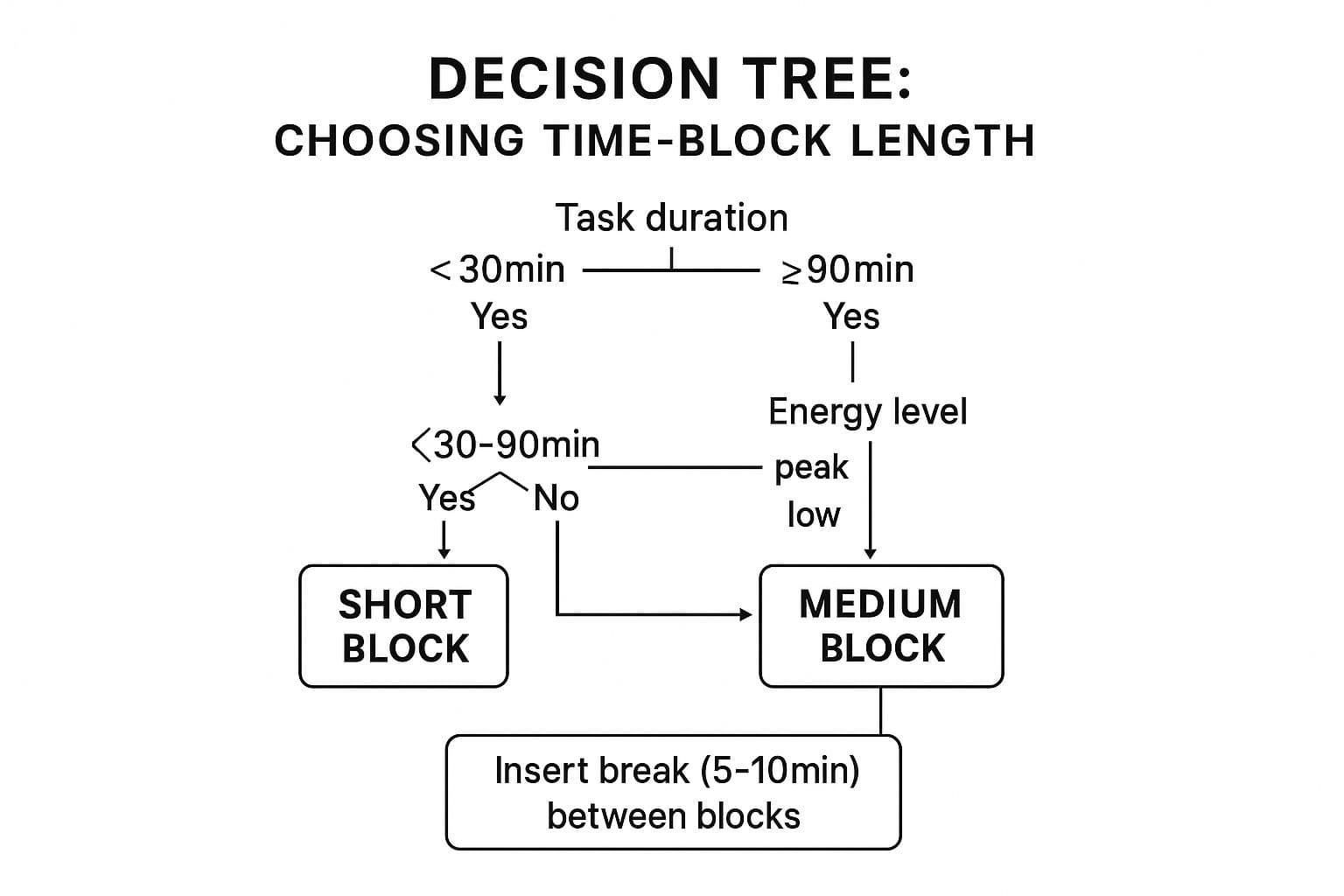
Time blocking assigns tasks to specific time slots. Combined with color-coding, it combats time blindness and decision fatigue by making the day tangible and predictable5.
How to implement
- Digital: Use Google Calendar or Outlook; color events by type (deep work, meetings, breaks).
- Physical: Use a wall planner or sticky notes you can move.
- Track: Use tools like Clockify or RescueTime to compare planned vs. actual time.
Strategic tip
Always schedule buffers (5–15 minutes) between blocks to ease transitions. Block non-negotiables first (sleep, meals), then place high-priority tasks in peak-energy slots.
6. The ADHD-Friendly Filing System: FAST Method
FAST stands for File, Act, Store, Toss. It gives four clear actions for every item, reducing analysis paralysis and helping you process paperwork and digital files quickly6.
How to implement
- File: Active documents you reference regularly.
- Act: Items that need immediate attention—handle them or move them to an Action tray.
- Store: Long-term archives (taxes, deeds).
- Toss: Recycle or delete anything irrelevant.
Strategic tip
Set up labeled trays and folders before you start. Use 15–20 minute sprints to work through backlogs using the FAST decision rule.
7. Dopamine-Driven Reward Systems
Because ADHD is often linked to lower baseline dopamine, pairing tasks with immediate, desirable rewards can improve motivation and completion rates7.
How to implement
- Gamify: Use Habitica to turn tasks into a game.
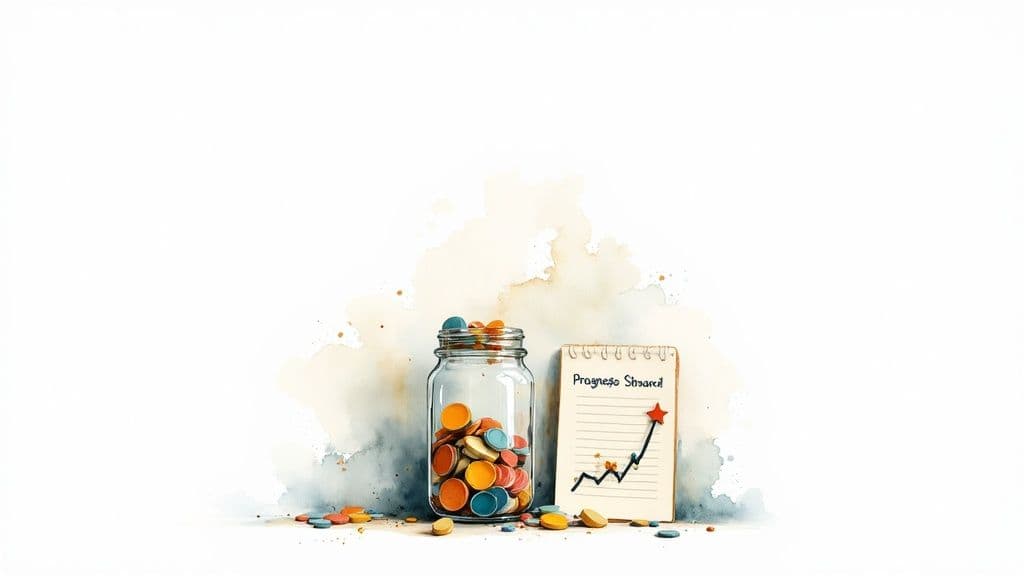
- Reward jar: Small treats (15 minutes of a favorite podcast, specialty coffee) drawn after a session.
- Visual progress: Use sticker charts or progress bars for larger projects.
Strategic tip
Combine micro-rewards with milestone rewards. Rotate rewards to keep them motivating, and consider social rewards like sharing before-and-after photos with a supportive friend.
7 ADHD Organization Tips Comparison
| Method | Implementation Complexity 🔄 | Resource Requirements ⚡ | Expected Outcomes 📊 | Ideal Use Cases 💡 | Key Advantages ⭐ |
|---|---|---|---|---|---|
| The One-Minute Rule | Low 🔄 | Minimal ⚡ | Quick task completion, reduced task buildup | Managing small tasks immediately, reducing overwhelm | Prevents task accumulation, builds momentum |
| Color-Coded Organization Systems | Medium 🔄 | Moderate ⚡ | Faster item recognition, reduced searching | Visual learners, organizing multiple categories | Instant visual recognition, reduces cognitive load |
| External Brain Systems | High 🔄 | High ⚡ | Improved memory support, anxiety reduction | Managing complex info, compensating working memory deficits | Reliable info storage, reduces forgetfulness |
| Body Doubling and Accountability Partners | Medium 🔄 | Low to Moderate ⚡ | Increased focus, motivation, reduced isolation | Those needing social accountability for productivity | Enhances focus via social presence |
| Time Blocking with Visual Schedules | Medium to High 🔄 | Moderate ⚡ | Structured day, better time awareness | ADHD individuals needing time management and structure | Reduces decision fatigue, improves planning |
| The ADHD-Friendly Filing System: FAST Method | Low to Medium 🔄 | Low ⚡ | Simplified decision-making, less clutter | Organizing papers and digital docs without overwhelm | Clear categories, quick to implement |
| Dopamine-Driven Reward Systems | Medium 🔄 | Moderate ⚡ | Increased engagement, sustained motivation | Making organizing enjoyable and rewarding | Enhances motivation leveraging ADHD brain chemistry |
Integrating Your ADHD-Friendly System for Lasting Success
There’s no single cure; build a toolkit that fits your neurotype. Start with one or two methods you’re most likely to use. Your external brain can be the hub where FAST folders, time blocks, and reward tracking come together.
From tips to a sustainable system
Be flexible. On low-energy days, rely on simple tools like the One-Minute Rule. On high-energy days, tackle larger projects. Combine delegation for energy-draining tasks—outsourcing scheduling or inbox management can conserve executive function for high-impact work.
Key takeaway: A sustainable ADHD organization system is flexible, simple, and tailored to your energy and focus patterns.
Ready to build a support system that works with your brain? Fluidwave provides on-demand virtual assistants to handle the exact tasks that drain your executive function, without the commitment of a monthly subscription. Delegate your scheduling, file organization, and administrative burdens to our vetted professionals and reclaim your focus for what truly matters. Explore how a pay-per-task model can become a core part of your ADHD organization strategy at Fluidwave.
Q&A
Q1. 어떤 전략부터 시작해야 하나요?
- 하나 또는 두 가지 전략을 선택해 일관되게 시도하세요. 예: 시간 차단과 외부 뇌 시스템을 먼저 도입해 일상 구조를 세우는 것이 효과적입니다.
Q2. 시스템을 유지하는 현실적인 방법은?
- 매주 15–30분의 검토 시간을 예약해 캡처한 항목을 정리하세요. 작은 보상 시스템을 병행하면 습관 형성에 도움이 됩니다.
Q3. 언제 다른 사람에게 도움을 요청해야 하나요?
- 반복적으로 에너지를 소모하는 작업(예: 이메일 관리, 스케줄 조정)은 외주화해 핵심 업무에 집중하는 것이 좋습니다.
1.
CDC, “Attention-Deficit/Hyperactivity Disorder (ADHD): Data & Statistics,” https://www.cdc.gov/ncbddd/adhd/data.html.
2.
Barkley, Russell A. Attention-Deficit Hyperactivity Disorder: A Handbook for Diagnosis and Treatment. Guilford Press, 2015.
3.
Forte, Tiago. Building a Second Brain. [https://www.buildingasecondbrain.com/](https://www.buildingasecondbrain.com/).
4.
Focusmate, “Focus Work Sessions to Help You Finish Tasks,” https://www.focusmate.com/.
5.
Newport, Cal. Deep Work. Grand Central Publishing, 2016. [https://www.calnewport.com/](https://www.calnewport.com/).
6.
Getting Things Done: The Art of Stress-Free Productivity. David Allen. [https://gettingthingsdone.com/](https://gettingthingsdone.com/).
7.
Volkow, Nora D. et al. “Dopamine in ADHD.” Neuroscience Today. [https://www.ncbi.nlm.nih.gov/pmc/articles/PMC4729760/](https://www.ncbi.nlm.nih.gov/pmc/articles/PMC4729760/).
중요한 것에 집중하세요.
AI 기반 워크플로우로 번개처럼 빠른 작업 관리가 가능합니다. 자동화가 바쁜 전문가의 주당 4시간 이상을 절약하는 데 도움을 줍니다.