Explore 10 powerful team building activity ideas for busy remote and hybrid teams. Find actionable steps to boost collaboration, morale, and productivity.
May 1, 2026 (4mo ago)
10 Team Building Activity Ideas for Busy Teams in 2026
Explore 10 powerful team building activity ideas for busy remote and hybrid teams. Find actionable steps to boost collaboration, morale, and productivity.
← Back to blog
Team building usually fails long before the activity starts. The failure happens in the setup. Someone picks an event that feels fun, drops it onto already full calendars, and hopes one hour of forced interaction will fix coordination problems that show up every week in real work.
A better standard is simple. If an activity does not improve how a distributed team communicates, hands off work, or builds trust across functions, it is just entertainment with admin overhead.
Done well, team building improves communication and morale, as noted earlier in these team building statistics. The gap is not interest. The gap is execution. Many companies still run team building as a one-off event instead of building it into normal operating rhythms, even though employees and managers clearly want more investment in stronger team culture.
That is the lens for this list. These are not generic icebreakers or big-budget offsite ideas. They are low-overhead, professional team building activities that fit distributed teams, work across time zones, and connect to actual collaboration. Each one can be planned and run inside Fluidwave, with clear owners, deadlines, approvals, and follow-up instead of scattered notes across chat, email, and someone’s personal to-do list.
I have found that this approach holds up better for busy teams because it respects the workweek. You are not asking people to pretend they have spare hours for performative bonding. You are giving them structured ways to work better together.
If you want outside inspiration beyond the usual list of office games, this collection of unique team building ideas is worth browsing, and you can Learn about Food Escapes for a more experience-led angle. For distributed teams, the stronger play is to pair activities with better habits for managing virtual teams, then run the logistics in one place so the activity produces something useful instead of disappearing the next day.
1. Virtual Escape Room Challenges
Virtual escape rooms still work. They just work best when you stop treating them as pure entertainment and start using them as a live test of how your team communicates under pressure.
Put the event inside a normal work block, not after hours. Keep teams small enough that everyone has to contribute. If you’ve got engineers, operations people, or client-facing teams in the same room, mix them on purpose so you can see how they share information when nobody owns the whole puzzle.

The setup is simple in Fluidwave. Create one project for the event, add registration, vendor selection, team assignments, budget approval, and post-session feedback as separate tasks, then delegate the administrative pieces to a virtual assistant. If you manage a distributed group, pairing this with stronger habits for managing virtual teams makes the exercise far more useful because the event reveals the same communication gaps that show up in everyday remote work.
How to run it without turning it into fluff
Pick a room with moderate difficulty. If the puzzles are too easy, one or two people dominate. If they’re too hard, energy drops fast and the team starts waiting for hints instead of collaborating.
Use a short debrief right after the game. Ask three things only:
- Where did information get stuck: Who had a clue but didn’t surface it quickly?
- Who improved the group pace: Which behaviors helped the team move forward?
- What should carry into work: What communication habit should the team repeat next week?
Practical rule: Debrief the behavior, not the puzzle. Nobody needs a recap of the pirate code. They need to notice who listened, who coordinated, and who went silent.
Virtual formats are also where the market is moving. The global team building activities market reached $11.2 billion in 2024, with virtual activities identified as the fastest-growing sub-segment at a projected CAGR exceeding 12%, according to Market Intelo’s team building activities market report. That tracks with what a lot of teams already know firsthand. Remote-friendly activities win because they’re easier to repeat.
If you want a themed version built around food and exploration, Food Escapes is worth a look.
A quick visual helps if your team hasn’t tried one before.
2. Collaborative Online Workshops and Skill-Sharing Sessions
A short internal workshop often beats a big external event. People bond faster when they get to see what a teammate knows, how they think, and what they care enough about to teach.
The best format is 30 to 60 minutes, one speaker, one practical takeaway, one live example. I’ve seen product managers teach better meeting design, sales leads teach objection handling, and analysts walk teams through dashboards everyone relied on but few understood. You can also use non-work topics if the speaker has real structure. Photography, budgeting, or keyboard shortcuts all work better than random “show and tell.”
Make it easy enough to repeat
Build a recurring series in Fluidwave with calendar dates, speaker assignments, prep deadlines, and recording links all in one project. Give each speaker a template task with fields for topic, audience, format, materials, and the single thing attendees should be able to do afterward.
A virtual assistant can handle reminders, meeting links, and follow-up notes. That matters because most internal learning series fail on coordination, not interest.
Use a lightweight structure:
- Opening prompt: Why this topic matters to the team right now
- Live demonstration: Show the process, workflow, or technique
- Q and A: Keep it focused on real situations
- Archive step: Save the recording and notes in the same project
A workshop series becomes team building when people leave knowing who to ask for help next time.
This format also helps inclusive participation. Strong contributors who dislike high-energy games often show up fully when the event has a clear agenda, a useful outcome, and no pressure to perform socially. For busy teams, that’s a better trade than trying to manufacture chemistry through icebreakers.
3. Structured Mentorship and Reverse Mentoring Programs
Some of the best team building happens one conversation at a time. Formal mentorship works because it creates repeated contact with a purpose. Reverse mentoring works because it breaks hierarchy in a productive way.
A senior operator can help a newer teammate understand stakeholder management, decision-making, or how the company gets things done. The reverse pairing matters just as much. Junior employees often spot tooling friction, communication habits, or customer behavior changes long before leadership does. Pair them intentionally and the relationship becomes useful instead of ceremonial.
What good mentoring structure looks like
Use Fluidwave to schedule recurring check-ins, assign a shared goal template, and keep notes attached to the same task thread over time. Each pair should have a standing cadence, a current topic, and one action item before the next meeting.
Keep the scope tight at first:
- First meeting: Background, goals, communication preferences
- Second meeting: A real challenge the mentee is dealing with
- Third meeting: Specific feedback on progress or decisions
- Fourth meeting: Review what changed and reset the focus
This doesn’t need to be elaborate. It does need consistency. Without that, mentorship turns into a kickoff meeting followed by silence.
Leader’s note: Don’t force chemistry. Give people a clean exit or rematch option if the pairing isn’t useful.
A virtual assistant can support matching logistics, scheduling, and reminders, but the quality still depends on the participants showing up prepared. Ask each person to add a short agenda in advance in the task comments. That single habit keeps conversations from drifting into vague career talk.
For distributed teams, mentoring also gives people a reliable connection point outside their immediate reporting line. That reduces isolation and creates more trust than most one-off social events ever will.
4. Asynchronous Collaborative Projects and Innovation Challenges
Synchronous team-building gets too much credit. For distributed teams, the better option is often a shared project people can contribute to over several days, with enough structure to keep momentum and enough flexibility to let good ideas develop.
The key is to make the challenge useful to the business. Pick one real problem with a clear owner. Improve a messy internal workflow. Redesign part of onboarding. Draft a better handoff process between sales and support. Build a small prototype around a repeated customer complaint. If the output can ship, test, or save time, participation stays higher because the work matters.
Fluidwave is a strong fit for this style of activity because the project can live in one place from brief to final review. Set up a dedicated board with stages like brief, research, draft, review, and decision. Assign sub-tasks by function, keep discussion in task comments, and use Kanban or table view to see where ideas stall. Teams that need a stronger foundation first should review practical team collaboration habits for distributed work before launching the challenge.
Keep the brief tight
Asynchronous collaboration breaks down when the prompt is broad or vague. Write the brief like a working project, not a motivational poster.
Include these elements in the main task:
- Problem statement: One issue worth solving, stated in plain language
- Scope: What is in bounds and what is not
- Time window: A fixed start date, review date, and final deadline
- Deliverable format: Doc, Loom, slide deck, mockup, prototype, or process proposal
- Decision criteria: How the winning idea or final recommendation will be judged
- Owner: One person responsible for collecting input and closing the loop
Then let people contribute in the time blocks that suit their schedule. Use comments for feedback, @mentions for decisions, and short recorded walkthroughs when a written note is not enough.
I have seen this work best as a five to seven day sprint. Long enough for thoughtful input. Short enough that nobody forgets the point.
Measure output and behavior, not just whether people said they enjoyed it. Look at how many cross-functional contributions came in, whether the team produced something worth adopting, how quickly feedback cycles moved, and whether the project exposed blockers you can fix later. That gives the activity a team-building benefit and an operational one.
This format also tends to include people who are quieter in live sessions. Written prompts, clear deadlines, and room to think before responding usually lead to better contributions than a fast group call dominated by the quickest speakers.
5. Team Wellness and Accountability Challenge Sprints
Wellness challenges get mocked for good reason. Too many are shallow, competitive in the wrong way, or accidentally invasive. Done well, they’re simple accountability systems that give people a shared rhythm and permission to care about energy, focus, and recovery.
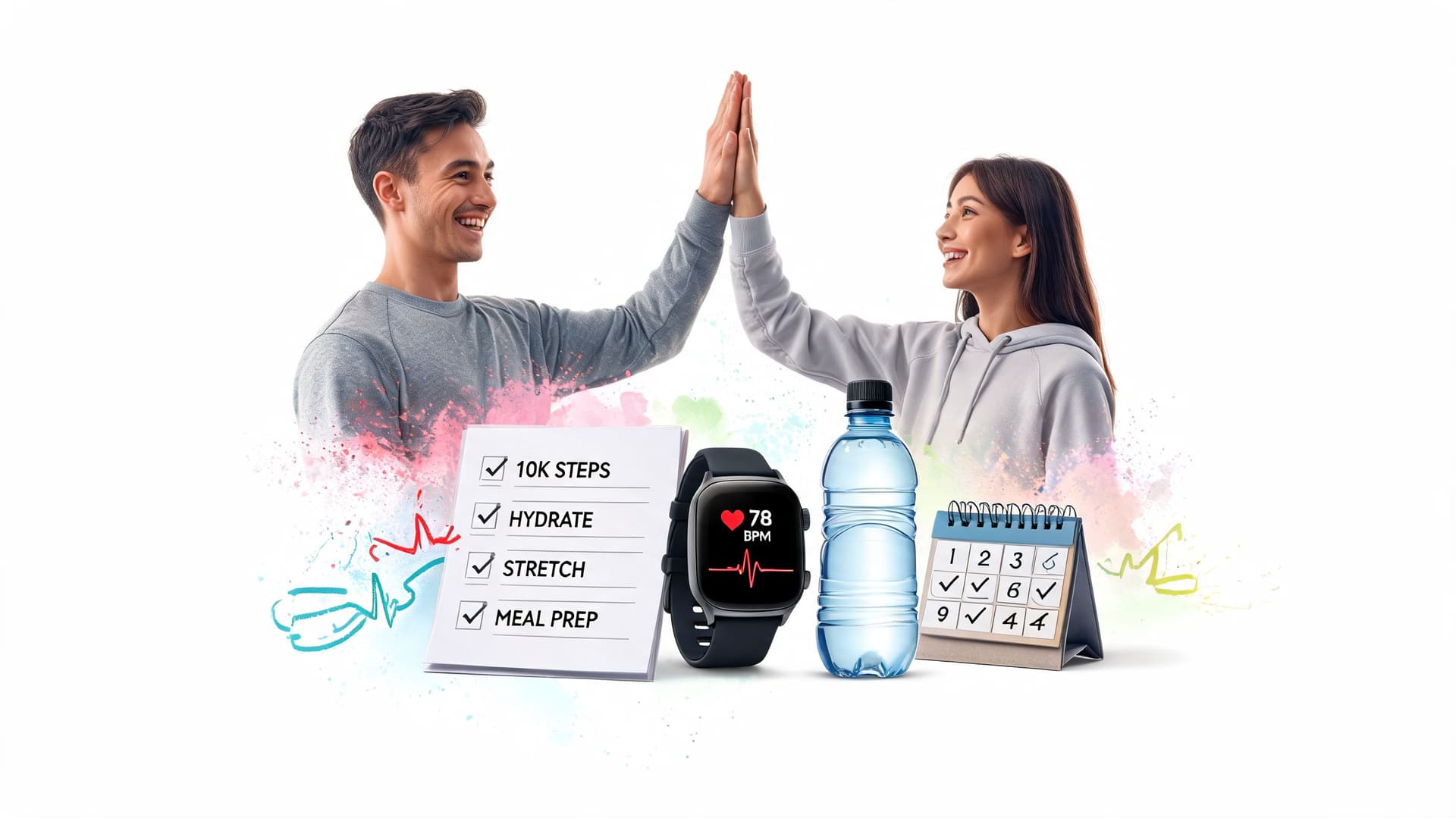
The fix is structure. Keep the sprint time-bound. Let people choose from several goal types instead of forcing everyone into the same metric. Walking, sleep habits, meditation, hydration, stretching, or screen-break consistency all work if participation is opt-in and progress sharing is flexible.
Keep it supportive, not performative
Use Fluidwave’s calendar view for weekly check-ins and recurring tasks for personal logging. Create a shared project where participants can post progress if they want, but always leave room for private tracking. A virtual assistant can send reminders and update the board so the organizer doesn’t become the bottleneck.
A good setup looks like this:
- Flexible goals: People choose what fits their life and health
- Visible cadence: One weekly check-in, not constant reporting
- Buddy system: Pair people for encouragement, not surveillance
- Low-stakes recognition: Celebrate consistency and honesty, not just wins
The trade-off is obvious. If you make it too casual, people forget it exists. If you make it too rigid, it starts feeling like management dressed up as wellness. Stay in the middle.
This kind of sprint also helps distributed teams create shared momentum without demanding extra meeting time. It works especially well after a hard delivery cycle when people need a reset more than another brainstorming session.
6. Cross-Functional Task Collaboration and Rotation Programs
If two departments complain about each other regularly, put them in the same project with clear constraints. That usually teaches more than another meeting about alignment.
Short rotation programs are one of the most underrated team building activity ideas because they expose people to the pressures behind someone else’s decisions. Marketing sees how support triages issues. Product sees how sales handles edge-case objections. Operations sees what slows engineering down. Silos soften when people stop guessing and start observing.
Use short rotations, not grand programs
You don’t need a months-long formal track to get value. Start with narrow rotations tied to one workflow, one campaign, or one recurring problem. In Fluidwave, set up a master project with assignment windows, onboarding tasks, mentor contacts, and reflection prompts for each participant.
Good rotation prompts include:
- Join another team’s planning cycle
- Shadow one recurring process from start to finish
- Own one small deliverable outside your usual lane
- Write up what surprised you and what should change
This format works because it creates shared context. It also reveals where handoffs break down, where assumptions are wrong, and where work gets delayed for reasons nobody on the outside sees.
A virtual assistant can coordinate scheduling and documents, but the team lead still needs to define boundaries. People should contribute enough to learn, not so much that the host team loses time cleaning up confusion.
Cross-functional rotations aren’t glamorous. They are effective. Teams usually trust each other more after they’ve seen the work up close.
7. Structured Feedback and Appreciation Systems
Praise is easy to overdo and feedback is easy to avoid. Both fail for the same reason. They get treated like culture theater instead of part of the operating system.
A better setup is simple. Put feedback on a schedule, tie it to real work, and give people a format that forces useful detail. Monthly works for fast-moving teams. Quarterly works for steadier functions. In either case, the goal is the same: document what helped, what created friction, and what should happen again.
Fluidwave is useful here because the feedback can sit next to the project, task, or handoff it refers to. That cuts down on vague praise and memory gaps. If your team needs a stronger foundation first, this guide on how to improve team communication fits well with the process.
Build the rhythm before you ask for honesty
Do not start with a wide-open discussion call. Ask for written input first. Distributed teams usually give better feedback when people have time to think, review the work, and write without interruption.
Use short prompts:
- What someone did that made the work easier or faster
- Where a teammate handled disagreement well
- One behavior that improved the result
- One adjustment that would reduce friction next time
Then review patterns live in a short meeting, or keep it fully async if schedules are tight. I have found that async-first works better for professional teams that already spend too much time in meetings. The trade-off is that the manager has to set a clear tone and follow up on anything unclear.
Describe what happened, the impact it had, and what should continue. Skip personality labels.
Recognition systems lose credibility when every note sounds the same or the same few people get mentioned every cycle. Keep the bar specific. Tie appreciation to actions people can repeat, such as documenting a messy handoff, catching a risk early, or stepping in to unblock another team.
A practical Fluidwave setup is straightforward. Create a recurring project for each feedback cycle, assign a template form, tag the teammates involved, and store recognition notes in the related workstream. Over time, that gives managers a usable record for performance reviews and gives the team a shared language for what good collaboration looks like.
8. Microlearning Series and Knowledge Base Collaborations
If your team keeps answering the same questions in chat, you already have the raw material for a team-building system. Turn it into a shared knowledge base.
This works because people don’t just consume information. They build it together. One person writes the first draft of a process. Another adds screenshots. A third cleans up the steps after using it in real work. That kind of collaboration creates ownership and reduces dependency on the same few experts.
Build the library in small pieces
Don’t launch a grand documentation initiative. Start with one recurring pain point per week. A handoff checklist. A pricing explanation. A client onboarding flow. A “how we run retros” page. Assign each piece in Fluidwave with a due date, review owner, and template so entries don’t become inconsistent.
Use recurring reminders for updates. Knowledge bases decay fast when no one owns maintenance.
A practical workflow looks like this:
- Capture questions: Pull repeated issues from Slack, email, and meetings
- Assign one owner: Someone drafts the answer
- Review quickly: A second person checks clarity and accuracy
- Archive centrally: Store links in a single Fluidwave project
- Recognize contributors: Mention useful entries in your appreciation rhythm
This format also supports distributed and neurodivergent teams well because it values written clarity over social spontaneity. People who dislike speaking up in group sessions often contribute excellent documentation when the task is structured and concrete.
A good knowledge base isn’t just operationally useful. It shows people that their expertise matters enough to preserve.
9. Gamified Productivity and Collaboration Challenges
Gamification fails when it turns work into a noisy points race. It works when the scoring reinforces habits your team already needs for better execution.
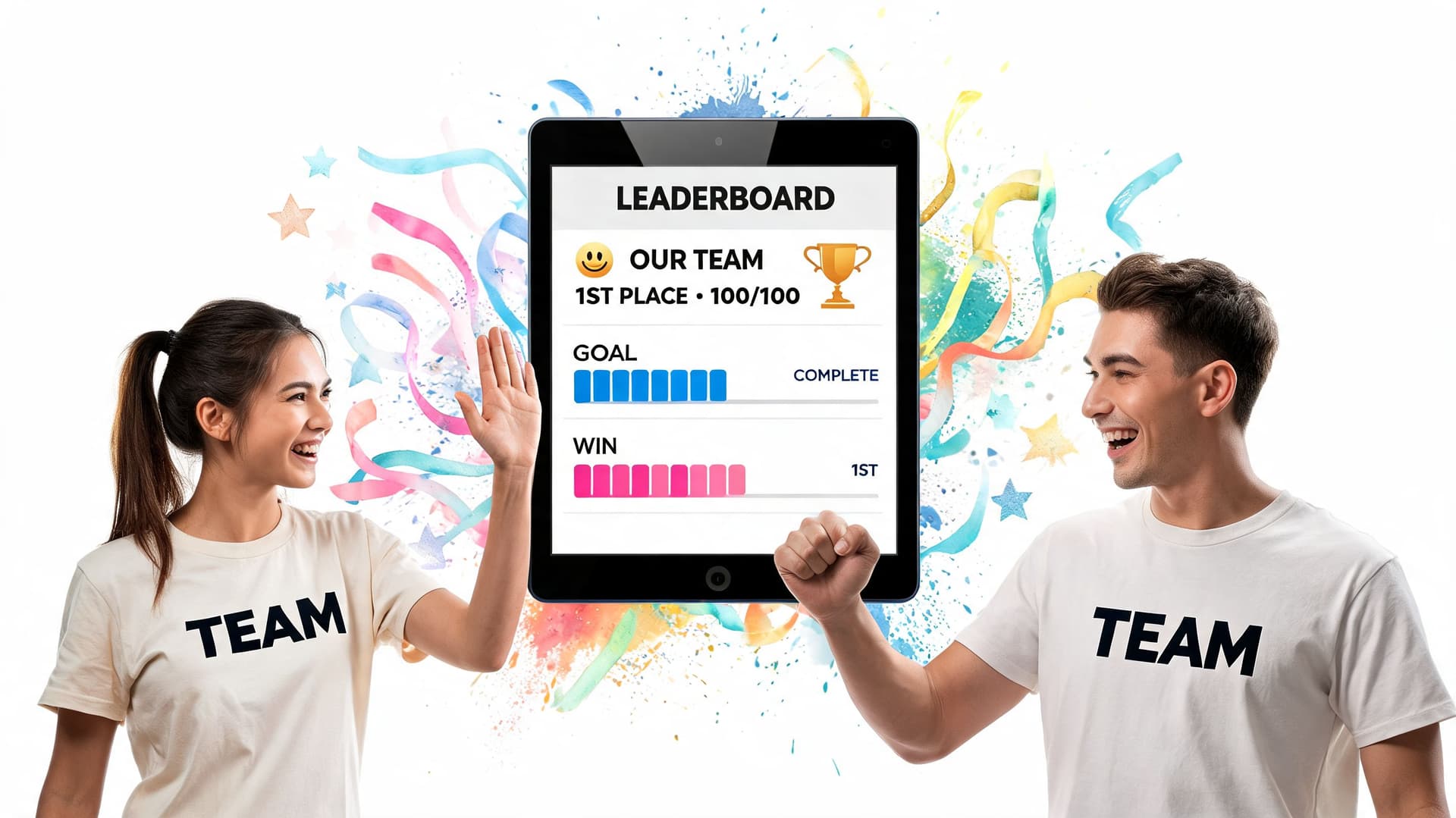
For distributed professional teams, the best version is low-overhead and tied to real work already happening. Score behaviors that reduce friction. Reward the person who clarifies a handoff, improves a shared process, or helps another team finish faster without creating rework. Keep the challenge short, team-based, and tied to outcomes people respect.
Build the challenge around work people already do
Set this up inside a shared Fluidwave project so the challenge lives alongside actual tasks, not in a separate spreadsheet nobody wants to maintain. Create one visible board for team totals, then add a task or thread for each scoring category with simple rules, examples, and one owner who verifies submissions.
A practical setup looks like this:
- Create 3 to 5 scoring categories: Keep them specific and easy to judge
- Use weekly cycles: Long contests lose credibility and attention
- Rotate team groupings: People should collaborate beyond their usual lane
- Require proof: Link the handoff, doc update, resolved blocker, or completed task
- Review in public: Spend five minutes a week confirming points and calling out useful work
Good categories include:
- Best cross-team assist
- Cleanest project handoff
- Most useful process fix
- Best shared documentation update
- Fastest unblock for another team
I have seen this work best when the rules fit on one screen. If people need a policy document to understand the contest, the activity is too heavy for a busy team.
A key benefit is visibility. Distributed teams often miss the work that keeps projects stable because that work occurs without overt recognition, across time zones, and inside task comments. A well-run challenge surfaces those contributions and gives managers a better picture of who improves team throughput.
Keep rewards modest. Public recognition, a team-picked perk, or small lunch credits are enough. Large prizes distort behavior fast, and then people start chasing points instead of helping the team work better.
10. Deliberate Pause and Reflection Rituals
Under-reflected and over-scheduled, teams move from deadline to deadline, then wonder why the same friction keeps showing up.
A short reflection ritual is one of the cheapest, most effective team building habits you can add. Daily written reflections, weekly retros, or end-of-project review sessions all work if they’re brief and consistent. The point isn’t to create another meeting. It’s to create a place where people notice patterns before those patterns harden into culture.
Keep reflection concrete
Set up recurring tasks in Fluidwave with prompts in the description and space for individual notes before any live discussion. The distraction-free interface is useful here because people can write first without the noise of active chat, then join the conversation with clearer thinking.
Use prompts like:
- What helped me work well this week
- Where I got stuck and why
- What I need from the team next week
- One process we should stop, start, or keep
For busy teams, this habit turns vague sentiment into usable information. It also helps quieter or more reserved people contribute without fighting for airtime in a live call.
There’s another reason to make this ritual inclusive and structured. Some teams are poorly served by traditional high-energy team building. A reference in the background material points to discussion around “non-hokey” alternatives for reserved teams on ProjectManagement.com’s discussion board. That lines up with what many managers already see. Not everyone connects through games. Many people connect through clarity, rhythm, and better work conversations.
Reflection rituals don’t feel exciting when you first introduce them. After a few cycles, teams usually stop wanting to lose them.
Top 10 Team-Building Activities Comparison
| Activity | 🔄 Implementation Complexity | ⚡ Resource Requirements | 📊 Expected Outcomes | Ideal Use Cases 💡 | ⭐ Key Advantages |
|---|---|---|---|---|---|
| Virtual Escape Room Challenges | Moderate, real-time facilitation and coordination | Medium, platform fees, reliable internet, facilitator | Strong team bonding; improved problem-solving; measurable completion metrics | Remote/hybrid teams needing short, engaging bonding sessions | Highly engaging, fosters collaboration under pressure |
| Collaborative Online Workshops & Skill-Sharing | Low, peer-led, light prep | Low, video tools, recording, presenter time | Increased knowledge transfer and psychological safety | Knowledge workers and teams fostering continuous learning | Low cost, scalable, creates shareable resources |
| Structured Mentorship & Reverse Mentoring | Medium, matching and ongoing coordination | Low–Medium, time commitment, tracking tools | Improved retention, knowledge transfer, career development | Growing organizations, retention-focused teams | Builds deep relationships and bridges experience gaps |
| Asynchronous Collaborative Projects & Challenges | Medium, requires clear briefs and documentation | Medium, collaboration tools, task tracking, reviewer time | Tangible deliverables, deep-focus contributions, timezone-friendly | Distributed teams, neurodivergent professionals, product prototyping | Flexible timing, produces implementable solutions |
| Team Wellness & Accountability Challenge Sprints | Low–Medium, scheduling and privacy care | Low, tracking tools, accountability partners | Better wellbeing, morale, energy; visible progress tracking | High-stress environments and teams prioritizing wellness | Improves focus and team camaraderie with measurable habits |
| Cross-Functional Task Collaboration & Rotations | High, planning, buy-in, handoffs | Medium–High, onboarding, mentors, temporary coverage | Broader skills, reduced silos, leadership identification | Organizations seeking cross-training and succession planning | Develops versatile employees and organizational empathy |
| Structured Feedback & Appreciation Systems | Low–Medium, facilitation and safety required | Low, templates, scheduling, optional anonymity tools | Stronger psychological safety, clearer communication | All teams, especially remote teams building culture | Reinforces recognition and actionable development |
| Microlearning Series & Knowledge Base Collaborations | Medium, content creation and curation process | Medium, CMS/wiki tools, contributor time | Scalable knowledge assets, faster onboarding, reduced repeats | Remote teams and startups scaling processes | Lasting documentation that reduces repetitive training |
| Gamified Productivity & Collaboration Challenges | Medium, fair metric design and monitoring | Medium, tracking systems, rewards, leaderboard upkeep | Short-term productivity boosts and heightened engagement | Sales teams, competitive cultures, short sprints | Motivates through play and measurable performance gains |
| Deliberate Pause & Reflection Rituals | Low, recurring practice but needs facilitation | Low, prompts, scheduled time, note capture | Reduced stress, improved clarity, early issue detection | Overwhelmed professionals, distributed teams, mental health focus | Encourages mindfulness and surfaces actionable insights |
Turn Ideas Into Action
A strong team isn’t built by picking one clever activity and hoping chemistry appears. It’s built by repetition. Teams get better when they practice useful behaviors often enough that those behaviors become normal. That’s why the best team building activity ideas are the ones your team can sustain.
That rules out a lot of popular advice. Big offsites have their place. So do occasional social events. But most busy teams need lower-overhead habits that fit inside real work. A mentorship cadence. A workshop series. A reflection ritual. A short asynchronous challenge. Those are easier to repeat, easier to improve, and more likely to survive a busy quarter.
The strongest choices are also tied to a real team need. If communication is messy, run a structured feedback sprint or a virtual escape room with a debrief focused on information flow. If people work in silos, use cross-functional rotations or an asynchronous innovation challenge. If the team feels drained, start with a wellness sprint or a deliberate pause ritual instead of asking for more performative energy.
Keep the trade-offs in mind. Competitive activities can lift energy, but they can also create distance if the same people always win. Social activities can loosen people up, but they can also feel forced if they have no connection to daily work. Documentation and reflection habits may sound less exciting, but they often produce stronger long-term cohesion because they improve how the team operates every week.
One pattern shows up across all ten ideas. The activity itself matters less than the system around it. Someone has to schedule it, assign roles, gather feedback, follow up, and capture what the team learned. If those steps live in scattered tools, the activity becomes one more loose end. If they live in the same workflow system your team already uses, the effort drops and the chance of repetition goes up.
That’s where a platform like Fluidwave changes the equation. You can create a dedicated project for any of these ideas, break the work into tasks, assign owners, set due dates, switch between Kanban, list, calendar, and table views, and delegate the admin load to a virtual assistant instead of carrying it yourself. For a team lead, that’s the difference between “we should do this sometime” and “this is now part of how we run.”
Start smaller than you think you should. Don’t launch three initiatives at once. Pick one idea that fits your team’s actual friction point and run it for a short cycle. Measure the result in practical terms. Are more people contributing? Are handoffs cleaner? Are meetings more focused? Are people more willing to ask for help? If yes, keep it. If not, change the format and try again.
That’s the proper playbook. Team building shouldn’t sit outside the work. It should improve the work. Once you operationalize it that way, it stops feeling like an obligation and starts becoming part of how a team gets stronger.
If you want team building to happen without creating more admin for yourself, Fluidwave gives you a practical way to run it. You can plan activities as real projects, assign prep and follow-up tasks, switch between calendar, Kanban, table, list, and card views, and delegate logistics to human virtual assistants on a pay-per-task basis. That makes it easier to turn good ideas into repeatable team habits instead of one-off events that fade after a week.
Focus on What Matters.
Experience lightning-fast task management with AI-powered workflows. Our automation helps busy professionals save 4+ hours weekly.