Struggling to start tasks or stay focused? This guide highlights ADHD‑friendly tools—from visual timers to live co‑working and AI planners—that help you start tasks, stay focused, and organize your day. These practical, evidence‑informed supports fit how many ADHD brains work and are meant to be tested and adapted to your routine.
September 30, 2025 (1y ago) — last updated April 20, 2026 (6mo ago)
Best ADHD Productivity Tools 2025
Discover ADHD‑friendly tools—from visual timers to AI planners—to help you start tasks, focus, and organize your day in 2025.
← Back to blog
Best ADHD Productivity Tools for 2025
Struggling with focus or getting started? This guide highlights ADHD‑friendly tools—from visual timers to body‑doubling apps—that help you organize, start tasks, and stay on track. ADHD often continues into adulthood and commonly affects executive function and time perception1. The recommendations below focus on external supports that fit how many ADHD brains work rather than one‑size‑fits‑all productivity advice.
Below you’ll find a practical, bite‑sized toolkit. Each tool is evaluated for ADHD relevance, with concrete tips on how to use it, its limits, and real‑world implementation ideas. You’ll also see links, pricing notes, and actionable ways to integrate these tools into your routine. Estimates suggest adult ADHD affects roughly 4–5% of people, so practical supports matter for a lot of readers2.
A supportive environment is essential. A clutter‑free workspace reduces distraction and sets the stage for better focus. For ideas on physical desk organization, see our related guide on aesthetic desk organization tools and our time management resources at Fluidwave’s blog.
How to use this list
Start small. Pick one tool to address the single biggest barrier you face—getting started, tracking time, resisting distraction, or keeping routines—and test it for a week. Combine complementary tools (for example, a visual timer plus a co‑working session) to build a reliable start ritual.
1. Fluidwave
Fluidwave targets core executive function challenges—prioritizing, initiating tasks, and working memory—with AI that surfaces your most critical tasks, reducing analysis paralysis. Its smart auto‑prioritization analyzes deadlines and your parameters so you can focus on action rather than deciding what to do next.
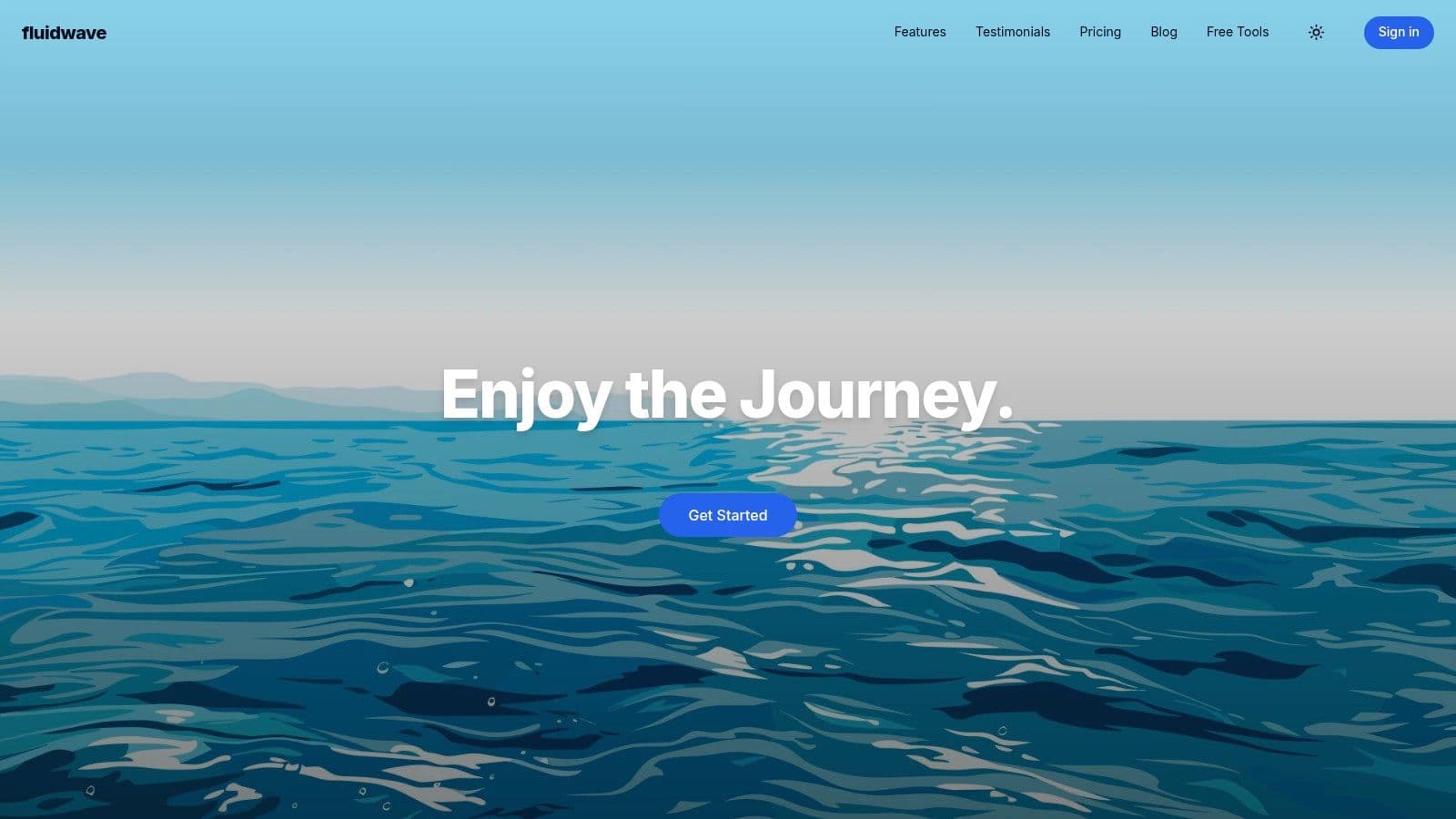
Fluidwave supports multiple views (Kanban, list, calendar) so you can pick the visualization that fits your thinking. A future pay‑per‑task delegation feature promises a low‑friction way to offload admin work without hiring a traditional assistant.
Website: https://fluidwave.com
Best for: Professionals, freelancers, and teams who want to automate prioritization and reduce cognitive load.
2. Time Timer
Time Timer provides a clinically studied visual timer that makes the passage of time tangible. For time‑blindness, the visible countdown is more intuitive than numeric timers. Models range from desktop devices to wearables, supporting focus in different settings.

Buy direct to ensure authenticity and warranty. Time Timer is especially useful for work sprints or Pomodoro cycles, offering a gentle sense of urgency without loud alarms.
Website: https://www.timetimer.com
3. Tiimo
Tiimo is a visual daily planner built for neurodivergent users. It turns abstract schedules into visual timelines with color coding, icons, and progress bars that make time feel concrete.
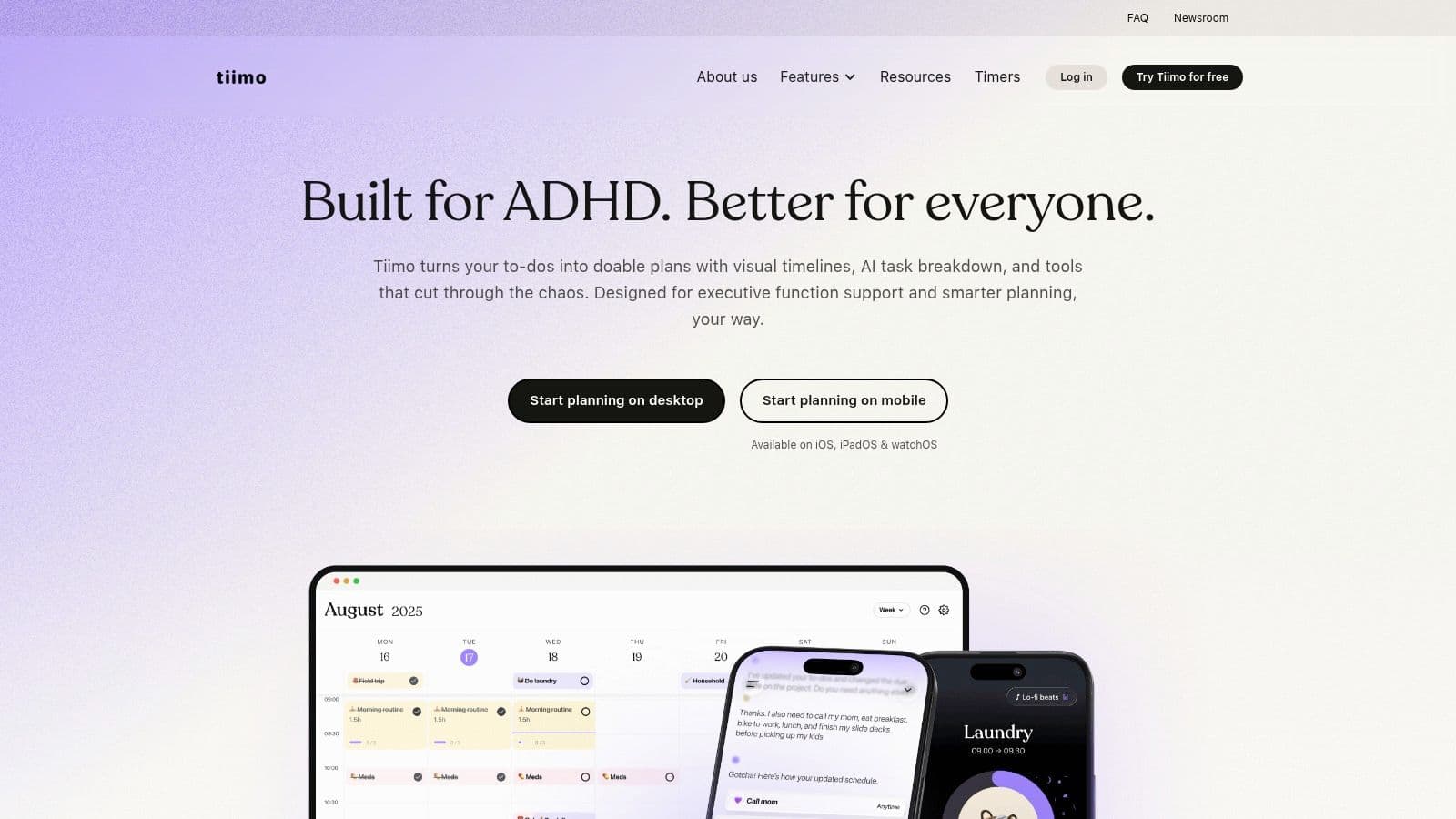
Strengths include routine building, AI task breakdowns for large projects, and multi‑platform sync (calendar, widgets, Apple Watch). It’s helpful when switching between activities is hard.
Key offerings:
- Visual timelines with color‑coded blocks
- Pre‑built routines you can drop in
- AI‑suggested sub‑tasks for big projects
- Calendar and device sync
Website: https://www.tiimoapp.com
Best for: Visual planners and routine lovers who want a predictable day structure.
4. Focusmate
Focusmate pairs you with a live accountability partner for one‑to‑one video co‑working sessions. This “digital body‑doubling” reduces the barrier to starting and helps sustain momentum during work blocks.
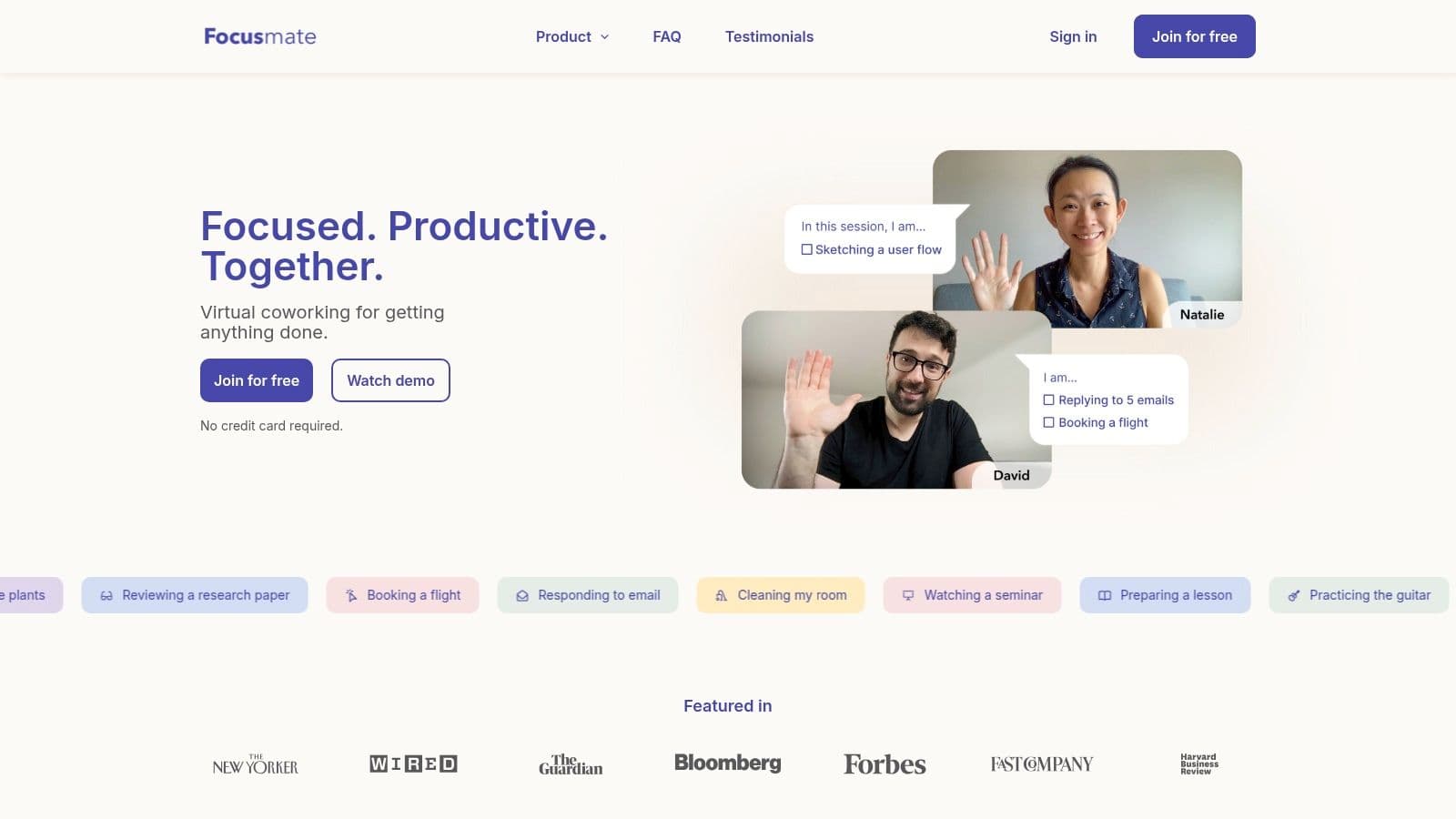
Commit to a focused block (25, 50, or 75 minutes) and work alongside someone who’s also focused—this often feels like being in a quiet library with an accountability partner.
Website: https://www.focusmate.com
Best for: Task initiation and sustained focus through live accountability.
5. Sunsama
Sunsama is a structured daily planner that helps you time‑block and build a calm planning ritual. It imports tasks from Asana, Trello, email and more into a single, focused view to reduce app overload.
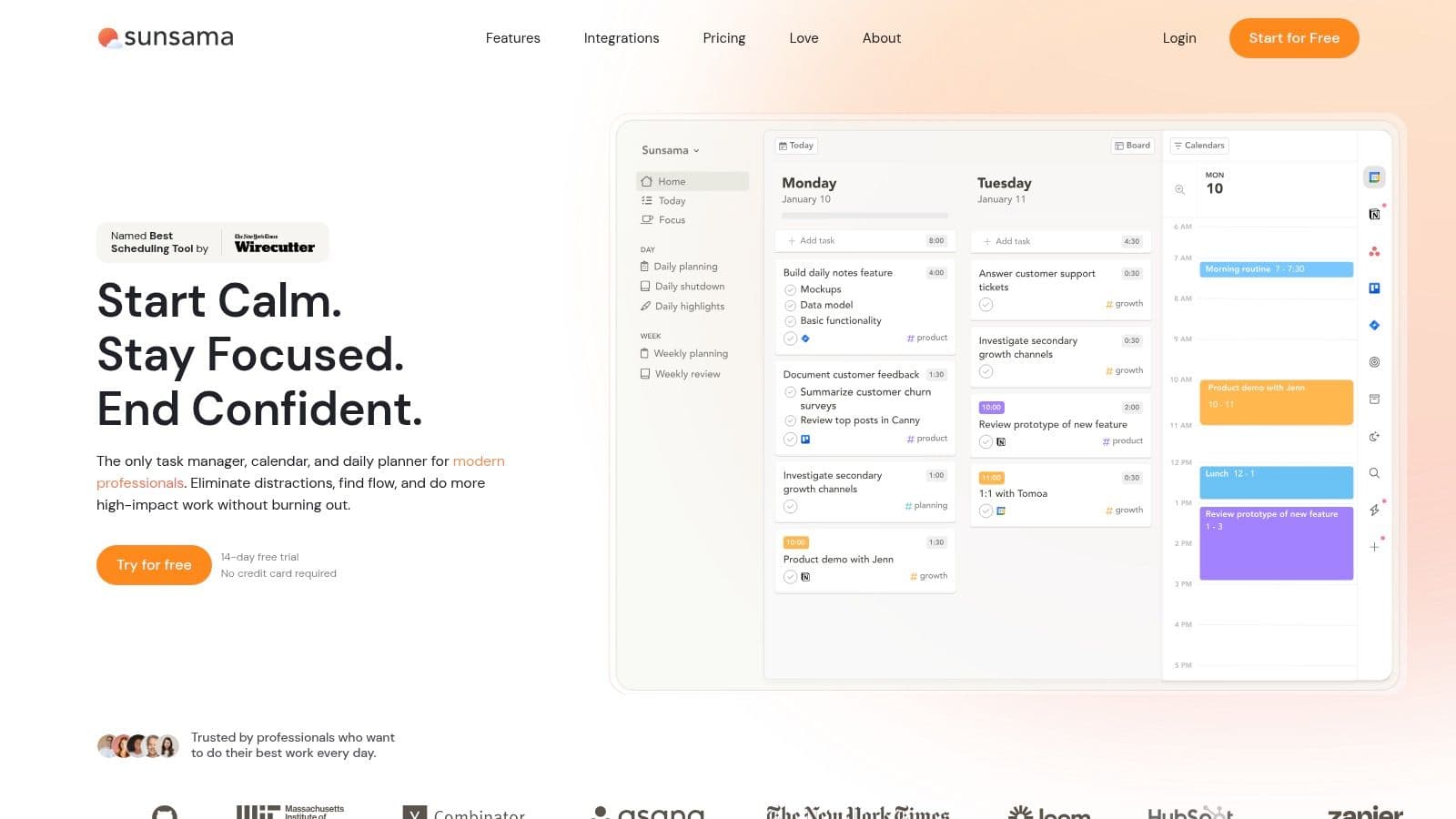
Strengths include guided daily planning, timeboxing, and end‑of‑day shutdown rituals. The minimalist interface helps prevent distraction while encouraging a sustainable planning practice.
Website: https://www.sunsama.com
Best for: Knowledge workers seeking a calm, ritualized planning process.
6. Freedom
Freedom blocks distracting sites and apps across devices, giving you a cross‑platform shield against interruptions. Schedule blocks that align with your work rhythm to prevent slipping into low‑value activities.
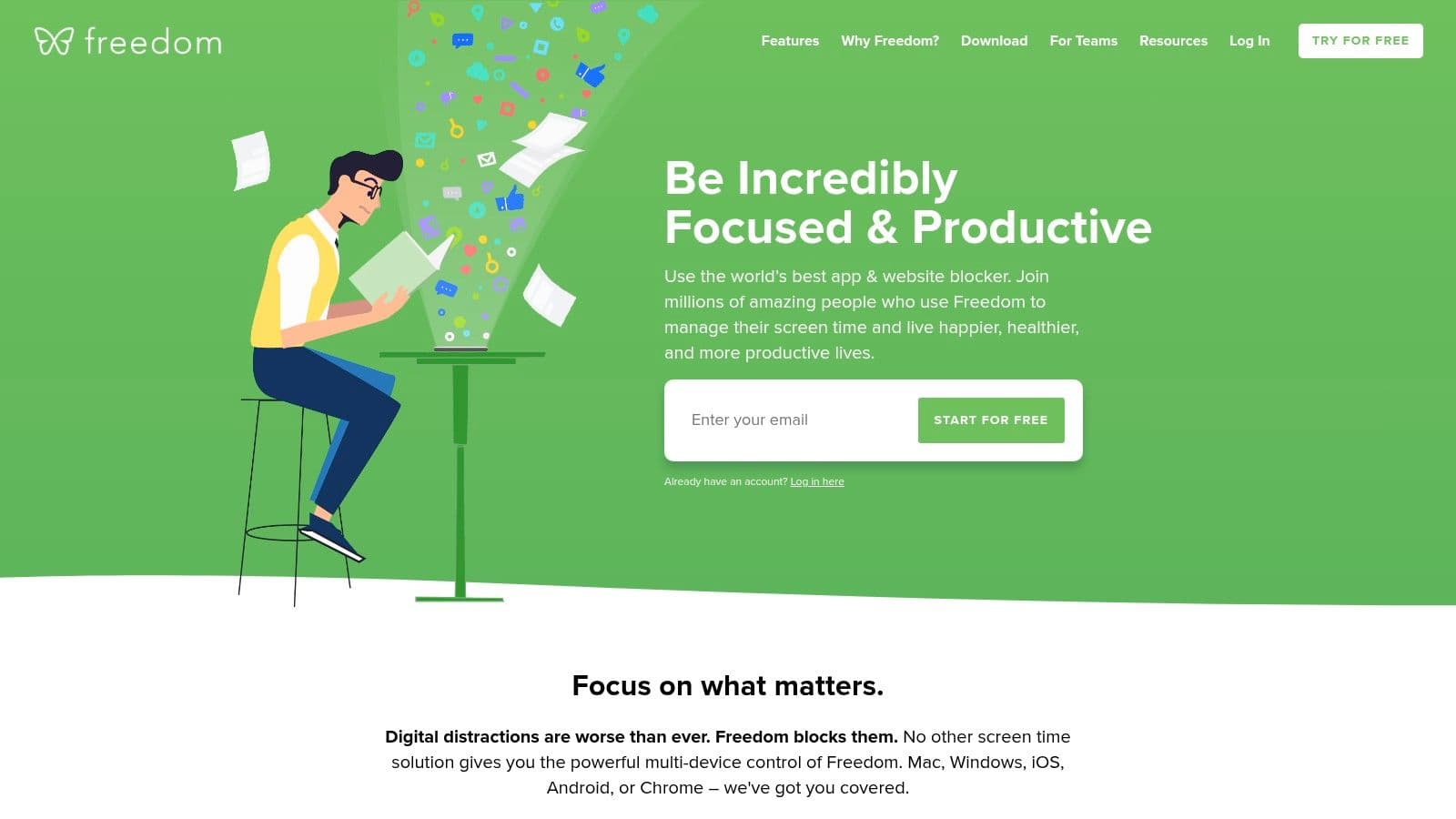
Features like Locked Mode and ambient sounds support deep work without relying on willpower alone. A lifetime license option can be cost‑effective for heavy users.
Website: https://freedom.to
Best for: Creating a distraction‑free digital environment.
7. Brain.fm
Brain.fm offers functional music designed to guide your brain into focus, relaxation, or sleep. Its soundscapes reduce mind‑wandering without the distraction of lyrics.
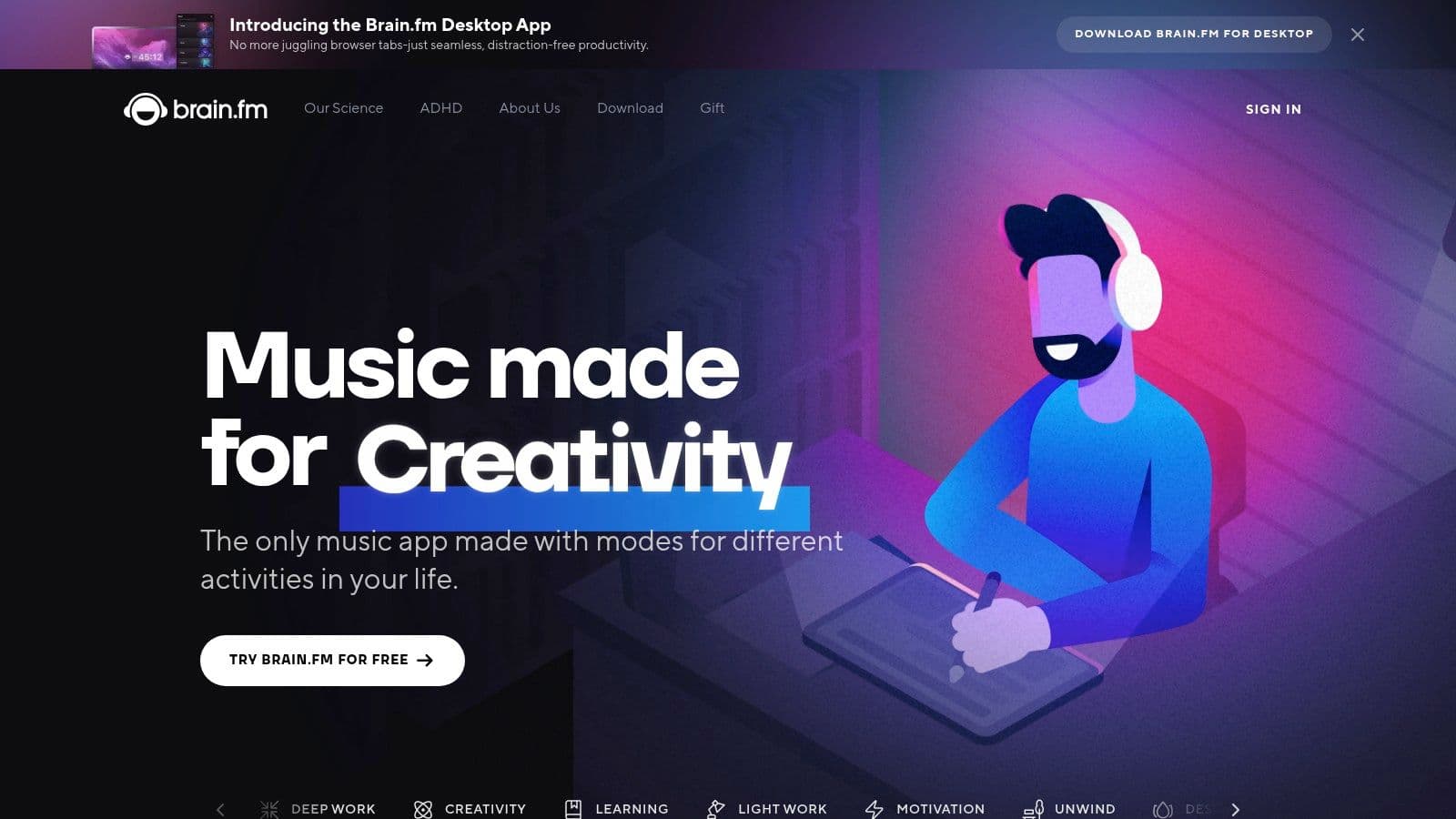
Use good headphones and choose a profile that matches your task—Brain.fm pairs well with Pomodoro cycles and study sessions.
Website: https://www.brain.fm
Best for: ADHD users who respond well to auditory focus cues.
8. Routinery
Routinery turns routines into guided, timed steps. It’s ideal for people who struggle with initiating and sequencing activities because it provides a concrete flow from start to finish.
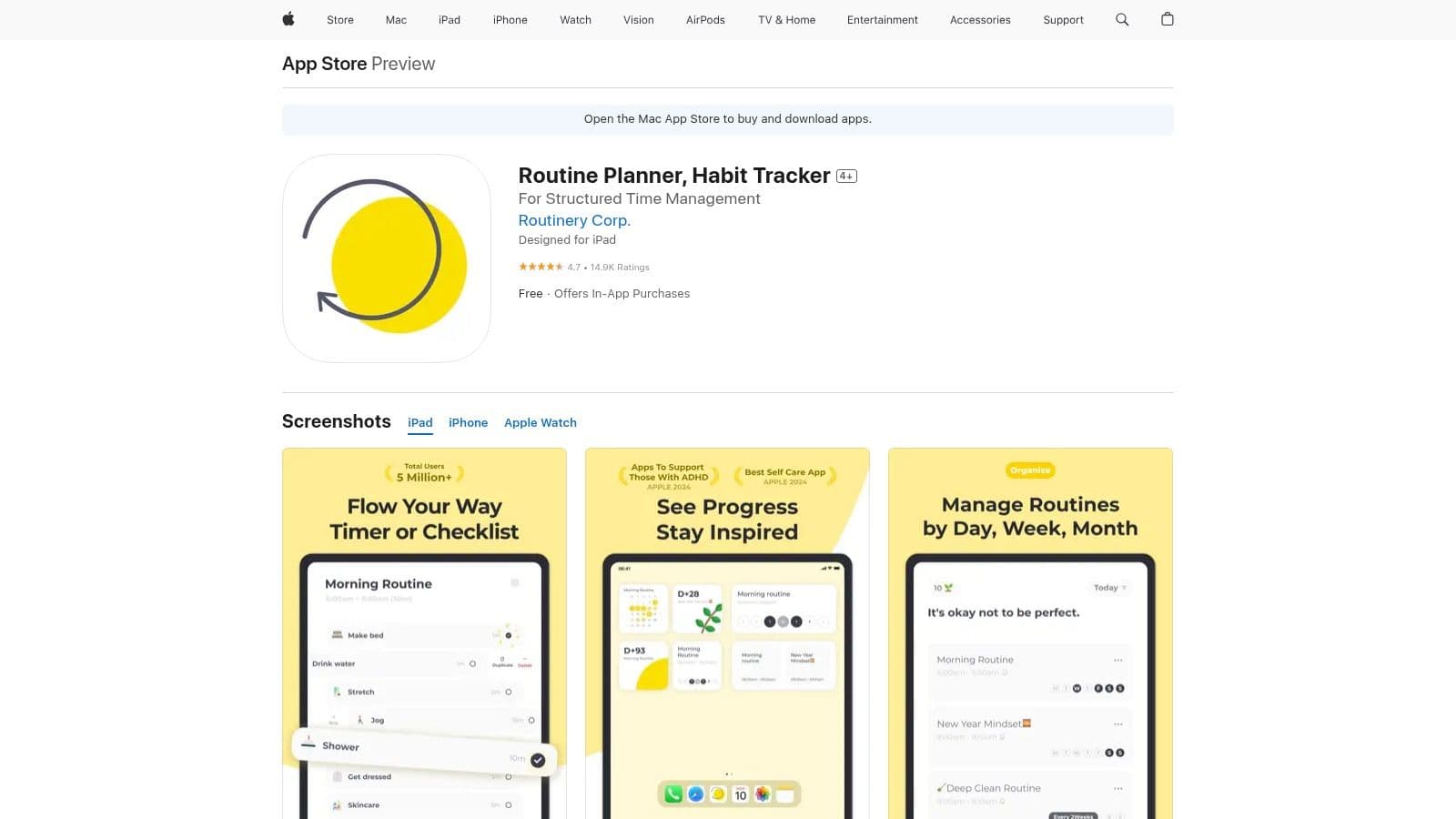
With voice and push prompts, Routinery walks you through routines like a morning ritual or an evening shutdown, reducing decision fatigue and helping you maintain momentum.
Website: https://apps.apple.com/us/app/routinery-self-care-routine/id1450486923
Best for: Building consistent daily sequences with timer‑based steps.
9. Focus Friend
Focus Friend gamifies focus with a bean character that grows as you stay on task. It combines visual rewards with Deep Focus app‑locking to help resist distractions.
The free version is functional; a Pro tier unlocks customization. The gamified approach can be motivating for people who respond well to visual rewards.
Website: https://www.yourfocusfriend.com
Best for: People who respond well to visual rewards and light gamification.
10. Etsy
Etsy is a marketplace for highly personalized, visually engaging tools: ADHD‑friendly Notion templates, printable planners, habit trackers, and digital stickers from independent designers.
Look for ADHD‑specific Notion dashboards that pull together daily tasks, goals, routines, and habit trackers to match your workflow and aesthetic.
Website: https://www.etsy.com
Best for: Notion users and crafters who want a highly customizable, visual system.
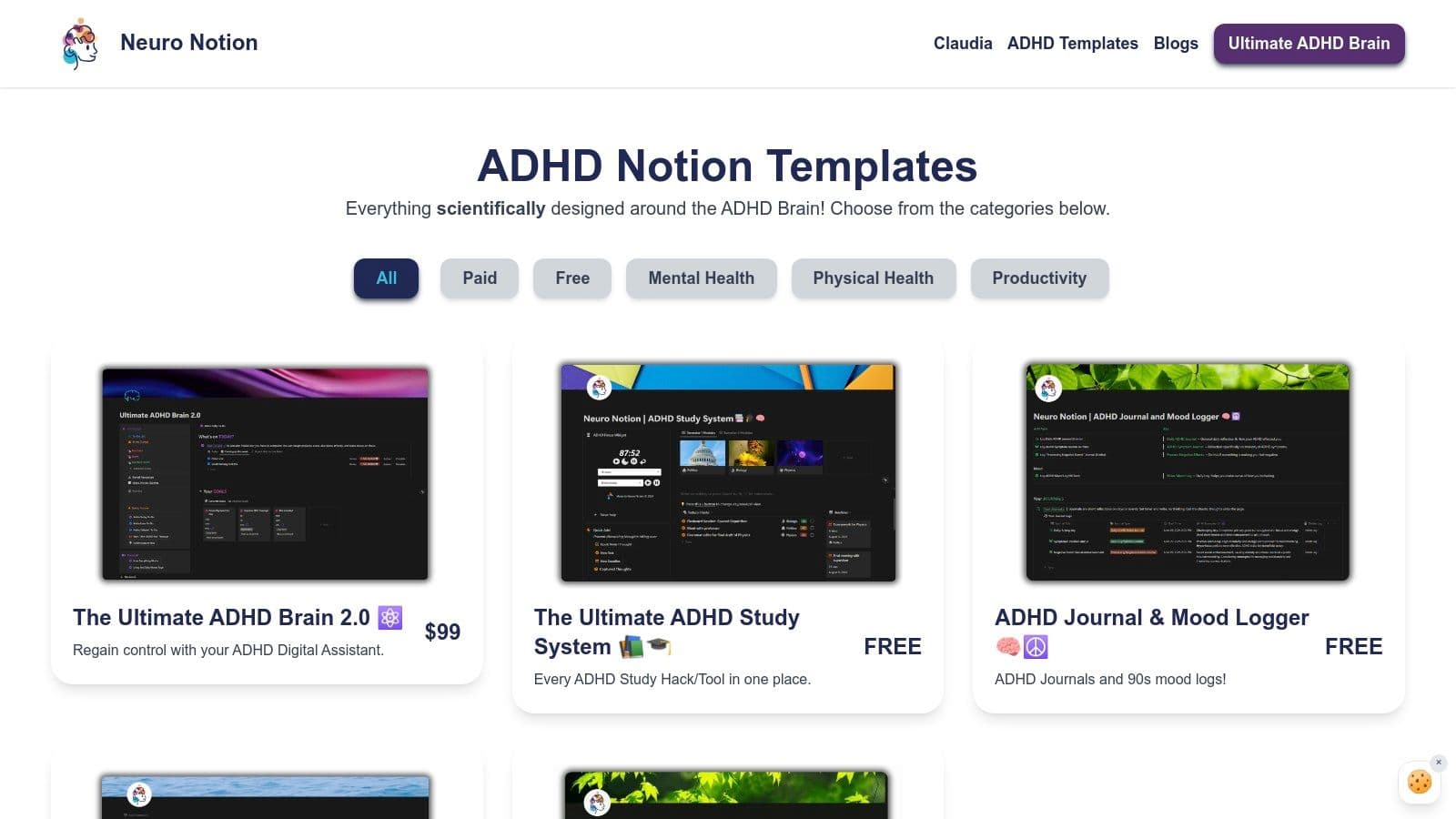
11. Neuro Notion
Neuro Notion offers a focused Notion template library designed for ADHD brains. Instead of starting from a blank page, you get pre‑built dashboards that address executive function challenges and reduce overwhelm.
Templates include both free and premium options. Familiarity with Notion lets you tailor the system to your needs while benefiting from ADHD‑focused design.
Website: https://www.neuro-notion.com/templates
Best for: Notion users who want ADHD‑specific structure out of the box.
Comparison at a glance
The table below summarizes core features, UX, pricing, and target users so you can quickly scan which tools fit your needs.
| Platform | Core Features | UX & Quality | Value & Pricing | Target | Unique selling point |
|---|---|---|---|---|---|
| Fluidwave | AI auto‑prioritization, multi‑view tasks | ★★★★☆ | Free + pay‑per‑task delegation | Professionals, teams | Intelligent automation to reduce cognitive load |
| Amazon | Wide ADHD tool selection | ★★★☆☆ | Competitive pricing | General consumers | Huge selection and convenience |
| Time Timer | Visual timers | ★★★★☆ | Hardware cost | ADHD individuals, educators | Visible time for time‑blindness |
| Tiimo | Visual planner, AI breakdowns | ★★★★☆ | Free + subscription | Neurodivergent users | Visual routines and timeline view |
| Focusmate | Live co‑working | ★★★★☆ | Free + paid plans | Those needing accountability | Real‑time body doubling |
| Sunsama | Daily planning & timeboxing | ★★★★☆ | Premium | Knowledge workers | Ritualized planning with integrations |
| Freedom | Cross‑device blocking | ★★★★☆ | Subscription + lifetime | Digital distraction sufferers | Lockable focus blocks |
| Brain.fm | Focus & relaxation audio | ★★★★☆ | Subscription | Auditory focus users | Neural‑targeted soundscapes |
| Routinery | Timed routines & prompts | ★★★★☆ | Subscription | Routine builders | Guided, timed steps |
| Focus Friend | Gamified timer + app lock | ★★★★☆ | Low‑cost Pro | Gamification fans | Visual rewards + blocking |
| Etsy | Notion templates & printables | ★★★☆☆ | Affordable | DIY planners | Highly customizable, indie marketplace |
| Neuro Notion | ADHD templates for Notion | ★★★★☆ | Free + premium | Notion users | Executive function‑focused dashboards |
Final thoughts
ADHD productivity isn’t about a single magic app. It’s about building a personalized stack that reduces friction and plays to your strengths. The tools above help with getting started, staying focused, and planning in ways that align with how many ADHD brains actually work.
Implementation matters: set up one or two tools, test them for a week, and adjust based on what improves your day. A simple, consistent setup used regularly beats a complicated stack that you don’t maintain.
Suggested starter combo: pair a visual timer like Time Timer with a Focusmate session to create a reliable start ritual, then layer in Sunsama or Tiimo for daily structure.
Quick Q&A
Q: What should I try first?
A: Start with low friction: a visual timer to combat time blindness plus one accountability method (Focusmate or a co‑working buddy). Use a planning app only if you feel overwhelmed by unstructured time.
Q: Can these tools replace medical care?
A: No. These tools support daily management but are not a substitute for clinical treatment. If symptoms significantly impair your life, consult a healthcare professional3.
Q: How do I make this sustainable?
A: Keep it simple. Choose one start ritual, one focus aid, and one planning tool. Schedule weekly check‑ins to see what’s working and drop tools that add friction.
FAQs
Q1: Which ADHD productivity tool should I try first?
A1: Try a visual timer (Time Timer) plus a focus method (Focusmate or Tiimo). Add a routine or planning app (Routinery or Sunsama) if you want structure. Test for a week and adjust.
Q2: Do these tools replace professional treatment?
A2: No. These tools support executive function and daily management but aren’t a substitute for professional clinical care. If ADHD symptoms are significantly impairing daily life, consult a healthcare professional3.
Q3: How can I make my ADHD toolbox sustainable long‑term?
A3: Build around your routines, start small, and focus on one or two core tools first. Schedule regular check‑ins to assess what’s working and what’s not.
For more practical ADHD focus strategies, explore our guide on time management for adults with ADHD and our broader ADHD productivity app comparisons on Fluidwave's blog.
1.
National Institute of Mental Health, “Attention‑Deficit/Hyperactivity Disorder (ADHD) in Adults,” National Institute of Mental Health. https://www.nimh.nih.gov/health/topics/attention-deficit-hyperactivity-disorder-adhd
2.
Simon, J., et al., “Prevalence of ADHD in adults: a systematic review and meta‑analysis,” American Journal of Psychiatry, 2019. https://doi.org/10.1176/appi.ajp.2019.19010042
3.
Centers for Disease Control and Prevention, “Attention‑Deficit/Hyperactivity Disorder (ADHD): Data & Statistics.” https://www.cdc.gov/ncbddd/adhd/data.html
Focus on What Matters.
Experience lightning-fast task management with AI-powered workflows. Our automation helps busy professionals save 4+ hours weekly.