Nail your next interview with our top manager interview questions and answers. Get expert-approved STAR examples and frameworks to land the job.
April 28, 2026 (5mo ago)
10 Manager Interview Questions and Answers for 2026
Nail your next interview with our top manager interview questions and answers. Get expert-approved STAR examples and frameworks to land the job.
← Back to blog
You’re in the interview, and the question sounds simple enough. How do you lead a team when deadlines slip, one high performer is close to burnout, a weaker contributor needs support, and half the team works remotely across time zones? That’s the point where hiring panels stop caring about polished resume bullets and start testing judgment.
Manager interviews are not really about sounding confident. They are about showing how you make decisions under pressure, how you delegate without losing visibility, how you use data without managing by spreadsheet, and how you communicate clearly when the team is not sitting in one room. Generic leadership language falls apart fast here.
Strong candidates answer with operating habits. They explain how they assign ownership, set priorities, coach performance, handle conflict, and measure progress. They give examples that show trade-offs. Maybe they protected a top performer from overload by redistributing work. Maybe they used weekly KPI reviews to catch delivery risk early. Maybe they tightened remote communication so decisions stopped getting stuck in chat threads.
A simple structure still helps. STAR works because it keeps answers grounded in real work. Situation gives the context. Task clarifies what you owned. Action shows how you led. Result shows what changed. Structured behavioral interviews have been part of management hiring for decades, and interviewers still use them because past behavior is easier to evaluate than abstract leadership claims.
Good preparation goes one step further. Build answers that reflect how modern teams run. Talk about strategic delegation, remote-first communication, and performance metrics that connect team output to business results. If you use systems to keep work visible and reduce follow-up overhead, say so. For example, candidates who can describe a clear delegation system for managers using Fluidwave usually sound far more credible than candidates who only say they are collaborative and organized.
If you want to sharpen your thinking before the interview, this roundup of actionable leadership tips for managers is worth a read.
1. Tell me about your management style and how you delegate tasks
A weak answer sounds like this: “I’m collaborative, but I also hold people accountable.” That tells the interviewer nothing. A strong answer explains how work gets assigned, how decisions move, and how you keep ownership clear.
I’d answer this by describing a system, not a personality. Good managers don’t delegate by dumping work on whoever looks available. They match work to skill, urgency, and development goals. They also keep enough visibility to catch drift early without hovering.

What a strong answer sounds like
You might say that your style is clear, structured, and adaptable. You set the outcome first, confirm who owns what, agree on checkpoints, and leave room for people to execute in their own way. Then make it real with an example.
A practical example is delegating recurring admin work like scheduling, inbox triage, or follow-up coordination to a virtual assistant while you keep strategic planning, hiring decisions, and stakeholder communication on your plate. If you use a platform like Fluidwave, mention that directly. Explain how you assign tasks, set deadlines, and track progress without creating noise. The company has a useful piece on mastering delegation in management that reflects the kind of operating rhythm hiring teams like to hear.
Practical rule: Delegation isn’t about getting work off your desk. It’s about making ownership visible.
Here’s where candidates often lose credibility:
- They confuse delegation with abdication. Saying “I trust my team and stay hands-off” can sound good until the interviewer hears there’s no control point.
- They over-centralize decisions. If every approval runs through you, you’re the bottleneck.
- They skip development. The best delegation stretches people. It doesn’t just offload grunt work.
If you want your answer to land, include one sentence on trade-offs. For example, full autonomy works well with experienced staff, but newer team members often need tighter briefs and shorter check-ins at the start. That sounds like management, because it is.
2. Describe a time you had to manage a difficult team member or conflict
It is Monday morning. Two people on your team are frustrated, a handoff slipped again, and the rest of the group is starting to work around the problem instead of trusting the process. That is the kind of situation this question is really about. Interviewers want to know whether you can address tension early, protect standards, and keep the team productive without turning one issue into a drama cycle.
The strongest answers sound specific and controlled. Pick one situation. Then show how you diagnosed the problem, what action you took, and what changed after that. Good managers do not rush to personality judgments. They separate behavior from assumptions, check the pattern, and respond in a way the team can trust.

A grounded way to frame it
A credible answer might be: a team member regularly missed handoffs, which created friction with design and operations. You reviewed deadlines, message history, and task ownership first. Then you met privately, learned that priorities were unclear and one recurring dependency was getting ignored, reset expectations in writing, and added short check-ins until the work became consistent again.
That answer works because it shows management judgment. You looked at evidence before confronting the person. You addressed the issue directly. You set a correction plan and followed it long enough to see whether the fix held.
If you want your answer to stand out, include one modern management detail. For example, explain that you used a shared task system to make blockers visible, or that you relied on written follow-ups because the team worked across time zones. Candidates who already use tools with visible queues and ownership tracking often explain conflict better because they can point to facts instead of opinions. If that reflects your real workflow, a short reference to methods for managing competing priorities across a team can support the logic behind your example.
A strong answer also acknowledges trade-offs. A high performer who damages team trust cannot get a free pass. At the same time, a struggling employee does not always need a formal escalation on day one. Good managers know when coaching is enough and when the issue has become a performance problem.
What to avoid
- Skipping the diagnosis. Saying you “had a tough conversation” is too thin if you never explain how you verified the issue.
- Telling a story with no standards. Interviewers need to hear what expectation was being missed and how you made it clear.
- Claiming everything ended perfectly. Sometimes success means better accountability, cleaner communication, or a documented improvement plan. Not every conflict ends with people becoming close collaborators.
A mature answer shows fairness, clarity, and follow-through.
Remote examples are especially useful here because conflict often gets worse when communication is asynchronous and assumptions fill the gaps. If you can explain how you used written briefs, clearer ownership, and simple performance signals to reduce confusion, your answer will sound current, measured, and grounded in how teams work now.
3. How do you prioritize multiple projects with competing deadlines?
It is 9:10 a.m. A client wants a same-day answer, an internal launch is already slipping, and two team leads both think their work should come first. That is the moment this interview question is really about. Interviewers are not asking whether you know a framework name. They want to know how you make a clear call, explain it, and keep the team from wasting energy on the wrong work.
Strong answers show a repeatable process. Mine is simple. Rank the work by business impact, deadline reality, dependency risk, and the cost of delay if another team gets blocked. Then reset priorities as new information comes in. Good managers do not cling to Monday’s plan when Wednesday’s facts changed.
The best responses also show that prioritization is tied to delegation, communication, and visibility. If you use a tool like Fluidwave, say how it helps you keep priorities visible across a remote or hybrid team. A shared board or calendar view makes trade-offs easier to explain because people can see deadlines, owners, and blockers in one place. If that matches your real process, point to your approach for managing competing priorities across projects and teams.
A concrete example usually lands better than a polished theory. You might say that you were running two client deliverables and an internal rollout in the same week. After reviewing revenue impact, contractual deadlines, and dependency chains, you protected the client work, cut the internal launch to a smaller first release, and reassigned prep tasks so senior time stayed focused on decisions only they could make. That shows judgment. It also shows strategic delegation, which matters more than trying to do everything yourself.
Before you keep reading, it helps to see how another coach explains this kind of triage in action:
What interviewers are really testing
They are listening for calm, judgment, and honesty about trade-offs.
A weak answer says, “I organize by urgency and stay flexible.” A stronger answer says what changed, what got deprioritized, how you informed stakeholders, and how you tracked the new plan. That is the difference between sounding prepared and sounding like someone who has run competing priorities in a live environment.
Say the hard part out loud. Real prioritization means something gets delayed, narrowed, delegated, or declined. Managers who can explain that clearly usually sound more credible because they understand the cost of every yes.
If your answer has no trade-off, it probably is not real prioritization.
One more thing helps. Mention how you use data, not instinct alone. That could be customer impact, delivery risk, team capacity, SLA pressure, or revenue timing. Modern managers are expected to make decisions that hold up under scrutiny, especially in remote-first teams where people need written reasoning, not hallway context. If Fluidwave is part of your workflow, that is a practical way to show you can prioritize with visibility, document decisions, and keep execution aligned after the meeting ends.
4. How do you develop and mentor your team members?
A manager gets this question after saying they care about growth. The interviewer is listening for proof. They want to hear how you turn day-to-day work into better judgment, stronger execution, and more independent team members.
Strong answers stay close to the work. Good development usually comes from assignment design, coaching cadence, and follow-through. It shows up in who gets ownership, how risk is managed, and whether feedback changes the next project, not just the last review cycle.
A better way to answer
Start with a clear system: I develop people by matching responsibility to readiness, then increasing scope as they show judgment. Early on, that might mean tighter briefs, shorter check-ins, and explicit success criteria. For someone ready to grow, it means owning a project, presenting trade-offs, and learning how to handle cross-functional friction without me stepping in too early.
Then give one example that ties development to results. A credible answer might be: “I had a reliable coordinator who was ready for more than execution work, so I gave them ownership of a cross-functional launch. I coached them on stakeholder communication, set weekly milestone reviews, and used post-launch feedback to sharpen their decision-making. The project shipped ahead of plan, stayed under budget, and the person left with real management reps, not just extra tasks.” That works because it shows mentorship as a business decision, not a side activity.
One detail makes this answer stronger. Explain how you coach in a modern environment where not every conversation happens live. In remote-first teams, growth often depends on written feedback, clear ownership notes, and visible decision logs. If you use a tool like Fluidwave, mention how shared task history, documented priorities, and follow-up comments make mentoring more concrete. You can point to what the person owned, where they got stuck, and how their judgment improved over time.
The trade-off interviewers respect
Developing people costs time up front.
If the team is under pressure, it is tempting to keep high-stakes work for yourself because you can finish it faster and with fewer surprises. Good managers make a more disciplined call. They hand off work when the learning value is high and the risk can be controlled.
A practical answer sounds like this:
- For repeatable work: I document the process, define the standard, and transfer ownership early.
- For stretch assignments: I give the person room to lead, but I set tighter checkpoints around decisions that affect other teams.
- For high-risk work: I stay closer until they show sound judgment consistently, especially in ambiguous situations.
That answer lands because it reflects real management. Team development is not about being endlessly supportive. It is about building capability in a way that protects delivery, raises the team’s ceiling, and gives people evidence they are ready for more.
5. What metrics or KPIs do you use to measure team performance?
A manager who cannot answer this clearly usually runs the team on instinct. That gets exposed fast in an interview. Hiring panels want to hear that you can measure performance without turning the team into a spreadsheet.
The strongest answers show judgment. Pick a small set of metrics that reflects output, quality, and operating health. Then explain how you use those numbers to coach, reassign work, or fix a process before results slip.
A practical answer sounds like this: “I use a mix of leading and lagging indicators. I want to see whether the team is delivering on time, whether the work meets the bar, and whether the pace is sustainable. The exact KPIs depend on the function, but I avoid measuring activity unless it connects to a business outcome.”
That works because it shows range.
For a project team, useful KPIs might include milestone hit rate, rework percentage, and cycle time. For a customer support team, I would expect an answer built around resolution quality, backlog age, and escalation patterns. For a growth or sales team, pipeline conversion, retention, and revenue quality usually matter more than raw volume. If you mention a metric, tie it to a decision. Interviewers care less about the dashboard than about what you changed after reading it.
Modern teams also need metrics that hold up outside live meetings. In remote-first environments, visible work matters. Shared task history, blocked-work trends, handoff delays, and follow-through on commitments give a clearer picture than status updates in chat. If you use a system like Fluidwave, you can point to documented ownership, completion patterns, and comment history as evidence of how the team operates. That is the same discipline behind remote team management practices that rely on clear written visibility.
Concrete examples help, but they do not need a citation to sound credible. Say, “In my last role, I tracked onboarding completion time, defect rate, and customer retention after handoff. When retention dropped, the numbers showed the issue was not speed. It was inconsistency in early account setup, so we changed the checklist and added one review point.”
What good managers avoid
- Vanity metrics. High activity can hide weak outcomes.
- Punitive scorekeeping. If people think metrics will be used against them, they stop surfacing risks early.
- Single-metric management. Pushing speed too hard creates errors. Chasing quality with no regard for throughput creates bottlenecks.
One sentence can raise the quality of your answer: “I use metrics to improve performance and judgment, not to police people.”
That tells the interviewer you know the true trade-off. Good measurement creates accountability, but it also needs context. The right KPI answer shows that you can read the numbers, spot the pattern behind them, and respond like a manager, not just a reporter.
6. How do you handle remote or distributed team management?
A distributed team misses a handoff on Friday, three people wait on answers in different time zones, and by Monday the problem is not effort. It is operating design. Interviewers ask this question to see whether you know how to run work without relying on proximity.
A strong answer shows that remote management is a system. Gallup’s reporting on remote and hybrid work points to how common distributed work has become, but the interview is not really about the trend. It is about whether you can create clarity, keep decisions visible, and protect momentum when people are not in the same room or even on the same schedule. See Gallup’s workplace research on remote and hybrid work.
The answer that lands
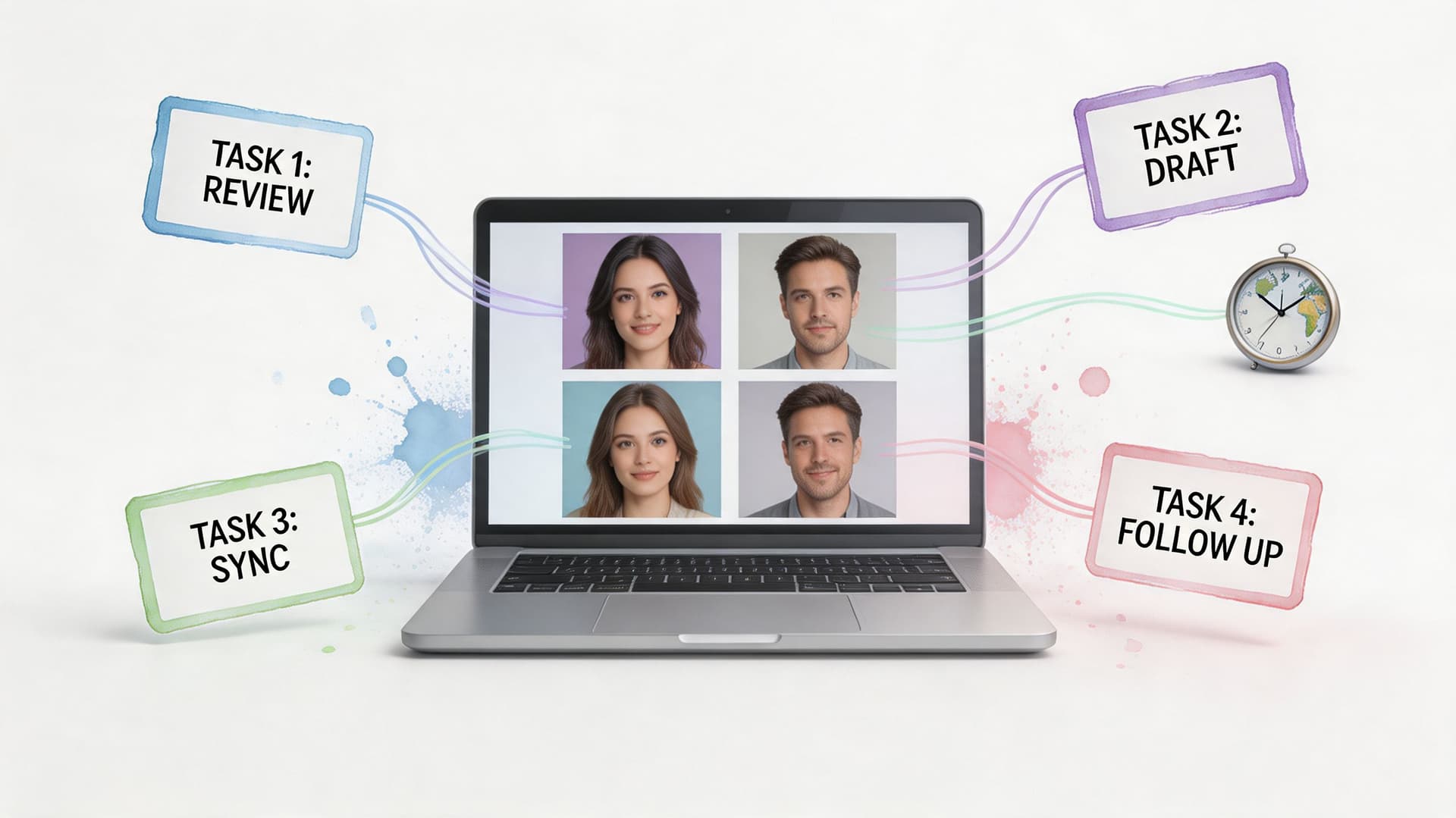
Say that you manage remote teams with an async-first approach. Work sits in shared systems, not scattered across private chats. Decisions are documented. Response-time expectations, handoff rules, and ownership are clear enough that people can keep moving without waiting for you to come online.
Meetings still matter. They just have a narrower job. Use them for decisions, coaching, and problem-solving. Do not use them to read updates that should have been written down already.
If you use Fluidwave, mention how shared task views, written comments, and delegated work across time zones help you keep execution visible. Their guide on remote team management practices that keep work visible across time zones gives you language that sounds like you have done the job.
The better answers also reflect how teams are staffed now. Many managers are coordinating full-time employees, contractors, and part-time specialists at the same time. That setup works well when responsibilities, deliverables, and approval points are written clearly. It breaks down fast when managers rely on ad hoc check-ins and memory.
A modern answer includes the trade-off
Remote teams need autonomy. They also need more deliberate structure than co-located teams.
That is the essential balance to name in your answer. Too much control creates delay and meeting fatigue. Too little structure creates duplicated work, missed handoffs, and uneven accountability. Strong managers solve that by setting clear outcomes, documenting decisions, and reviewing results with data instead of policing activity.
A practical answer could sound like this: “I run distributed teams async first, with clear ownership, written decisions, and defined response windows. I use meetings for decisions and coaching, not routine status reporting. I also make performance visible through delivery, quality, and follow-through, so remote work stays flexible without becoming vague.”
That tells the interviewer you understand modern management, not just remote etiquette.
7. How do you stay organized and model productivity for your team?
Interviewers ask this because your personal habits leak into the team. If you’re scattered, always late to decisions, and constantly changing priorities, your team will spend half its energy compensating for you. Good managers don’t need to be productivity influencers. They do need reliable systems.
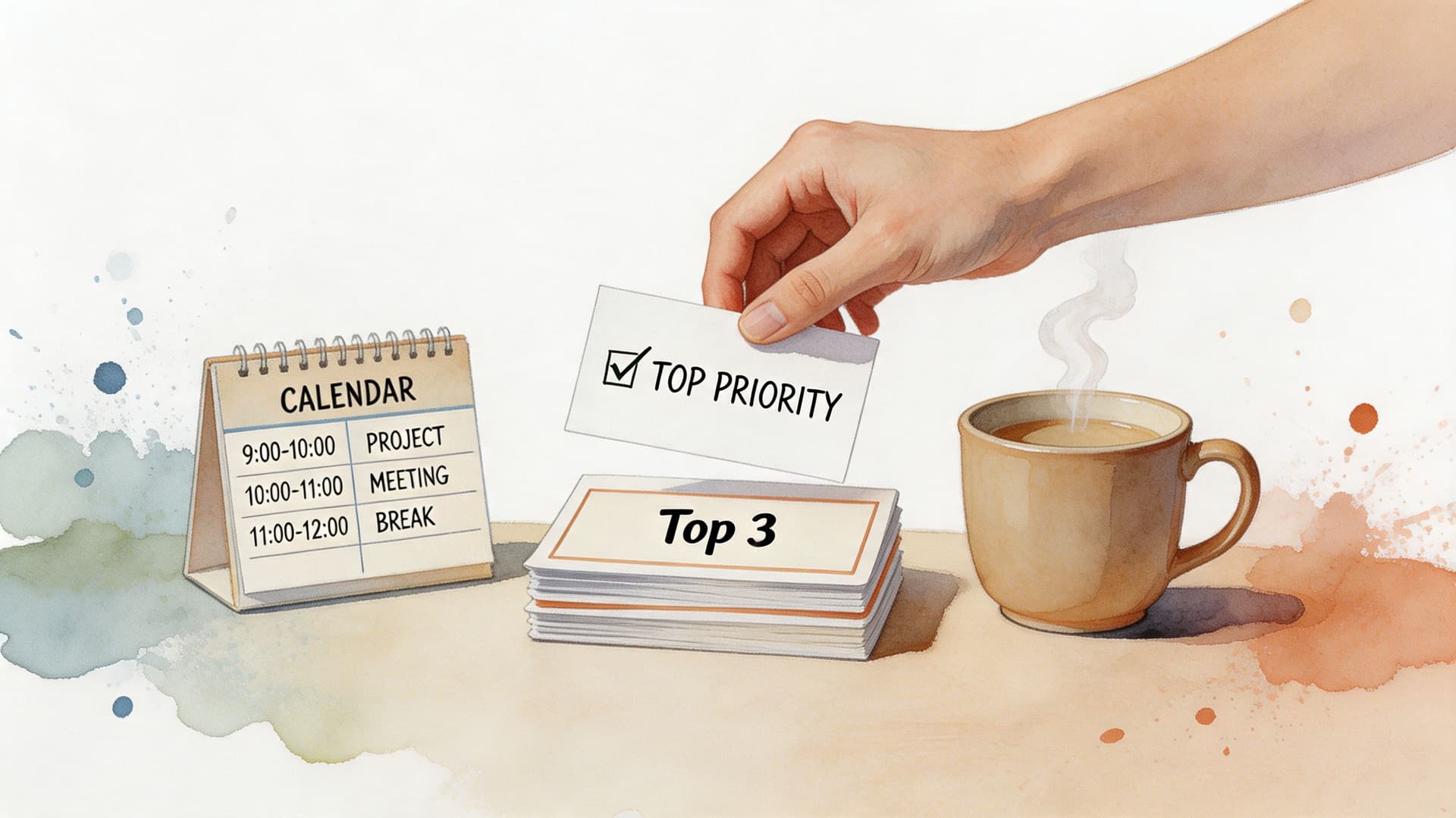
A convincing answer is specific and boring in the best way. You review priorities at the same time each week. You keep one trusted task system. You block focus time when needed. You don’t ask the team to work from chaos while you claim to be “flexible.”
What to say
A practical answer might be: “I stay organized by running a weekly planning pass, a daily review of top priorities, and a single source of truth for tasks. I also try to model realistic productivity, not perform busyness.”
That last line matters. Teams copy what leaders reward. If you praise midnight replies and frantic multitasking, that becomes the norm. If you model clear priorities, visible planning, and sensible response times, the team gets permission to work the same way.
You can also mention that you use your own task board publicly. That often builds trust. People can see what’s waiting on you, what you’re focused on, and where to escalate. It also makes your delegation more credible because you’re not asking others to adopt a system you ignore yourself.
What doesn’t work
- Performing overload. Some managers think looking overwhelmed signals importance.
- Using five tools badly. One clean workflow beats a stack of disconnected apps.
- Confusing responsiveness with productivity. Fast replies can coexist with poor execution.
The interview answer should sound sustainable. Nobody believes a leader who claims perfect inbox zero, flawless time blocking, and uninterrupted deep work every day. A stronger answer admits friction and explains how you recover when the week goes sideways.
8. How do you provide feedback and handle performance issues?
A manager notices in a Monday one-on-one that a strong employee has missed two handoffs in a row, gone quiet in Slack, and started surprising peers with late changes. The wrong response is to wait for the quarterly review. The right response is to address it while the facts are fresh, the stakes are still manageable, and there is still time to correct course.
That is the frame interviewers want to hear. Good managers make feedback routine, specific, and tied to the work. They also handle underperformance without drifting into vague encouragement or premature escalation.
What a practical answer includes
A credible answer starts with cadence. Feedback works best when it is part of the operating system, not a special event. Mention regular one-on-ones, quick course corrections close to the work, and written expectations people can refer back to. In remote teams, that matters even more because silence gets misread fast and small misses can sit hidden for weeks.
Then explain how you separate three different problems: skill, capacity, and behavior. A person who does not know how to do the work needs coaching. A person carrying too much needs priorities reset or work redistributed through better delegation. A person who understands the standard and keeps ignoring it needs a clearer accountability conversation.
A strong answer can sound like this: “I give feedback as close to the event as possible, with examples and a clear expectation for what should change. If performance drops, I first confirm whether the issue is capability, bandwidth, or behavior. Then I agree on a plan, define what improvement looks like, and set a follow-up date. If the pattern continues, I document it and involve HR at the right point.”
One line I listen for in interviews is simple: be clear enough that the employee knows what to do next.
Systems help, but judgment still matters
Documentation makes these conversations fairer. Shared goals, project timelines, response-time norms, and delivery records give you evidence instead of impressions. That is one reason modern managers are expected to be more data-aware than before. If someone says communication is strong but the team is repeatedly blocked waiting on updates, the record should show that gap.
Tools can help here if you describe them well. For example, a platform like Fluidwave can give managers a cleaner view of workload, deadlines, and follow-through across a distributed team. Used well, that supports better coaching because you can point to patterns early, rebalance work through strategic delegation, and avoid turning every performance issue into a personal judgment.
The interview answer gets stronger when you show restraint too. Not every miss is a performance problem. Sometimes the manager created the issue through unclear priorities, weak onboarding, or poor remote communication habits. Candidates who admit that trade-off usually sound more experienced, because they know accountability runs in both directions.
9. Describe your experience with budgets, resources, and ROI
A manager gets approved for one extra hire, but the underlying problem is a broken workflow that wastes ten hours a week across the team. This question tests whether you can spot that difference.
Interviewers are listening for business judgment. They want to hear how you decide where money, time, and people create the best return.
Candidates often undersell themselves here because they never held the full departmental budget. That is usually too narrow a definition. If you have influenced headcount plans, vendor choices, software spend, project scope, or how team capacity gets allocated, you have relevant experience.
How to answer if your budget authority was broad or narrow
Start with your actual level of ownership. A strong answer sounds like this: “I directly managed some budget lines and influenced others by making the case for staffing, tooling, and priority changes.” Then show how you evaluated trade-offs. Cover expected impact, time to implement, team capacity, and the downside if the investment does not pay off.
A credible example is deciding between automation, contract support, or keeping work in-house. The best answers explain why the cheapest option can fail if it creates rework, slows decisions, or burns out senior people who should be focused on higher-value work.
You do not need a dramatic finance story. A grounded example works better. For instance, you might explain that you cut unnecessary software spend, tightened milestone tracking, and reallocated work so a launch stayed ahead of schedule without adding headcount. That shows control over cost, execution, and delivery in one answer.
What experienced candidates say about ROI
Strong managers talk about return in more than one form. Revenue matters. So do speed, quality, retention, and manager attention.
That is especially true on remote or distributed teams, where hidden inefficiency can sit in handoffs, status chasing, and duplicate reporting. Good candidates mention how they use operating data to see where capacity is going. A tool like Fluidwave can help surface workload patterns, delivery risk, and underused capacity, which makes resource decisions easier to defend because they are based on evidence instead of guesswork.
Use language like this:
- I look at direct cost and opportunity cost. If I free ten hours a week, I want to know what higher-value work that time can support.
- I judge ROI by execution quality too. A cheaper process that creates delays or errors often costs more a month later.
- I treat delegation as a resource decision. Senior people should not spend their week on routine coordination if a lighter process or different owner solves it.
- I want the team close to the numbers. The people doing the work usually know which steps add value and which ones only create overhead.
That answer sounds practical because it reflects how managers operate. Budget judgment is rarely about cutting spend for its own sake. It is about putting limited resources where they improve outcomes, protect team capacity, and hold up under scrutiny later.
10. How do you approach change management and innovation?
A manager inherits a team that is tired of new systems, skeptical of leadership, and already overloaded. Then an interviewer asks, "How do you approach change management and innovation?" The strongest answer shows that you can introduce better ways of working without creating confusion, resentment, or extra drag.
Good candidates treat change as an operating decision. They start with a business problem, define what needs to improve, and then choose the smallest change that can prove value. That matters on modern teams, especially in remote settings where weak communication or unclear ownership can make even a smart idea fail in rollout.
A credible answer sounds like this: "I start by getting specific about the problem. Is the issue speed, quality, visibility, handoffs, or decision latency? Then I involve the people closest to the work, test a change on a small scale, and track whether it improves the result before expanding it."
That framing works because it shows judgment. It also reflects what interviewers are screening for. Analysts at Harvard Business Review have noted that many managers struggle because their leadership approach does not fit the demands of the role. Change questions help interviewers see whether your style creates adoption or just activity.
A strong example is replacing scattered status updates with one shared workflow for a distributed team. You might explain that the team was losing time in Slack threads, email follow-ups, and duplicate trackers, so you introduced one source of truth, a weekly review cadence, and a short trial period. If you use a platform like Fluidwave, mention how it helped you spot bottlenecks, uneven workload, or stalled work so the change was tied to evidence, not preference. That signals forward-thinking leadership without sounding like you chase tools for their own sake.
What hiring managers want to hear
- You diagnose before you prescribe. Strong managers do not force a system onto the team just because it is new.
- You test changes in stages. A pilot, feedback loop, and clear owner usually work better than a broad rollout.
- You explain trade-offs. A new process may improve visibility but add reporting overhead, so you watch for that.
- You measure adoption and results. Launching a process is easy. Getting consistent use and better outcomes is harder.
- You treat resistance as useful input. Objections often point to a dependency, risk, or workflow gap you need to fix.
One sentence I like in interviews is: "I try to make change feel concrete. People support it faster when they can see what problem it solves, what will change this week, and how we will know it worked."
That answer feels experienced because it connects innovation to execution. Real managers do not get credit for announcing change. They get credit for helping a team absorb it, improve performance, and keep trust intact.
Top 10 Manager Interview Questions Comparison
| Item | 🔄 Implementation complexity | ⚡ Resource requirements | 📊 Expected outcomes | 💡 Ideal use cases | ⭐ Key advantages |
|---|---|---|---|---|---|
| Tell me about your management style and how you delegate tasks | Moderate, requires clear delegation processes and tool setup | Moderate, task management tools + onboarding time | Higher autonomy, faster task completion (e.g., ~30%) | Scaling teams, routine task automation | Empowers team; frees leader for strategic work |
| Describe a time you had to manage a difficult team member or conflict | High, situational and sensitive; needs tailored approach | Low–Moderate, time for coaching, possible HR involvement | Restored performance and morale when handled well | Performance issues, interpersonal conflicts | Builds trust; develops underperformers |
| How do you prioritize multiple projects with competing deadlines? | Moderate, needs frameworks and stakeholder alignment | Moderate, prioritization tools and coordination time | Improved on-time delivery and reduced bottlenecks | Concurrent projects, tight deadlines | Strategic focus; clearer trade-offs |
| How do you develop and mentor your team members? | Moderate–High, ongoing coaching and planning | High, regular 1:1s, development budget, stretch assignments | Skill growth, succession readiness, higher retention | Talent development, leadership pipeline | Sustainable team growth; stronger internal mobility |
| What metrics or KPIs do you use to measure team performance? | Moderate, define balanced metrics and dashboards | Moderate, analytics tools and data collection | Transparent, data-driven improvement in productivity & quality | Performance reviews, continuous improvement programs | Objective accountability; actionable insights |
| How do you handle remote or distributed team management? | Moderate, establish async norms and intentional cadence | Moderate, communication platforms and scheduling across time zones | Better coordination, fewer unnecessary meetings (e.g., -40% email) | Distributed teams, multi-timezone operations | Trust-based autonomy; scalable collaboration |
| How do you stay organized and model productivity for your team? | Low–Moderate, personal routines and visible practices | Low, personal tools and time-blocking habits | Higher team adoption of productive habits; modeled credibility | Leadership by example; culture-building | Authentic leadership; practical productivity gains |
| How do you provide feedback and handle performance issues? | Moderate, consistent documentation and timely conversations | Moderate, time for check-ins and tracking systems | Early correction, fair escalation; improved outcomes | Ongoing performance management, remediation plans | Fairness, improved accountability, growth-focused |
| Describe your experience with budgets, resources, and ROI | High, requires financial analysis and justification | Moderate–High, budget tools, cross-functional input | Better resource allocation and measurable ROI (example: payback in 2 months) | Budget ownership, investment decisions, cost optimization | Financial stewardship; quantified impact |
| How do you approach change management and innovation? | High, stakeholder engagement, training, phased rollout | Moderate–High, pilots, training, change communications | Successful adoption and process improvements (e.g., +25% efficiency) | Tool migrations, process transformations, cultural change | Sustained innovation; buy-in-driven change |
Fine-Tune Your Strategy and Organize Your Prep
You are halfway through a manager interview. The first few questions go fine, then the interviewer asks for a specific example about delegation under pressure, a conflict between two strong performers, and how you tracked whether your fix worked. Candidates who prepared with talking points usually stall here. Candidates who prepared with evidence, trade-offs, and a clear decision path usually pull ahead.
Strong prep looks a lot like strong management. It is organized, selective, and tied to outcomes.
Start by building a bank of seven to ten stories from your actual work. Do not write one story for each question. Write stories that can do more than one job. A missed deadline can support answers on prioritization, delegation, stakeholder communication, and performance management. A team reset after a difficult quarter can support questions on morale, metrics, coaching, and change.
Then sort those stories by role level. For a first-time manager interview, keep the lens close to the team. Show how you set expectations, followed through, and handled issues early. For a senior manager or director role, widen the frame. Show cross-functional judgment, resource trade-offs, and how your decisions changed team performance over time.
Hiring teams usually care less about polished theory than proof that you can lead in practice. A manager answer gets stronger when it shows three things. What problem you faced, how you decided what to do, and what changed afterward. If the result was mixed, say that. Good interviewers trust candidates who can explain a partial win, a hard lesson, or a decision that protected the business at a short-term cost.
A practical way to prep is to map each story across modern management themes, not just classic behavioral categories. Include one example that shows strategic delegation. Include one that shows remote-first communication across time zones. Include one that shows data-driven performance management, where you used metrics to diagnose a problem instead of relying on instinct alone. That gives your answers a more current point of view and helps you sound like a manager who can lead the team in front of you, not the team from five years ago.
Mistakes that weaken otherwise solid candidates
- Answers stay too abstract. “I believe in trust and accountability” is fine as an opener, but it needs a real case behind it.
- The setup runs too long. Spend less time explaining the org chart and more time on your decision.
- Trade-offs are missing. Management answers get stronger when you explain what you chose not to do and why.
- Results are vague. Use concrete changes such as cycle time, quality, retention, team capacity, or stakeholder confidence if you can support them.
- Remote leadership is treated like a side topic. For many teams, communication habits, documentation, and async decision-making are part of basic management now.
- Follow-up questions catch them off guard. Be ready for “What did your team think?”, “What metric told you it was working?”, and “What would you change next time?”
STAR still helps, but use it with some judgment. Keep the situation short. Spend your time on the action, the reasoning behind it, and the result. For manager interviews, I usually tell candidates to add one more layer beyond the basic format. Name the constraint. Budget, headcount, time zone gaps, skill gaps, or competing executive priorities often explain why your decision mattered.
Your prep system should also reflect how you work as a manager. Fluidwave is useful here because it lets you turn preparation into a visible workflow. Set up columns for company research, likely question themes, draft answers, mock interviews, and follow-up gaps. If you use strategic delegation on the job, show that same instinct in your prep. Hand off low-value research or scheduling tasks, keep the high-value thinking for yourself, and use the saved time to tighten your examples.
If you need help sharpening one of the hardest answers candidates give, this DynamicsHub interview weakness guide is a useful companion read.
One final test works well. Read an answer out loud and ask whether it sounds like something you learned from experience or something you picked up from generic interview advice. The stronger answer usually includes friction, judgment, and a measurable effect on the team.
If you want your interview prep to reflect the way strong managers work, try Fluidwave. Use it to organize stories, track research, plan mock interviews, and delegate low-value prep tasks so you can spend your time where it matters most, on clear, credible answers.
Focus on What Matters.
Experience lightning-fast task management with AI-powered workflows. Our automation helps busy professionals save 4+ hours weekly.