Discover how to prevent employee burnout with practical strategies for leaders and teams. Learn to spot the signs and build a resilient, supportive workplace.
January 21, 2026 (8mo ago) — last updated February 17, 2026 (7mo ago)
How to Prevent Employee Burnout: A Guide for Leaders
Discover how to prevent employee burnout with practical strategies for leaders and teams. Learn to spot the signs and build a resilient, supportive workplace.
← Back to blog
How to Prevent Employee Burnout: A Leader’s Guide
Discover how to prevent employee burnout with practical strategies for leaders and teams. Learn to spot the signs and build a resilient, supportive workplace.
Preventing employee burnout isn’t about tacking on a few wellness perks; it’s about building a supportive culture, balancing workloads, and truly protecting people’s time and energy. This guide gives leaders practical steps to spot early warning signs, redesign work, and create teams that sustain high performance without sacrificing well-being.
The true cost of burnout in your organization

Burnout is an occupational phenomenon with three core elements: energy depletion, mental distance or cynicism about one’s job, and reduced professional efficacy.1 When these symptoms spread, they quietly erode productivity, creativity, and morale.
This isn’t an individual failing. It’s often a sign that systems, workflows, or expectations are out of balance—and that fixing culture and design is the real solution.
The scale of the problem is growing: some analyses project a sharp rise in employees at risk of burnout and significant economic costs from lost productivity and healthcare spending.2 Employers who treat burnout prevention as a strategic priority protect their people and their bottom line.
Why burnout is a business problem
A high-performing team member who starts missing deadlines or checking out in meetings is more than a short-term issue. Reduced efficacy ripples across projects, client relationships, and team morale. Over time, disengagement increases absenteeism and turnover while reducing innovation.
Burnout shows up as subtle declines long before an exit interview. Treat it as an organizational risk and you can intervene early.
Shift from reacting to preventing
To stop burnout, shift from handling individual crises to changing the environment that creates them. Ask hard questions about workload design, communication norms, and whether people feel safe saying, “My plate is too full.” When prevention is part of your operational strategy, you retain talent and sustain performance.
Learn to spot early warning signs

Burnout typically arrives slowly. Spotting early, consistent changes in behavior is the best chance to intervene before someone hits a breaking point.
Individual signs to watch for
Look for persistent patterns rather than one-off bad days:
- Decreased discretionary effort: the person stops volunteering or sharing ideas and limits contribution to the bare minimum.
- Increased irritability or negativity: once-optimistic people become cynical and react more strongly to feedback.
- Physical exhaustion and vague ailments: chronic fatigue, frequent headaches, or rising sick days can signal deeper strain.
Seeing these signs is an opportunity to offer support and investigate causes, not to blame.
Team and organizational symptoms
When burnout becomes collective, it points to systemic problems:
- More interpersonal conflict and short tempers.
- Collective disengagement: low participation in meetings and declining energy for shared goals.
- A rise in mistakes and missed deadlines as attention to detail falls.
Stress versus burnout
Stress often looks like over-engagement and urgency; burnout looks like chronic disengagement and emotional exhaustion. The distinction matters because solutions differ: pressure can resolve short-term stress, but it will only accelerate burnout.
| Symptom area | Normal stress | Chronic burnout |
|---|---|---|
| Emotional state | Urgency and high activity | Helplessness and emotional exhaustion |
| Engagement | High, frenetic engagement | Deep disengagement and detachment |
| Outlook | Hopeful about resolution | Pervasive cynicism and low hope |
| Primary damage | Physical fatigue | Emotional and motivational decline |
When signs shift from frantic effort to detachment, intervene with support, workload adjustments, and systemic fixes.
Personal resilience: practical habits that protect energy
Individual resilience helps, but it’s not a substitute for better systems. Use these practical habits to protect your energy and performance.
Protect focus and reclaim time
Context-switching and constant notifications are major drains. Build deliberate pockets of deep work:
- Try focused work blocks like the Pomodoro Technique: 25 minutes on, 5 minutes off.
- Schedule “no-email” blocks each day and use a visible “do not disturb” status when concentrating.
These habits reduce fatigue and increase output quality.
Manage energy, not just time
Identify your energy peaks and align demanding work to those windows. Reserve low-energy periods for admin tasks. Also learn to truly disconnect outside work hours—avoid habitual email checks that prevent recovery. Consistency with boundaries pays dividends for mental health.3
Say “no” and negotiate workload
High performers often overcommit. Use collaborative language to negotiate priorities rather than defaulting to “yes.” Example script:
“I'd be happy to help. Right now my priorities are Project X and Y. To give this new task the focus it needs, which of the others should I deprioritize?”
This frames the conversation around capacity and quality rather than refusal.
Build burnout-proof teams through better leadership
Managers are the most powerful buffer against team burnout. Their actions shape norms, expectations, and psychological safety.
Create psychological safety
Psychological safety lets people admit mistakes, raise concerns, and ask for help. Leaders can foster this by modeling vulnerability, encouraging constructive dissent, and focusing on process improvements rather than personal blame. Many workers report reluctance to discuss mental health with managers, so leaders must proactively close that gap.4
Run one-on-ones that matter
One-on-ones shouldn’t be status updates. Use them to ask open questions and listen:
- “What’s been taking most of your energy this week?”
- “Is anything blocking your work that I can help remove?”
- “How is your current workload—energizing or draining?”
Make these check-ins consistent, person-focused, and action-oriented.
Model realistic workloads and boundaries
Leaders set norms. If you email at 10 PM, people assume that’s expected. Be explicit about your own boundaries and encourage delegation and rest. Delegate with clear instructions, aligned skills, and trust—then step back to let people own the work.5
Redesign work to reduce cognitive overload
Good leadership and personal habits help, but if work itself is poorly designed, burnout will persist. Cognitive overload from constant switching and administrative tasks is a major driver of exhaustion.
Automate repetitive friction
Automate recurring low-value tasks like meeting scheduling, reminders, and status collection so people can focus on strategic work. Automation isn’t about replacing people; it’s about freeing them for higher-impact work.
For example, automating daily check-ins can return hours of planning time each week and reduce the daily grind of manual updates.6
Delegate strategically
Effective delegation reduces bottlenecks and aligns tasks with skills and growth goals. Key principles:
- Match tasks to skills and interest.
- Provide clear context, outcomes, and deadlines.
- Give autonomy and avoid micromanaging.
Thoughtful delegation balances workload and creates development opportunities.
Protect time for deep work
Design meeting norms, notification guidelines, and collaborative practices that protect uninterrupted focus. When teams get back several hours a week through automation and smarter workflows, they regain the cognitive bandwidth to do meaningful work.
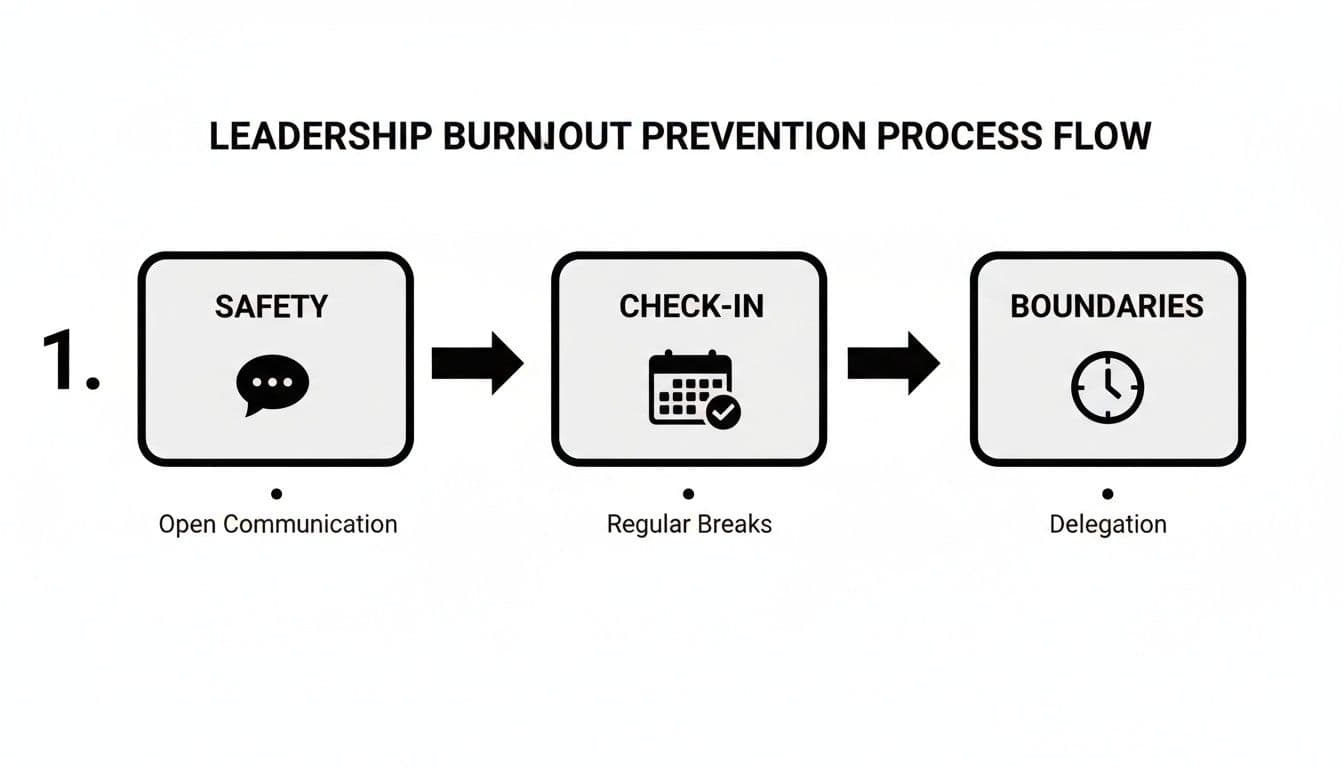
This three-part approach—psychological safety, consistent check-ins, and clear boundaries—creates a resilient foundation for team health.
Build a culture of continuous well-being

Burnout prevention is ongoing, not a one-and-done project. Move beyond annual surveys and create continuous listening systems to detect issues early and act on them.
Use frequent, focused feedback
Pulse surveys and anonymous suggestion tools provide regular, actionable signals about workload, support, and process friction. When people trust these channels, you get the insights needed to make meaningful changes.
Ask specific questions that map to known drivers of burnout, for example:
- “On a scale of 1–10, how manageable has your workload felt this month?”
- “Do you have the resources and support you need to do your job well?”
- “Is there anything in our workflow that creates unnecessary frustration?”
Treat well-being as a KPI and measure it consistently alongside revenue and customer metrics.
Track metrics that matter
Use both leading and lagging indicators to assess progress:
| Metric | What it tells you | How to track |
|---|---|---|
| Absenteeism rate | Early sign of exhaustion or disengagement | Monitor unscheduled absences by team over time |
| Employee Net Promoter Score (eNPS) | Loyalty and likelihood to recommend your company | Ask “How likely are you to recommend us as a place to work?” in pulse surveys |
| Voluntary turnover | Loss of talent, especially top performers | Track voluntary exits and reasons in exit interviews |
Measure consistently, test initiatives, and double down on what moves the needle.
Managing workloads, delegating effectively, and tracking progress are essential to a burnout-proof culture. Fluidwave provides tools to automate routine tasks, delegate clearly, and give teams breathing room to focus on what matters. See how Fluidwave can help build balanced, productive workflows: https://fluidwave.com.
Quick Q&A
Q: What are the earliest signs of burnout to watch for?
A: Look for persistent changes like reduced discretionary effort, increased cynicism or irritability, chronic exhaustion, or frequent vague illnesses. These patterns usually appear before a crisis.
Q: How should managers respond when they spot burnout signs?
A: Start with a supportive conversation in a one-on-one, assess workload and blockers, negotiate priorities, and remove systemic friction. Follow up with changes to workload, regular check-ins, and process fixes.
Q: What organizational steps reduce burnout risk most effectively?
A: Build psychological safety, automate repetitive tasks, delegate strategically, protect deep work time, and use continuous feedback and targeted metrics to track progress.
1.
World Health Organization, “Burn‑out an occupational phenomenon: International Classification of Diseases,” May 28, 2019, https://www.who.int/news/item/28-05-2019-burn-out-an-occupational-phenomenon.
2.
The Interview Guys, “Workplace Burnout Projections and Economic Impact,” (analysis referenced in article), https://theinterviewguys.com.
3.
Gallup, “Employee Burnout, Part 2: The State of the Global Workplace,” (analysis on prevalence and trends), https://www.gallup.com/workplace/349484/employee-burnout.aspx.
4.
National Alliance on Mental Illness (NAMI), workplace mental health resources and polls on comfort discussing mental health at work, https://www.nami.org.
6.
Fluidwave, product examples for automating check-ins and status updates, https://fluidwave.com.
Focus on What Matters.
Experience lightning-fast task management with AI-powered workflows. Our automation helps busy professionals save 4+ hours weekly.