Learn how to plan your day with a proven framework that boosts focus and cuts stress. Get actionable daily planning tips for real-world productivity.
October 5, 2025 (1y ago)
How to Plan Your Day for Peak Productivity
Learn how to plan your day with a proven framework that boosts focus and cuts stress. Get actionable daily planning tips for real-world productivity.
← Back to blog
If you want to actually master your day, you have to ditch the idea of a rigid, minute-by-minute schedule. The real goal is to create a flexible framework that's built around your most important work. It all starts with figuring out your top 1-3 priorities** for the day, carving out protected time for them on your calendar, and leaving some breathing room for the curveballs life will inevitably throw your way. It’s a proactive approach that makes sure you’re making real progress, even when things don’t go perfectly to plan.
Why Traditional Daily Plans Often Fail
Sound familiar? You map out the perfect daily schedule, feeling on top of the world, only to watch it completely fall apart before your morning coffee is even cold. If so, you're not alone. The problem isn't that you lack discipline; it's that the old-school planning method is broken. A lot of us were taught to create these super-detailed, to-the-minute agendas that just can't survive the reality of a modern workday.
The truth is, rigid plans are just too brittle. They have no answer for the constant stream of reactive stuff that defines our jobs—the surprise emails, the last-minute meeting invites, or the "quick question" from a coworker that ends up eating 30 minutes. This old approach gives you a false sense of control that shatters at the first interruption, leaving you feeling frustrated and hopelessly behind schedule.

The Illusion of Being Busy
Here's another trap these old plans set for us: they trick us into thinking being busy is the same as being productive. A calendar packed from 9-to-5 might look impressive, but it’s often just a recipe for shallow work and jumping between tasks. You bounce from one thing to another, never really getting deep into anything important.
This is made even worse by the sheer amount of time we waste on things that don't matter. The average worker spends a wild 392 hours a year just in meetings, and let's be honest, many of them are useless. That's the same as 16 full workdays down the drain. You can find more eye-opening data in Clockify's productivity statistics.
This cycle of constant activity without any real progress is a fast track to burnout. Learning how to plan your day isn't about cramming more stuff in; it's about being strategic and creating space for the work that actually gets you somewhere.
A successful day isn't about checking off the most items on your list. It's about making significant progress on the right items—the ones that move your goals forward.
Overlooking Personal Well-Being
Maybe the biggest reason traditional plans fail is that they forget the most important part of the equation: you. They almost never account for your natural energy levels, your ability to focus, or your basic need for breaks. Trying to force yourself to tackle a complex, creative task when you’re in a post-lunch slump isn't just inefficient—it’s a recipe for frustration and bad work.
A truly effective daily plan has to be more human. It needs to be built on a foundation that:
- Prioritizes focused work: Setting aside dedicated, uninterrupted blocks of time for your most demanding tasks.
- Builds in flexibility: Leaving buffer zones in your schedule to handle interruptions and adapt to changes on the fly.
- Respects your well-being: Intentionally scheduling breaks and matching your tasks to your natural energy rhythms.
By seeing where these old methods fall short, we can finally ditch the rigid to-do list and build a resilient framework that supports real, sustainable achievement.
The Morning Ritual That Recaptures Your Day
We’ve all been there—that sinking feeling before you’ve even opened your laptop. Your mind is a swirling mess of to-dos, project deadlines, and vague worries, but there’s no clear path forward. This mental clutter is a productivity killer, but you can dismantle it in just ten minutes each morning with a simple, powerful ritual.
It all starts with a brain dump. Before you do anything else, grab a notebook or open a fresh page in Fluidwave and just write. Get every single task, big or small, that’s taking up mental real estate down on paper. Don’t filter it. Don’t organize it. Just get it all out. This act alone brings immediate relief and gives you a real inventory of what you're dealing with.
From Chaos to Clarity: Finding Your Top Priorities
With your complete list in front of you, the next step is to find your "big rocks" for the day. Scan everything you wrote down and pick just one to three tasks that will make the biggest impact. These aren't the easy, quick-win items; they are the things that actually move the needle on your most important goals.
But what happens when you’re staring at a bunch of urgent requests? That’s when a quick prioritization check becomes your best friend. It’s a simple mental filter to sort through all the noise.
You can think of it in terms of the classic Eisenhower Matrix. It's a surprisingly handy way to quickly categorize everything from that morning brain dump.
The Simple Eisenhower Matrix for Daily Tasks
This quick visual guide helps you categorize your tasks from the morning brain dump, ensuring you focus on what truly matters.
| Category | Action | Example |
|---|---|---|
| Urgent & Important | Do these first. | Finalize the client proposal due at noon. |
| Important, Not Urgent | Schedule time for these. | Work on Q3 strategic planning document. |
| Urgent, Not Important | Delegate or do it quickly. | Respond to a routine scheduling email. |
| Not Urgent & Not Important | Eliminate or postpone. | Organize old computer files. |
Using a framework like this keeps you from just being busy and pushes you to focus on what's genuinely productive. You shift from a reactive mode—constantly putting out fires—to a proactive one where you’re in the driver's seat.
The visual below shows how this simple flow takes you from a chaotic list to a structured, actionable plan.
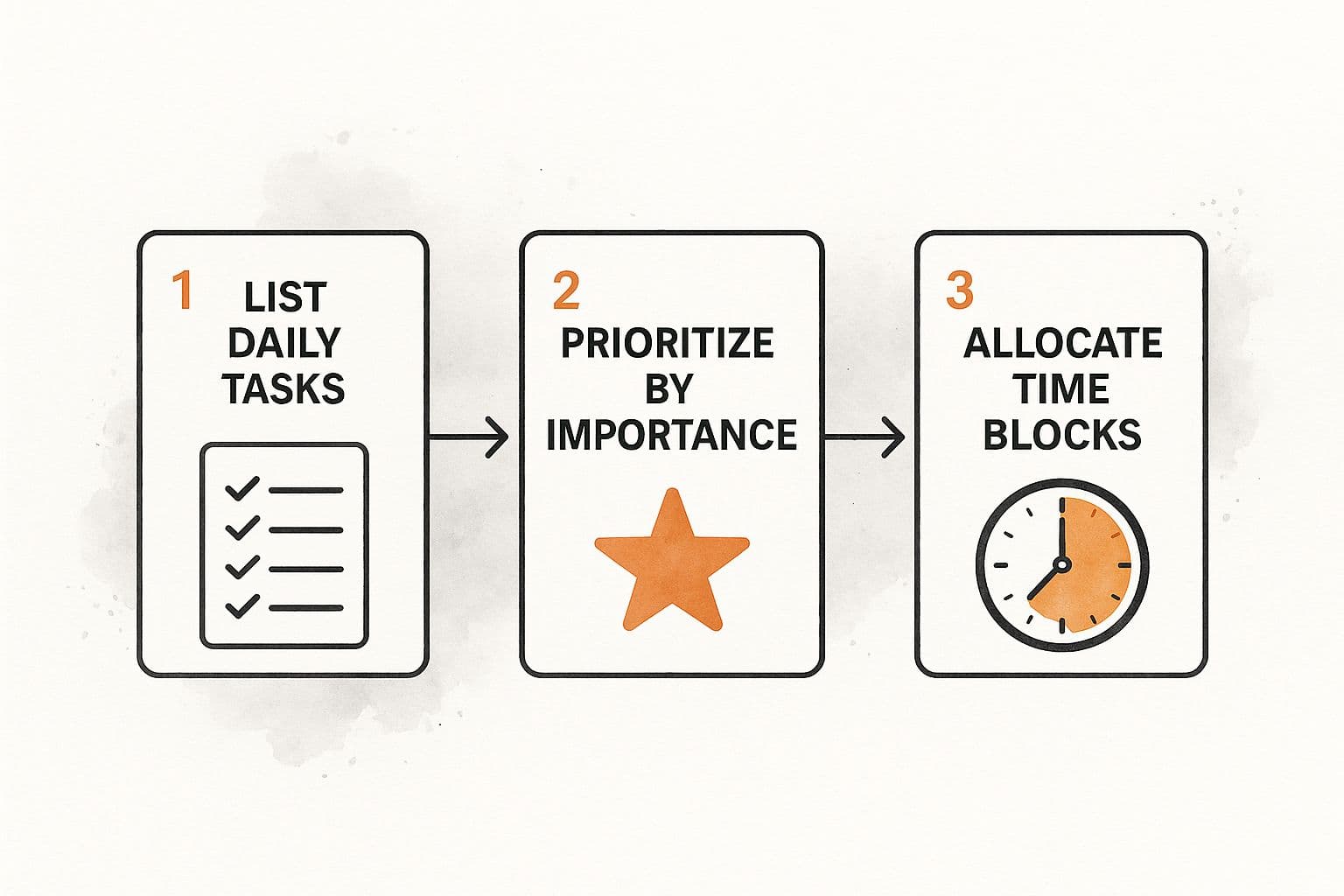
As the infographic shows, the process turns a jumbled mess into a clear roadmap, setting you up for a focused day.
The goal of a morning planning ritual isn’t to create a rigid, unbreakable schedule. It’s to define what a successful day looks like before distractions have a chance to take over.
The Power of Ten Minutes
This whole process might sound like a lot, but it's actually incredibly fast. Research shows that investing just 10 to 12 minutes in planning your morning can boost your productivity by 25%. That's almost two hours of your day reclaimed that would otherwise be lost to indecision and jumping between tasks.
It's pretty shocking, but 82% of people don't have any kind of daily planning system at all. You can find more insights about how planning boosts daily productivity at Sunsama.com. By intentionally carving out this small chunk of time, you drastically cut down on the number of random decisions you have to make all day, saving your mental energy for the deep work that really matters. This small habit is the foundation of how to plan your day for the long haul.
Organizing Your Tasks for Real-World Context
Once you have your priorities straight, the real work begins. A giant, static to-do list isn't a plan; it's just a source of anxiety. I've been there. You stare at this massive wall of text, and instead of feeling motivated, you just feel overwhelmed. The goal is to turn that chaos into a smart, living system that actually helps you get things done.
Modern productivity tools were designed to fix this exact problem. Instead of one long, scary list, you can create smart views that filter and sort your tasks based on what you’re actually doing. This is a total game-changer. It means your task list adapts to your situation, whether that’s where you are, how much energy you have, or the type of work you need to do.
Creating Views That Fit Your Workflow
Think about all the different hats you wear during the day. There’s a time for deep, focused work, a time for quick admin cleanup, and a time for running around town. A truly effective task list should reflect these different modes.
For example, I like to create specific views that match my real-world needs:
- @DeepWork: This is my sanctuary. It only shows me the big, complex projects that need my full attention. All the little distracting tasks are hidden, which makes it so much easier to get into a state of flow.
- @Errands: This list is a lifesaver. It’s context-aware, so it might only show up when I’m actually out of the office. It groups everything I need to do on the go, like "pick up dry cleaning" or "mail that client package."
- @Admin: This is my go-to for those weird 15-minute gaps between meetings. It’s full of low-energy, quick-hit items like firing off non-urgent emails or submitting an expense report.
This method of batching similar tasks together seriously cuts down on mental drain. Every time you jump from one type of task to another, your brain has to re-calibrate. You can learn more about minimizing the impact of context switching, but the short version is that it zaps your focus and energy.
The point is to make your task list a proactive assistant. It should surface the right information at the right time, clearing the path for you to take action instead of adding another layer of complexity to your day.
Letting Intelligence Handle the Prioritization
Beyond just sorting things by hand, today’s platforms can do a lot of the heavy lifting for you. A tool like Fluidwave, for example, can automatically prioritize your tasks based on deadlines, dependencies, and the importance levels you’ve set. This saves you the constant mental effort of trying to figure out what to do next.
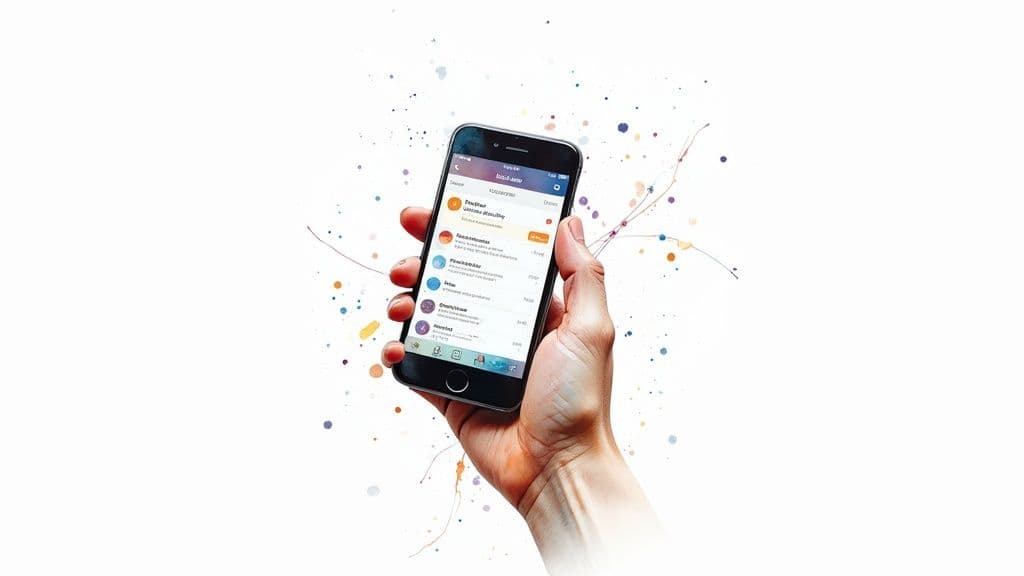
Here's what that looks like in practice—Fluidwave organizes tasks into clean, actionable views so you can see your priorities at a glance.

As you can see, tasks aren't just tossed into a random list. They’re structured within specific projects and tagged with clear priorities, giving you instant clarity. This kind of visual organization makes sure your most critical work is always front and center. It’s how you stop important deadlines from ever slipping through the cracks again.
By moving to a system that’s both contextual and intelligently prioritized, you’re no longer just listing your tasks—you’re strategically managing your focus and energy.
Turning Your Plan Into Action with Time Blocking
Having a prioritized and organized task list is a massive step forward, but let's be real—it’s still just a list. If you really want to own your day, you need to give those priorities a home on your calendar. This is where time blocking comes in. It’s the bridge between knowing what you need to do and actually getting it done.
Time blocking is simply the act of scheduling specific blocks of time for your tasks, treating them like you would any other important appointment. So instead of just having a to-do item that says "work on the Q3 report," you create a calendar event from 9:00 AM to 11:00 AM dedicated solely to that. This simple shift from a passive list to an active schedule is what protects your most important work from the constant flood of distractions.
Estimating Your Time Realistically
One of the biggest hurdles I see people face with time blocking is figuring out how long a task will actually take. We all tend to be a little too optimistic, and that can cause a carefully planned schedule to completely fall apart by 10 AM. The key here is to be realistic, not idealistic.
A great rule of thumb I've picked up is to add a 20% buffer to whatever you first guess. If you think drafting that presentation will take an hour, block out an hour and 15 minutes. This isn't a sign that you're slow. It's a smart strategy that accounts for the inevitable—unforeseen problems, a necessary coffee break, or just the natural rhythm of creative work. This buffer gives you breathing room and keeps one task from derailing your entire day.
The Power of Scheduled Breaks
It might feel counterintuitive, but one of the most productive things you can schedule is doing nothing. Your brain just isn't built for eight straight hours of intense focus. Trying to force it is a fast track to burnout and sloppy work.
Scheduling breaks isn't a luxury; it's a strategic necessity for maintaining high-quality focus and preventing mental fatigue. It’s about working smarter, not just longer.
Intentionally scheduling short breaks—even just five or ten minutes every hour—helps you recharge and come back to your work with a fresh perspective. And I don't just mean mindlessly scrolling on your phone. Use these moments to stand up, stretch, grab some water, or just stare out the window. By planning these small moments of rest, you’ll find your energy and focus stay much more consistent throughout the day. We explore this idea more in our guide to building a powerful time blocking schedule.
Protecting Your Focus Blocks
Once a task is on your calendar, you have to treat it with the same respect you would a meeting with your CEO. That means turning off notifications, closing unrelated browser tabs, and letting your team know you're in a focus block. It’s not about being unavailable; it’s about being intentional.
Many of the best AI calendar tools are fantastic for this, as they can help automate the scheduling process, find the best times for your tasks based on your energy levels, and make sure your schedule is both ambitious and achievable.
Ultimately, time blocking turns your calendar from a simple record of what you owe other people into a strategic plan for achieving your own goals. It's how you finally move from knowing what to do, to actually getting it done.
Planning Your Day Around Your Natural Energy
What if your daily plan wasn't some rigid structure you had to force yourself into? What if, instead, it was a flexible guide that worked with your body’s natural highs and lows? The way we think about daily planning is changing, moving beyond simple to-do lists and into a more personalized, data-driven space. It’s all about lining up what you need to do with when you have the energy to do it best.
This shift starts with paying attention to the signals your body is already sending. Biometric data from wearables like an Oura ring or a Whoop band can give you a surprisingly clear picture of your capacity for the day. By looking at metrics like your sleep quality, recovery scores, and even heart rate variability, you can stop guessing and start knowing.
Aligning Tasks with Your Energy Levels
Imagine waking up to a low recovery score after a rough night's sleep. The old way would be to just push through that tough creative brief anyway, probably with frustrating results. The smarter way is to swap it with lower-energy tasks, like clearing out your inbox or organizing some files.
Then, on days when your data shows you’re primed for peak performance, you can confidently block out time for your most challenging, deep work. This is where modern planning gets really powerful. It’s no longer just about managing tasks; it's about managing your personal energy to get those tasks done right.
By listening to your body's data, you transform planning from a guessing game into a strategic advantage, boosting performance and dramatically reducing the risk of burnout.
Understanding Your Chronotype
This energy-aware approach goes hand-in-hand with your natural chronotype—your body’s built-in tendency to sleep and be active at certain times. Are you a "lion" who does their best work at the crack of dawn, or an "owl" who gets their creative spark late at night? Knowing this is a total game-changer.
- Morning Larks (Lions): If this is you, schedule your most critical, high-focus tasks first thing in the morning. That's when your brain is firing on all cylinders.
- Night Owls (Wolves): You might want to save your deep work for the afternoon or evening and use the morning hours for lighter, admin tasks that don't need as much mental horsepower.
Understanding your natural rhythm is the first step toward building a schedule that feels supportive instead of draining. Our handy chronotype planner can help you figure out your own energy patterns so you can start making smarter scheduling decisions today.
Ultimately, to truly sync up your daily plan with your body's rhythms, it helps to adopt a holistic wellness approach. This ensures your physical and mental well-being are fully supported, creating the foundation for sustained productivity.
Of course, even with the best system in place, some practical questions always pop up when you start applying it to the real world. Getting good at daily planning is all about fine-tuning your approach, not chasing some impossible ideal of perfection. Let's tackle some of the most common hurdles people run into.
What If My Day Is Totally Unpredictable?
I hear this one all the time, especially from managers and people in leadership roles. Let's be honest: very few of us have days that go exactly according to plan. The point of this planning method isn't to lock you into a rigid schedule but to give you a compass for the day.
A simple trick that works wonders is to only time-block your top 1-3 priorities. That's it. Leave the rest of your calendar flexible to handle the inevitable fire drills and "quick questions" that pop up. Your morning plan simply sets the definition of a "win." If you knock out those big-ticket items, you've won the day, no matter what other chaos ensues.
How Do I Actually Stay Motivated to Do This Every Day?
Motivation is fickle; solid habits are what carry you through. Chasing a feeling is a losing game. Instead, focus on building the habit of planning.
Start ridiculously small. Before you shut down your computer for the day, just identify and write down the single most important thing you need to do tomorrow. When you experience that small victory of getting it done, you kickstart a powerful feedback loop.
Action fuels motivation, not the other way around. Consistently taking small, planned steps builds the momentum you need to stick with it for the long term.
At the end of the day, take 60 seconds—literally just one minute—to glance at what you got done. This simple act of acknowledgment proves the value of your planning and makes it that much easier to do it again tomorrow. It’s the secret to making daily planning stick.
Should I Only Be Planning My Work Tasks?
Definitely not. If you're serious about creating a life that isn't just about work, you have to plan for it. Weaving your personal commitments into your daily schedule is non-negotiable.
When you block out time for a workout, family dinner, or reading a book, you're treating those things with the same importance as a client call. This is the most effective defense against work slowly creeping into every free moment you have. It forces you to be intentional about where you invest your most finite resource—your time—across every part of your life.
Ready to turn your overwhelming to-do list into a focused, achievable plan? Fluidwave brings smart task management and intuitive delegation together, helping you reclaim your day. Start planning with Fluidwave for free today.
Focus on What Matters.
Experience lightning-fast task management with AI-powered workflows. Our automation helps busy professionals save 4+ hours weekly.