Gününüzü dikkat dağıtıcıların raydan çıkarmasından mı sıkıldınız? Planlama, ortam tasarımı ve derin çalışma ritüelleri için kanıtlanmış stratejilerle iş yerinde odaklanmayı nasıl geliştireceğinizi öğrenin.
January 3, 2026 (8mo ago)
İş Yerinde Odaklanmayı Geliştirin ve Verimliliğinizi Artırın
Gününüzü dikkat dağıtıcıların raydan çıkarmasından mı sıkıldınız? Planlama, ortam tasarımı ve derin çalışma ritüelleri için kanıtlanmış stratejilerle iş yerinde odaklanmayı nasıl geliştireceğinizi öğrenin.
← Back to blog
İş Yerinde Odaklanmayı Geliştirin ve Verimliliğinizi Artırın
Gününüzü dikkat dağıtıcı unsurların raydan çıkarmasından bıktınız mı? Planlama, ortam tasarımı ve derin çalışma ritüelleri için kanıtlanmış stratejilerle iş yerinde odaklanmayı nasıl geliştireceğinizi öğrenin.
İşte Neden Odaklanamıyorsunuz ve Nasıl Düzeltebilirsiniz
Odaklanamamak kişisel bir başarısızlık değildir. Evde ya da ofiste olsun, modern iş genellikle her zaman erişilebilir olmamızı bekler. Her Slack bildirimi, her “kısa soru” ve her e-posta dikkat dağıtır ve toparlanma süresi birikir.
Bu kesintiler sizi derin çalışmadan koparır ve beyninizi bağlam değiştirmeye zorlar. Bu bağlam değiştirme yorucu ve maliyetlidir. Araştırmalar, bir kesintiden sonra tamamen yeniden odaklanmanın ortalama 23 dakika 15 saniye sürebileceğini gösteriyor1. Küçük dikkat dağıtıcılar büyük bir verimlilik sızıntısına dönüşür.
Tek Bir Kesintinin Gizli Maliyeti
Beş saniyelik bir telefona bakış çok küçük gelir, ancak gerçek maliyet sonrası toparlanma süresini de içerir. İşte verimliliğin çoğunun kaybolduğu yer.
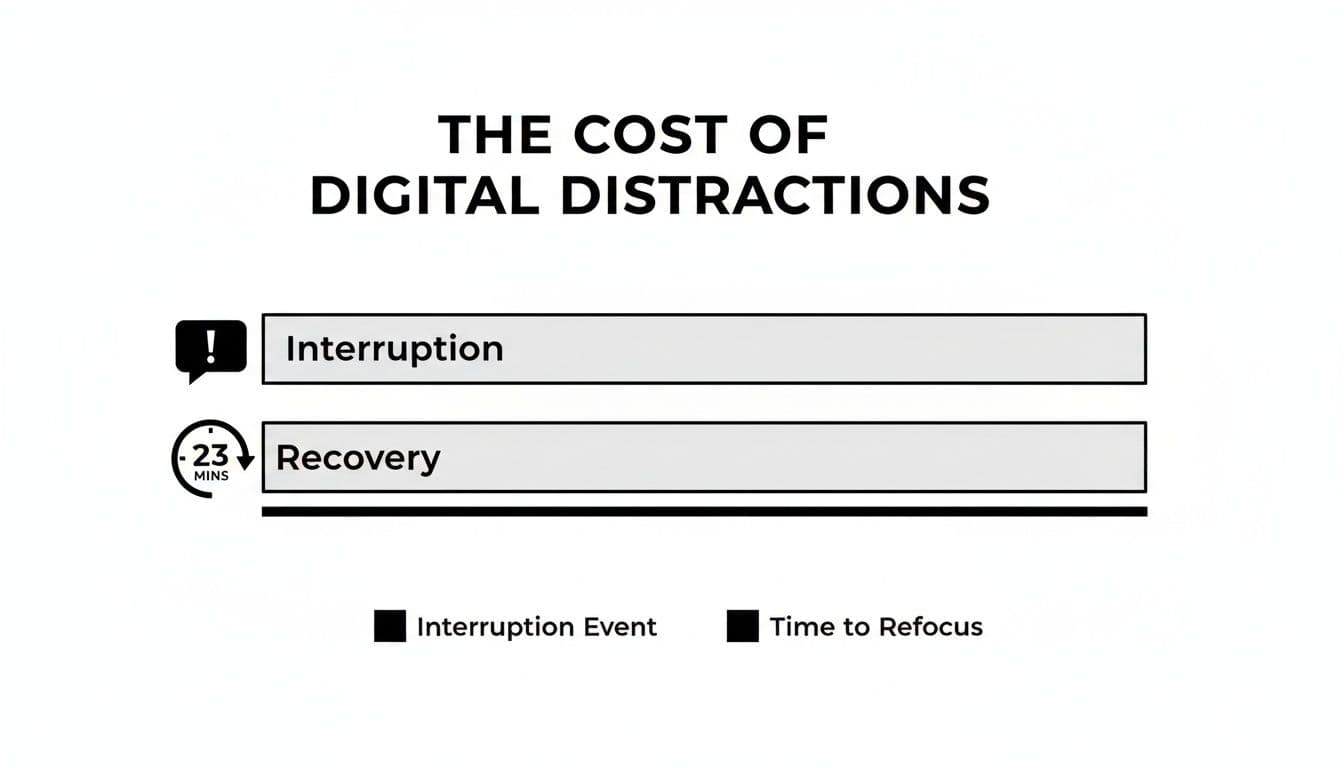
Bu kısır döngü yaratır: dikkat dağılması geride kalma endişesine yol açar ve bu stres odaklanmayı daha da zorlaştırır.
Yaygın İş Yeri Dikkat Dağıtıcılarının Gerçek Maliyeti
| Dikkat Dağıtıcı Türü | Sıklık (Günlük Ortalama) | Her Kesinti İçin Toparlanma Süresi | Günlük Toplam Kaybedilen Süre |
|---|---|---|---|
| E-posta bildirimleri | 30 | 5–10 dk | 2,5–5 saat |
| Anlık mesajlar | 15 | 10–15 dk | 2,5–3,75 saat |
| “Kısa sorular” | 8 | 15–20 dk | 2–2,6 saat |
| Akıllı telefon uyarıları | 50+ | 1–5 dk | 50 dk–4+ saat |
Arka plan gürültüsü gibi görünen şey aslında en üretken saatlerimizin büyük bir boşaltımıdır.
Çoklu Görev Efsanesinin Ötesine Geçmek
Çoklu görev büyük oranda bir efsanedir. Çoklu görev gibi görünen şey aslında görevler arası geçiştir ve doğruluğu azaltır, stresi artırır ve sizi yavaşlatır. Çalışmalar, yoğun medya çoklu görevcilerinin bilişsel kontrolünün diğerlerinden daha zayıf olduğunu gösteriyor; bu da odaklanmayı ve verimliliği baltalıyor2.
Kesintilerin zararsız olmadığını ve çoklu görevin bir süper güç olmadığını kabul etmek ilk adımdır. Hedef sıfır kesinti değil—bu imkansız—ama derin, kesintisiz çalışma için kasıtlı bloklar ayırmaktır.
Sabahlarınızı Niyetli Planlamayla Yönetin
Güne nasıl başladığınız tonu belirler. E-posta ve mesajlara hemen tepki vermek sizi savunma moduna sokar. Kısa, niyetli bir işe başlamadan önceki ritüel momentum yaratır.
Bu basit ritüeli deneyin: ekranlardan 10 dakika uzaklaşıp kalem ve kağıtla oturun. Gününüzü başarılı kılacak bir veya iki sonucu belirleyin. Bu, neyin önemli olduğunu ve neyin sadece acil olduğunu ayırt etmenizi zorlar.
Öncelikleri Ivy Lee Yöntemi ile Belirleyin
Ivy Lee Yöntemi, önceliklendirme için basit ve etkili bir yoldur:
- Yarın için en önemli altı görevi listeleyin.
- Gerçek öneme göre sıralayın.
- Birinci göreve odaklanın, bitene kadar devam edin, sonra ikinciye geçin.
- Bitmeyen maddeleri ertesi günün listesine taşıyın.
Altı maddelik limit, yüksek etkili işe odaklanmayı zorlar.
Maksimum Etki İçin "Kurbağını Ye"
Ivy Lee Yöntemi'ni "Kurbağını Ye" ilkesine bağlayın: enerjiniz en yüksekken en önemli, en zor görevinizi ilk olarak yapın. Bu büyük görevin tamamlanması, günün geri kalanı için momentum oluşturur.
Çalışma Alanınızda Bir Odak Kalesi İnşa Edin
Fiziksel ve dijital ortamlarınız beyninize sürekli ipuçları verir. Konsantrasyonun en kolay seçenek olacağı şekilde tasarlayın.

Fiziksel Ortamınızı İhlal Edin
Masanızı derin çalışma için bir sığınak gibi değerlendirin:
- Ofis sohbetini engellemek için gürültü önleyici kulaklık kullanın.
- Sabah kendinizin taze başlaması için her günün sonunda dağınıklığı temizleyin.
- Odak zamanını meslektaşlara işaretlemek için görünür bir durum göstergesi kullanın.
Daha fazla tasarım ipucu için, üretken bir ofis alanı yaratma rehberine bakın.**
Dijital Dikkat Dağıtıcıları Fethedin
Dijital dağınıklık genellikle fiziksel dağınıklıktan daha büyük bir tehdittir. Sürtünmeyi azaltmak için:
- Gereksiz bildirimleri susturun—acilse biri sizi arar.
- Dikkat blokları sırasında zihinsiz kaydırmayı durdurmak için site engelleyiciler kullanın.
- Masaüstü dosyalarını düzenleyin ve yalnızca mevcut işi erişilebilir tutun.
Teknoloji yardım edebilir ya da zarar verebilir. Hangi araçlara iş akışınıza girmelerine izin vereceğiniz konusunda kasıtlı olun.
Takviminizi Zaman Bloklama ve Derin Çalışma ile Yönetin
Zaman bloklama her dakikaya bir görev verir. Belirsiz hedefleri somut takvim randevularına dönüştürün: "Q3 raporu taslağı" yerine "Q3 raporu için ilk bulguların taslağı — 09:00–10:30" yazın. Başlamak için bir zaman bloklama şablonu kullanın.

Beyninizi Pomodoro Tekniği ile Eğitin
Uzun odak seansları imkansız geliyorsa, Pomodoro ile başlayın:
- Bir görev seçin.
- 25 dakikalık bir zamanlayıcı ayarlayın ve sadece o görevin üzerinde çalışın.
- Zamanlayıcı çaldığında 5 dakikalık bir mola verin.
- Dört Pomodoro'dan sonra 15–30 dakikalık daha uzun bir mola verin.
Kısa sprintler zihinsel dayanıklılık oluşturur ve daha büyük blokları yapılabilir kılar.
Odak Ritüelleriyle Derine Dalın
Hazırsanız, yüksek değerli görevler için 60–90 dakikalık derin çalışma ritüelleri oluşturun. Bu blokları kendinizle pazarlık yapılamaz randevular olarak görün. Takvimleri engelleyin ve bu sürenin korunduğunu başkalarına iletin.
Zihinsel Alanı Boşaltmak İçin Devretme ve Otomasyon
Odak yalnızca ne yaptığınızla ilgili değildir—ne yapmadığınızla da ilgilidir. Tekrarlayan, düşük etkili görevleri devredin ve mümkün olduğunda otomatikleştirin ki bilişsel enerjiniz stratejik işe gitsin.
Hangi Görevleri Devretmeniz Gerektiğini Belirleme
İşiniz hakkında dürüst olun: hangi görevler tekrarlayıcı, güçlü yönlerinizin dışında ya da düşük etkili? Bunlar devretmek için en iyi adaylardır.
İşi ilk seferde iyi yapılacak şekilde net talimatlar ve beklentilerle devretmeyi öğrenin.
Otomasyon ve Yardımdan Yararlanma
E-posta sınıflandırmayı otomatikleştirmek, gönderileri zamanlamak veya takvim yönetimi için sanal asistan kiralamak için araçlar kullanın. "Her şeyi yapan"dan "sonuçların yöneticisi"ne geçmek, önemli olana odaklanmanızı sağlar.
Nöroçeşitlilik Gösteren Profesyoneller İçin Odak Stratejileri
Standart üretkenlik tavsiyeleri nöroçeşitlilik gösteren kişiler için zayıf bir uyum olabilir. Katı bir sistemi zorlamak yerine, beyninizin güçlü yönleriyle uyumlu yaklaşımlar bulun.
Kanban panoları veya zihin haritaları gibi görsel araçlar yardımcı olabilir. Büyük projeleri çok küçük mikro adımlara bölün—bazen "Belgeyi aç" veya "İlk başlığı yaz" doğru iş birimi olabilir.
Ortamınızı ve İş Akışınızı Uyarlamak
Vücut eşlik etme—başka biriyle yüz yüze ya da görüntülü bir görüşmede birlikte çalışma—ince bir hesap verebilirlik yaratır ve güçlü bir odak yardımı olabilir. Doğal enerji ritimlerinizle çalışın: öğleden sonra daha zinde iseniz yaratıcı görevleri zorla sabaha çekmeyin.
Nasıl ve ne zaman çalışacağınız üzerinde özerkliğe sahip olmak doğrudan daha iyi zihinsel sağlık ve performansla ilişkilidir3.
Daha hedefe yönelik teknikler istiyorsanız, ADHD'li yetişkinler için zaman yönetimi rehberimize bakın.
Yaygın Soruların Ele Alınması
Ne Kadar Sürede Fark Görürüm?
Zaman bloklama veya Pomodoro gibi tekniklerle tutarlı bir uygulamanın ilk haftasında küçük kazanımları fark etmeniz muhtemeldir. Daha büyük değişimler genellikle üç ila dört haftalık istikrarlı çabadan sonra ortaya çıkar.
Derin Çalışma Seansında Kesintiye Uğrarsam Ne Yapmalıyım?
Kesintiler olur. Kısa bir cümle işe yarar: “Şu anda odak seansındayım—45 dakika içinde size dönebilir miyim?” Kesintinin ardından bir nefes alın ve odaklanmanızı geri kazanmak için 30–60 saniyelik bir sıfırlama ritüeli kullanın.
Bunaltıcı Hissediyorsam Nasıl Başlarım?
Bir değişiklik seçin—bildirimleri susturun, tek bir 25 dakikalık Pomodoro deneyin veya altı maddelik bir Ivy Lee listesi yazın. Küçük, tutarlı kazanımlar kalıcı alışkanlıklara dönüşür.
Hazır mısınız, topu havada tutmayı bırakıp odaklanmaya başlamaya? Fluidwave, görev yönetimini talep üzerine sanal asistanlarla harmanlayarak meşgul işleri temizler ve zihinsel enerjinizi serbest bırakır. Meşgul işleri devredin ve zamanınızı gerçekten önemli olana ayırın. Bugün odaklanmanızı geri kazanmaya başlayın.
Sıkça Sorulan Sorular
S: Odaklanmayı geliştirmek için yapabileceğim en hızlı değişiklik nedir?
A: Gereksiz bildirimleri susturmak ve her sabah 10 dakikalık kağıt tabanlı bir planlama ritüeli yapmak. Bu küçük değişiklik, odaklanmış çalışma için hemen alan yaratır.
S: Ekibim bana ihtiyaç duyduğunda derin çalışma zamanımı nasıl korurum?
A: Takviminizde odak zamanını engelleyin, bir durum göstergesi ile sınırlarınızı iletin ve bu blokların dışında hızlı kontroller için bir pencere teklif edin.
S: Tipik üretkenlik yöntemleri benim için işe yaramazsa ne yapmalıyım?
A: Onları uyarlayın. Görsel sistemler, çok küçük mikro adımlar veya vücut eşlik etme kullanın. Tek beden herkese uyan bir rutini zorlamak yerine enerji ritimlerinizle çalışın.
1.
Gloria Mark ve diğerleri, “No Task Left Behind? Examining the Nature of Fragmented Work,” CHI 2008. https://www.ics.uci.edu/~gmark/CHI2008-Interruptibility.pdf
2.
Clifford I. Nass, Eyal Ophir ve Anthony D. Wagner, “Cognitive control in media multitaskers,” Proceedings of the National Academy of Sciences 106, no. 37 (2009): 15583–15587. https://www.pnas.org/content/106/37/15583
3.
Gallup, “State of the Global Workplace” ve çalışan özerkliği ile iyilik hali üzerine ilgili araştırmalar. https://www.gallup.com/workplace/236441/employee-engagement-drives-growth.aspx
Önemli Olan Şeye Odaklanın.
Yapay zeka destekli iş akışlarıyla son derece hızlı görev yönetimini deneyimleyin. Otomasyonumuz yoğun profesyonellerin haftada 4 saatten fazla tasarruf etmesine yardımcı olur.