Узнайте, как защищать своё внимание на работе с помощью простых изменений в окружении, расписании и инструментах, чтобы добиться длительной концентрации и регулярной глубокой работы.
December 19, 2025 (9mo ago) — last updated January 23, 2026 (8mo ago)
Как сосредоточиться на работе: простые и проверенные шаги
Практические советы по защите внимания, структуре дня и уменьшению отвлекающих факторов для длительной концентрации и глубокой работы.
← Back to blog
How to Stay Focused at Work: Practical Strategies
Summary
Discover practical ways to protect your attention, structure your day for deep work, and reduce interruptions for sustained productivity.
Introduction
Staying focused at work often feels impossible, but it isn’t about trying harder. It’s about defending your attention by shaping your environment, scheduling your best hours for meaningful work, and using tools and habits that reduce interruptions. These small, deliberate changes help you get more done with less stress and more clarity.

Why You Can’t Focus at Work and What It’s Costing You
Modern work rewards constant availability. Email pings, chat messages, and back-to-back meetings fragment attention and force frequent task switching. This context switching has a real cost: people get interrupted frequently and need time to recover before returning to deep work1. The cumulative effect is lost productivity, more stress, and lower engagement at work2.
The Real Cost of a Distracted Mind
Every interruption costs more than the interruption itself. You lose momentum and the mental energy required to return to flow. That recovery time adds up, and over days and weeks it makes deep work rare and exhausting. Protecting uninterrupted time is what allows real progress on important tasks.
Physical Strain and Mental Fatigue
Your physical environment matters. Long hours staring at a screen contribute to digital eye strain and poor posture, both of which reduce stamina for focused work. Fixing basic ergonomics, reducing eye strain, and keeping your workspace tidy free up mental resources for complex problem solving3.
Engineer a Distraction-Proof Workspace
Your workspace should help you focus, not fight you. Small changes to your physical, digital, and auditory environments create a supportive focus bubble.
Clear Your Desk, Clear Your Mind
A cluttered desk increases visual noise and makes it harder to start. Keep only what’s essential for the task at hand—laptop, notebook, pen. Store reference materials and extras out of sight. The physical act of tidying signals to your brain that it’s time to work.
Tame Your Digital Environment
Notifications are designed to pull you away. Do an audit of alerts across devices and turn off anything nonessential. For unavoidable tools, set them to less intrusive alerts.
On your computer, use a separate browser profile for work with only work-related bookmarks and logins. On your phone, move distracting apps off the home screen to create friction against mindless checking.
Be intentional about your digital boundaries. If you don’t build them, notifications will build your schedule for you.
Manage Your Soundscape
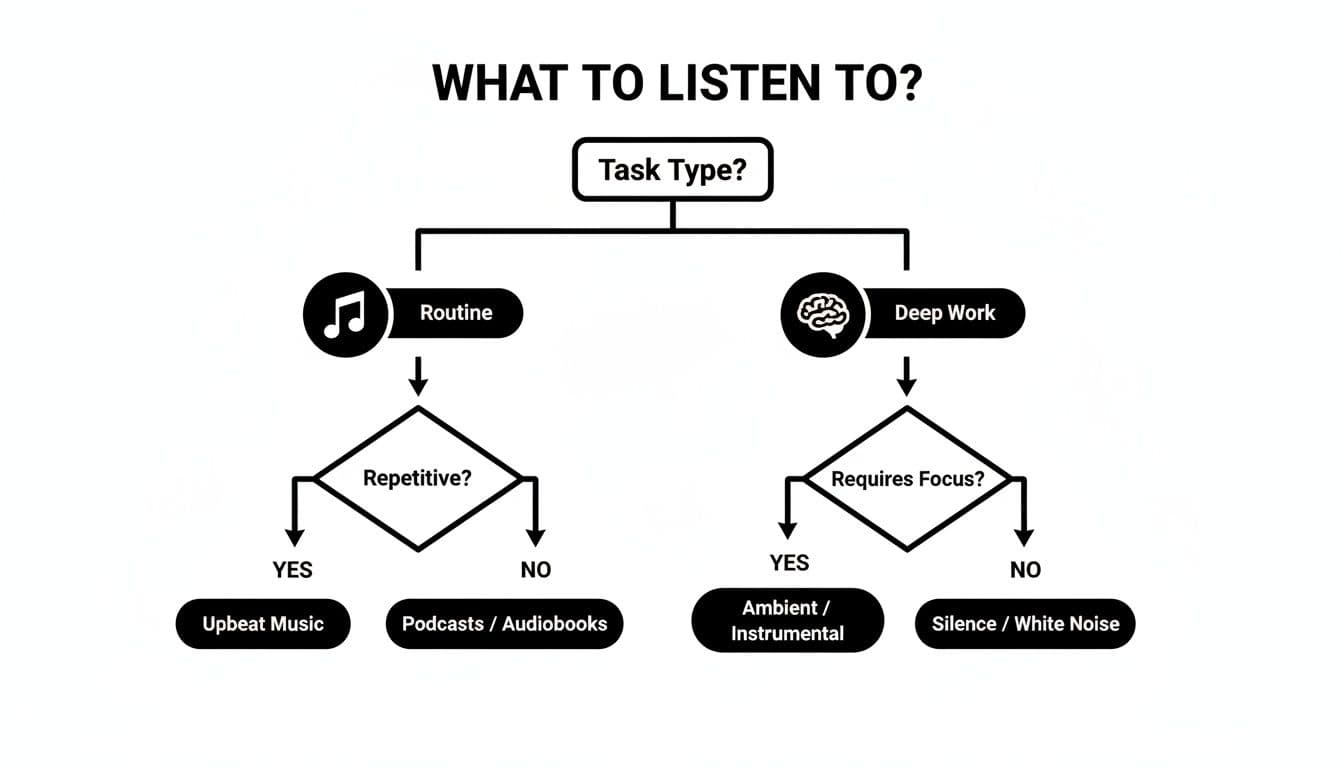
Sound can help or hurt focus. Noise-cancelling headphones are one of the most effective investments for creating a quiet work zone. For many people, ambient noise or instrumental music improves concentration. Match audio to the task:
- For routine work: upbeat or lyrical music can boost energy.
- For deep thinking: instrumental music, classical pieces, or ambient soundscapes reduce competition for your language-processing centers.
Choosing the right audio can increase perceived productivity and help remote workers reclaim productive time, but gains depend on managing the environment carefully4.
Master Your Schedule for Peak Concentration
Controlling your day is about protecting your best attention, not just filling a calendar. Structure your schedule so you’re proactive about deep work and reactive tasks don’t consume your best hours.
Find Your Personal Productivity Rhythm
Track your energy for a week. Note when you’re most alert and when you lag. Schedule demanding tasks during your high-energy windows, and save email and admin for low-energy times. Your prime hours are a finite resource, protect them.
Choose a Focus Framework
Pick a method that fits your work and personality. Common frameworks include:
- The Pomodoro Technique: short, focused sprints (commonly 25 minutes) with brief breaks, good for getting started on intimidating tasks.
- Time blocking: reserve calendar blocks for specific tasks, including breaks and email, which works well for busy, multi-project schedules.
- Eat the Frog: do your hardest, most important task first thing in the morning to avoid procrastination.
Adapt these methods to your needs. If a 25-minute sprint breaks your flow, try 45 or 60 minutes instead. The goal is consistency, not rigidity.
Make It Work in the Real World
Start small: schedule one or two protected deep-work sessions each week and iterate. Use calendar blocks marked “do not disturb” and communicate those windows to your team. Protecting blocks consistently is how focused work becomes the norm. Consider linking to your team’s collaboration guidelines or a shared calendar policy to set expectations, for example How we work deeply.
Use Technology to Defend Your Attention
Technology can be the enemy of attention, but it can also be the solution. Build a simple focus stack: a few tools that block distractions, centralize tasks, and automate repetitive work.
Build a Lean Digital Focus Stack
A practical stack might include:
- A distraction blocker like Freedom or Cold Turkey to block sites and apps during focus sessions.
- A centralized task manager so tasks don’t live in your head but in one trusted place.
- Automation tools or AI assistants to handle repetitive work and reduce manual reprioritization.
Automation and AI for More Deep Work
Automation can reclaim hours of work time each week. When routine tasks are automated, you get more high-value time for deep, creative work. AI tools can summarize documents, sort tasks, and help delegate small items, reducing context switching and cognitive load5. See internal resources for automation templates at Tools for focus.
Design a Distraction-Free Workflow
Set rules for how and when you engage with communication tools. For example, check email at scheduled times only, and batch-process notifications every few hours. These habits prevent constant interruptions and preserve flow.
Focus Strategies That Work with Your Brain

People’s brains work differently. Generic advice can be unhelpful for neurodivergent professionals, including people with ADHD. The goal is to find strategies that cooperate with your natural tendencies rather than fight them.
Harness Your Brain’s Strengths
If you experience hyperfocus, treat it as an asset. When it hits, protect that time by clearing your schedule and silencing distractions. Try body doubling—working alongside someone, physically or virtually—to create gentle accountability without pressure.
“Focus isn’t about perfect attention. It’s about getting back to your main task quickly when your mind wanders.”
Practical Tools for Maintaining Flow
Make task breakdowns very granular. For example, instead of “write report,” use micro-steps like:
- Find three key statistics
- Draft the opening paragraph
- Create the data chart
Other practical aids:
- Visual timers: show time passing without a jarring alarm.
- Gamification: reward small wins to keep motivation high.
- A distraction pad: jot down stray ideas or to-dos so you can return to the task immediately.
For some people, small fidgets or movement help focus. Work with your brain’s wiring to build routines that feel natural and sustainable6.
Build Habits That Make Focus Automatic
The aim is to make focus habitual, not a constant fight. Simple start-of-day and end-of-day routines prime your brain for concentration and enable recovery.
Start Your Day with Intention
Avoid jumping straight into your phone. Spend the first 15–20 minutes screen-free: hydrate, review your top priority, and set a clear intention for the day. This anchors your attention before incoming demands arrive.
The Power of a Shutdown Ritual
A shutdown ritual creates a firm end to the workday. A short checklist can help:
- Review today’s accomplishments for closure.
- Organize tomorrow’s top tasks so you stop carrying work home mentally.
- Tidy your workspace for a fresh start.
- Say a short phrase like “shutdown complete” to mark the boundary.
This ritual helps your brain disengage and supports better rest.
The Biological Foundation of Focus
No productivity system replaces good sleep, nutrition, and exercise. Your cognitive performance depends on these basics. One night of poor sleep impairs attention and decision-making, while regular exercise supports memory and sharpness. Treat these as nonnegotiable supports for your ability to concentrate.
Questions and Quick Answers
Q: How long should I try to focus in one session?
There’s no single right answer. Many people find success with sessions between 25 and 90 minutes. Use shorter blocks to start tasks and longer blocks for deep creative or technical work. Match the time to your energy and the task.
Q: What should I do when I get interrupted?
Interruptions happen. Politely set expectations, for example, “I’m in a focus session now, can we talk in 45 minutes?” If the interruption is unavoidable, jot a quick breadcrumb of where you were so you can return quickly.
Q: Is music helpful or harmful for focus?
Music helps many people, but it depends on the work. For routine tasks, music with lyrics can be motivating. For complex, language-based tasks, choose instrumental or ambient tracks. The right audio can reduce distraction and improve sustained attention4.
Ready to stop reacting to distractions and start protecting your time? Fluidwave offers automation and visual task management to prioritize your work and free up time for deep focus.
1.
University of California, Irvine research on task interruption and recovery time, Gloria Mark and colleagues. https://www.ics.uci.edu/~gmark/
2.
Gallup, “State of the Global Workplace” and analyses on employee engagement and economic impact. https://www.gallup.com/workplace/236441/state-global-workplace-2017.aspx
3.
Information on digital eye strain and workplace ergonomics, Harvard Health Publishing. https://www.health.harvard.edu/
4.
Studies and surveys on music and productivity, and remote work productivity shifts; see Harvard Health Publishing and productivity reports. https://www.health.harvard.edu/
5.
Research and reports on automation and time savings for employees, see analyses from industry consultancies and productivity platforms. https://www.selectsoftwarereviews.com/blog/employee-productivity-statistics
6.
Resources on neurodiversity-friendly productivity strategies and tools, including body doubling and task chunking. https://sensorypoodle.com.au/
Сосредоточьтесь на том, что важно.
Испытайте сверхбыстрое управление задачами с рабочими процессами на базе ИИ. Наша автоматизация помогает занятым профессионалам экономить 4+ часа в неделю.