Learn how to start a virtual assistant business with a practical, step-by-step guide that helps you find a profitable niche, create focused services, and land your first clients.
June 22, 2025 (1y ago) — last updated March 26, 2026 (6mo ago)
Start a Virtual Assistant Business: Complete Guide
Step-by-step guide to start a virtual assistant business: find a niche, build focused services, price for value, and get your first clients.
← Back to blog
Understanding the Virtual Assistant Market Opportunity

If you’re wondering whether to start a virtual assistant business, you’re looking at a market that’s not just growing — it’s expanding rapidly. The shift to remote work has changed how businesses operate, creating ongoing demand for skilled remote professionals. Business owners and executives aren’t only open to virtual help, they’re actively seeking specialist support to stay flexible and competitive. This isn’t just about cutting costs, it’s about getting targeted expertise without the overhead of a full-time hire.
The numbers tell a clear story: the global virtual assistant market is projected to more than double in a few years, approaching nearly $50 billion by 20271. That steady growth underscores a strong, lasting demand for qualified VAs.
| Year | Market Value (USD Billion) | Growth Rate (%) | Key Drivers |
|---|---|---|---|
| 2023 | $23.47 | 18.5 | Increased remote-work adoption, focus on cost-efficiency |
| 2024 | $28.28 | 20.5 | Rising SME demand, AI integration in VA services |
| 2025 | $34.08 | 20.5 | Expansion into specialized niches (healthcare, legal) |
| 2026 | $41.07 | 20.5 | Gig-economy growth, globalization of operations |
| 2027 | $49.50 | 20.5 | Advanced automation tools, higher demand for expert skills |
For deeper trend analysis and supporting data, see the market overview linked in the footnotes1.
Identifying Where the Real Demand Lies
Knowing the market is growing is one thing; finding your place in it is what really matters. The biggest opportunity isn’t to be a jack-of-all-trades. The most successful VAs specialize in high-value niches where their skills solve expensive, time-consuming problems for clients. Move beyond basic admin and consider the specific needs of booming industries.
For example, a small e-commerce brand may not need a full-time employee for its Shopify store, but it does need someone who understands inventory management, customer service, and product listing optimization. A busy podcaster needs audio editing, show-note writing, and guest scheduling expertise — not just general assistance. Those are the gaps where you can charge premium rates.
From Generalist to In-Demand Specialist
Start by mapping your background and interests to client needs:
- Past experience: Have you worked in finance, real estate, or marketing? Industry knowledge is a massive advantage. A VA with property-management experience can offer real-estate-specific services a generalist can’t.
- Technical skills: Are you proficient with platforms like Salesforce, HubSpot, or advanced social-media tools? Companies will pay more for platform-specific expertise.
- Passion projects: Do you enjoy graphic design, content writing, or video editing? Turn that passion into a service — clients prefer VAs who care about the work.
The goal is to connect what you do best with a clear business need. When a client sees you have both the skills and an understanding of their industry, you stop being a commodity and become a strategic partner.
Defining Your Virtual Assistant Service Portfolio
One common pitfall is trying to offer a little bit of everything. That approach makes it hard to stand out. Instead, build a focused service portfolio that positions you as the ideal choice for a specific client type. Create offers that solve specific, high-value problems and that justify premium rates.
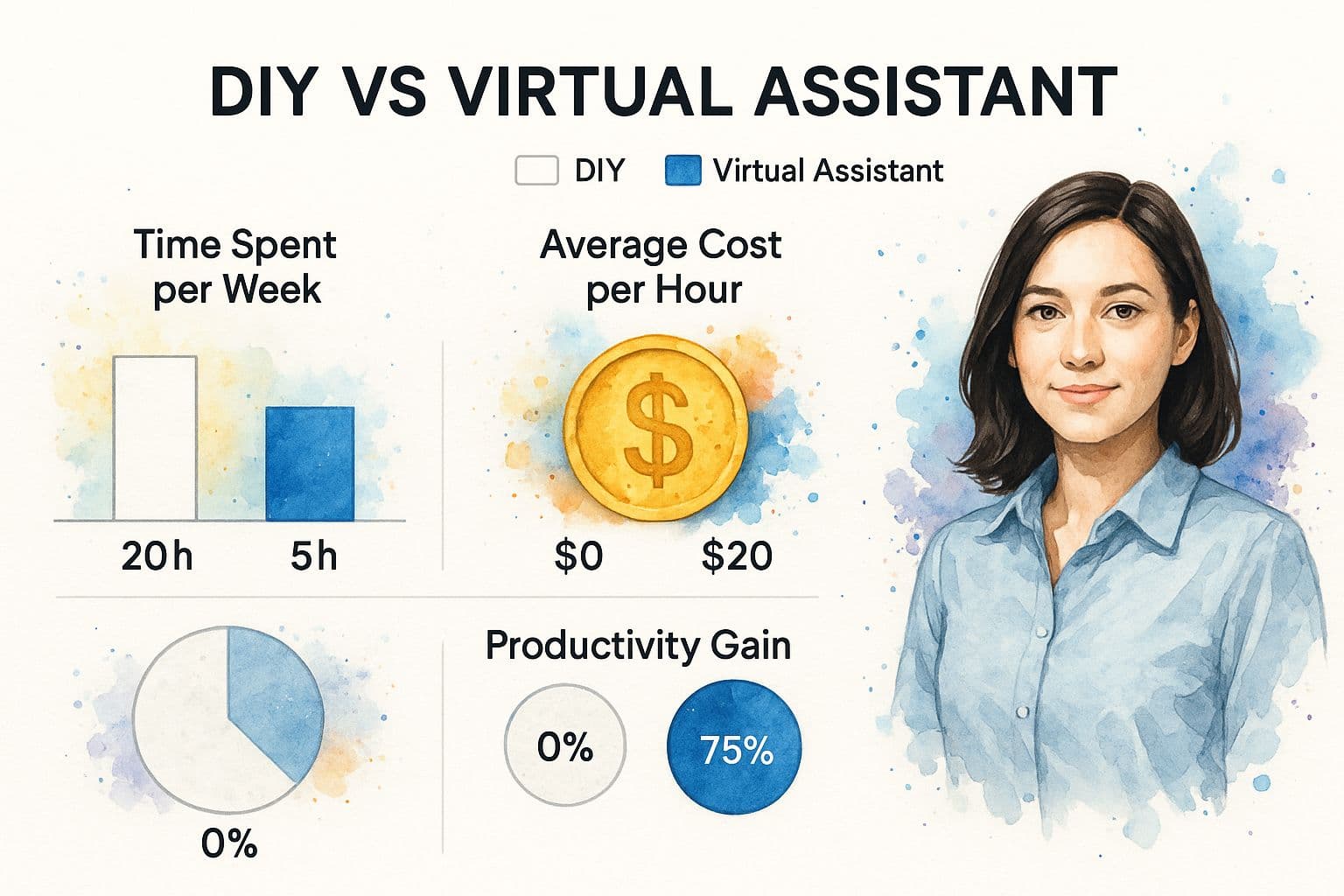
While there’s an hourly cost, the productivity boost and time saved deliver a strong return on investment for clients.
From Skills to Profitable Services
Your skills and history are the foundation of your service offerings. Think beyond “admin tasks.” If you have marketing experience, analyzing campaign data is a sellable skill. If you coordinated complex international travel as an executive assistant, you can offer premium travel and logistics support. Don’t overlook your past — it’s your competitive advantage.
Example: a VA with HR experience could package a “Hiring Support” service for startups that includes:
- Screening initial applicants
- Conducting preliminary phone interviews
- Managing onboarding paperwork
- Scheduling interviews for hiring managers
That’s not just scheduling; it’s a complete hiring-support system for companies that can’t yet hire a full-time HR person. The VA industry is shifting toward expertise and niche services, and many firms are replacing part-time or full-time roles with specialized VA packages2.
High-Demand Virtual Assistant Services
Consider specializing in one or more of these services:
- Administrative support: calendar, email triage, travel coordination
- Social media and content support: scheduling, captions, basic design
- E-commerce support: product listings, order management, customer service
- Bookkeeping and invoicing (with appropriate certifications)
- HR and hiring support: applicant screening, onboarding
- Podcast and video support: editing, show notes, episode production
- Customer support: helpdesk management, live chat
- Project coordination: task tracking, stakeholder updates
- Technical and software support: CRM management, form automation
Pick 2–3 core services and build packages around them with clear deliverables and outcomes.
Pricing, Packages, and Positioning
Price based on value, not just hours. Clients pay a premium for specialists who solve problems that save time or drive revenue. Create simple, tiered packages (basic, growth, premium) and list what’s included in each. Offer an a la carte option for one-off tasks, and a retainer for ongoing work.
Be transparent about what you won’t do. That clarity helps you attract the right clients and avoid scope creep. On your website or service page, link to detailed package pages such as /services or /pricing to help prospects convert.
Getting Your First Clients
Start with your network: former colleagues, industry contacts, and local business owners. Offer a short trial or a discounted first month to build case studies and testimonials. Create a simple one-page service PDF or a portfolio page that showcases results and process.
Use platforms like LinkedIn and niche job boards to find targeted leads. Publish short how-to posts and case studies on your blog to attract organic search traffic — link those posts internally to service pages and case studies to guide visitors toward hiring.
Scaling and Systems
Document repeatable processes and use tools that help you deliver consistent work. Project management tools, shared SOPs, and templated email sequences are crucial. When you’re ready to scale, hire subcontractors for overflow work and keep quality control through checklists and regular training.
FAQs — Quick Q&A Summary
Q: What’s the best niche to start in? A: Start with what you know. Choose an industry or platform where you already have experience, then narrow to specific services clients need.
Q: How should I price my services? A: Price for value. Offer tiered packages with clear deliverables and provide retainers for ongoing work.
Q: How do I find clients quickly? A: Tap your network, create case studies, publish helpful blog posts, and use targeted job boards and LinkedIn outreach.
1.
https://thereistalent.com/virtual-assistant-statistics-insights-trends/ — Market trends and projections for the virtual assistant industry.
2.
https://www.virtualedgepro.com/industry-growth — Insights on virtual assistant adoption and niche demand.
Focus on What Matters.
Experience lightning-fast task management with AI-powered workflows. Our automation helps busy professionals save 4+ hours weekly.