اكتشف نصائح تنظيمية عملية لاضطراب فرط الحركة وتشتت الانتباه. سنتناول 7 استراتيجيات علمية ومباشرة لتقليل الفوضى، إدارة المهام بدقة، وتحسين التركيز بحيث تناسب أسلوب تفكيرك.
August 9, 2025 (1y ago) — last updated March 21, 2026 (5mo ago)
7 ADHD Organization Tips That Work in 2025
نصائح عملية لاضطراب فرط الحركة وتشتت الانتباه: 7 استراتيجيات لإدارة المهام، تقليل الفوضى، وتحسين التركيز.
← Back to blog
7 ADHD Organization Tips That Work in 2025
اكتشف نصائح تنظيمية عملية لاضطراب فرط الحركة وتشتت الانتباه: 7 استراتيجيات لإدارة المهام، تقليل الفوضى، وتحسين التركيز.
Introduction
For many people with ADHD, conventional organization advice doesn’t fit. Challenges with planning, prioritizing, and working memory are rooted in brain differences, not willpower1. Effective systems work with your cognitive wiring by reducing mental load, leveraging visual cues, and externalizing memory. This guide gives seven practical, neuroscience-informed strategies you can apply immediately to reduce clutter, meet deadlines, and protect focus.
1. The One-Minute Rule
The One-Minute Rule says: if a task takes less than one minute, do it now. Popularized by productivity frameworks such as Getting Things Done, this simple rule prevents small tasks from snowballing and reduces the burden on working memory2.

By handling micro-tasks instantly, you create momentum and clear mental space for deeper work. Use this rule strategically—apply it during transition times rather than interrupting deep-focus periods.
How to implement
- Physical space: file documents immediately, hang coats, load dishes into the dishwasher.
- Digital environment: reply to quick emails, archive or delete unimportant messages on arrival.
- Task management: capture short tasks immediately in your external system rather than trusting memory.
Strategic tip
Use visual prompts like a sticky note that asks, “Does this take < 1 minute?” and apply the rule during transitions (between meetings, on arrival, before leaving your desk).
2. Color-Coded Organization Systems
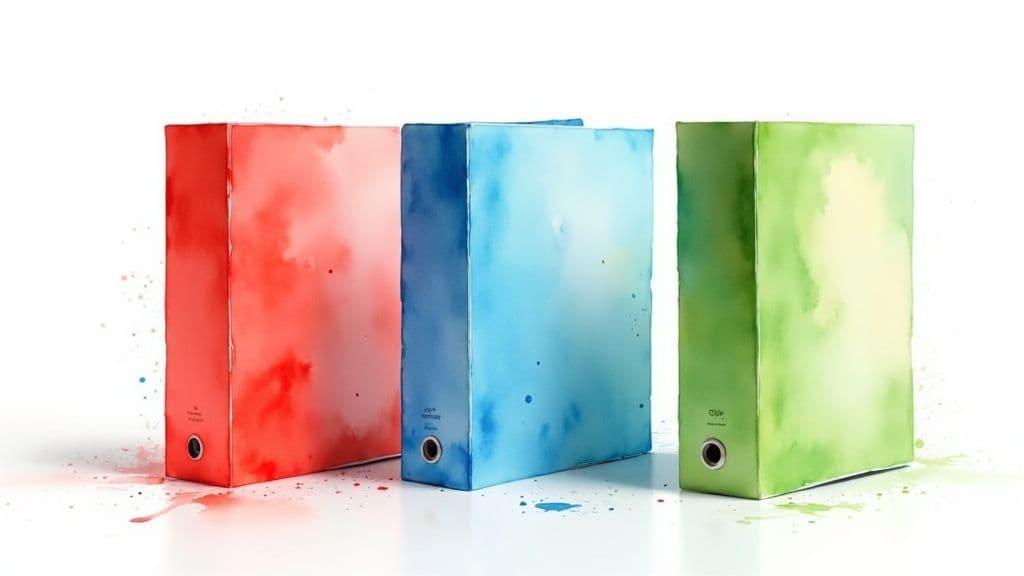
Color-coding turns abstract categories into immediate visual signals—ideal for people who rely on visual processing to reduce cognitive effort. Assigning consistent colors across physical and digital systems speeds retrieval and lowers decision friction.
How to implement
- Physical documents: colored folders (red = urgent, blue = medical, green = finance).
- Digital calendars: unique colors for work, personal, health, and deadlines.
- Home organization: colored bins, hangers, or labels for quick sorting.
Strategic tip
Start with 3–4 core colors and post a visible legend. Apply the same colors across folders, calendars, and storage to create an integrated visual system.
3. External Brain Systems (Digital and Physical)
An external brain is a trusted place—digital or analog—where you capture ideas, tasks, and reference materials so your working memory isn’t overloaded. This concept underpins systems like Getting Things Done and Building a Second Brain, and it’s especially useful for ADHD-related working memory challenges3.
How to implement
- Digital: use Notion, Obsidian, or a dedicated task manager. Voice memos are great for transient thoughts.
- Physical: a command center with a whiteboard, family calendar, and in/out trays or a bullet journal for portable capture.
- Workspace: create zones for incoming items, action items, and long-term storage.
Strategic tip
Commit to one capture tool for a week. Do a weekly review to keep the system current and reliable—otherwise your external brain becomes another source of clutter.
4. Body Doubling and Accountability Partners
Body doubling is working in the presence of another person (in-person or virtual) to increase task initiation and sustained focus. It provides gentle accountability and reduces isolation—both powerful supports for ADHD productivity4.
How to implement
- Virtual co-working: use Focusmate or set up timed Zoom sessions with a friend.
- In-person: work together at a library, café, or co-working space.
- Home: ask a roommate or family member to be in the room while you do a task.
Strategic tip
Choose partners with compatible energy and set expectations up front (silent session, light chat, or structured Pomodoro intervals).
5. Time Blocking with Visual Schedules
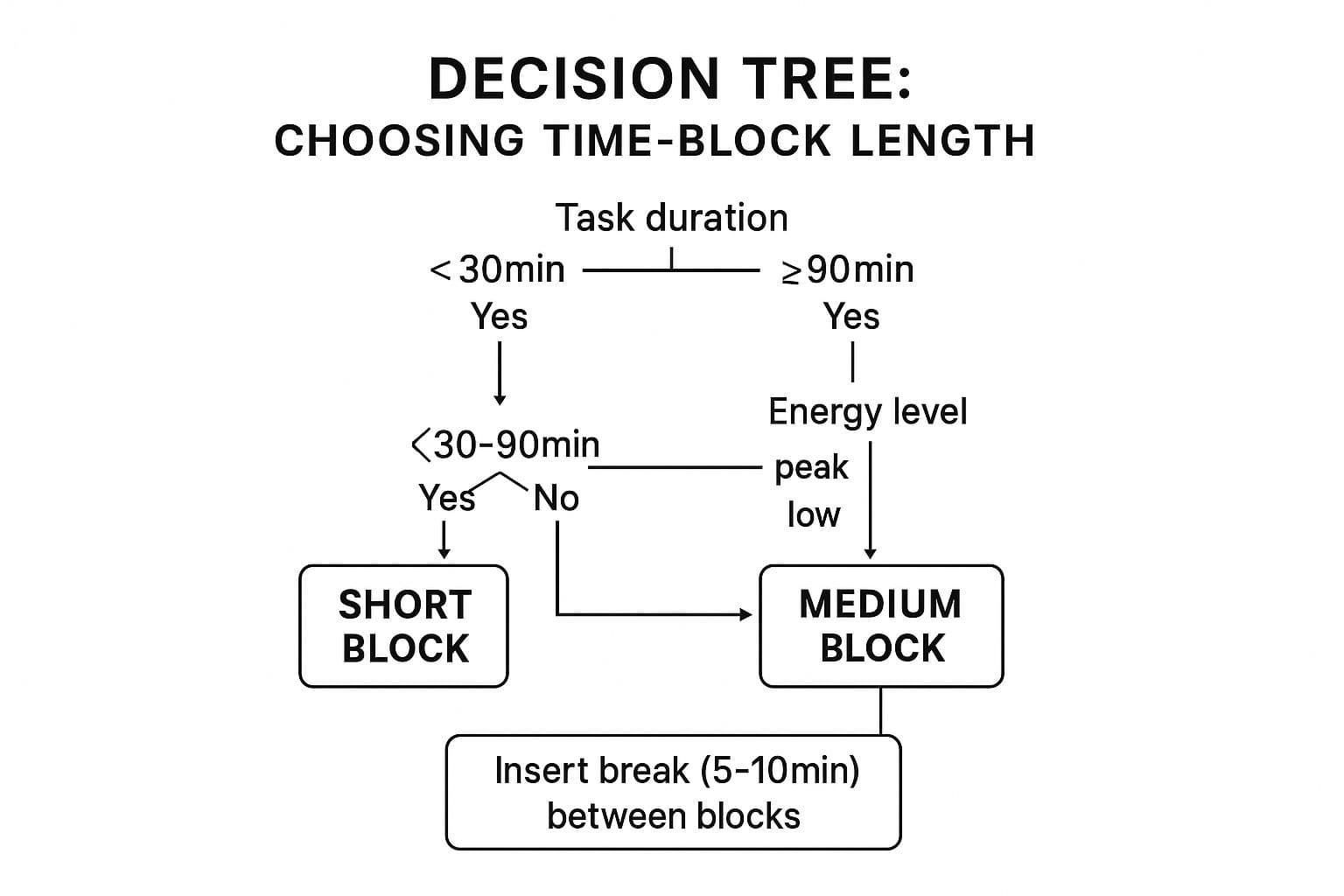
Time blocking gives structure to time-blindness by assigning tasks to specific slots. Combined with color-coding, it creates a clear, visual roadmap for your day that reduces decision fatigue.
How to implement
- Digital calendars: create colored events for deep work, meetings, personal time, and breaks.
- Physical planners: use sticky notes as movable blocks for tactile flexibility.
- Tracking: use apps like Clockify to compare planned vs. actual time and refine your blocks.
Strategic tip
Always include 5–15 minute buffers between blocks to ease transitions. Block non-negotiables first (sleep, meals), then schedule important tasks during peak energy windows. Consider a premade template to get started quickly on your calendar or internal planning page (/templates/time-blocking).
6. The ADHD-Friendly Filing System: FAST Method
FAST—File, Act, Store, Toss—is a four-option decision pathway that prevents analysis paralysis when processing documents or messages. Simple, fast decisions keep piles from forming and reduce the stress of choosing what to do next.
How to implement
- File: current items you’ll reference soon.
- Act: items that require immediate action; handle them or move them to an Action tray.
- Store: long-term archives for legal or sentimental records.
- Toss: recycle or delete what you don’t need.
Strategic tip
Set up File/Act/Store/Toss stations before you begin. Use a timer (15–20 minutes) to sprint through backlogs and regularly prune stored archives.
7. Dopamine-Driven Reward Systems
Because ADHD often involves lower baseline dopamine, pairing tasks with immediate rewards boosts motivation. Gamification and small, consistent reinforcements can make organizing feel worthwhile rather than tedious5.
How to implement
- Gamify tasks with apps like Habitica.
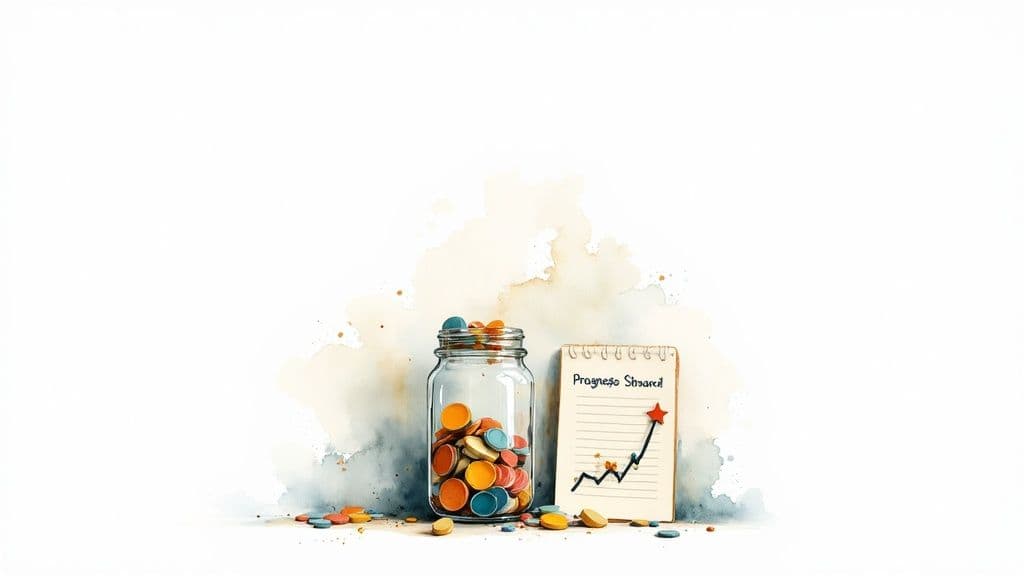
- Reward jar: draw a small treat after a session (15 minutes of a podcast, a specialty coffee).
- Visual progress: sticker charts or progress bars for major projects.
Strategic tip
Use a mix of immediate micro-rewards and larger milestone rewards. Rotate rewards periodically and add social reinforcement (share before-and-after photos with a supportive friend).
Quick Comparison of the 7 Methods
| Method | Complexity | Resources | Outcome | Best for | Advantage |
|---|---|---|---|---|---|
| One-Minute Rule | Low | Minimal | Fewer small tasks | Everyday micro-tasks | Prevents buildup |
| Color-Coding | Medium | Moderate | Faster recognition | Visual learners | Low cognitive load |
| External Brain | High | High | Memory support | Complex projects | Reliable storage |
| Body Doubling | Medium | Low–Moderate | Better focus | Task initiation | Social accountability |
| Time Blocking | Medium–High | Moderate | Structured day | Time-blindness | Reduces decision fatigue |
| FAST Filing | Low–Medium | Low | Less clutter | Paper/email triage | Quick decisions |
| Dopamine Rewards | Medium | Moderate | Increased motivation | Low-engagement tasks | Aligns with neurochemistry |
Integrating Your ADHD-Friendly System for Lasting Success
There’s no single cure. The most sustainable approach is a personalized toolkit that fits your routines and energy cycles. Start with one or two strategies that feel doable—perhaps the One-Minute Rule and an External Brain—and build from there. Your system becomes most powerful when techniques connect: use your external brain to run FAST filing, color-code your calendar, and pair time blocks with rewards.
Delegate recurring tasks that drain your executive function—scheduling, inbox triage, or formatting—so you can focus on high-impact work. If delegation fits your situation, explore services like Fluidwave for pay-per-task support.
Key takeaway: Build a flexible, compassionate system that adapts to changing focus, energy, and motivation instead of forcing rigid perfection.
Quick Q&A
Q: Where should I start if I feel overwhelmed?
A: Start with one small habit—try the One-Minute Rule for a week and capture everything into a single external tool. Small wins build momentum.
Q: How do I prevent tools from becoming clutter?
A: Commit to a weekly review to process captured items and prune outdated notes. Keep one trusted capture location and consolidate gradually.
Q: Which strategies work best together?
A: Combine an external brain with time blocking and a reward system. Use color-coding across your external brain and calendar for instant clarity.
References
This is not an exhaustive bibliography but key sources used to support claims in the article.
1.
National Institute of Mental Health, “Attention-Deficit/Hyperactivity Disorder,” NIMH, https://www.nimh.nih.gov/health/topics/attention-deficit-hyperactivity-disorder-adhd.
2.
Getting Things Done, “The One-Minute Rule and Getting Things Done,” Getting Things Done, https://gettingthingsdone.com.
3.
Tiago Forte, “Building a Second Brain,” Forte Labs, https://fortelabs.co/blog/building-a-second-brain/.
4.
ADDitude Magazine, “Body Doubling for ADHD: How It Helps, Who It Helps, and How to Find a Partner,” ADDitude, https://www.additudemag.com/body-doubling-adhd/.
5.
M. J. Frank et al., “Dopaminergic Mechanisms of Individual Differences in Reinforcement Learning,” Translational Psychiatry (review of dopamine and motivation in ADHD), https://www.ncbi.nlm.nih.gov/pmc/articles/PMC4735479/.
ركز على ما يهم.
اختبر إدارة مهام فائقة السرعة باستخدام سير عمل مدعوم بالذكاء الاصطناعي. تساعد الأتمتة المحترفين المشغولين على توفير أكثر من 4 ساعات أسبوعياً.